Taboo Tuesday: The Strange Thing About The Johnsons


The Strange Thing About The Johnsons is a short film by Ari Aster, which he made for his student thesis at the AFI Conservatory. Fourteen years later, it still provokes strong, guttural reactions from viewers. It premiered at the Slamdance Film Festival in 2011 but made a more significant impact when it was leaked online and subsequently went viral.
The Strange Thing About The Johnsons centres on the Johnson family, an upper-middle-class family harboring an awful and shameful secret beneath its veneer of living ‘The American Dream’.
Aster presents an uncomfortable, taboo subject matter: incestuous abuse. Although the film’s runtime is a brisk twenty-nine minutes, Aster succeeds in presenting a believable family drama set against the backdrop of true horror.
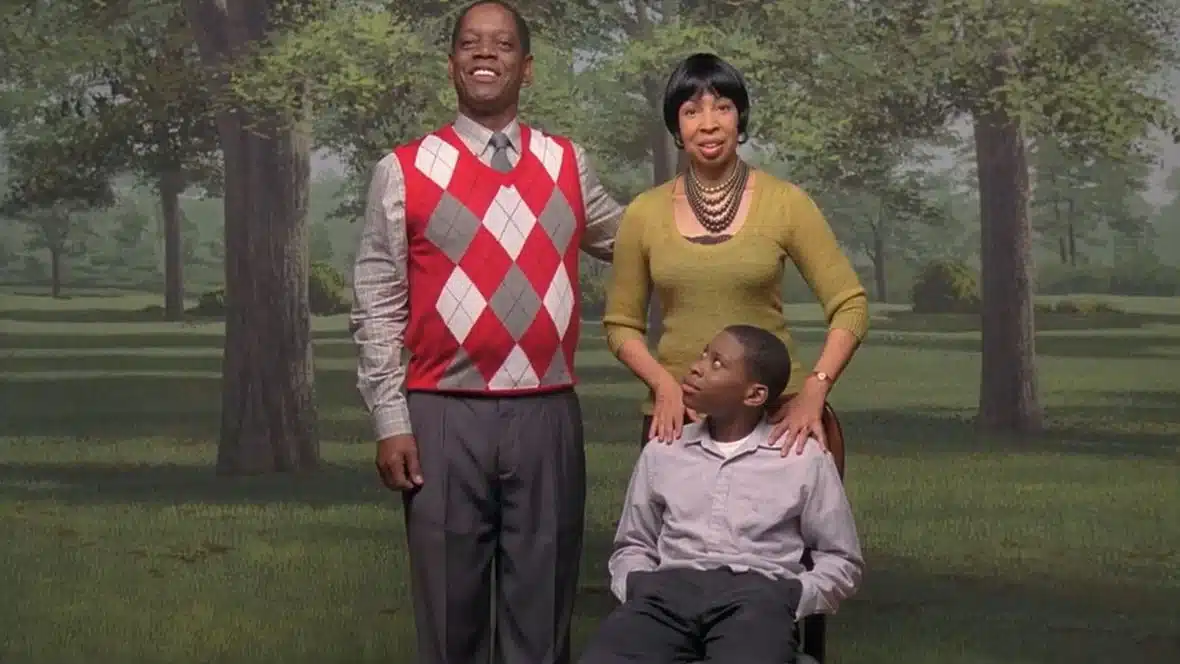
Despite the film feeling somewhat grounded in reality, Aster employs a fantastical subversion of the expectations of his audience.
In Aster’s film, it is not a child experiencing abuse at the hands of their parent or guardian, but rather, it is the child who grooms and abuses the father, lending the film an unsettling, uncanny feeling.
The Uncanny Valley effect is pervasive throughout the film: each character’s actions feel forced yet theatrical, and the actors adopt an eerie, unblinking stare, complete with frozen smiles, further accentuating the feeling of unease.
The film’s structure is familiar enough, while its depictions of its dark subject matter feel akin to an episode of The Twilight Zone. Every line of dialogue and every action feels like a caricature of how mainstream films depict the idealised, white suburban family.
In The Strange Thing About The Johnsons, all of the characters are African-American. They live in large, affluent homes, host champagne garden parties, and generally behave like upper-class white characters from an 1980s movie.

It was released during a time when mainstream representation of African-American culture was depicted in a cliched, negative light across popular media.
How often did you see Black Americans as upper class, wealthy, or successful in various types of media before the popularity of Jordan Peele’s films, for example? Now, consider how often you would recognise your favourite black actors popping up in the same, tired-out, cliched crime thrillers about gang warfare or social poverty within the Projects during the early 2010s?
I believe that much of the controversy of this film revolves around the idea of a white, privileged filmmaker challenging how people of colour are presented onscreen. However, I believe that they are missing the intent of the film.
During the lavish garden party scene, torn straight from movies like Heathers, we notice that the servers are all white.
This is an intentional, comedic subversion of our expectations because, as Western, white filmgoers, we are used to the cliched representations of the social elite being Caucasian American, while the African-American characters are few and far between.
I burst out laughing during the ‘token white guy’ scene. Joan greets one guest in particular, a geeky white man in glasses, by exclaiming ‘’Oh YOU! You’re such a… CLOWN!’’— here the joke is at the expense of the lone white guy for a (refreshing) change.
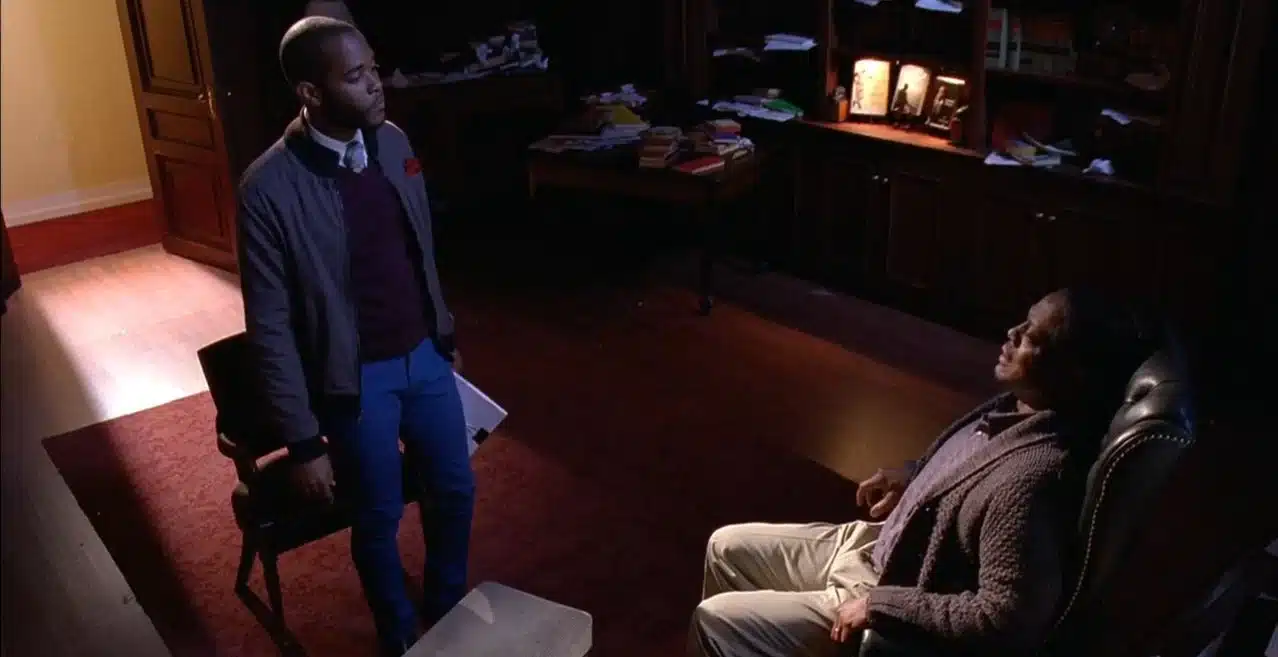
While Aster paints a more realistic, healthy, and positive trope of ‘The American Black family,’ he also injects his trope with a shocking twist; the handsome, well-educated black son is hiding his horrific abuse towards his own father.
Taboo subjects in society often change over time as we collectively accept different ethical standards, and Aster’s very first film seeks to confront those standards in the most heinous of ways.
Aster himself said that his intent with his thesis film was to shock and provoke. In this light, one could compare The Strange Thing About The Johnsons to the works of John Waters or subversive filmmaker Lars Von Trier.
We are introduced to the Johnson’s dynamics in the opening scene which is provocative in itself: the father, Sidney (played by Billy Mayo, RIP) walks in on his teenage son, Isaiah (played by Brandon Greenhouse) masturbating in bed. It only gets progressively more disturbing from there.
A shocking moment sets up the warped reality of the film as we bear witness to how familial abuse doesn’t suddenly happen, but instead, it builds up over time, in painful increments.
We feel like we are the voyeurs spying on something which should not be witnessed; further immersing us, and making us feel complicit in the abuse because we are also powerless to act.

Aster implements cutaways and offscreen shots, leaving the viewer to fill in the horrific blanks themselves.
Aster made another movie with Billy Mayo called Beau, a short film that served as a prototype for his three-hour-long epic Beau Is Afraid.
Billy was always Aster’s first pick for the role of Beau in his feature. However, when Billy tragically passed away in 2019 from undisclosed causes, Aster was forced to recast the part, which went to Joaquin Phoenix.
I feel safe knowing that The Strange Thing About The Johnsons remains a cult favourite today, and has even experienced a new wave of Cinephiles via TikTok and Reddit, ensuring that shock cinema fans are still impressed with Billy Mayo’s powerful acting range.
If you enjoy the works of provocateurs like Gaspar Noé and Julia Ducournau, you will likely find The Strange Thing About The Johnsons an interesting, if uncomfortable, watch.

She’s a lover, he’s a fighter. Together, they’re CHEER AND LOATHING. Tune in to hear your hosts, Stephanie (Cheer) and Casey (Loathing), clash over the films they love — and the ones they love to hate.
In this holiday extravaganza episode of Guilty Pleasures, join hosts Stephanie, Kelly, and our newest addition, Jonathan (Jack was tied up in tinsel and couldn't join us), as they unwrap the bizarre and unhinged world of holiday cinema. They dive into the depths of Elves, a film that's as chaotic as it is entertaining. It's a sleigh full of questionable decisions, diabolical dialogue, absurd plot twists, wildly offensive antics, and unhinged holiday mischief.
And that's not all! In the second half of the podcast, join your festive cinephile friends for a look at four more ”nutty as a fruitcake” holiday treats: A New York Christmas Wedding, Elf Bowling, A Medea Christmas, and Jack Frost. Plus, we each offer a bonus Christmas flick guaranteed to make you say, ”Ho, Ho, HO-LY Hell!”
Expect laughter, disbelief, and a spirited debate about what truly makes a movie a guilty pleasure. Don't miss this festive journey through the weirdest corners of holiday films!


Follow Us!