


Since “The Sixth Sense”, no one, not even Shyamalan himself, has been able to pull the rug out from under us with quite such style and skill.
No time to read? Click the button below to listen to this post.
M. Night Shyamalan’s The Sixth Sense is difficult to classify 25 years after its release. It’s often categorized as a horror movie, though there is little in the way of overt scares. What we get, instead, is a poignant ghost story, with a somber Philadelphia haunted by restless spirits, peppered with eerie shocks and souls lingering in a liminal space between life and death.
Released on August 6, 1999, The Sixth Sense resonated with audiences mainly because its under-the-radar twist shocked audiences so effectively, much like The Crying Game did seven years prior. This still-talked-about-to-this-day twist evoked such strong emotions in viewers despite the film having only provided mild shocks throughout most of its runtime.
By telling the story of a nine-year-old with the ability to communicate with spirits, Shyamalan taps into the potent fantasy that we can shape our destinies even in death.
The film’s resolution ties up all loose ends, offering closure through justice served, relationships repaired, and final farewells exchanged, allowing all characters to find peace, whether in the afterlife or the world of the living.
For Shyamalan, it was a last chance to establish himself as Steven Spielberg’s heir apparent after he had stalled out twice.
His first big miss was with Praying for Anger, his forgotten 1992 directorial debut, followed by the disastrous Wide Awake. This Denis Leary/Dana Delany/Rosie O’Donnell dramedy bombed in 1998 after three years of reshoots, edits, and general psychological torment under the Miramax chief Harvey Weinstein. Shyamalan even had Spielberg’s producing partners, Frank Marshall and Kathleen Kennedy, along for the ride.
Yet, Shyamalan never lacked confidence.

In fact, it was his confidence that reportedly rankled Weinstein. Yet, The Sixth Sense feels so much like the first M. Night Shyamalan film in style, tone, and twistiness; it’s as if his previous work never happened.
Like an actual movie magician, he made his career struggles disappear.
The director of The Sixth Sense shows similarities to Spielberg in the visual style. Still, the film’s boldness lies in its commitment to a somber mood that transcends typical horror movie gloominess. This tone is further developed in his subsequent film, Unbreakable, where the gloomy atmosphere of Philadelphia adds depth and melancholy to the story.
The somber setting enables Shyamalan to mix in moments of fear, particularly when nightly ghostly encounters haunt the young protagonist. However, the director aims to convey emotions of grief, confusion, and doubt related to death.
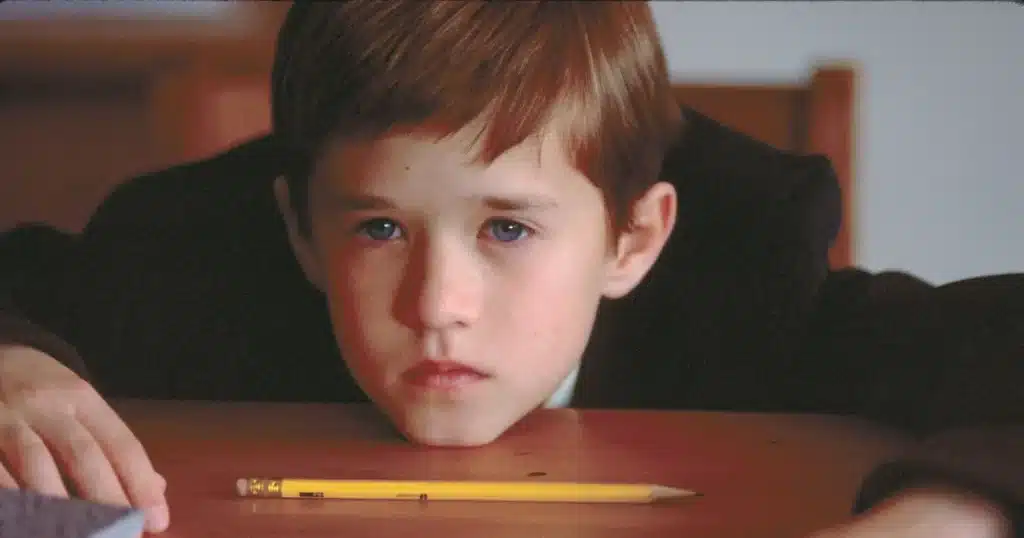
The story unfolds with Bruce Willis’s portrayal of Dr. Malcolm Crowe, a renowned child psychologist haunted by a past case involving a child he couldn’t assist. The film reveals that the same child, now grown, tragically harms Malcolm and himself. Despite this, Malcolm endeavors to redeem himself by helping another patient, Cole Sear, depicted by Haley Joel Osment.
Cole is a perceptive and delicate boy facing challenges at home and school. He conceals a troubling secret from Malcolm and those around him.
The Sixth Sense sometimes manipulates information, glossing over the boundaries of the deceased.
However, revisiting the film post-twist reveals Shyamalan’s control over the narrative, guiding viewers to particular conclusions.
Scenes between Malcolm and his wife hint at discord, while ambiguous conversations add layers to the story.
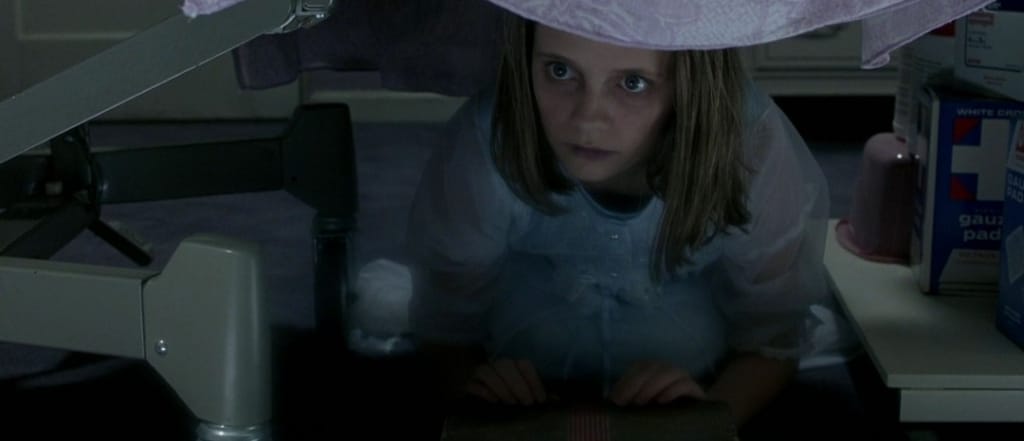
As the doctor and patient decipher Cole’s purpose, the plot delves into New Age messages and neatly resolves lingering threads. Cole aids a girl in revealing a dark secret, brings closure to his family, and advises Malcolm in a poignant moment.
The strengths and weaknesses of The Sixth Sense have influenced the rest of Shyamalan’s career, indicating that he had established his own successful formula and was likely to follow it.
While he has sometimes followed current trends – such as The Last Airbender‘s unsuccessful attempt at a young adult Chosen One fantasy and The Visit‘s more effective embrace of the found-footage genre – he has maintained his identity as a filmmaker who consistently draws from familiar themes.
Known for his plot twists, he continually seeks to recreate the same surprise element that captivated audiences before but has resulted, in my opinion, chiefly in disappointment. Still, it’s hard not to admire his tenacity and relentless pursuit of his passion, regardless of critical feedback or financial failure.
Regardless of what you think of the rest of his career, it’s indisputable that Shyamalan demonstrated a refined style and skill with The Sixth Sense — brilliantly manipulating the pacing of traditional genre films and delving into the darker aspects of human psychology.
Overall Rating (Out of 5 Butterflies): 5










Follow Us!