Fresh Screams: Five Horror Films to Stream (June 8-14)
- Animation
- Foreign Film
- Hulu
- Netflix & Chills
- Reel Review
- Streaming on Shudder
- Streaming Spotlight
- Tubi


This week’s Fresh Screams is devoted to movies that proudly wear their “not for everyone” status as a badge of honor. From handcrafted Mexican gothic fantasy and glacial French dreamscapes to hallucinatory folk horror and an absurdist Sasquatch odyssey, every pick on this list is aimed squarely at viewers whose tastes lean more Criterion Closet than Friday-night crowd-pleaser.
In other words, we’ve got catnip for the arthouse crowd.
Those who crave more visceral horror, traditional narratives, or fast-paced thrills may find this week’s picks too much of a detour to satisfy their popcorn horror cravings. Even our pVOD pick, Iron Lung, is fiercely polarizing, stripping away the usual engines of multiplex horror in favor of static, single-room claustrophobia and a deeply opaque dead universe.
For those up for a horror adventure off the beaten path, this week delivers a treasure trove.
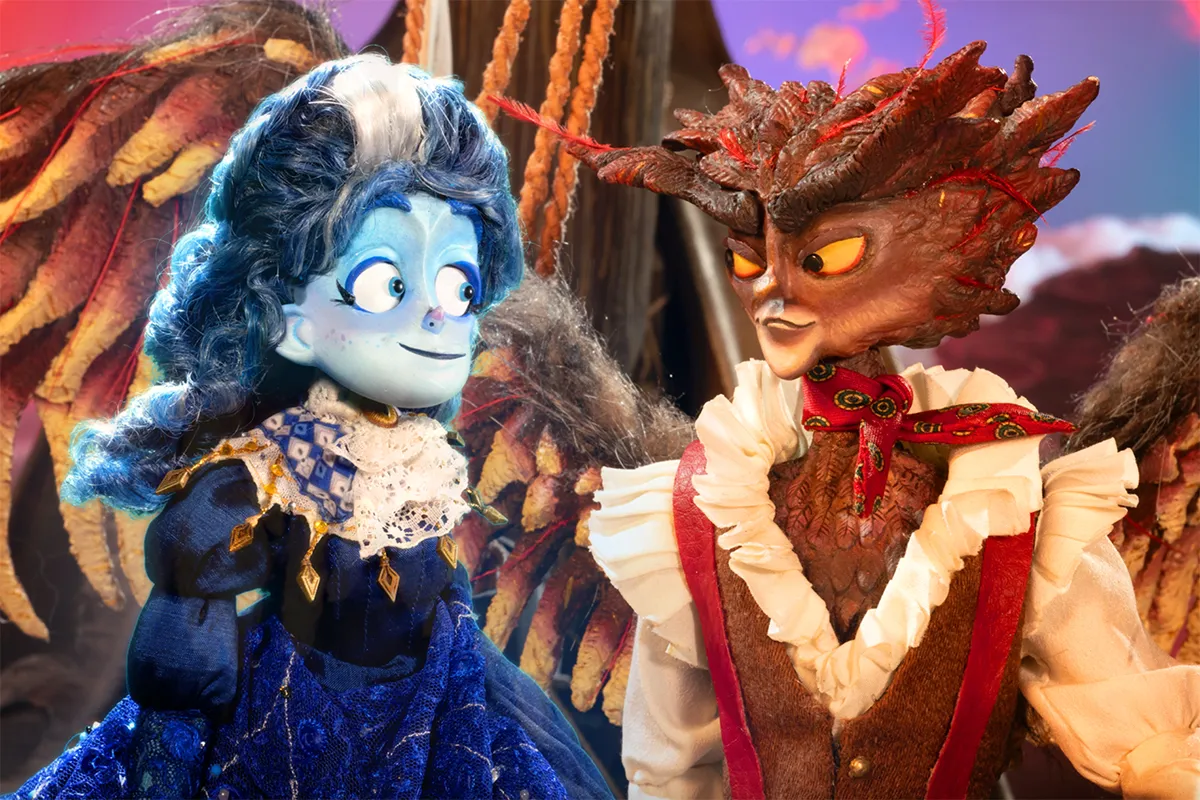
If you watch nothing else this month on streaming, I urge you not to miss I Am Frankelda, a painstakingly beautiful, gothic stop-motion animated horror-fantasy feature from directors Roy and Arturo Ambriz of Cinema Fantasma.
The first stop-motion feature ever produced in Mexico, it balances eerie fairytale charm with deep emotional resonance. It’s not too dark for younger viewers to enjoy, but it has that Burton-esque creepy oddity that adult animation fans will love. It also has a distinctly Guillermo del Toro blend of beauty and horror, which makes sense given that del Toro served as a mentor figure on the project and helped refine the film’s theatrical cut.
Set in 19th-century Mexico, the film follows Francisca Imelda, a brilliant young woman with a passion for writing macabre ghost stories. Facing a rigid, conservative society that rejects her for her creative talents, Francisca retreats into her imagination. She enters a realm of nightmares and subconscious thought where the monsters and occult creatures from her stories are very much alive.
Guided by a tormented prince named Herneval, Francisca learns that this realm of fiction is facing a crisis of its own. A scheming, spider-like villain named Procustes threatens to seize control of the subconscious kingdom, forcing Francisca to use her voice, her imagination, and her love of horror to help restore the delicate balance between the Realm of Fiction and the Realm of Existence.
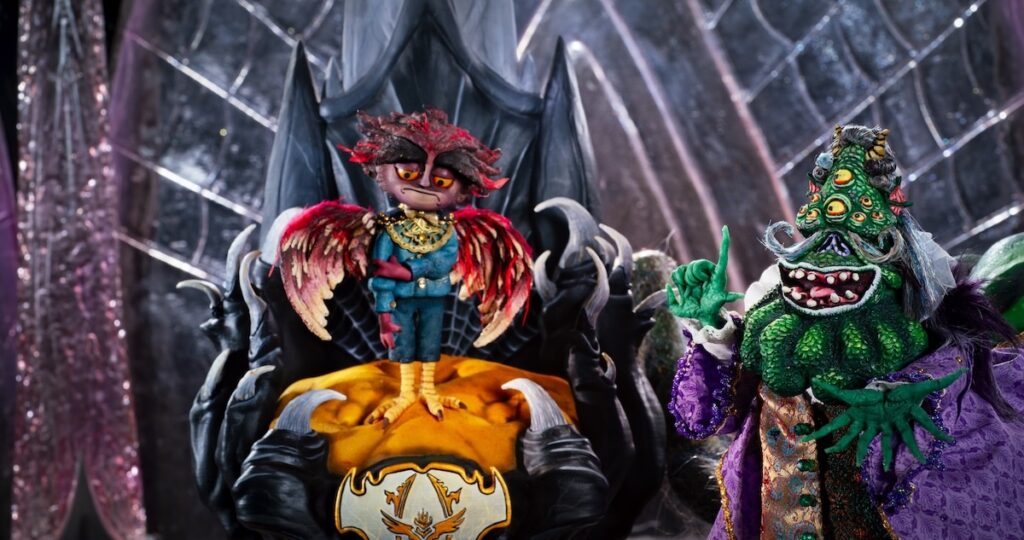
The Ambriz brothers explore the isolation and discouragement that unconventional creators face. The film becomes a moving allegory for defending your creative voice when the world demands conformity.
What makes the film especially meaningful for horror fans is the way it treats the genre itself. Rather than framing monsters or dark thoughts as corrupting forces, they are honered as an essential part of the human psyche.
It’s a technical marvel featuring breathtaking stop-motion craftsmanship and incredibly detailed expressionistic sets. It’s also a musical, with a gorgeous narrative-driven score by Kevin Smithers and top-tier vocal performances that bring Broadway-level emotional weight to the screen.
On Netflix, you can watch in English or Spanish. I checked out both and highly recommend either version. Many of the original Mexican voice actors reprised their roles for the English dub, which helps preserve the performance quality and emotional authenticity.
I almost always prefer watching a film in its original language, but the dub has real value here. The stop-motion details are so mesmerizing that non-Spanish speakers may appreciate being able to take their eyes off the subtitles and fully absorb the handcrafted artistry. The English dub also handles the operatic musical sequences beautifully, keeping you immersed in the film’s gothic fairytale world.
Whereas I Am Frankelda is a foreign film I consider essential viewing, The Ice Tower is a more polarizing pick for a niche audience.
Directed by Lucile Hadžihalilović and co-written with Geoff Cox, The Ice Tower (La Tour de glace) is an enigmatic, dreamlike French fantasy drama. Subtitled, long, slow, and artsy, I’m not going to pretend this is a must-watch film for mainstream audiences. But for arthouse fans seeking something different, it offers a hauntingly beautiful meditation on the boundary between enchantment and sacrifice.
Set in provincial France during the 1970s, the story follows Jeanne, a 16-year-old orphaned runaway fleeing a cold foster home and the heavy grief of her mother’s overdose. After arriving in an alpine town, Jeanne assumes the alias Bianca, stealing the identity of an ice skater she spots at a local rink. Desperate for warmth and shelter, she slips inside a film studio where a massive adaptation of Hans Christian Andersen’s The Snow Queen is being shot.
There, she falls under the spell of Cristina van der Berg, the imperious, jaded screen diva playing the title role. As the production grinds on, a deep and unsettling fascination grows between the movie star and the vulnerable teenager, blurring the line between the artificial fairytale on set and the reality of their own lives.
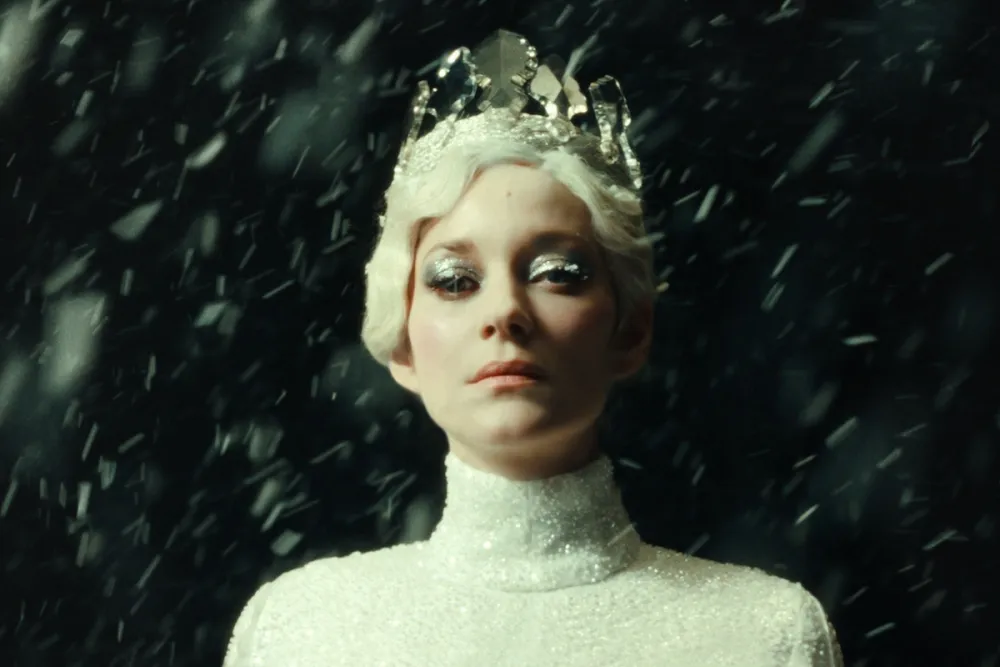
Hadžihalilović fills the frame with icy beauty, candlelit interiors, hypnotic close-ups, and winter light fractured through costume crystals.
The interplay between Clara Pacini and Marion Cotillard is the highlight, creating a gorgeous contrast between vulnerable resilience and jaded elegance. Ken Yasumoto’s sound design, paired with dreamy electronic textures and classical selections, helps place the film in a strange suspended state between dream, nightmare, and memory.
But if you don’t appreciate films that lean into hypnotic, glacial pacing and prioritize sensory atmosphere over traditional narrative, you might want to skate on past this one. For those who dream of a trip to the Criterion Closet and have films by Tarkovsky, Tarr, Bresson, Herzog, and Bergman in their Letterboxd Top 4, this is a crystal palace of perfection.
Directed by Osgood “Oz” Perkins (Longlegs, The Blackcoat’s Daughter) and written by Nick Lepard, Keeper is a suffocating, atmospheric piece of folk horror about toxic masculinity, domestic manipulation, and poisoned intimacy.
The film follows Liz and her partner of exactly one year, Malcolm, as they embark on an anniversary weekend getaway at a secluded, austere country cabin belonging to Malcolm’s family. The romantic trip quickly gives way to an uneasy psychological puzzle. After a tense dinner disrupted by Malcolm’s intense cousin Darren, Malcolm pressures a reluctant Liz into eating a slice of homemade chocolate cake left by the property’s caretaker.
When Malcolm leaves the next morning for a sudden medical emergency, Liz falls into a hypnotic, drug-like stupor. Haunted by the cabin’s shifting interior geography and horrific visions of different women, she begins to uncover the property’s dark reality: Malcolm and Darren are not merely strange men with bad family energy but something far more dangerous.
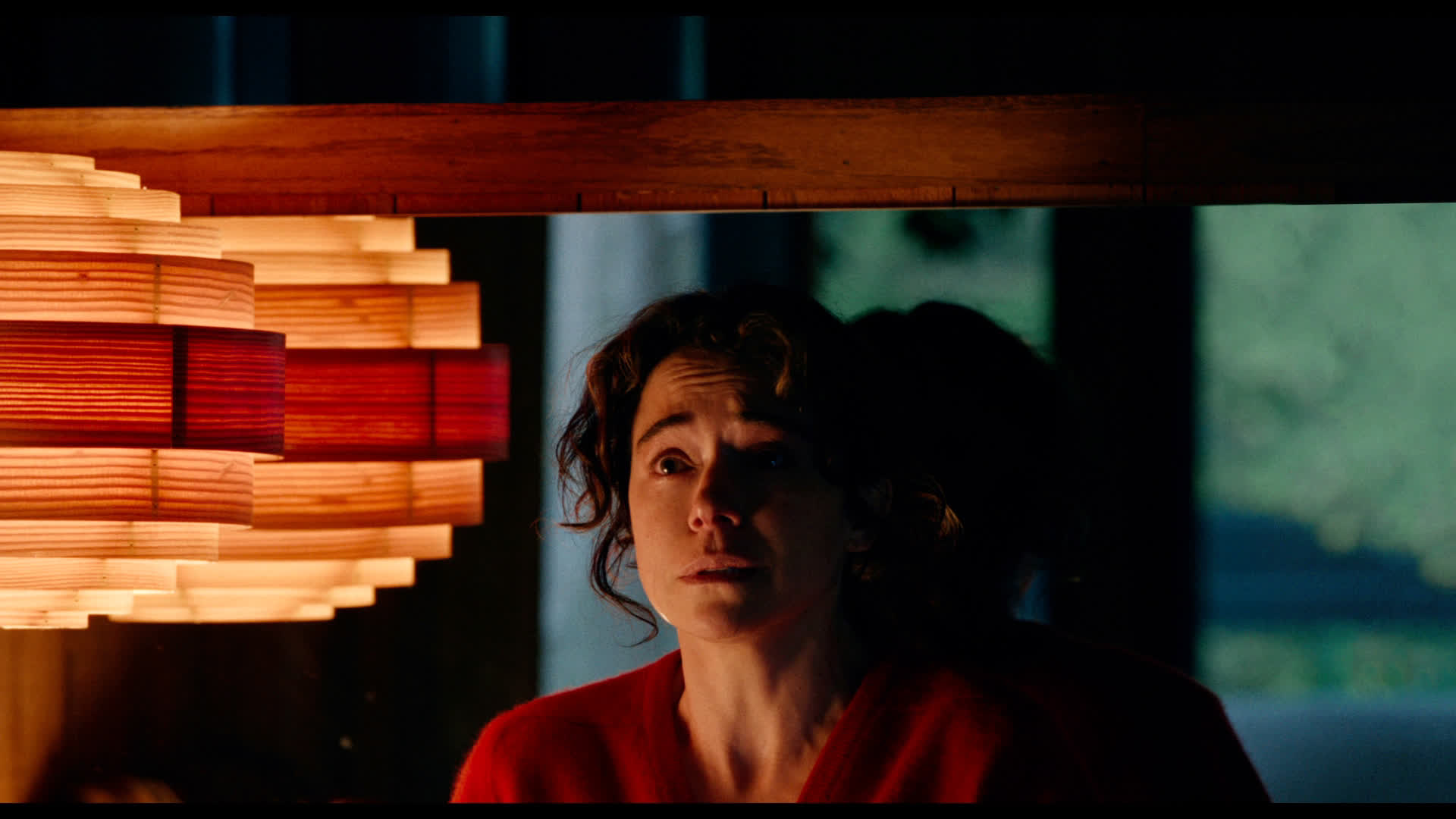
The entities lurking beneath the house do not want random strangers. They require Malcolm to sacrifice women that he has spent a full year courting, loving, and convincing to trust him. The film uses that rule to turn romance into predation, positioning Malcolm’s attentive boyfriend persona as part of the trap. The chocolate cake becomes the physical manifestation of poisoned affection.
Tatiana Maslany is mesmerizing. Tasked with carrying long stretches of silent, ambient isolation, she brilliantly anchors the film’s hallucinatory terror. The oppressive sound design and carefully controlled cinematography create an overwhelming sense of doom, while the creature design is both original and genuinely unsettling.
It’s not perfect. The final act may lose viewers who prefer the film’s enthralling mystery to its more literal explanation, and the dream-logic pacing will likely frustrate those looking for a faster, more linear survival thriller.
But for Perkins fans and modern folk horror devotees, Keeper is still a compelling, deeply atmospheric watch. Its themes of submission, betrayed trust, and intimacy as a weapon are too potent to dismiss.
Directed by independent filmmaking duo David and Nathan Zellner and executive produced by Ari Aster, Sasquatch Sunset is a highly unconventional, completely dialogue-free avant-garde comedy-drama that tracks a year in the life of a family of cryptids. I first fell in love with this film at SXSW a couple of years ago, and I remain fully charmed by its strange, mournful magic.
The film follows a small pack of four Sasquatches: an aggressive alpha male, a gentler adult male, a harried matriarch, and a curious adolescent. Together, they navigate the misty, lush redwood forests of the Pacific Northwest. Structured around the changing of the seasons, the film plays like a nature documentary without narration.
Beneath its absurd premise, the film is a deeply mournful exploration of a species’ end. The family’s tree-knocking rituals are not just primitive communication. They are a desperate, increasingly tragic search for connection.
As the characters face death, isolation, and the slow realization that they may be the last of their kind, the film treats their grief with surprising tenderness.

Paradise is spoiled not by monsters, but by trash, logging, abandoned campsites, and the careless debris of modern life. The Sasquatches’ encounters with man-made objects shift the tone from whimsical curiosity to confusion, rage, and eventually sorrow.
It’s an ecological fable about a world being destroyed by a species too absent-minded and self-important to notice what it is erasing.
The performances are wildly impressive. Under thick, restrictive prosthetics, Riley Keough and Jesse Eisenberg deliver remarkable body language and eye acting, conveying jealousy, tenderness, grief, and wonder without a single word of dialogue. The cinematography gives the forest a damp, tactile beauty, while The Octopus Project’s score creates the perfect balance between whimsy and dread.
It’s an aggressively polarizing, love-it-or-hate-it cinematic experiment. A must-see for arthouse purists and independent cinema enthusiasts who will appreciate its bold swings and total creative commitment. Mainstream viewers, however, may feel lost in the woods.

Written, directed, self-financed, and starring YouTube creator Mark Fischbach, better known as Markiplier, Iron Lung is an independent sci-fi cosmic horror film based on David Szymanski’s hit indie video game. That alone makes it fascinating. Markiplier somehow willed a weird, deeply uncompromising indie cosmic-horror film into existence and got audiences to show up in force.
The film takes place in a bleak post-apocalyptic future after “The Quiet Rapture,” a mysterious cosmic event that caused every star and habitable planet in the universe to vanish without explanation. With the last remnants of humanity stranded on crumbling space stations, a massive ocean of liquid blood is discovered on a desolate moon. A desperate colonial authority sends Simon, a convict seeking his freedom, on a blind exploratory mission inside a tiny, rusting one-man submarine known as the Iron Lung.
Welded inside the vessel with no viewport windows, Simon is forced to navigate the crushing, pitch-black deep using only a primitive map, basic instruments, and a slow-cycling external camera.
The entire premise is built on the total deprivation of control. The outside world is massive, unknowable, and hostile, but Simon can only process it through proximity sensors, mechanical groans, delayed images, and his own deteriorating mind.

Simon’s mission is not a heroic attempt to save humanity so much as a cruel, bureaucratically mandated gamble from a system still willing to sacrifice individual lives even at the literal end of existence.
Fischbach’s dedication to the project is undeniably impressive, and the production has a distinct physical weight. For a self-funded, $3 million independent feature with no traditional studio distribution, the film looks shockingly polished. The cramped metal interiors, the dripping crimson design, the groaning submarine hull, and the echoing sonar all create a thick, constant sense of sonic dread.
The reported use of more than 80,000 gallons of fake blood may be the headline-grabbing detail, but the real achievement is how convincingly the film turns that impossible environment into something oppressive and real.
That said, this is not always a fun watch. Because the film spends nearly its entire runtime trapped in the cramped confines of the SM-13 submarine with one actor, it quickly becomes tedious. The compelling concept also struggles to sustain a two-hour runtime. Viewers unfamiliar with the source material may feel confused or shut out by its narrative opacity.
Flaws and all, Iron Lung is worth a watch for its striking visual design, old-school atmospheric suspense, and low-budget cosmic horror ambition. It respects its source material while finding a cinematic language of its own, even when that language is cramped, punishing, and hard to breathe through.

She’s a lover, he’s a fighter. Together, they’re CHEER AND LOATHING. Tune in to hear your hosts, Stephanie (Cheer) and Casey (Loathing), clash over the films they love — and the ones they love to hate.
In this holiday extravaganza episode of Guilty Pleasures, join hosts Stephanie, Kelly, and our newest addition, Jonathan (Jack was tied up in tinsel and couldn't join us), as they unwrap the bizarre and unhinged world of holiday cinema. They dive into the depths of Elves, a film that's as chaotic as it is entertaining. It's a sleigh full of questionable decisions, diabolical dialogue, absurd plot twists, wildly offensive antics, and unhinged holiday mischief.
And that's not all! In the second half of the podcast, join your festive cinephile friends for a look at four more ”nutty as a fruitcake” holiday treats: A New York Christmas Wedding, Elf Bowling, A Medea Christmas, and Jack Frost. Plus, we each offer a bonus Christmas flick guaranteed to make you say, ”Ho, Ho, HO-LY Hell!”
Expect laughter, disbelief, and a spirited debate about what truly makes a movie a guilty pleasure. Don't miss this festive journey through the weirdest corners of holiday films!










1 Comment
1 Record
S. MIchael Simms wrote: