

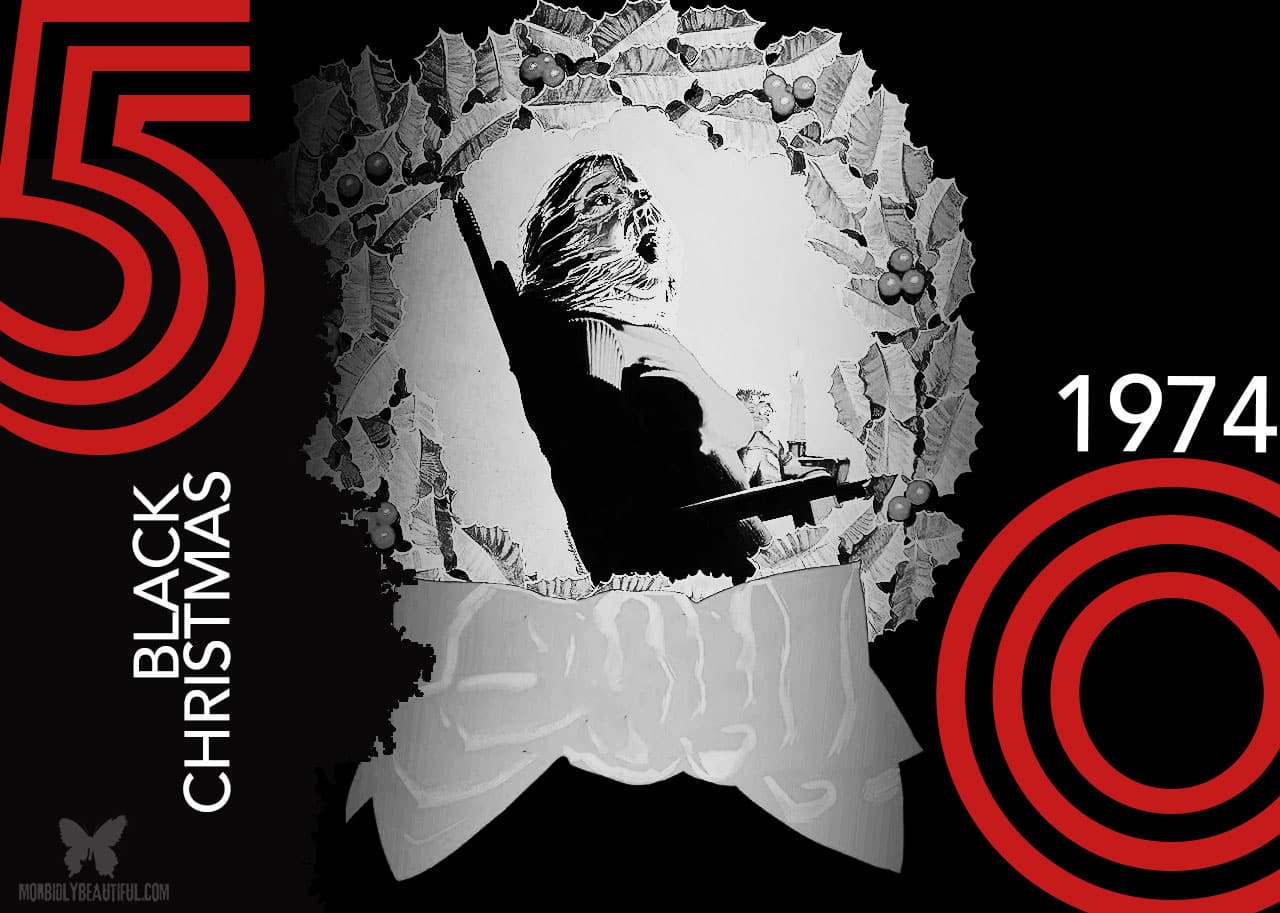
“Black Christmas” carved a chilling mark in cinema history, blending social horror with slasher terror for a defining xmas horror classic.”
No time to read? Click the button below to listen to this post.
The sexual liberation movement of the 1970s changed all the rules around sex and birth control, forever altering the way that women lived their lives. Bob Clark’s holiday horror film Black Christmas (1974) drops viewers directly into this world and right into a sorority house full of young women in control of their lives and excited about winter festivities.
But even before we meet the women of Pi Kappa Sig, we meet the serial killer stalking their house.
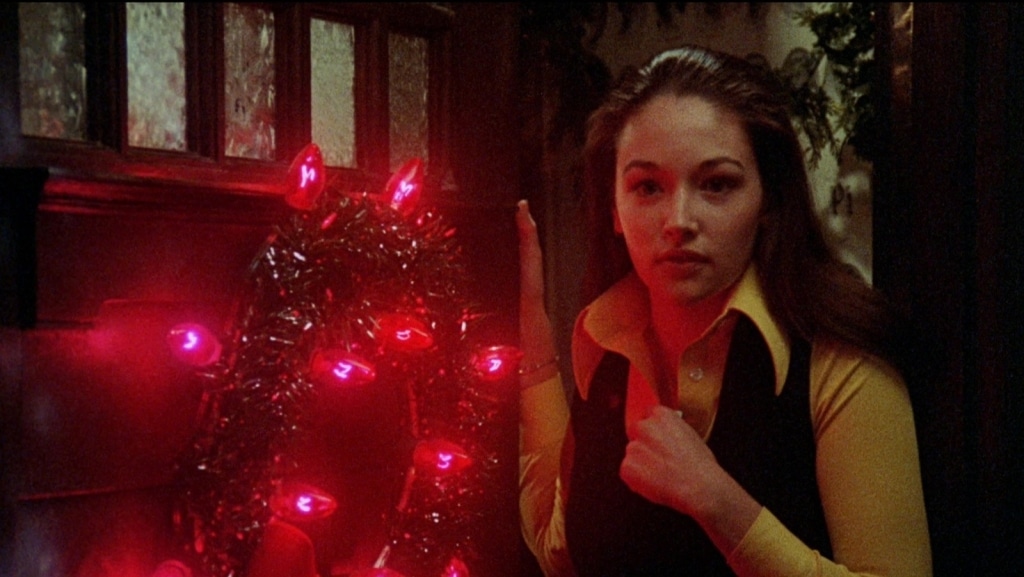
At the start of the film, their sorority house is lit up with Christmas lights that should act as hopeful beacons in the dark night. The sound of the chilling wind that pervades the film, the solemn holiday carolers, and the murderer’s heavy breathing as he approaches the house combine to serve viewers an entirely unsettling opening.
Initially, we’re stuck out in the cold, isolated, and peeping in the windows just like the murderer. We are seeing through the eyes of the killer, watching the holiday hijinks at the sorority house unfold.
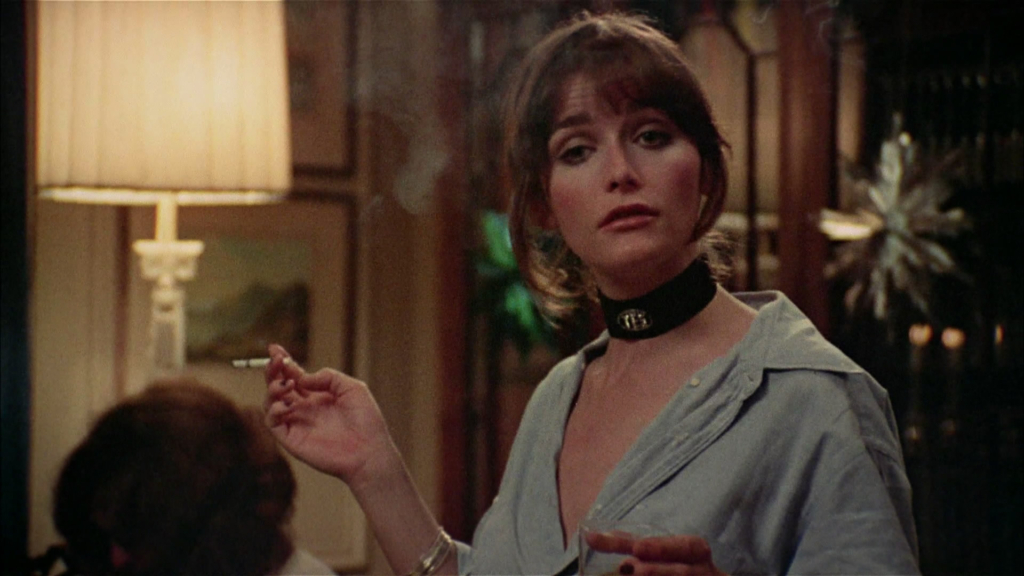
Inside, there’s Barb (Margot Kidder, who won the 1975 Canadian Film Award for Best Performance by a Lead Actress for this role) looking more elegant than any college student has a right to; angel-faced Jess (Olivia Hussey) in her iconic ghoulish sweater; Clare (Lynne Griffin), who is anxious about the rapist attacking women in their town; and good old Mrs. Mac (Marian Waldman), the irreverent house mother who hides booze in the toilet tank.
The seventies were not just a decade of sexy fun, though.
Screenwriter Roy Moore was inspired by a handful of dark events—both real and imagined—when he created the story for Black Christmas.
There was the pervasive urban legend of the babysitter getting creepy calls that were coming from a man inside the house with her and the children; there was Edmund Kemper, the “Co-Ed Killer,” who targeted female college students in California; there was teenager George Webster, who murdered his mother in Montreal; and Wayne Boden (also known as “The Vampire Rapist”), who assaulted and killed women in Montreal and Calgary. (Moore was Canadian, and Black Christmas was shot in Canada.)
Inside the cozy house, the sorority sisters’ revelry is interrupted by a phone call. Jess picks up and calls out, “It’s him again – the moaner!” The sorority sisters listen in horrified silence as the mystery caller makes lewd and explicit comments, complete with pig-like snorts.
They seem frozen, helpless to stop the abusive tirade, until Barb grabs the phone and calls him a “fucking creep.” The caller threatens to kill her, but Barb is nonchalant about this vicious promise.
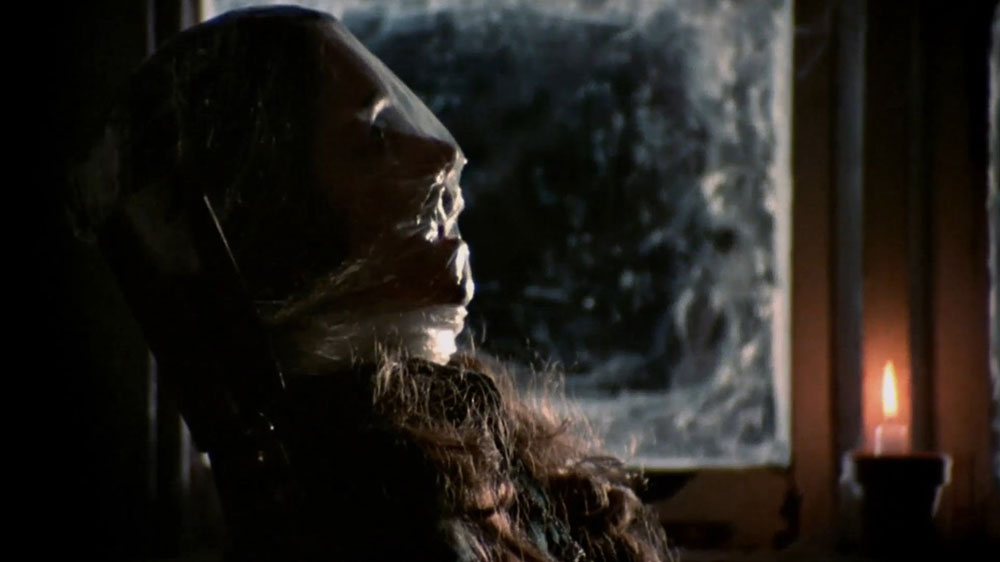
As easily as Barb is able to defend her sisters against this sexual harassment, she’s able to turn on nervous Clare, who is worried (rightfully, as it turns out) that Barb is egging on their mystery caller. She calls Clare a “professional virgin,” and Clare retreats to her bedroom, where she is promptly murdered. The caller is indeed inside the house! And he positions her corpse with a baby doll in her arms in a rocking chair in a freakish tableau of motherhood.
Chillingly, he also sings “Little Baby Bunting,” effectively ruining this sweet lullaby. The merrymaking in the house drowns out the sound of her final moments.
Black Christmas is a study in juxtapositions.
The killer’s mouthy breathing is mixed in with Christmas carolers in the opening scenes, and now innocent Clare is killed while the rest of the sisters bask in the holiday spirit. Even the very idea of the film – the mix of Christmas joy with horrific sexual harassment and murder – is a combination of extremes.
Clueless about Clare, the girls hold a Christmas party for kids at the sorority house. As with everything else in this film, the party scene has a disturbing shine to it. A male coed hired to play Santa curses and calls Barb a bitch, even with a child on his lap. Barb one-ups this wildly inappropriate behavior by feeding a little kid alcohol and joking about getting him “schnockered.”
All the bad behavior in Black Christmas makes it feel like we’re watching something we shouldn’t be watching, no matter how old we are.
The treatment of the kids at the party may be played for laughs, but it’s horrifying to imagine a college student encouraging a young child to drink alcohol. Who exactly is in charge here? Between the sorority mother, Mrs. Mac’s lack of responsibility, and the women’s naiveté, there does not seem to be a safety net to catch the sisters if they make dangerous decisions.
Jess, Barb, and the rest of the sisters are their own kind of at-risk kids. The tension in the film often grows out of the in-betweenness of where the sisters are in their lives: They’re not children, but they’re not yet truly adults.
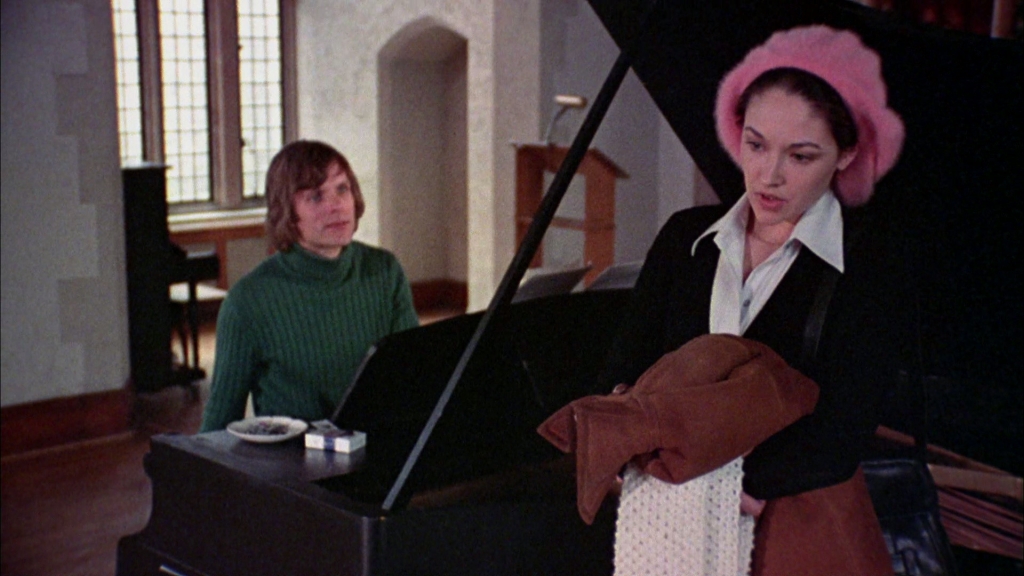
Jess, the sweet to Barb’s spicy, meets up with her music major boyfriend Peter (Keir Dullea), who is banging dissonant notes on the piano. Jess tells Peter that she’s pregnant and considering an abortion. Peter argues with her, revealing that he values his own needs much more than the feelings of his girlfriend.
Later, he declares to Jess that they’re getting married without any input from her. She tells him, “You can’t ask me to drop everything I’ve been working for and give up all my ambitions because your plans have changed.”
Peter responds by calling her a “selfish bitch” and threatening her, as an echo of how the caller responded to Barb earlier.
There is a thin line between the serial killer and Peter.
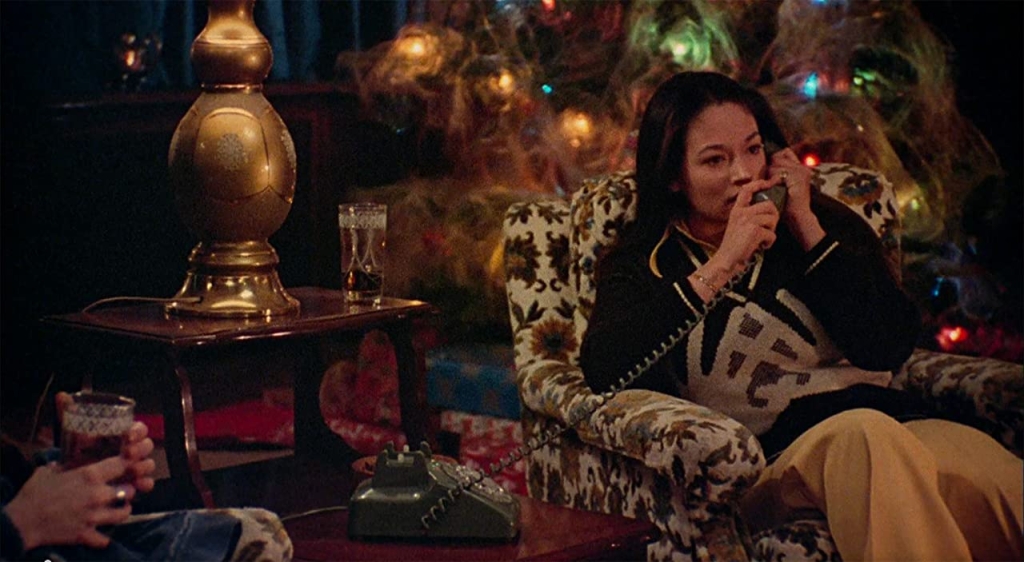
Sorority sisters like Jess are exercising their rights to live their lives as they see fit, while Peter is trying to enforce patriarchal ideas about men’s and women’s roles and attempting to overpower his girlfriend.
His quick slide into misogyny shows evil lurking beneath the surface – with the caller, it’s just more explicit.
Back at the sorority house, Barb is starting to realize Clare is missing, and maybe it’s her fault for being cruel to her. She deals with her guilt by getting very drunk. She plays at being tough and sophisticated, but she’s as vulnerable as anyone else.
Unbeknownst to Jess, several of her sisters (and Mrs. Mac) have been murdered. The wind outside becomes a howl as Jess is left by herself, sitting quietly by the fire, dread spreading across her face. She’s reported the obscene caller, and she’s awaiting his next call; for the police to trace the call, she must stay on the line with him as he says foul and increasingly confusing things to her.
In one heart-stopping moment, the caller moans to pregnant Jess, “Where’s the baby?” This, combined with Peter’s earlier threat, gives Jess the idea that her boyfriend could be the caller.
Then, in a chilling and unforgettable climax, an urban legend is brought to life in the world of Black Christmas.
Just like in the opening of the film, we get to see the sorority house lit up with Christmas lights from outside. But this isn’t the story coming full circle to a peaceful ending. Instead, the sound of the killer singing in the attic is heard above the ever-present wind, which has been howling throughout the house this whole time, showing that the girls are neither safe nor protected.
(Kenneth Heeley-Ray won the 1975 Canadian Film Award for Best Sound Editing in a Feature for Black Christmas.)
We wait with bated breath during the agonizingly long final shot of the sorority house, wondering if we’ll hear a scream or a crash, or anything to reveal Jess’s fate. But nothing happens, and we’re left to wonder.
All college students – including the women of Pi Kappa Sig in Black Christmas – exist within the liminal space between childhood and adulthood and between innocence and knowledge. The killer pushes the women in the film out of their childlike existence and into a holiday hell from which they will never escape.
The brutal suggestion that the final girl may not have survived adds an unsettling coda to this classic holiday horror film, making it a harrowing and haunting watch that never gets less scary with repeated viewings.







Follow Us!