


“The Terminator” remains a cultural touchstone—a cinematic juggernaut that redefined the genre and launched a legacy spanning decades.

No time to read? Click the button below to listen to this post.
“I’LL BE BACK!!” were the words uttered by Arnold Schwarzenegger that launched the movie The Terminator into popular culture. Directed by James Cameron, the film’s plot was based on Cameron’s screenplay. It was made for only $6 million. When it opened in October 1984, the film was a modest success, earning over $38 million in the U.S. and an additional $54 million in foreign markets.
Still, it became a cult hit and spawned three sequels. 1997, the United States Library of Congress selected the movie for preservation.
The film follows the exploits of the character Sarah Connor and her unborn son John, the future leader of the human resistance against the machines. Assisting in her war is the half-sperm donor, half-bodyguard Kyle Reese, who is revealed later in the film as John’s father and Sarah’s baby daddy without child support. The first in a series of time-traveling cyborgs, called Terminators, is sent from the year 2029 back to 1984 to kill Sarah’s unborn son.
This is not the first tale to feature a cyborg or machine sent from the future to wreak havoc on their human masters.
The most widely known version of the concept comes from Isaac Asimov’s short story, The Bicentennial Man, published in 1976. In that story, an android created as a simple servant to humans grows and learns over several centuries until he is so human-like that he is granted full human rights.
A recurring theme in Asimov’s stories was the idea of A.I. that can learn and evolve over time while being controlled by some distant human, called a singularity.
However, Asimov’s robots were not autonomous like those in the Terminator films. Instead, they were governed by three rules: 1) a robot may not harm a human, 2) a robot must obey any human order unless that order violates rule 1, and 3) a robot must protect its own existence.
Although Asimov’s fictional robots were constrained by rules to ensure the safety of humans, the same is not true of Terminator‘s cyborgs.

They would be allowed to go totally HAM on those punk bitches! The machines had no off switch and could learn and evolve independently. Although their actions were still predetermined and controlled by a superior force that some would call fate, the machines could adapt and improvise, making them dangerous and unpredictable.
In the film, the Terminator is a highly advanced cyborg, a machine that looks like a human. Its artificial skin can approximate living tissue and mimic the texture and color of the real thing. Terminators can blend into their environment and appear harmless until they are not, which usually ends with a bunch of dead humans.
In the following sequel, it would be revealed that a corporation, Cyberdyne Systems, used the remains of the destroyed Terminator to create the first model of what would become a powerful military technology.
In the near future, these technologies will be used to create the sentient AI, Skynet, and build machines that look just like humans and operate independently. These robots would be controlled remotely, but they would also be given independent objectives. In the Terminator universe, the machines would decide that humans were too destructive and a threat to their existence.
The second reason for the Terminator‘s popularity is the actor who portrayed the titular character.
Arnold Schwarzenegger was already an international film star before being cast as the Terminator.
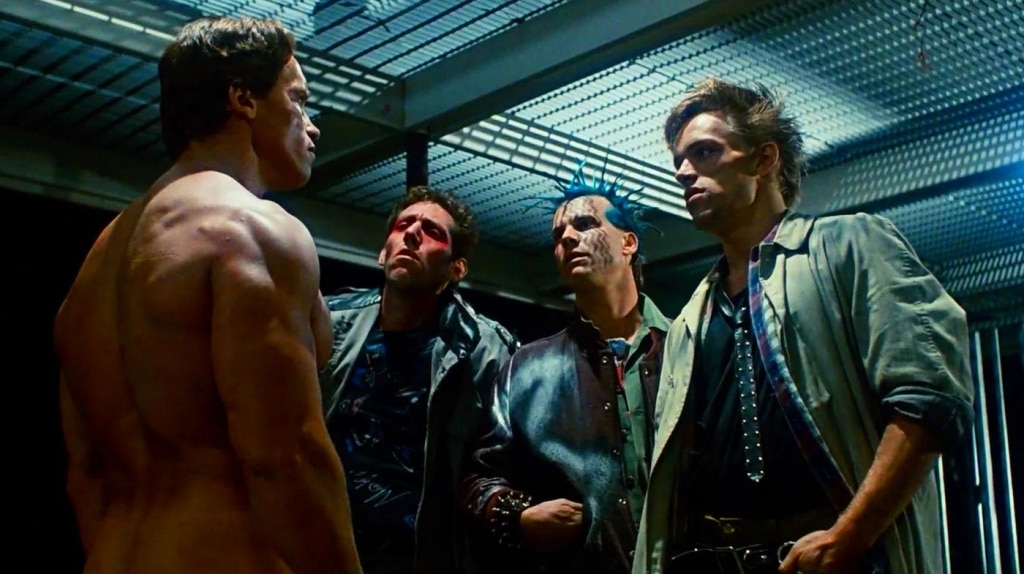
In 1977, the Austrian-born Schwarzenegger moved to the U.S. to become a professional bodybuilder. By the early 1980s, he had gained recognition as a film actor. After seeing the movie Conan the Barbarian, director James Cameron decided that the Austrian-born beefcake would be perfect for the role of the killer cyborg. The rest is history.
In 1984, Schwarzenegger was paid a salary of $75,000, which adds up to over $4,400 per word. Adjusted for inflation in 2022, the $75,000 would be just about $214,000 today.
Of course, he isn’t the only star attraction. Equally pivotal to the film’s success is the actress who played Sarah Connor, Linda Hamilton.
Hamilton made her professional acting debut at age 23 with a small part in the 1979 drama Night-Flowers. She then spent the next eight years working in minor roles on television. Her breakthrough came when she landed a lead role in the 1984 supernatural slasher film Children of the Corn, a horror film based on Stephen King’s short story.
The role of the Terminator’s target, Sarah Connor, was Hamilton’s big break. After starring as Sarah Connor, she was catapulted to stardom.
Hamilton went on to appear in many successful movies, including the action film T2: Judgment Day in 1991 and Dante’s Peak in 1997.
In addition to the strong performances, Terminator was widely praised for its special effects.
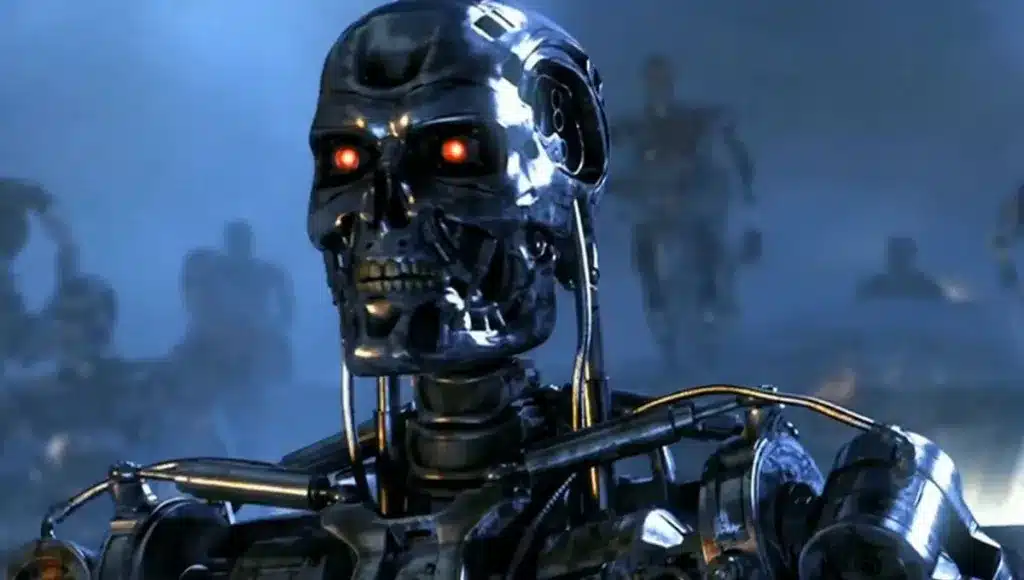
This included detailed robotic designs and the use of a digital morphing system.
Digital morphing is the process of taking two or more images and blending them together into one composite image. For example, a person’s face can be superimposed onto a robot’s body. The use of digital morphing has become very popular in movies, television shows, and commercials to this day.
Another thing that set The Terminator apart from other sci-fi action films of its time was its compelling storyline and characters. We follow Sarah Connor, played by Linda Hamilton, on her journey from being an ordinary woman who can’t balance a checkbook to a badass revolutionary with the fate of the human race in her hands as she tries to escape the Terminator, saving herself and her unborn son.
Hamilton’s portrayal of Sarah’s transformation was believable and added depth to the character.
The film also explored the themes of fate and the dangers of technology. The idea of a future ruled by machines is a frightening one, and THE TERMINATOR highlights the consequences of humanity’s reliance on technology.
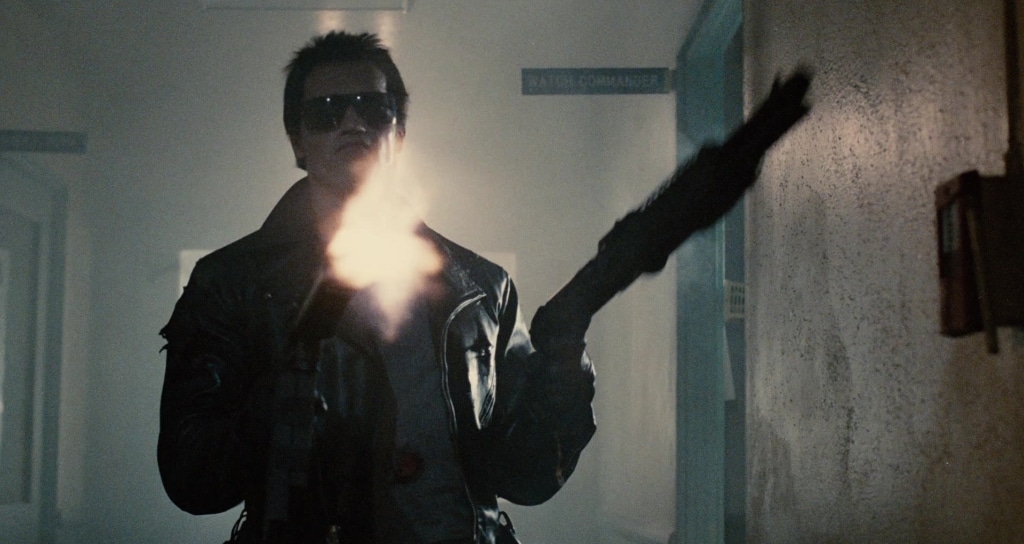
One of the most impressive aspects of the film is its ability to entertain still and captivate audiences 40 years after its release. The film’s pacing is perfect, keeping the audience engaged from start to finish. The soundtrack, composed by Brad Fiedel, also adds to the tension and intensity of the film.
In conclusion, The Terminator is a must-see for any action or science fiction film fan. Its groundbreaking special effects, compelling storyline, and iconic characters make it a timeless classic.
If you’re the only person on Earth who hasn’t seen it, do yourself a favor and watch it now. You won’t be disappointed.
5 OUT OF FIIVVVEE!!












Follow Us!