


Celebrating 40 years of sleepless nights, “A Nightmare on Elm Street” remains a groundbreaking horror masterpiece that redefined the genre.
No time to read? Click the button below to listen to this post.
Wes Craven’s captivating creation, A Nightmare on Elm Street, remains a cult favorite forty years later. It remains one of the most influential and culturally significant horror films of all time. Its innovative concept, terrifying antagonist, and rich themes elevated the slasher genre while cementing its place as a cornerstone of horror cinema.
On a modest 1.1 million dollar budget, Elm Street earned over 57 million, leaving audiences trembling in their seats worldwide.
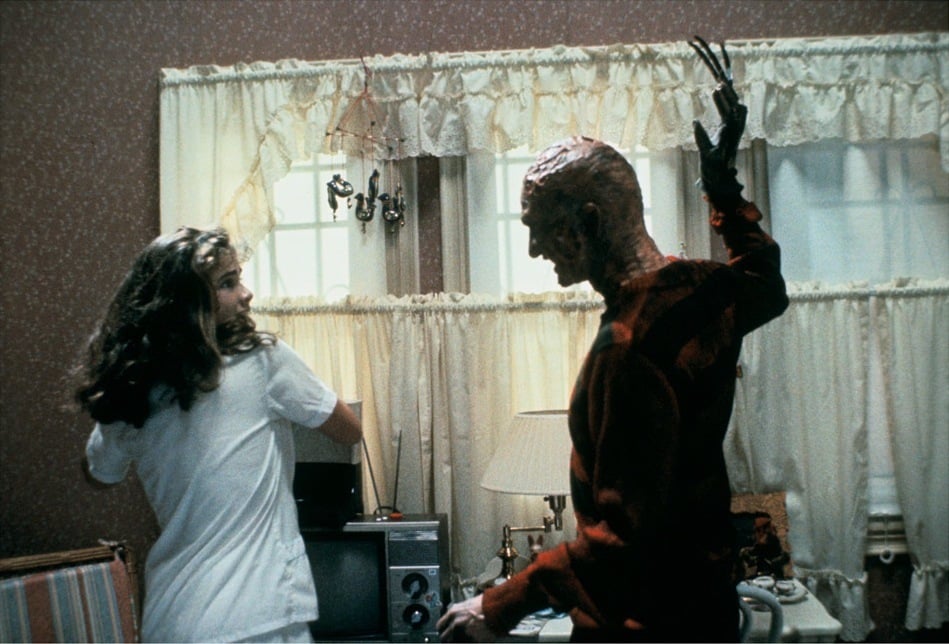
The film’s premise—a killer who stalks his victims in their dreams—is an ingenious departure from traditional slashers. Freddy Krueger (played by Robert Englund) isn’t bound by physical rules, making him an omnipresent, inescapable threat. This blending of supernatural horror with psychological terror introduced a new kind of fear, where even sleep—a universal human necessity—becomes dangerous.
At its core, A Nightmare on Elm Street explores complex, deeply unsettling themes, including ideas of guilt and revenge, trauma and repression, teen angst and isolation, and fear of mortality.
Elm Street debuted at a time when the slasher genre was dominated by formulaic entries. Its innovation revitalized the genre and proved that slashers could be more than blood and guts—they could tell stories rich in lore, psychology, and imagination.
Freddy Krueger’s dark charisma made him an instant icon. Unlike silent killers like Michael Myers or Jason Voorhees, Freddy had a distinct personality: sadistic, witty, and grotesquely theatrical. His burned visage, razor glove, and striped sweater became symbols of horror culture.
Of course, Freddy’s popularity is owed in no small part to Robert Englund’s iconic portrayal of the dream demon—one of the most memorable performances in horror history.
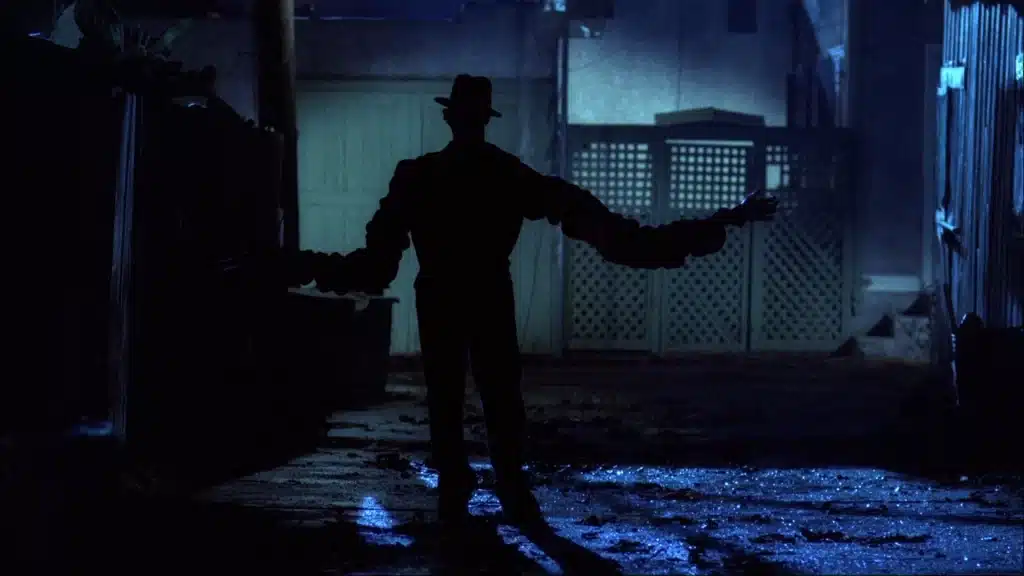
Englund transformed Freddy into a unique villain who was not only terrifying but also darkly charismatic. His interpretation elevated the character beyond the typical silent killers of the slasher genre, making Freddy a pop culture icon.
Englund infused Freddy with a sinister glee, blending malice with morbid humor. His exaggerated movements, menacing gestures, and gleeful sadism gave Freddy a presence that was both terrifying and perversely entertaining. Englund gave Freddy a theatrical, almost vaudevillian quality. His sharp, mocking one-liners and grotesque playfulness made him a unique antagonist. Though heavily made up, Englund’s expressive eyes and facial movements shone through, adding a layer of humanity to the monstrous Freddy. This nuance allowed audiences to be both repulsed by and fascinated with him.
Before becoming Freddy Krueger, Robert Englund was a working actor primarily known for supporting roles in television and film. He worked steadily in TV series and movies throughout the 1970s and early 1980s, often playing sensitive or quirky characters. He appeared in episodes of shows like Starsky & Hutch and CHiPs. Englund trained as a classical actor, which contributed to his ability to bring depth and flair to Freddy.
He was most recognized for his role as Willie, a kind-hearted alien in the science fiction TV miniseries V (1983). Willie’s gentle and sympathetic nature made him a fan favorite, but it was a far cry from the monstrous Freddy Krueger. Englund’s role as Freddy was a stark departure from the “nice guy” or soft-spoken characters he was previously known for.
Prior to Freddy, he was a respected character actor but not a household name. but Elm Street launched him into global recognition.
He would go on to reprise the role of Freddy in seven official sequels, becoming synonymous with the character. While this solidified his legacy, it also typecast him within the horror genre. But Englund happily embraced his status as a horror icon, appearing in numerous genre films, including Wishmaster (1997) and 2001 Maniacs (2005), and becoming a beloved figure on the convention circuit.
However, Englund isn’t the only reason for the film’s shattering success.
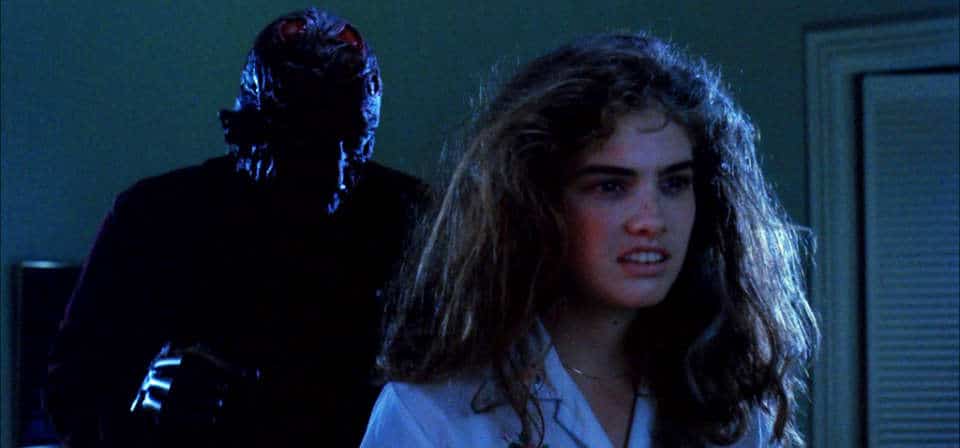
Heather Langenkamp’s portrayal of Nancy Thompson in Elm Street is pivotal to the film’s popularity and enduring legacy. As one of the most beloved and iconic final girls in horror history, Nancy’s character deviates from the genre’s stereotypes, bringing intelligence, courage, and heart to her battle against Freddy Krueger.
Lagenkamp was only twenty years old in the first film and had appeared as an extra in Francis Ford Coppola’s The Outsiders (1983) and Rumble Fish (1983). Her first major role was Nickel Mountain (1984), but it was her role as Nancy that earned her a reputation as a formidable Scream Queen and cemented her place in popular culture.
Nancy Thompson redefined the final girl archetype in slasher films. Whereas many final girls were reactive, Nancy was proactive and resourceful. She took control of her situation, researching Freddy’s backstory and devising a cunning plan to confront him. Her agency stands in sharp contrast to the “helpless victim” trope. She doesn’t survive by chance; she survives through determination and intelligence. Her use of logic and critical thinking elevates her as one of the most capable final girls in horror history.
Langenkamp plays Nancy with vulnerability and humanity, making her relatable. She experiences fear, grief, and doubt but never lets those emotions defeat her.
Nancy resonates deeply with audiences because she feels real. She isn’t a superhero or an invincible figure—she’s an ordinary teenager placed in an extraordinary situation. Fans admire her for being a role model of resilience and courage. Her importance also lies in how she breaks stereotypes and embodies empowerment.
The tension between Nancy and Freddy is the heart of A Nightmare on Elm Street, elevating it above other slashers of the era. Their dynamic is uniquely engaging, giving us a battle of wits with personal stakes that make Nancy’s eventual triumph feel earned and deeply satisfying.
Despite a modest budget, the film was innovated for its special effects.
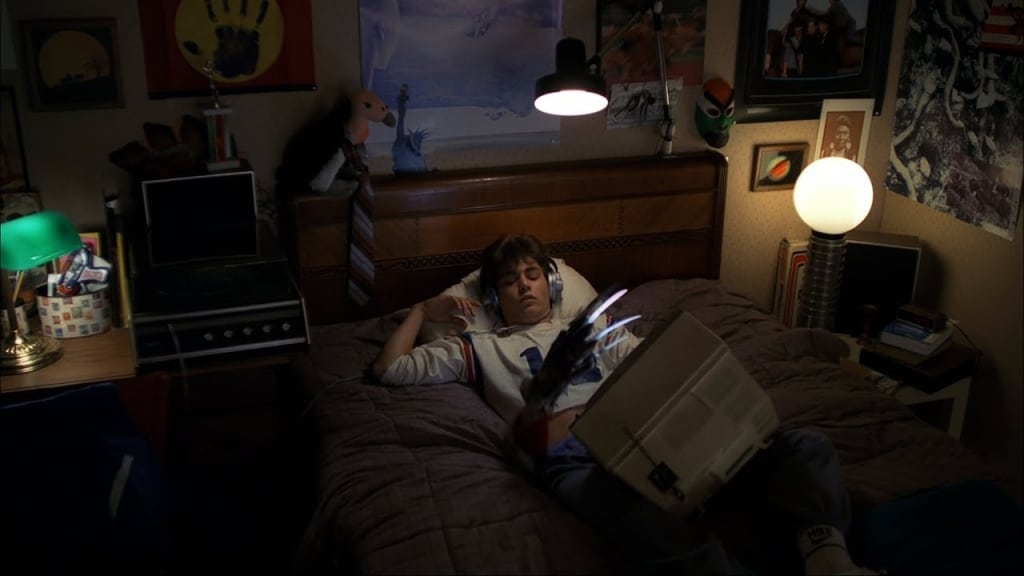
Craven’s vision created groundbreaking sequences, like the iconic “blood geyser” and the gravity-defying bedroom scene. These moments redefined what was possible in low-budget horror filmmaking.
The film’s unexpected success saved New Line Cinema from bankruptcy, earning it the nickname “The House That Freddy Built.” Elm Street spawned a successful franchise, including sequels, a crossover (Freddy vs. Jason), and a reboot, solidifying its status as one of the “Big Three” alongside Halloween and Friday the 13th.
Among the slasher titans, however, A Nightmare on Elm Street stands out for its creativity and psychological depth. Freddy’s supernatural abilities and rich backstory made him more complex than most genre villains. The franchise also showcased Craven’s willingness to innovate, as seen in New Nightmare (1994), which introduced meta-horror elements years before Scream.
Elm Street is arguably Wes Craven’s most iconic work, even among his impressive filmography (The Last House on the Left, The Hills Have Eyes, Scream). While Scream cemented his legacy as a master of meta-horror, Elm Street was the film that defined his unique ability to combine visceral scares with cerebral storytelling. It was also a precursor to his experimentation with the boundaries of horror, as seen later in New Nightmare.
The film’s influence can also not be overstated.
Craven’s dream sequences inspired countless filmmakers to experiment with surreal imagery and non-linear narratives in horror. Freddy paved the way for antagonists who were more than human, blending psychological terror with physical horror. Freddy’s quippy, theatrical presence set a precedent for horror villains with larger-than-life personalities. Elm Street hinted at the meta-commentary Craven would later perfect in Scream and New Nightmare, showing his ability to evolve the genre.
In a genre often dismissed for being formulaic, A Nightmare on Elm Street demonstrated the power of originality and vision, ensuring its place as one of the greatest and most influential horror films of all time.







Follow Us!