

Microbudget madness meets Clive Barker’s shadow in Joe Hollow’s grimy and ambitious debut, “Flesh of the Unforgiven”.
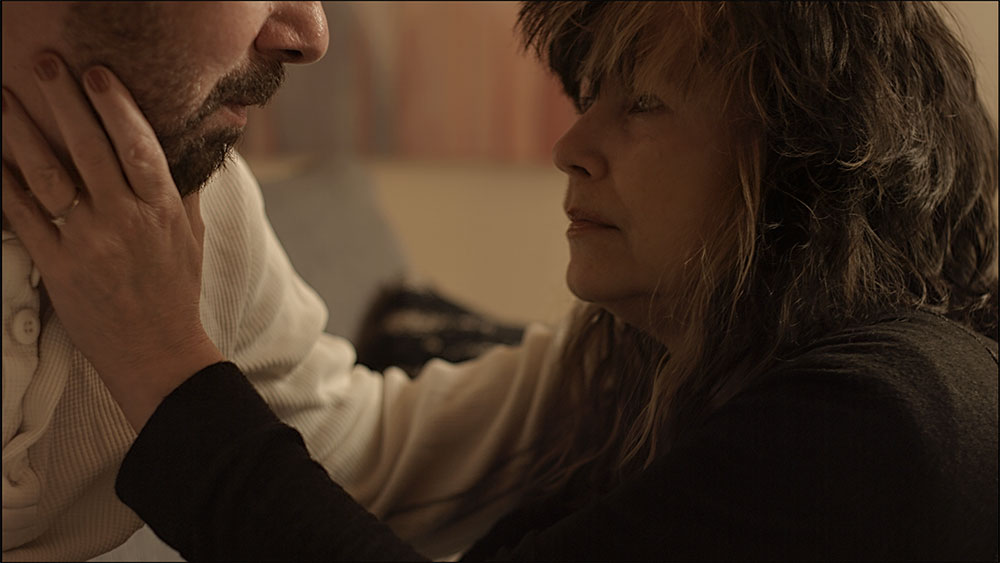
Jack and Sienna’s crumbling marriage at the heart of Flesh of the Unforgiven
No time to read? Click the button below to listen to this post.

When sitting down to watch a genuinely independent, micro-budget horror film, you need to make peace with its rough edges. The lack of polish is part of the pact. What you gain in return is often the raw creativity and restless spirit that corporate horror can’t buy.
Joe Hollow’s Flesh of the Unforgiven is one of those films. It’s messy but fascinating, flawed but brimming with unfiltered imagination. It’s a piece that demands forgiveness for its narrative stumbles but rewards you with atmosphere, audacity, and more than a few inspired chills.
Hollow, who wears nearly every hat—writer, director, editor, star, composer—understands his limitations and leans into them.
The result is a low-tech, grimy aesthetic that feels intentional rather than accidental. It’s often dirty, unsettling, and oddly hypnotic.
At its heart, Flesh of the Unforgiven is a story of guilt and grace.

Jack Russo (played by Hollow) is a writer shackled by creative paralysis and the weight of a faltering marriage. Hoping for reconciliation, he and his wife Sienna (Debbie Rochon) retreat to a secluded cabin.
But their fragile détente splinters when a mysterious VHS tape arrives for Jack, ostensibly sent from his impatient publisher who is demanding a treatment in three days. The tape is filled with disturbing content, including a masked sadist and his seemingly willing victim.
From there, the film slips into fractured territory where hallucination bleeds into reality. The couple’s love story begins to collapse under the weight of punishment, penance, and long-buried sin.
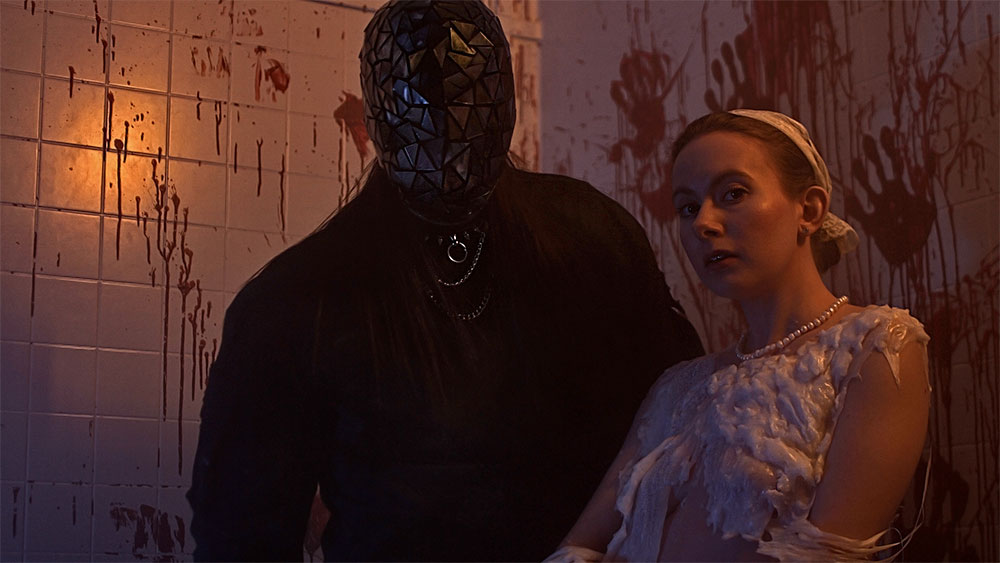
Sienna is haunted by visions involving an ominous figure called the Death Dealer.
Her haunting dreams make sleep difficult, compounded by her desperate desire to reconnect with Jack and earn his forgiveness for her trespass against him… something he’s not quite ready to offer her.
Meanwhile, Jack is falling further down the rabbit hole. He avoids Sienna by pretending to bury himself in work, even though the words won’t come, and tries to drown his sorrows in alcohol. He’s asked Sienna for patience, but her yearning for closure makes it hard to give Jack the time and space he needs, furthering their rift.
A parallel thread follows Vivienne (August Kyss), a young woman broken by personal tragedy, who teeters at the edge of despair until she finds herself drawn into the Death Dealer’s orbit.
The film’s greatest asset is indie horror icon Debbie Rochon.
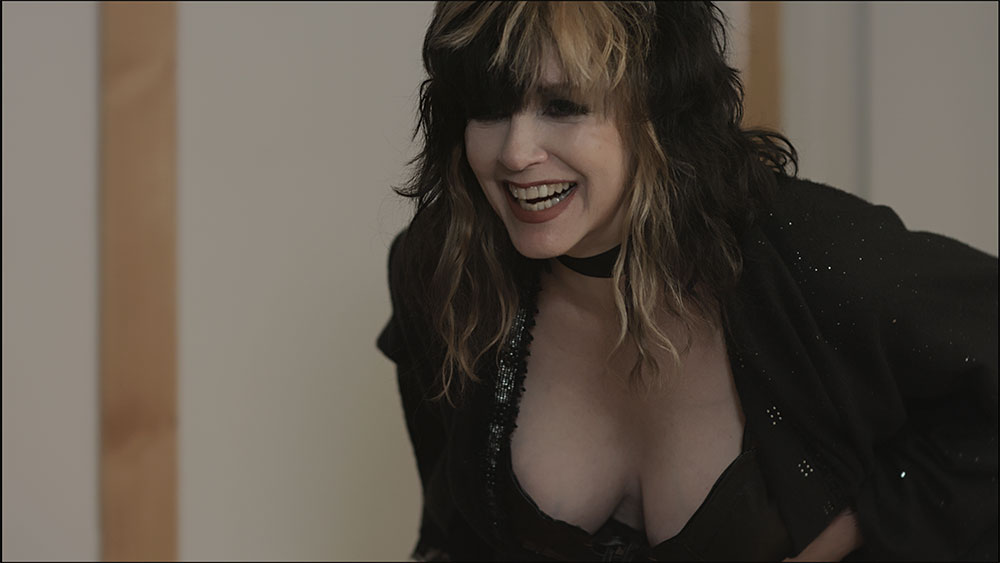
Decades into her fruitful career, she proves she’s still lethal on screen—shifting from heartbroken wife to sultry siren to something far more terrifying. Rochon embodies a woman desperate for forgiveness, aching for love, and grappling with the shadows of her mistakes.
Her performance elevates the film, injecting it with emotional stakes that extend beyond the gore.
Hollow, as Jack, carries the weary everyman burden convincingly. His performance swings between empathetic and callous, capturing a man who is drowning in mistrust and regret. Behind the scenes, Hollow is equally omnipresent—composing music, performing on the soundtrack, and embodying both the Death Dealer and the masked sadist Diablo in the sinister VHS sequences.
Adriana Uschishiba adds a jolt of anarchic fun as a playful demon with Harley Quinn energy, while August Kyss quietly steals scenes as Vivienne, grounding the surrealism with authentic grief.
The VHS-inspired sequences are intentionally jarring: scratchy, grimy, and laced with sadistic menace.
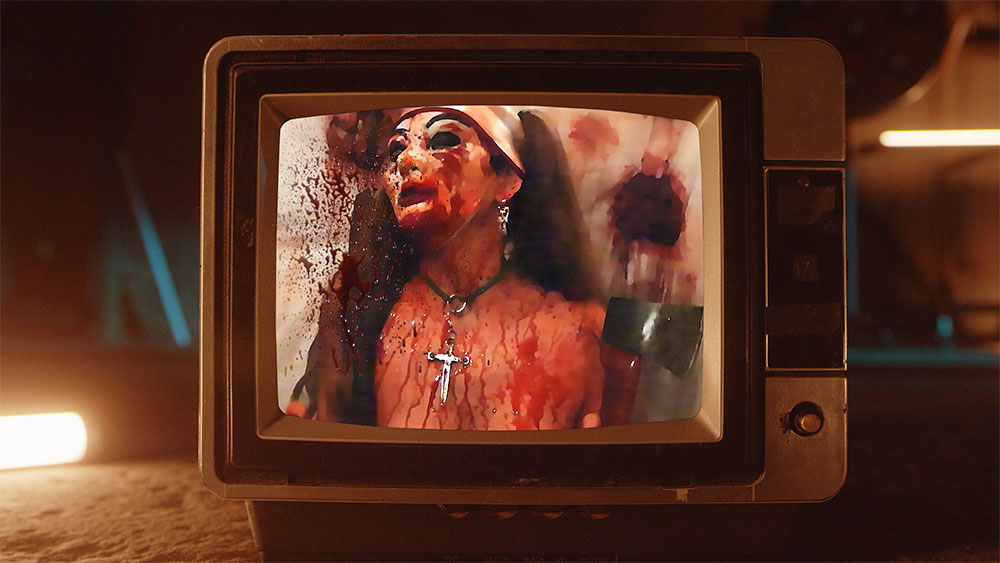
Many scenes feel more like mood pieces than story drivers, designed to disorient the viewer rather than explain. That experimental approach may frustrate those looking for linear storytelling, but it effectively extends the film’s fractured psychology.
Thematically, Flesh of the Unforgiven borrows from the world of Clive Barker.
Like Hellraiser, it dances with sadomasochism, obsession, temptation, and the blurred line between salvation and damnation. Pain and pleasure intertwine, the sins of flesh weigh heavily, and forgiveness becomes as elusive as grace itself.
Hollow’s Death Dealer is less a monster than a perverse priest. He offers his victims a twisted form of redemption, demanding they confront their deepest fears in exchange for rebirth.
This is not a film for everyone. Its experimental form prioritizes visuals and soundscapes over clarity and dialogue. Narrative threads sometimes buckle under the weight of abstraction. At times, it feels like a fever dream, which is both intoxicating and frustrating.
For some, the film’s narrative challenges will be a dealbreaker. For others, this is just part of the film’s indie charm.
Flesh of the Unforgiven is raw and uncompromising.
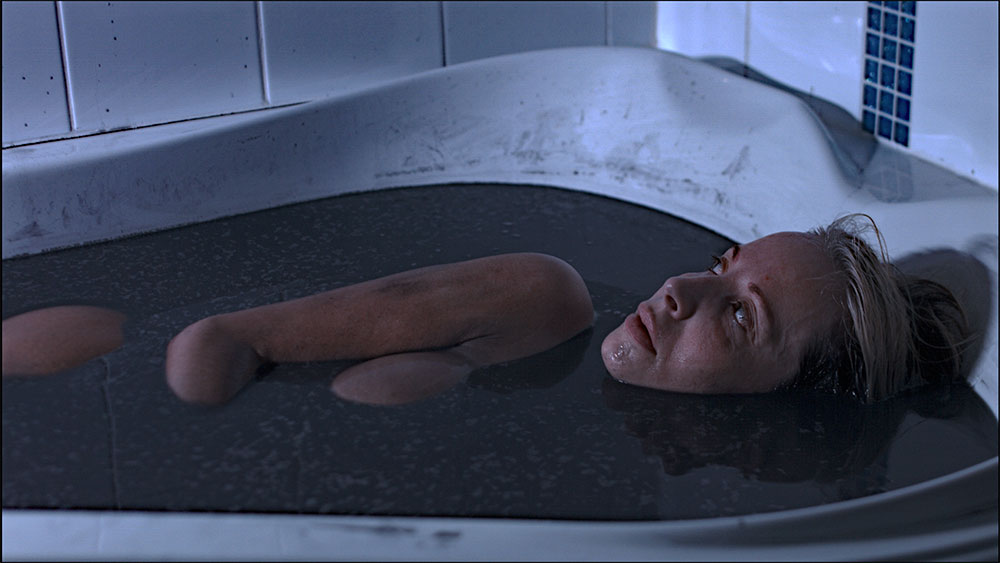
August Kyss as Vivienne, struggling with grief in Flesh of the Unforgiven
It’s a passion project made with limited resources but endless nerve. For all its rough edges, it radiates commitment. You can feel Hollow bleeding into every frame, determined to carve a piece of his vision into the horror landscape.
It is also not family-friendly fare. From the opening scene, which mixes nudity, gore, and NSFW imagery, Flesh of the Unforgiven stakes its claim in the shadows. It never veers fully into extreme horror or torture-porn territory, but it flirts with exploitation enough to unsettle.
It may not be perfect, but it’s worth seeking out for fans of microbudget horror, devotees of Debbie Rochon, or anyone hungry for a grimy, unpolished riff on Hellraiser’s themes of sin and salvation. It’s a small miracle that a film like this exists at all, and it’s one worth celebrating.
Shot in twelve days in the dead of a Canadian February for only $8k, Flesh of the Unforgiven proves that necessity can still be the mother of invention.
Flaws aside, it is a film of ambition, heart, and guts—moody and visceral.
Overall Rating (Out of 5 Butterflies): 3
Flesh of the Unforgiven is available to stream on Amazon and Apple TV. Look for it on Tubi TV in the coming weeks.








Follow Us!