

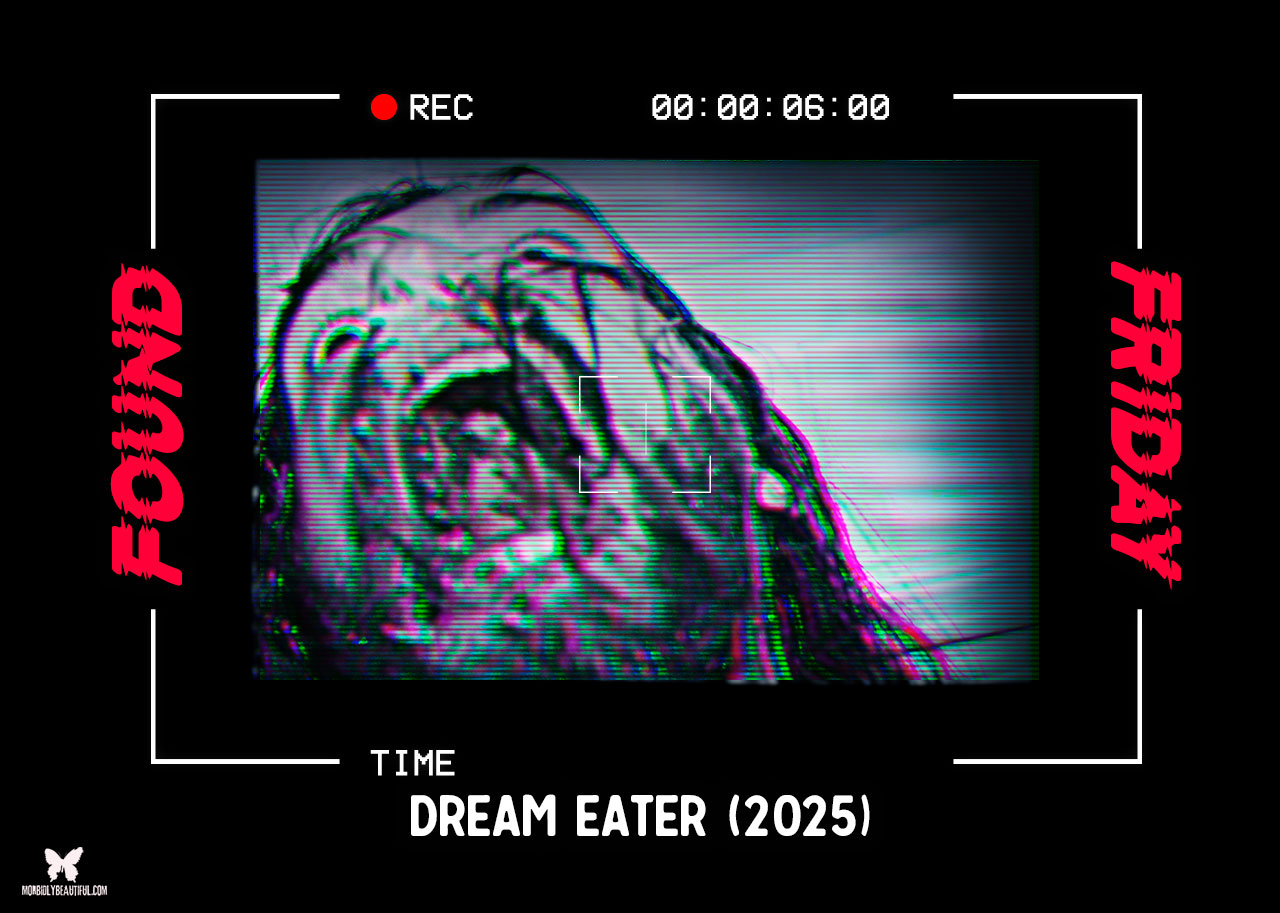
“Dream Eater” turns a remote winter getaway into a waking nightmare, blending found footage terror, parasomnia, and cult-laced cosmic horror.
No time to read? Click the button below to listen to this post.

Sleep disorders are already horror-adjacent. There’s something inherently unnerving about the idea that your body can get up, move around, and do things you don’t remember.
Found footage has been trying to mine that fear for years, with varying degrees of success. But Dream Eater, written and directed by Jay Drakulic, Mallory Drumm, and Alex Lee Williams, leans all the way into that dread. And then drags it into the realm of cults, cosmic nightmares, and the ugly ways we turn trauma into content.
It’s the kind of found footage film that feels familiar on the surface, yet sneaks up on you with a few truly nasty ideas.
Dream Eater opens with a simple but effectively chilling cold open.
We’re dropped into a horrifying 911 call against a black screen. A woman is hysterical. A man is hurt. We hear his screams in the background, raw and panicked. She explains that her boyfriend has a history of sleepwalking, but never like this. And then he screams something that instantly needles under your skin:
“He’s trying to get in the house!”
It’s a goosebump moment that sets the tone and puts viewers on edge, while quickly establishing there may be something even more frightening at play than a potentially dangerous sleep disorder.
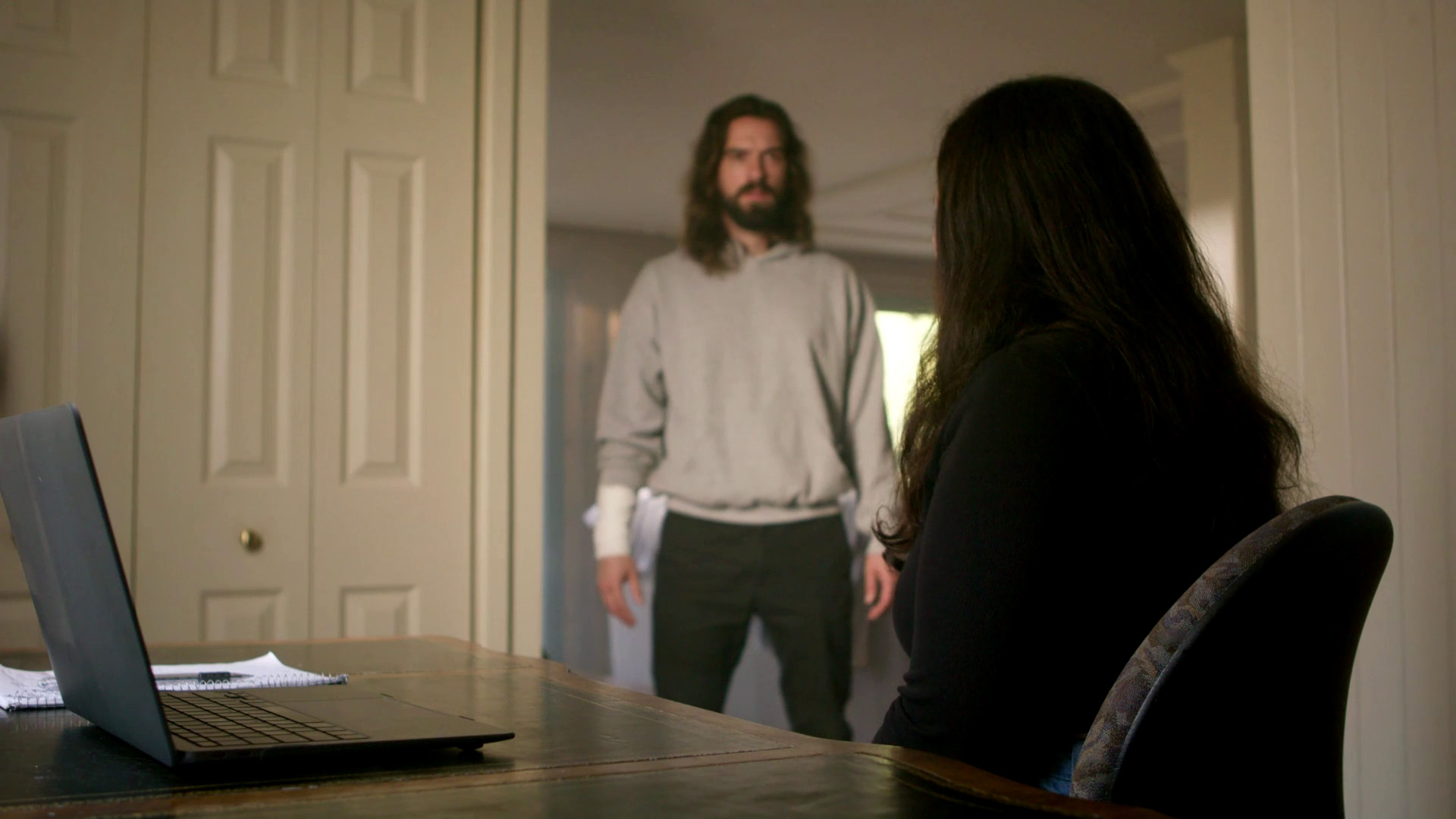
Cut to one week later. That man is Alex (played by writer-director Alex Lee Williams), and the woman is his girlfriend Mallory (played by writer-director Mallory Drumm), a documentarian who’s been asked by Alex’s doctor to record his increasingly worrisome episodes. As they prepare for a 10-day birthday escape to a remote rental cabin, Mallory nudges Alex into talking about his latest parasomnia incident on camera.
This forces an immediate wedge in their already shaky relationship, as Mallory is not just playing the role of Alex’s supportive partner but also as someone who’s been tasked with documenting a condition that scares the hell out of them both.
The drive to their destination is laced with dread.
An unnerving whistling motif winds through the score as the couple travels across a bleak, snow-covered landscape to their “beautiful” but undeniably isolated cabin.
When Alex jokes that it’s like their “very own Overlook,” the reference is playful. But it also feels like the film is nodding to the long tradition of “cabin-in-the-snow” horror and quietly signaling where we’re headed.
From the moment they arrive, something’s off.
A note from the owner apologizes for periodic rolling blackouts and explains how to reset the water heater and breaker in a low, claustrophobic crawlspace beneath the house. Alex immediately complains about the accommodations, about the cold, about the strain.
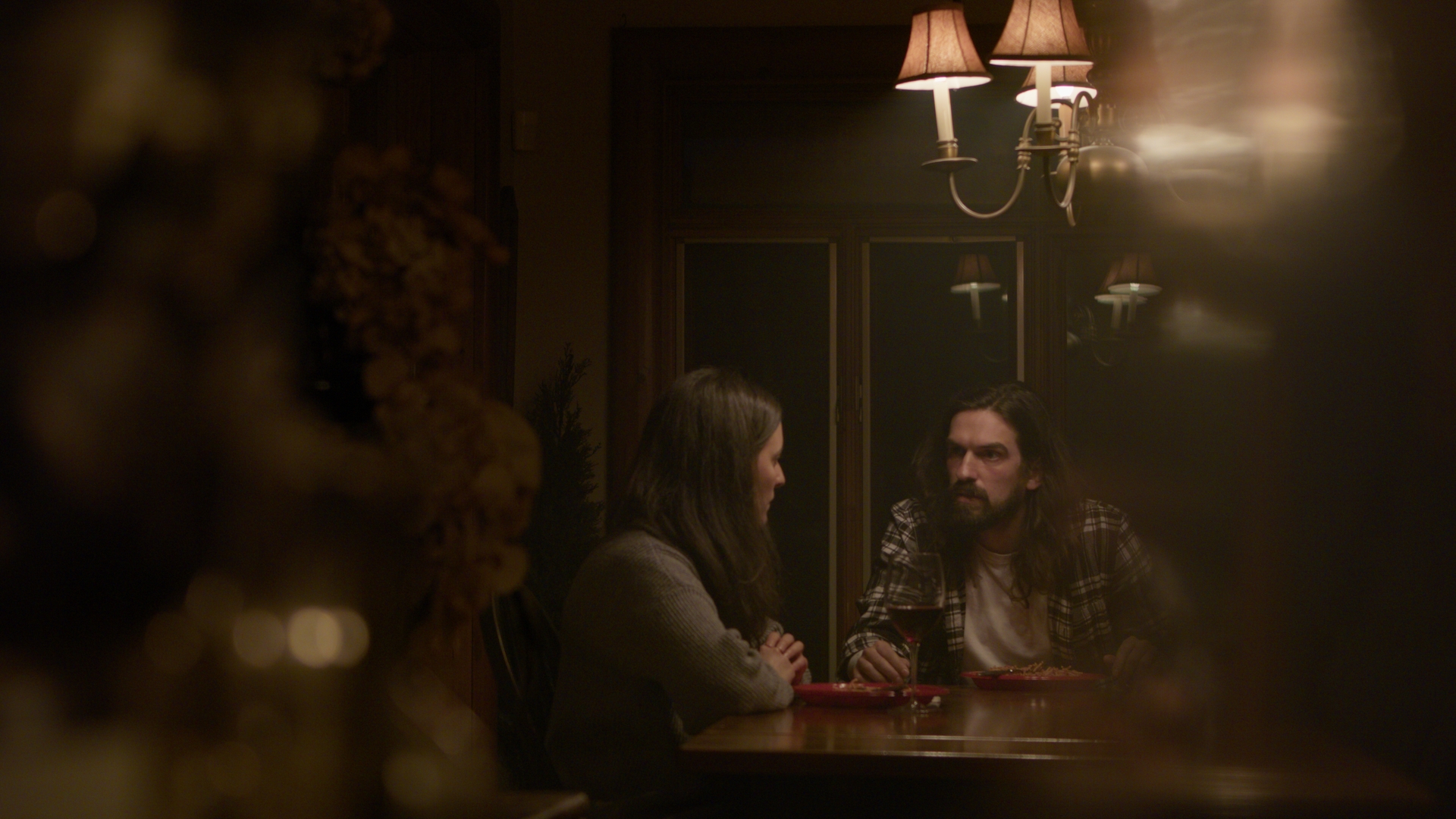
The film repeatedly reminds us that this couple is financially strapped and emotionally threadbare. This trip, recommended by Alex’s therapist, is supposed to be a reset. Instead, it feels like a pressure cooker.
Mallory is under instructions to keep the camera rolling as much as possible. Alex’s parasomnia has become increasingly violent, and everyone—including his doctor—is afraid it’s only a matter of time before he hurts himself or someone else.
As the days and nights roll on, Alex’s dreams worsen, and the film slowly blurs the line between clinical sleep disorder and spiritual or supernatural attack.
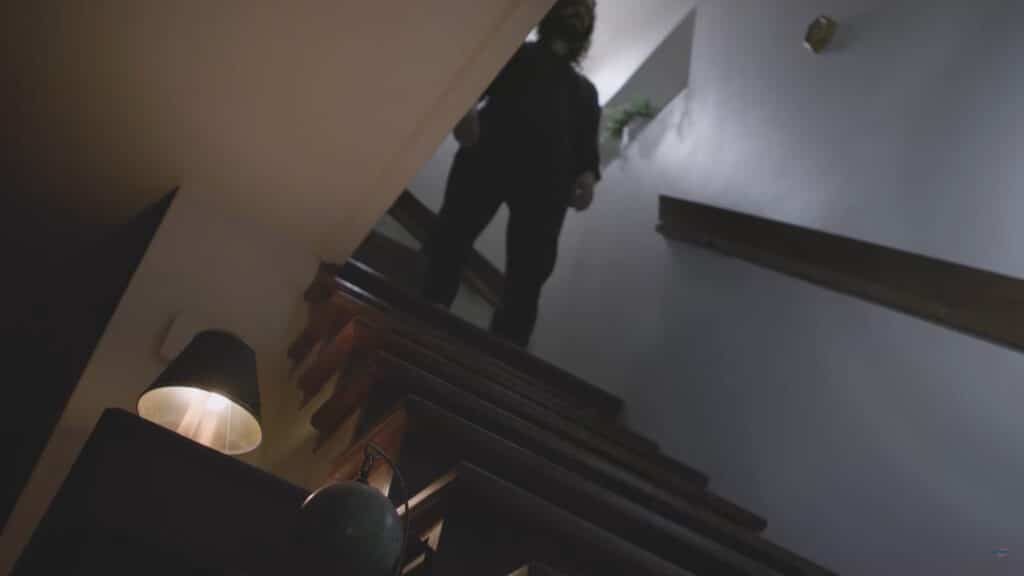
Alex starts to talk about a man beneath the house. About something that might have followed them. About images that feel Lovecraftian, vast and inhuman, intruding on his most vulnerable moments. When Mallory digs deeper, she finds other cases of parasomnia sufferers describing the same creature; the same presence; the same sense that something is feeding on them in their sleep.
That’s when Dream Eater stops being “just” a parasomnia movie and steps into full-on nightmare mythology.
It’s remarkable how much horror the film wrings out of simple setups and careful sound design.
The standout sequence happens when Alex, in the grip of an episode, wanders barefoot into the snow in the middle of the night. Pushed along by that now-familiar, disquieting whistle, he shuffles toward a shed, following a call only he can hear. Then he’s told—by something we can’t see—to turn off the light.
Suddenly, it’s pitch black.
We’re stuck in place as the audio does all the heavy lifting. A deep, gravelly voice, instantly evocative of Black Phillip in The Witch, begins to speak to Alex. It’s a brilliant example of how to maximize limited means.
No flashy creature effects, no overexposed monster reveal—just darkness, a terrified performance, and a voice that sounds like it crawled out of your subconscious.
One of Dream Eater’s savvyiest choices is making Mallory a skilled filmmaker, allowing every shot to look far better than found footage typically allows.
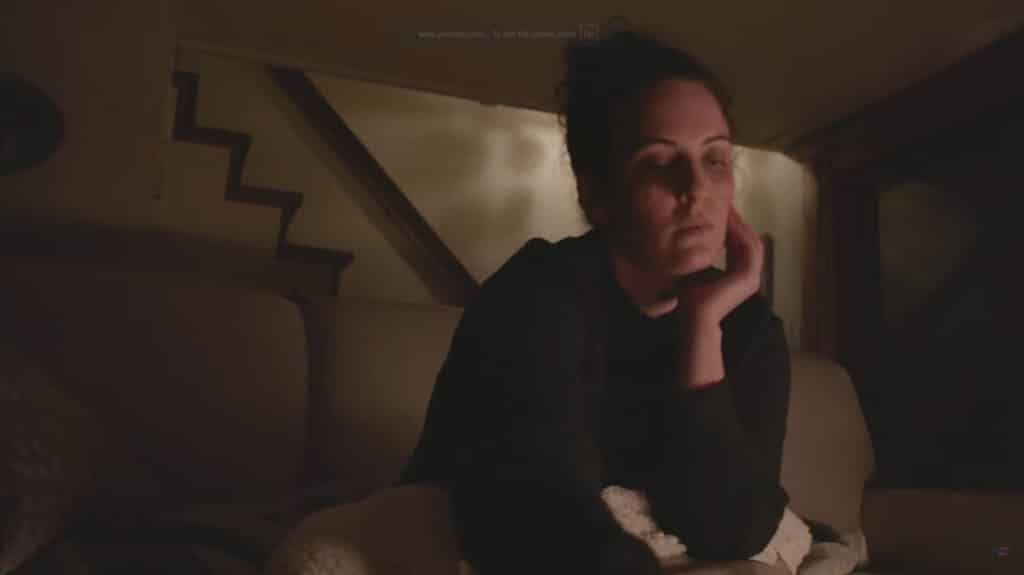
Why is someone always filming? Because Mallory has been explicitly told to treat Alex’s condition like an ongoing case study. Why does the footage look so composed? Because this is what she does: framing shots, capturing usable audio, thinking cinematically even in stressful situations.
The compositions are steady and intentional, the lighting is surprisingly strong, and the pacing of what gets captured versus what we only hear feels very deliberate.
As Mallory becomes more desperate to protect Alex, the story widens beyond the cabin, as the film layers on interesting lore and backstory that increase our unease.
The film nods at our current true-crime-obsessed culture with a plot point involving a low-rent Unsolved Mysteries-style show called UNRESOLVED MYSTERIES—a playful, pointed reminder of how easily people’s real suffering gets turned into bingeable content.
As the situation escalates and Alex becomes more threatening, the footage becomes increasingly fraught. The movie quietly asks: at what point does documenting someone’s pain become another way of consuming it? When does “we’re doing this to help” turn into “we’re doing this because we can’t stop watching”?
Williams and Drumm are carrying a lot here, both in front of and behind the camera.
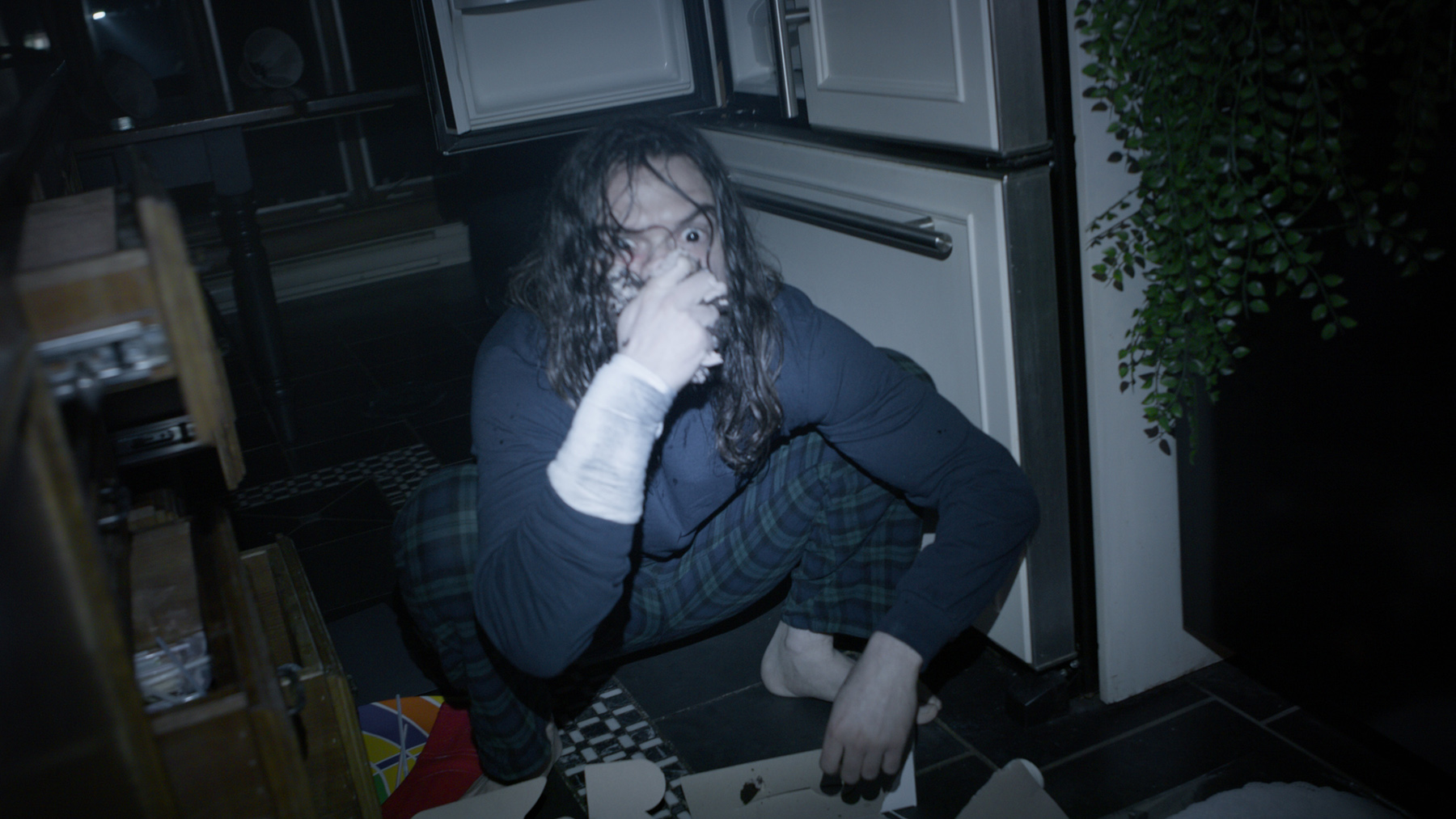
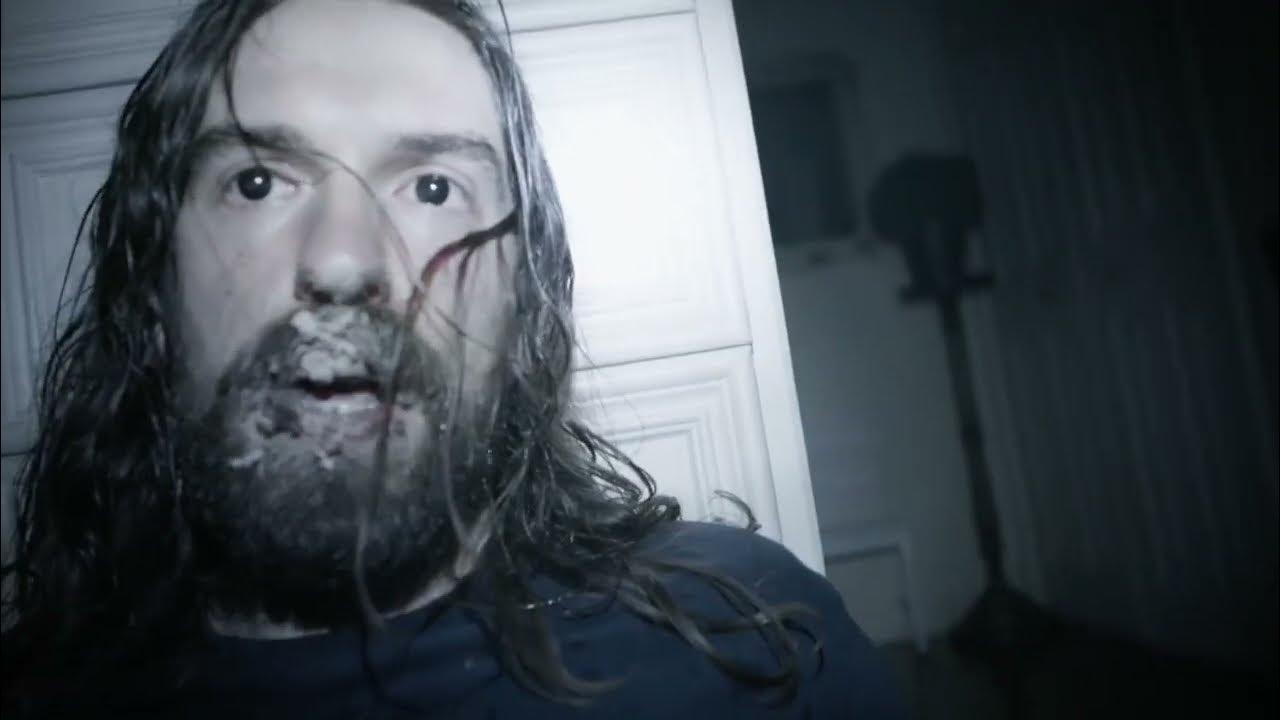
As performers, they’re sometimes stronger in concept than chemistry. Alex is written and played as someone who’s already prickly, defensive, and exhausted before the nightmare truly ramps up. That works well in the later possession sequences, where he becomes a deeply unsettling presence, all empty eyes and disassociated menace.
But it also means he’s rarely easy to root for, even before the entity fully asserts itself.
Mallory, meanwhile, is the emotional anchor. She’s stubbornly loyal, but increasingly frayed. Drumm plays her with a grounded, lived-in energy that makes it believable she’d stay far past the point most of us would. Still, the script doesn’t always give us a strong sense of who Alex and Mallory were before things got bad, which undermines our investment.
There’s also a sense of repetition that flattens momentum. You may feel the film is circling the same emotional beats a few too many times before pushing into the next escalation.
The upside is that when Dream Eater decides to step on the gas in the third act, it truly delivers.
Dream Eater doesn’t reinvent the subgenre, but it is a solid reminder of why the format works so well when handled with care.
Overall Rating (Out of 5 Butterflies): 3.5








Follow Us!