

From “Host” to “The Boogeyman”, Rob Savage’s career trajectory proves that creativity often thrives amidst chaos and challenges.
No time to read? Click the button below to listen to this post.
The phrase goes that necessity is the mother of invention.
It is easy, caught up in our now, to think of AI as the first real threat to human artistic creation, but fears of sterilizing art through mechanization have persisted for at least a few hundred years. While unease over the digitization of creative output does not quite have the same lineage outside of science fiction novels, the comfortably dark creative future that AI helps us to envision is an algorithmic nightmare of safe sameness.
Smooth sailing from here on out.
The Boogeyman (US, Rob Savage, 2023), an adaptation of the Stephen King story of the same name, received its theatrical release in June of 2023. Its director, Rob Savage, made two films in 2020 and 2021 that were very much a product of their time. That time, as most of us will remember, was the pandemic. While artists in an array of forms and genres tackled COVID and the society that was being molded by it, few embraced the practicalities quite as readily as the British filmmaker.
Horror movies, the haunted houses of metaphor, tended to deal with lockdown obliquely, such as in Ben Wheatley’s In the Earth (UK, 2021) or Chloe Okuno’s Watcher (US, 2022).
Savage, on the other hand, chose to tackle COVID in the most direct and practical way possible. His 2020 film Host portrays the absurdity of our pandemic lives matter-of-factly, but through its meager budget, Savage discovered a fresh take on horror that was less found footage and more ‘lived footage.’
We all lived footage then.
And so came the concept: a séance that occurs entirely on a sixty-minute Zoom call.
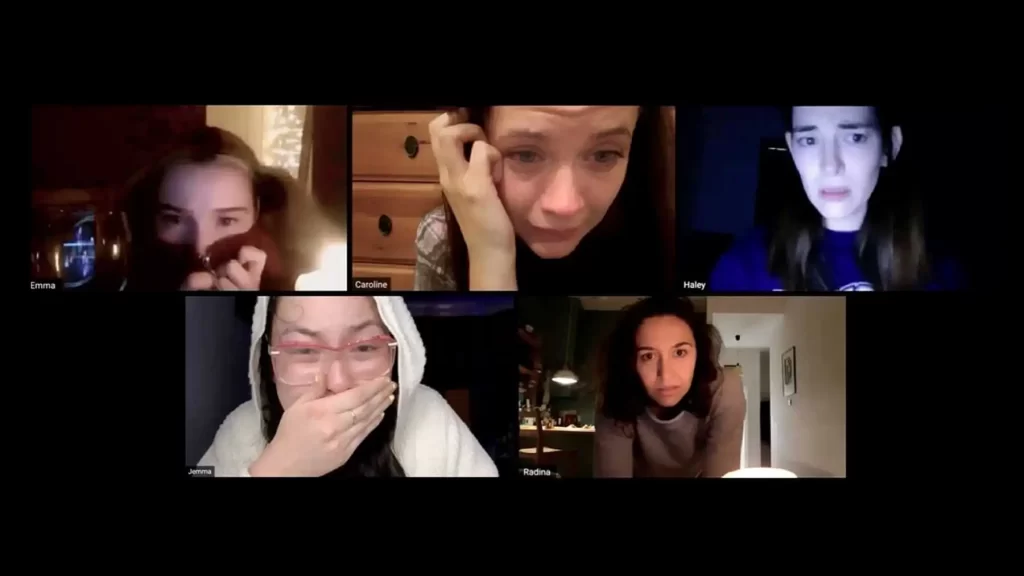
This leftfield pitch had two major benefits for Host. In the first instance, to quote a space captain, it had the virtue of never being tried, lending it an air of novelty that scared off the fatigue of predictability, an ennui to which the horror fan is especially susceptible.
Secondly, it guaranteed relatability – a rare type of shared world that, for those eighteen months, was as close to universal as possible.
By then, most of us had experienced awkward online meetings, infuriating lags, loss of connection, and even the strange tendency of people to sit so close to their cameras that you can spy their brains up their nostrils.
In other words, most of us had realized the shameful inadequacy of the virtual world for true social interaction, but it still mattered to us because it was our only choice.
(As a third bonus benefit, this melding of the technological and folkloric allowed for one of the wittiest horror movie titles around)
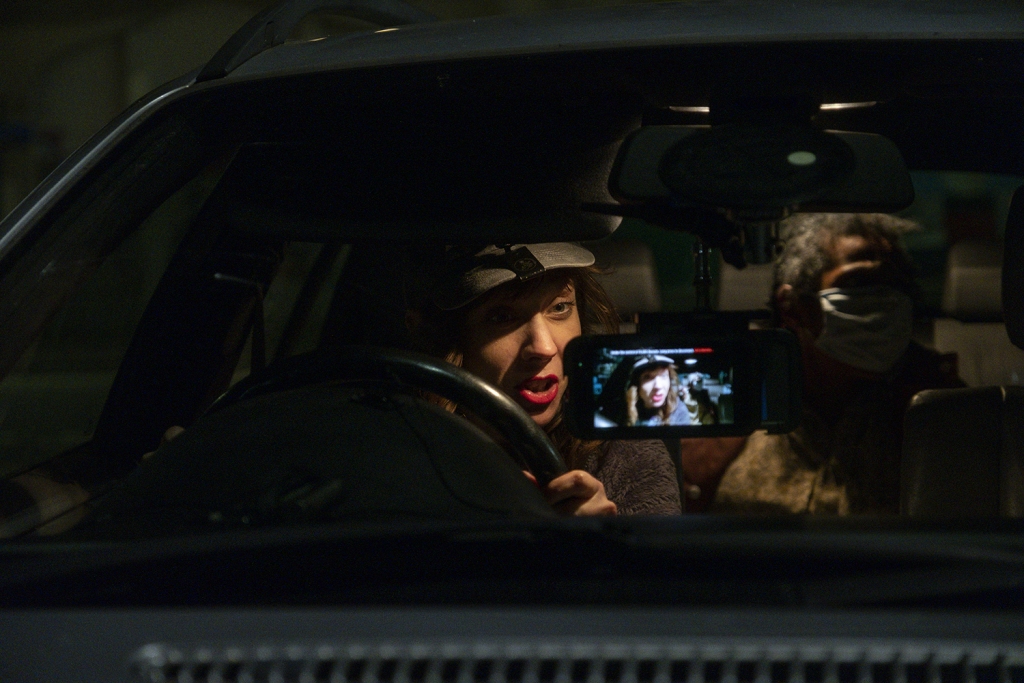
While Savage’s 2021 film Dashcam was not as well-received by critics or the public, it adeptly captures a sentiment of the mid-to-late pandemic era. That this particular mood is one of overflowing bile and social decay – displayed in Dashcam in a literal, scatological way – is not the film’s fault. However, that seems to have been the preferred accusation.
Much of the criticism fell at the door of the lead, Annie Hardy, who turns in such a convincing performance as a completely unlikable tool that it seems to have become a turn-off for many (strange given the popularity of Game of Thrones, which features possibly the largest selection of unlikable tools ever assembled).
Despite all of its perceived flaws, however, Dashcam, like its predecessor Host, is a film that maximizes its tiny budget to create something unconventional and accurate in its illustration of pandemic life. While some may not relate to the protagonist, we can all relate to her world.
This leads us to the question: how relatable is 2023’s The Boogeyman?

The answer to that is perhaps a little too relatable for the horror movie aficionado.
In fact, for anyone who has seen the terrifying Lights Out (US, 2016) or the child-screaming simulator that is The Babadook (US, 2014), the dial on the horror-o-meter may switch from relatable to simply derivative.
This all begins with a familiar setup: a large house in a neighborhood where the neighbors are never seen, home to a single-parent family with a dark past that festers in mutual silence. While it is nice to see a single-parent family with a father at its head, Will’s inexplicable absences at key moments and his failure to engage his daughters in their trauma, especially given his psychiatric occupation, grow increasingly hard to reconcile as the film and its psychological threats progress.
This leads to a greater ambiguity about what the film is trying to say about grief—rather uninspiringly represented by a black mold in the house—an ambiguity especially brought into focus by the clichéd solution offered at the end.
Does THE BOOGEYMAN capture anything real about the here and now?
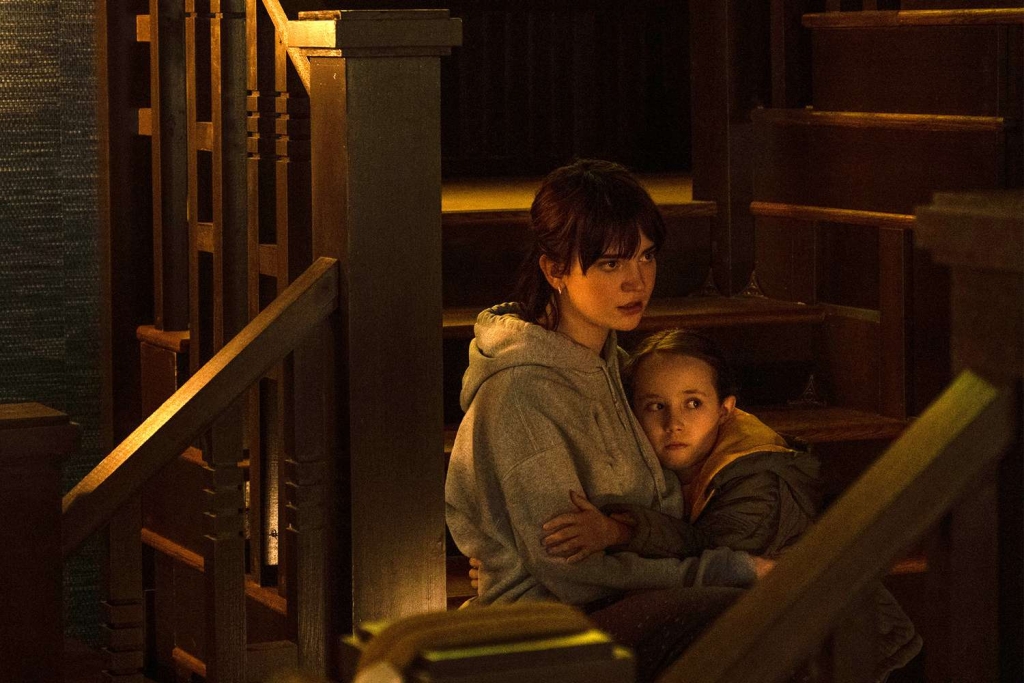
In his press engagements, Savage stressed that the intention was to create a popcorn film that could have been made during any time in the last sixty years and still be enjoyed universally now.
But how do you channel that sort of timeless relatability without being hackneyed?
The film certainly emulates the current Stephen King adaptation trend, particularly in its portrayal of high school children as the most callous and fundamentally mean beings on the planet. These are pitted against younger children, who are predictably wise for their years but powerless when it comes to convincing anyone older of the danger they face. Finally, there is the recluse driven mad with grief, their mental illness portrayed mainly by the fact that they never have a shower.
These are narrative tropes we have seen before. Which is to say that, despite all of its polish and style, The Boogeyman remains entirely conventional.
Let’s return all the way back to the first line, to necessity and its fostering of innovation.

Where Host and Dashcam had estimated budgets of $100,000 each, The Boogeyman had a slightly higher financial allowance of $35 million. Initially intended to be a streaming exclusive, as were Savage’s previous cinematic duo, the film tested so well with audiences that 20th Century Studios decided to give it a theatrical release. There is little doubt that some of its more atmospheric scenes benefit from the true cinematic experience, especially in the case of the audio, which plays a huge role in the monster’s creep factor.
With an increased budget and big studio backing, the real necessity in play is always to reach a wider audience.
While it was stated earlier that Host and Dashcam capture something universal of their epoch, their restrictive budgets and strained environments led to an unconventional style that could be unkindly perceived as lacking polish. Given how these two films ingeniously navigate those restrictions, this is a pity because those same restrictive necessities lend Savage’s movies an originality that The Boogeyman cannot, and never attempts to, match.
Limitations in movies are often a blessing. Practical effects, above all, have proved this to be true.
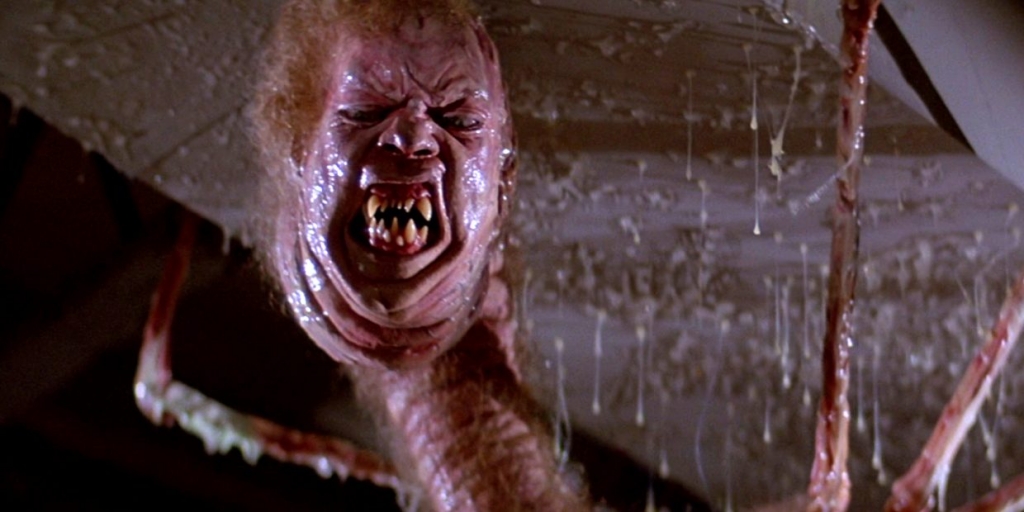
Think of the pure fear of the goo-oozing Xenomorph in Scott’s Alien (US, 1979) or of the sweaty genetic aberrations in Carpenter’s The Thing (US, 1982); then think about the terrible CGI puppets of the late 1990s and 2000s, think about every generic computer-generated battle scene Marvel has churned out in the last decade.
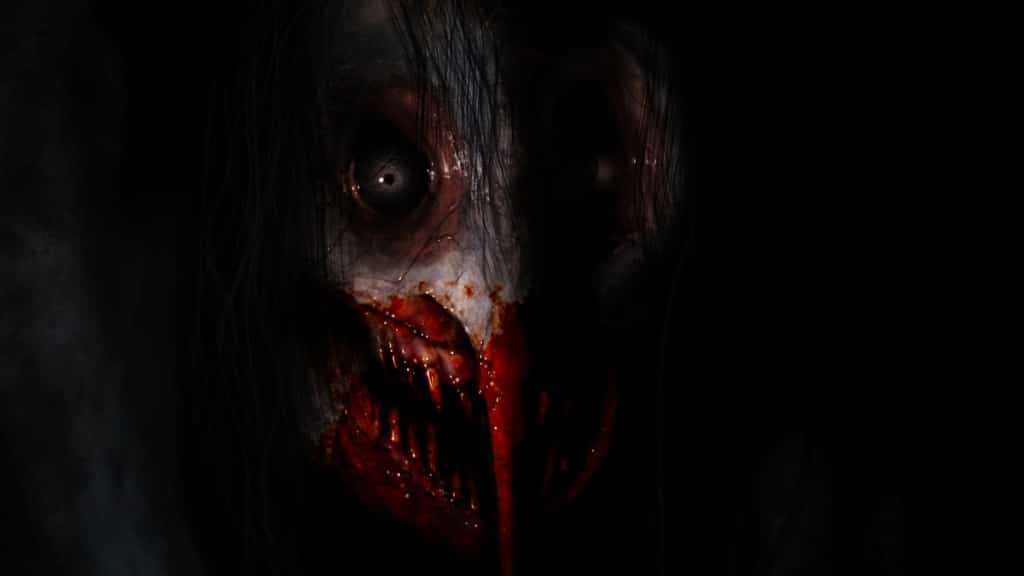
While Savage, in his own words, made efforts to limit the time the monster appeared on screen in The Boogeyman, the restraining power of a less strained budget is not concealed elsewhere.
In movies, less is more. Fewer resources challenge the creative brain to step outside its comfort zone. What it produces there can be ground-breaking in an exciting way that new technology and narrative safety rarely can.
Savage’s talents as a director are clear, but what remains to be seen is how much of his true originality was a product of the duress of circumstances we all shared during the pandemic.








Follow Us!