
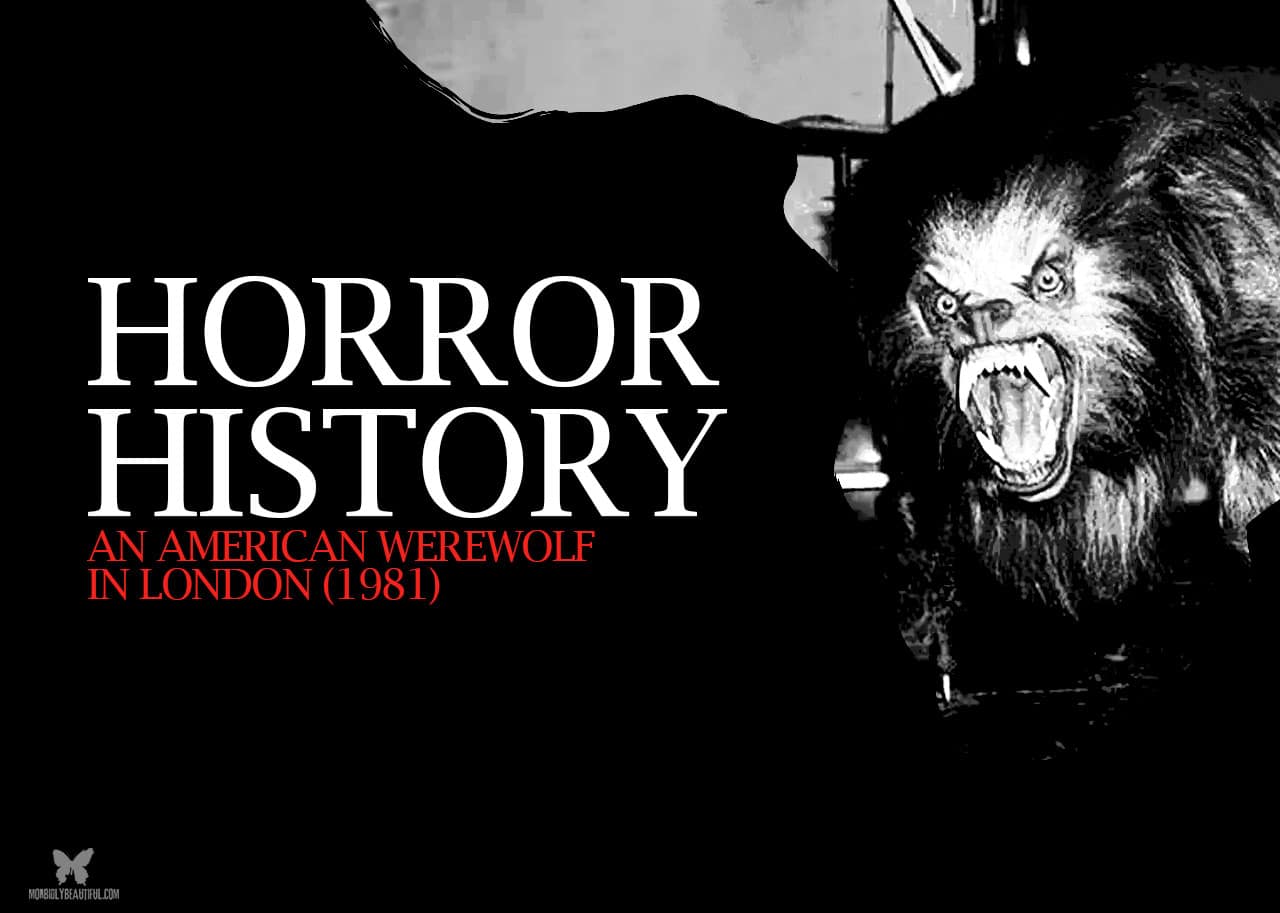
“An American Werewolf in London”transformed the genre, blending dark humor with groundbreaking special effects to create a movie masterpiece.
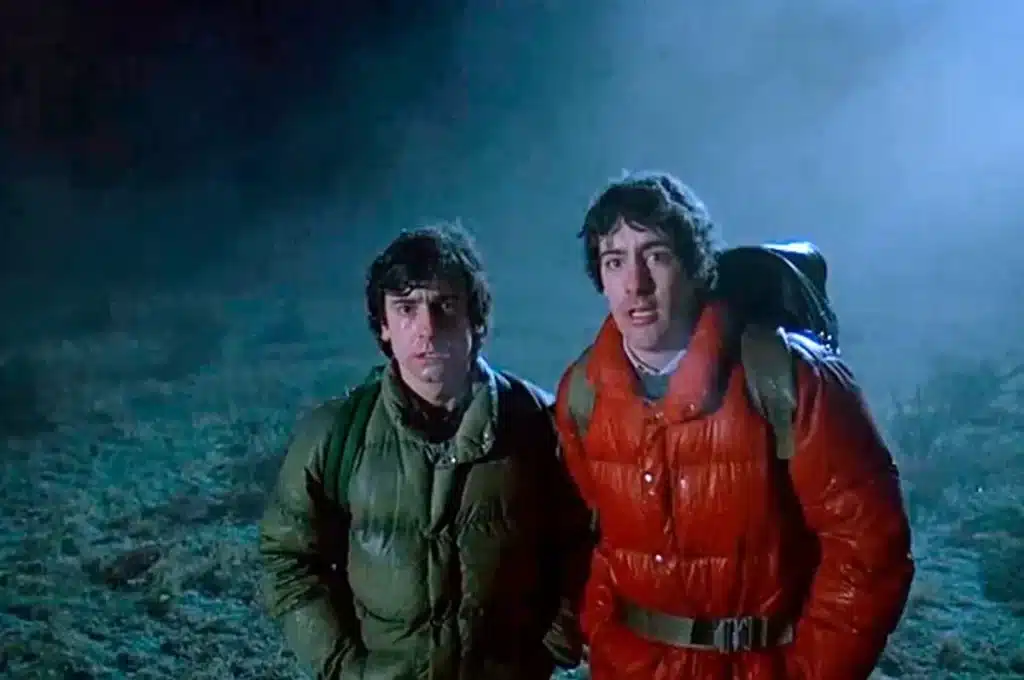
AN AMERICAN WEREWOLF IN LONDON, from left: Griffin Dunne, David Naughton, 1981. ©Universal Pictures
No time to read? Click the button below to listen to this post.
For horror fans, 1981 was the year of the werewolf. That year alone, four werewolf movies were released: The Howling, Wolfen, Larry Cohen’s Full Moon High, and, celebrating its anniversary today, An American Werewolf in London.
Many consider John Landis’s film the best werewolf movie of all time. His seamless, genre-bending fusion of horror and comedy makes it a masterpiece. With a classic horror story, a classic rock soundtrack, and an excellent cast, An American Werewolf in London has carved out its niche in horror history.
The story follows two New Yorkers, David Kessler (David Naughton) and Jack Goodman (Griffin Dunne) as they hike through the English countryside. While passing through the moors of Yorkshire, a werewolf attacks them, killing Jack and injuring David. As a result, David becomes a werewolf.
Released on August 21, 1981, An American Werewolf in London grossed $64 million worldwide against a $6 million budget. It ranked as the highest-grossing horror movie of the year. Special effects artist Rick Baker earned an Oscar for his work, the first Oscar for Best Makeup. Many years later, Landis would regard the film as his “masterpiece.”
An American Werewolf in London was an idea that had been brewing in Landis’ mind since 1969. At the time, he was an uncredited production assistant and assistant director on the movie Kelly’s Heroes. Landis was working on location in Yugoslavia when he witnessed a gypsy funeral. The deceased was being buried feet first in a garlic and rosary-covered coffin. A local told Landis this was to keep the deceased from rising from the grave.
Seeing the funeral made Landis think of how absurd it would be to communicate with a corpse, and he started writing the screenplay.
Landis decided to center the story around werewolves, avoiding zombies and serial killers, because he wanted the audience to suspend disbelief.
He also chose werewolves because every culture has a shapeshifting legend.
Landis’ screenplay remained on the back burner for many years. Everyone he showed his screenplay to didn’t think the horror/comedy fusion worked.
When he was 21, Landis landed his first directing job, a parody of 1950s monster movies called Schlock. Landis also worked with special effects artist Rick Baker for the first time. Baker designed the gorilla suit for Schlock which Landis wore in the film. While working on Schlock, Landis discussed his werewolf movie with Baker.
Once Schlock was released, Landis couldn’t find a studio interested in releasing it until the late talk show host Johnny Carson happened to see it. Carson loved Schlock so much that he invited Landis to his show, and he showed clips of the movie, which led to a theatrical release.
The film bombed at the box office but gained a cult following and led to bigger and better projects for Landis such as National Lampoon’s Animal House (1978) and The Blues Brothers (1980). After these back-to-back hits, Universal Studios gave Landis the green light for American Werewolf.
As soon as he had his budget for American Werewolf, Landis contacted Baker.
Years earlier, Landis had discussed his werewolf project with Baker.
However, many years had passed, and Baker was already set to work on The Howling. Baker left that film, and his assistant, Rick Bottin, took over the special effects for The Howling.
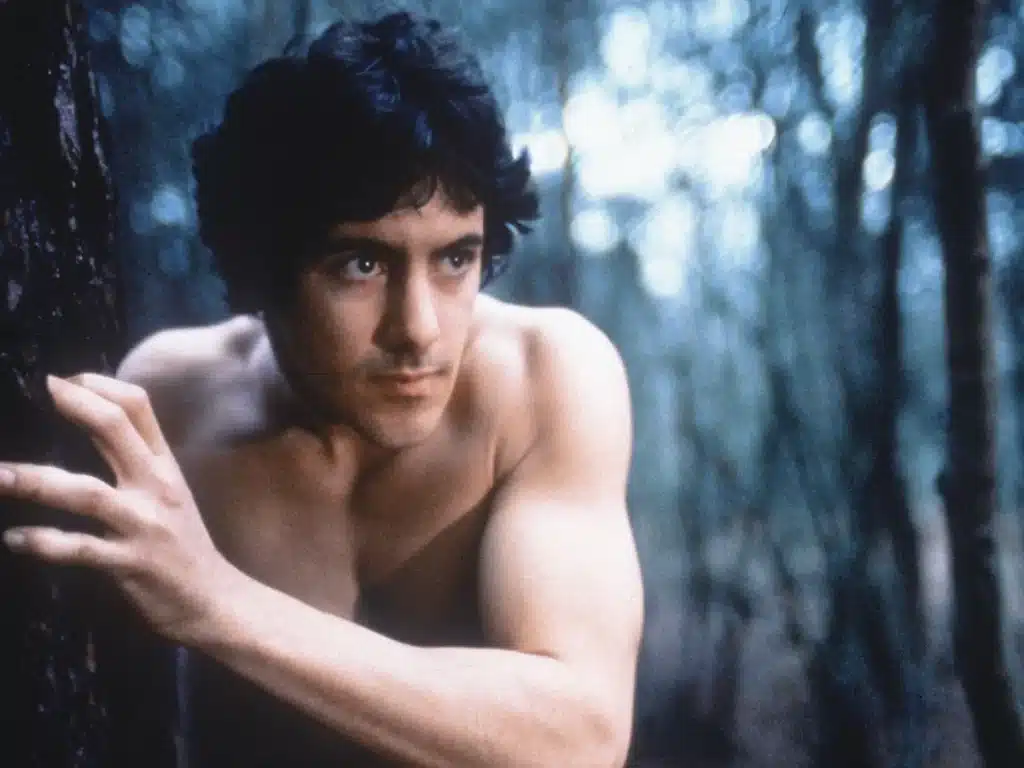
Once Baker was on board, the studio pressured Landis to cast Blues Brothers stars Dan Aykroyd and John Belushi as David and Jack. But Landis wanted unknowns. David Naughton was best known as the spokesperson for Dr. Pepper. Naughton also had a hit disco song, “Makin It,” which made it to the top five on the Billboard charts. “Makin’ It” was the theme song to a short-lived sitcom of the same name in which Naughton starred.
Before starring in American Werewolf, Naughton had a starring role in a teen movie called Midnight Madness (which also starred Michael J. Fox, who went on to star in Teen Wolf).
Reportedly, Naughton came to Landis’ attention through the Dr. Pepper ads. After he cast Naughton in the role, Landis told Naughton, “We’re both peppers.” After American Werewolf, Naughton wouldn’t be a pepper for much longer. Dr. Pepper fired Naughton because of his nude scenes in the film. The cast and crew reportedly sang the Dr. Pepper jingle, “Be a Pepper,” replacing “Pepper” with “werewolf.”
Landis chose London as the setting for American Werewolf for two reasons: the city’s association with gothic horror and filming in the U.K. offered a considerable tax break.
Landis, Baker, Naughton, and Dunne required work permits to film in the U.K. Three work permits were granted without issue for Landis, Baker, and Naughton. Dunne was denied at first. The Actors Union wanted an American actor living in the U.K. cast instead. However, Landis refused to recast Dunne and threatened to move the film’s location to Paris. He even started scouting locations in France.
Needless to say, Landis won in the end, and Dunne received his permit. There wouldn’t be an American Werewolf in Paris until 26 years later, in an ill-received box office bomb with a story unrelated to the 1981 classic.
Permits secured, the cast and crew began an arduous shoot from February to March 1981.
Landis wanted to shoot in winter to achieve a “dreary” effect. The weather was unpredictable, changing from sleet and snow to sunny all in a day. Rain machines were brought in, which would freeze.
Rick Baker has said that the 1940s horror classic The Wolf Man, starring Lon Chaney Jr., is the movie that inspired him to become a special effects artist. Naturally, Baker took inspiration from that film when designing the effects for American Werewolf. Like the wolf in the original film, Baker’s concept was originally a more humanoid werewolf who walked on two legs. Landis wanted his werewolf on four legs, looking like a “demon from hell.”
Baker reluctantly changed his design per Landis’ wishes and used his dog, Bosco, as a reference.
Baker spent months working on the overall design for the werewolf, including how it would move and how the makeup would be applied to the actors.
David Naughton and Griffin Dunne suffered through shooting. Naughton had to perform nude scenes outdoors in freezing temperatures, and his werewolf makeup took 10 hours to apply. Naughton described the experience of sitting in the makeup chair as “a long flight that never goes anywhere.”
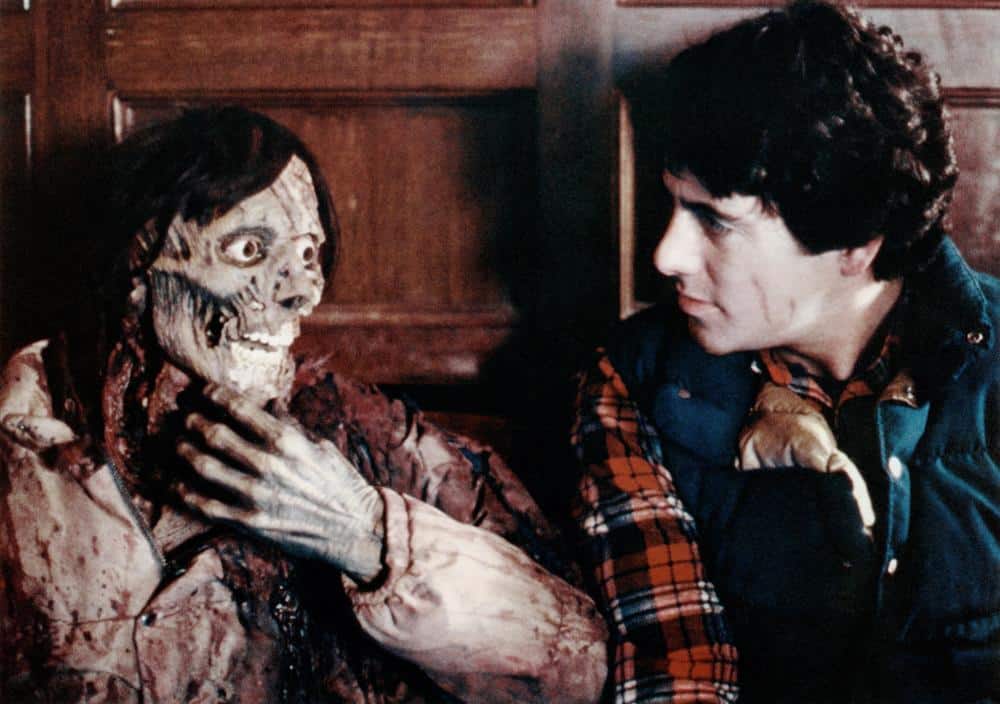
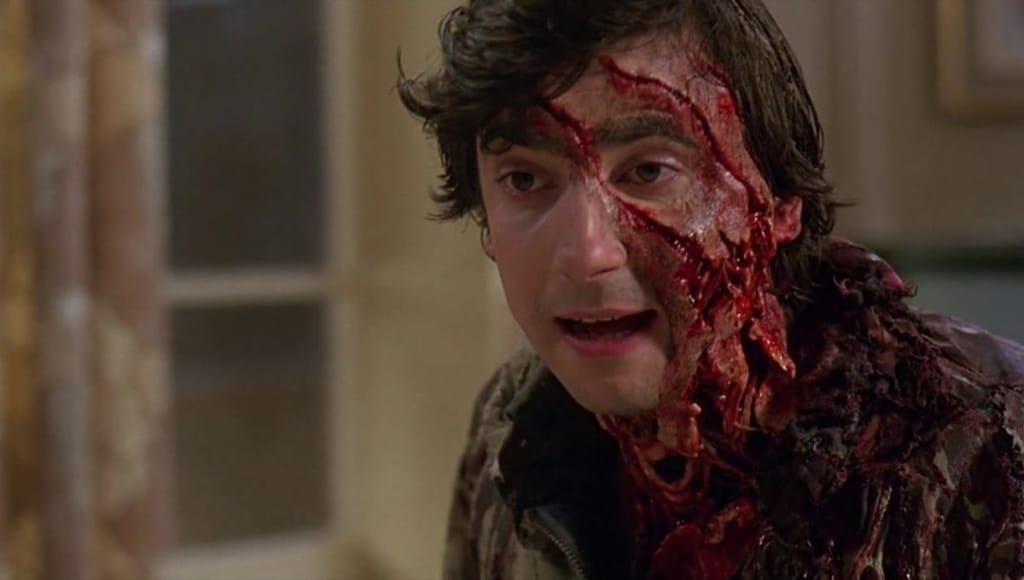
On the other hand, Dunne’s makeup for zombiefied Jack traumatized the actor. The shredded skin and torn flesh looked so realistic that Dunne was genuinely horrified. He feared that he looked so hideous that no one would want to look at him. Seeing himself as the mauled walking dead apparently was a grim reminder for Dunne of his own mortality, which reportedly affected his emotional state.
An American Werewolf in London is best known for Naughton’s iconic transformation scene.
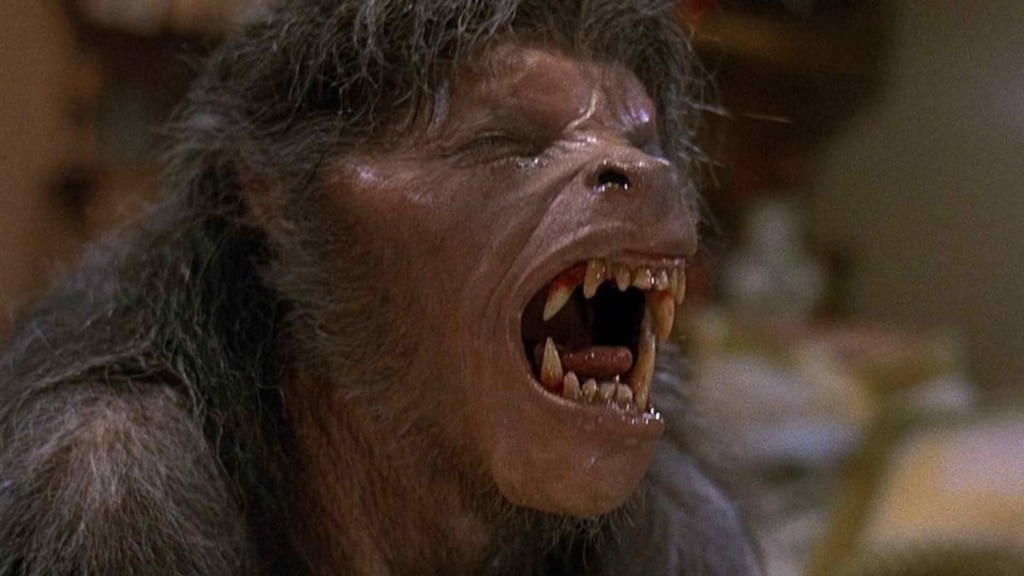
In Baker’s inspiration, 1941’s The Wolf Man, the titular shapeshifter goes through his transformation while sitting in a chair. Landis thought this concept was absurd. He wanted his werewolf to go through a visibly torturous, painful transformation. That’s exactly what Landis got.
The scene was filmed without cuts using new techniques. Baker didn’t get the full effect of his work until he finally viewed the finished film. After hearing the crowd cheer, Baker felt his hard work paid off.
Yet another obstacle American Werewolf faced was filming in Piccadilly Circus, a bustling area in London’s West End.
No film had been shot in Piccadilly Circus for fifteen years before American Werewolf. Landis was determined to obtain permission to film the movie’s climax there. So, he used his previous experience working with police while filming The Blues Brothers in Chicago’s busy streets, and the film even helped Landis get what he wanted.
He invited 300 London police officers to a screening of The Blues Brothers, which led to his being granted permission to film at Piccadilly Circus. He was even granted permission to stop traffic. To ensure filming of the werewolf’s rampage scene went smoothly, a replica of the area was built on a stage to rehearse the scene.
Not only that, Landis even had a cameo in the scene where he performs a stunt where a car knocks him through a glass window.
The actual events in the movie were not the first scenes that Landis shot.
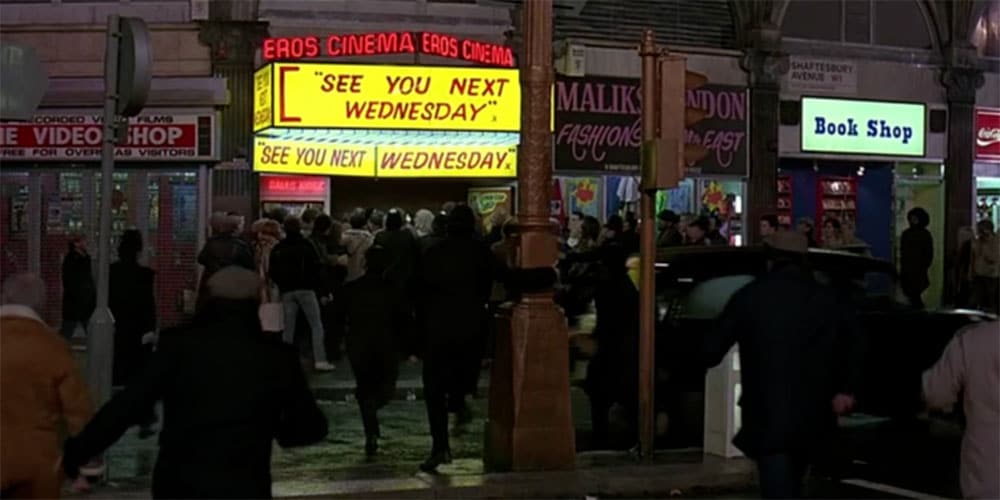
Before he started filming the story, Landis shot the fake porn film, See You Next Wednesday, that David and Jack watch at a theater in Piccadilly Circus.
Originally, the scene called for a cartoon to be shown at the theater. As far as Landis knew, during the ‘70s, theaters in Piccadilly Circus showed cartoons. However, when he arrived in the early 80s to shoot American Werewolf, he saw that the theaters had stopped showing children’s movies and were showing adult films instead. Landis changed the script to reflect this.
Besides being featured in the theater scene, See You Next Wednesday is advertised in the London subway. See You Next Wednesday also appears in various ways in subsequent Landis movies as a recurring joke.
Landis hit another bump in the road when trying to secure the rights to the songs used in the film.
If you notice, the soundtrack has an obvious theme, featuring songs with the moon in the lyrics and titles. The completed film features three versions of the classic song Blue Moon, Moondance, and Bad Moon Rising. Originally, Landis wanted the opening credits to feature Cat Steven’s Moon Shadow, but Stevens objected because he believed that werewolves existed. Furthermore, Bob Dylan objected to his version of Blue Moon being used in the movie for religious reasons.
Landis next faced difficulty in securing an R rating for his film.
The Motion Picture Association of America (MPAA) objected to the extreme gore and the sex scenes in the film. So, Landis had to cut sex scenes and a scene where a piece of toast fell out of Jack’s throat. Test audiences were so repulsed by a scene where a group of homeless people were attacked that Landis cut that scene also.
Landis wasn’t through with werewolves yet.

The late King of Pop, Michael Jackson, was such a huge fan of An American Werewolf in London that he wanted both Landis and Baker to work with him on his video, Thriller.
The now iconic music video almost wasn’t released. Due to his religious beliefs, Jackson at first objected to the content, which is why the video originally included a disclaimer from Jackson, assuring fans that he did not endorse the occult.
It was a long, bumpy road, but it was well worth the wait for Landis, Baker, and horror fans—especially werewolf aficionados.
The film is a treat, offering a classic monster tale with a delightful dark comedic twist. The cast is excellent, notably Griffin Dunne who manages to inject dark humor in his portrayal of Jack as his body decays. Baker’s special effects are extraordinary.
These elements, coupled with Landis’ masterful direction, produced a masterpiece of horror cinema still talked about today.
CONCLUSION
Follow Us!