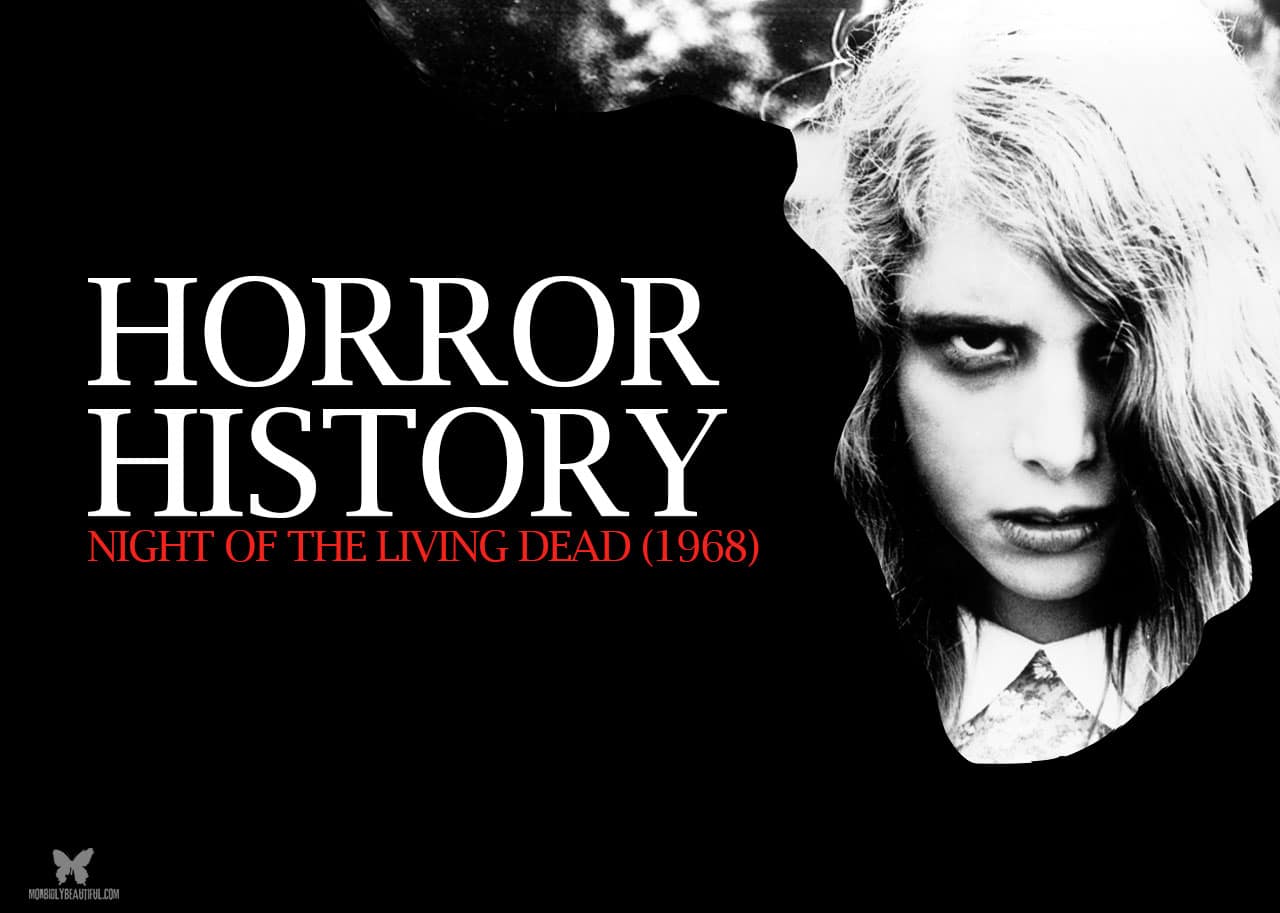
“Night of the Living Dead” birthed the modern zombie genre while delivering a chilling social commentary—as relevant today as it was in 1968.
No time to read? Click the button below to listen to this post.
Night of the Living Dead is one of the best-known and most recognized horror films outside of the horror genre. Not everyone’s seen it, but everyone’s heard of it. What makes it memorable? Romero injected horror into an everyday, relatable scenario.
The horror in question is also something everyone fears–the dead rising from their graves. Take a mass uprising of undead zombies and trap a group of people in a farmhouse in the middle of nowhere. When the zombies surround the farmhouse and begin to attack, it’s the perfect storm of terror.
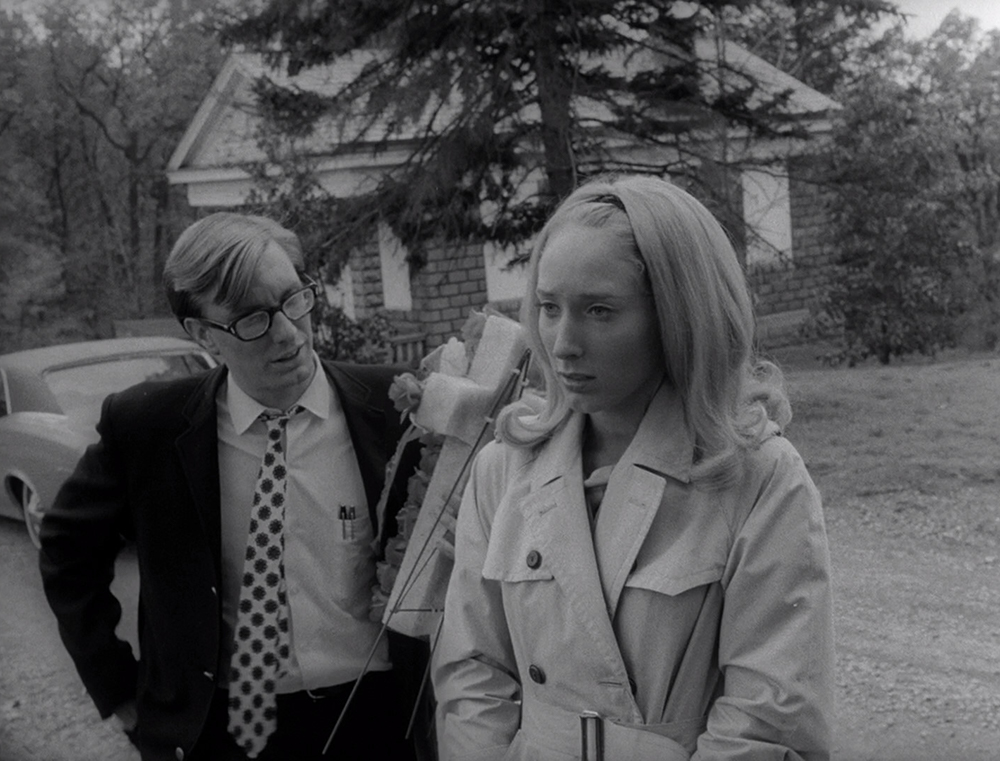
Siblings Barbra and Johnny (Judith O’Dea, Russell Streiner) visit their father’s grave in rural Pennsylvania, where a man attacks Johnny. Barbra flees to a farmhouse, finding a corpse inside. As ghouls surround the house, a stranger named Ben (Duane Jones) arrives and boards up the windows and doors. They find more people hiding in the cellar: Harry (Karl Hardman), his wife Helen (Marilyn Eastman), their daughter Karen (Kyra Schon), and a couple, Tom and Judy (Keith Wayne, Judith Ridley).
The group listens to reports of cannibalistic corpses and plans to escape to a rescue center. Eventually, the ghouls find them, and chaos ensues. The group finds themselves fighting for survival against a horde of undead zombies.
Night of the Living Dead premiered in Pittsburgh on October 1, 1968, and grossed $12 million domestically and $18 million internationally, making it one of the most profitable films of its time.
Its explicit violence and gore were groundbreaking, leading to controversy and negative reviews. Over time, it gained a cult following and critical acclaim, appearing on lists of the greatest and most influential films.
The film is seen as a touchstone in the horror genre and reflects the social and cultural changes of the 1960s.

This is particularly evident with the casting of African-American actor Duane Jones in the lead role. In 1999, it was selected for preservation in the National Film Registry by the Library of Congress for its cultural, historical, and aesthetic significance.
George Romero’s film career started after dropping out of Carnegie Mellon University in Pittsburgh. He co-founded The Latent Image with his friend Russell Streiner (who played Johnny), directing and producing TV commercials and industrial films. The company started small, but after creating a high-budget Calgon commercial parodying Fantastic Voyage (1966), Romero believed they had the experience and equipment to make a feature film. They aimed to tap into the film industry’s “thirst for the bizarre.”
Romero, Streiner, and John A. Russo approached Karl Hardman and Marilyn Eastman (Harry and Helen Cooper) of Hardman Associates, Inc., pitching their idea for a horror film. This led to the formation of Image Ten, a production company established to produce a single feature film. The initial budget was $6,000, with each member investing $600 for a share of the profits. Ten additional investors contributed another $6,000, but this was still insufficient.
Production halted multiple times as Romero used early footage to attract more investors. Eventually, Image Ten raised approximately $114,000 for the budget (equivalent to $999,000 today).
An allegorical short story Romero wrote, plus Richard Matheson’s classic novel, I Am Legend, served as inspiration.
Matheson’s story, in a which a plague turns people into vampires, got its own film treatment over the years with The Last Man on Earth (1964), starring horror icon Vincent Price, and I Am Legend (2007) starring Will Smith.
Romero wanted to write a revolutionary tale about a chaotic event that would alter society; he wanted to take a different route.
While Matheson’s story begins post-revolution, Romero wanted his story to start at the beginning. Night of the Living Dead starts with siblings visiting their father’s grave, blissfully unaware that the dead are rising with a thirst for living flesh. Romero teamed up with his friend, John Russo. The two tossed many ideas back and forth.
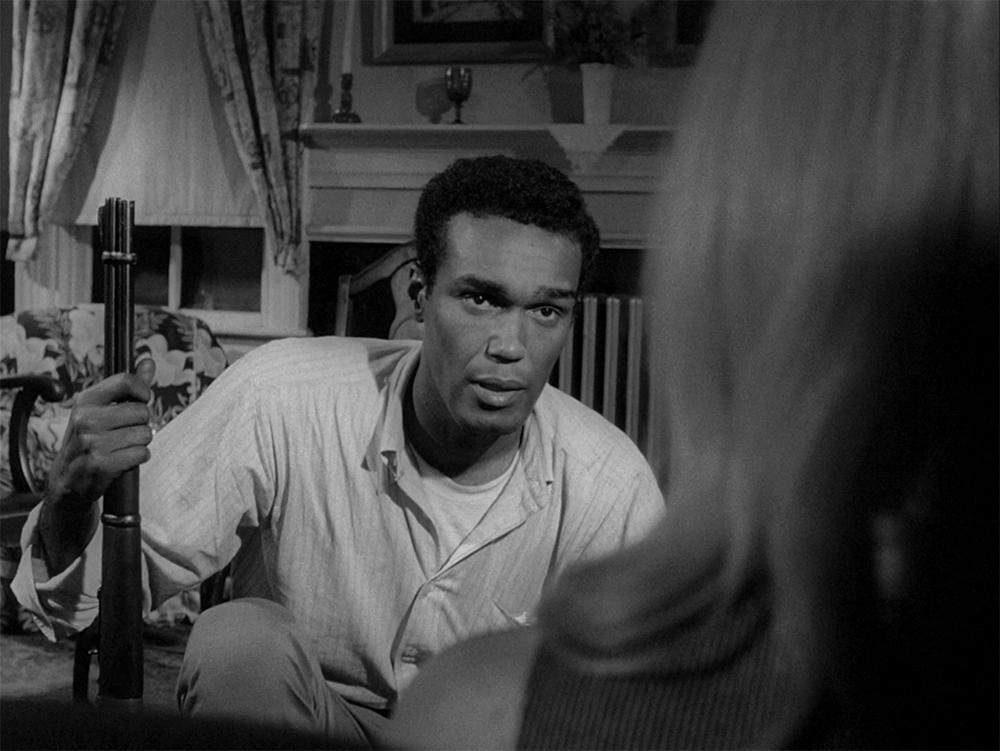
The film’s cast has no big names. Many of the cast were members of the production team, plus friends and acquaintances from Pittsburgh. Duane Jones, who plays Ben, was a friend. Most people point out that casting a Black actor as a main character was a bold move for Romero at the time. However, Variety quotes Romero, saying, “We had no preconceived notion as to the role being a Black role. Duane came in, he looked right, he read well, so we used him. We never took any further note of it. It’s not mentioned in the script at all, although I know we’re getting a lot of press comment over that fact.”
Judith O’Dea had just returned to Pittsburgh from out West in time to star as Barbra. Keith Wayne was a nightclub entertainer, and Judith Ridley was a secretary. Producers Karl Hardman and Marilyn Eastman were married in real life, and their onscreen daughter, Karen, was their daughter. Romero recruited clients and friends to play the zombies.
Upon its release, NIGHT OF THE LIVING DEAD received mixed reviews.
Critics were divided, with some shocked by its graphic violence and gore, while others praised its raw and realistic portrayal of horror. Despite the initial controversy, the film quickly gained a cult following and became a significant influence on the horror genre.
Night of the Living Dead is credited with popularizing the modern portrayal of zombies in popular culture. It has spawned numerous sequels, remakes, and adaptations, and its influence can be seen in countless zombie films and TV shows that followed.
Romero’s work continues to be celebrated for its impact on the horror genre and its social commentary. When Romero passed away on July 16, 2017, in Toronto, obituaries hailed him as the “father of the modern movie zombie.”
SOURCES
“How ‘60s counterculture infected ‘Night of The Living Dead,’ by Sam Kemp, October 1, 2021. Far Out; “Writing and making Night of the Living Dead,” by Ryan Lambie, March 12, 2018, Den of Geek;
“George Romero Invented Modern Zombie Horror Genre,” by John Casteele, July 22, 2017. ScreenRant; “George Romero Discusses ‘Night of the Living Dead’ in Previously Unavailable 1972 Interview,” by Alex Ben Block, October 25, 2017, Variety; Kane, J.. (2010). Night of the Living Dead: Behind the Scenes of the Most Terrifying Zombie Movie Ever. Citadel Press: New York.
“George Romero Invented Modern Zombie Horror Genre,” by John Casteele, July 22, 2017. ScreenRant; “George Romero Discusses ‘Night of the Living Dead’ in Previously Unavailable 1972 Interview,” by Alex Ben Block, October 25, 2017, Variety; Kane, J.. (2010). Night of the Living Dead: Behind the Scenes of the Most Terrifying Zombie Movie Ever. Citadel Press: New York.

Follow Us!