


The controversial thriller “8MM” is a dark and polarizing journey that pushes the boundaries of mainstream cinema—in the best ways.
No time to read? Click the button below to listen to this post.
IN THIS CORNER: KELLY MINTZER
The Lowdown
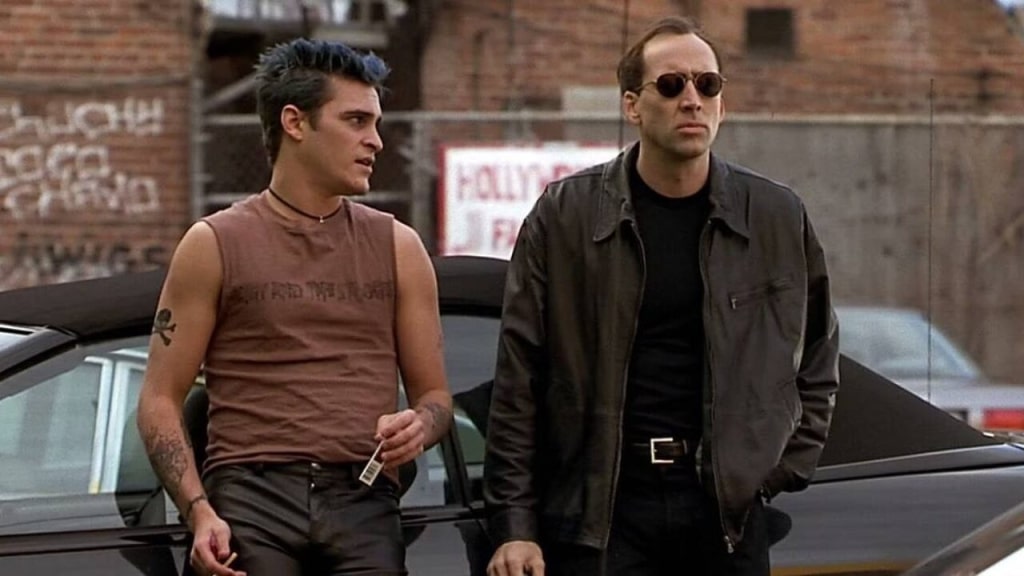
Oh god, 8MM. I think most horror fans have that one movie that sits at the base of their spine, the one that seeped into their DNA and shook them to their core. For me, that movie is 8MM.
I can’t remember how old I was when I first saw it — probably 14 — but I know I felt changed afterward. Haunted. Going into this rewatch, I was prepared to chuckle at my initial response; surely, this movie wasn’t the pure nightmare I remembered.
I was right, it wasn’t.
It’s worse.
8MM was panned by critics upon its release, and I can’t imagine why, other than they simply couldn’t see past the horror. It’s no surprise that this was written by the same guy who wrote Seven — it has a similarly bleak worldview. I wonder, however, if it would be given a kinder assessment by modern critics.
This is a movie with a lot to say, in particular, about the violence of men and the pound of flesh it takes from women. But I’m getting ahead of myself.
8MM springs from a simple but clever premise: a wealthy widow finds a snuff film in her dead husband’s safe. The woman, kind and disturbed, hires Nic Cage’s detective to investigate. Her greatest hope is that the movie is fake and that he can confirm its lack of authenticity. It’s no spoiler to say he finds the movie is real.
8MM has a hint of whodunnit, but it’s mostly in service of a descent into hell. Nic Cage’s PI goes into the most horrific realms of humanity you can imagine, with an impossibly beautiful young Joaquin Phoenix serving as his Virgil.
The plot, while intriguing, is not the thing.
The movie delves into complicated questions, including the complicity of the viewer and the ways we become inured to cruelty and violence.
Finally — and perhaps the coffin nail for the movie’s reviews, given its status as a major studio release — its ending is devastating; there’s no sense of relief or of the good guy triumphing over the bad guys. Everyone loses here.
It’s honest and brutal and lingers in your nerve endings long after the final credits roll.
The Cage Factor:
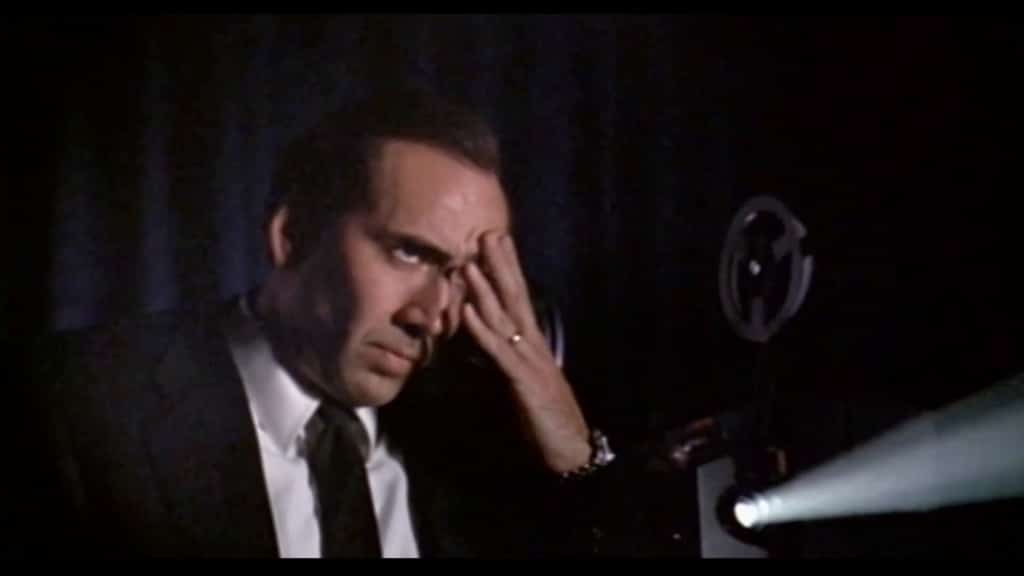
FUCKING ESSENTIAL. This is the best possible use of manic Nicolas Cage energy. He is restrained through much of it, but when he bursts and releases that special strain of Cage-ian energy, it is so impactful; it is so moving. It hits HARD. His detective unravels and unwinds, and every ounce of his hysterical energy feels earned. It’s a brilliant and perfect performance, set against incredibly heavy hitters, including an astoundingly sleazy James Gandolfini and Joaquin Phoenix, who cannot help but steal every scene he’s in (and this writer’s heart).
AND IN THIS CORNER: STEPHANIE MALONE
The Lowdown
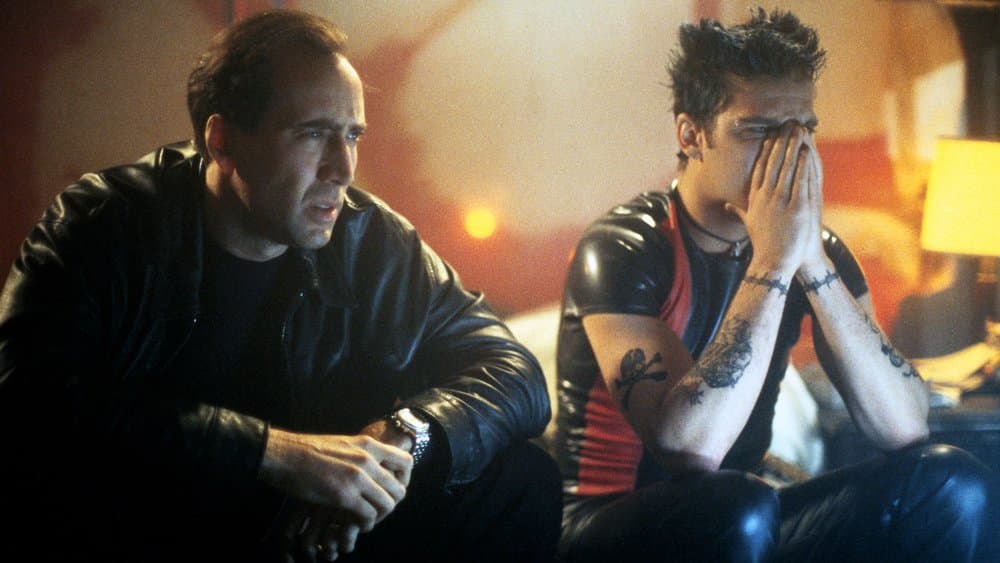
Like Kelly, I have vivid memories of this one — remembering it crawling deep under my skin and shaking me to my core. That rarely happens, not when you watch as much subversive and haunting horror as I do. When the chance to rewatch 8MM came up, I was eager to see if it held up; would a much older, jaded, and world-weary Stephanie still find it remotely affecting? The answer, unequivocally, is abso-fucking-lutely.
Directed by the legendary Joel Schumacher, a man beloved for his contributions to 1980s and 1990s pop culture and. his vivid imagination, his work on 8MM cemented him as a filmmaker willing to take risks. Whether it was reinventing the vampire genre with The Lost Boys, creating one of the campiest superhero films with Batman & Robin, or delivering gritty dramas like Tigerland, Schumacher was never afraid to push boundaries.
His films have a polarizing yet enduring legacy, and 8MM, with its intense look at the dark side of human nature, certainly ranks among his most divisive. This unflinching exploration of the underground world of snuff films both captivated and repulsed audiences and critics alike, leaving an indelible mark on the landscape of psychological thrillers.
It’s a daring, divisive thriller that isn’t afraid to peer unflinchingly at the ugliest recesses of the human soul to reveal just how unfathomably cruel and sadistic some people can be.
It’s the kind of haunting horror film that reveals hidden monstrosities and reminds us to forget evil entities, supernatural boogeymen, and grotesque creatures; the absolute worst thing we have to fear is each other.
Bolstered by strong performances, especially from Cage, who grounds the film with his portrayal of a man haunted by what he uncovers, 8MM carves out a unique place in late 90s cinema.
While it may not appeal to all viewers thanks to its disturbing themes, it remains a thought-provoking and intense thriller that has managed to maintain every bit of its devastating impact twenty-five years later.
The Cage Factor:
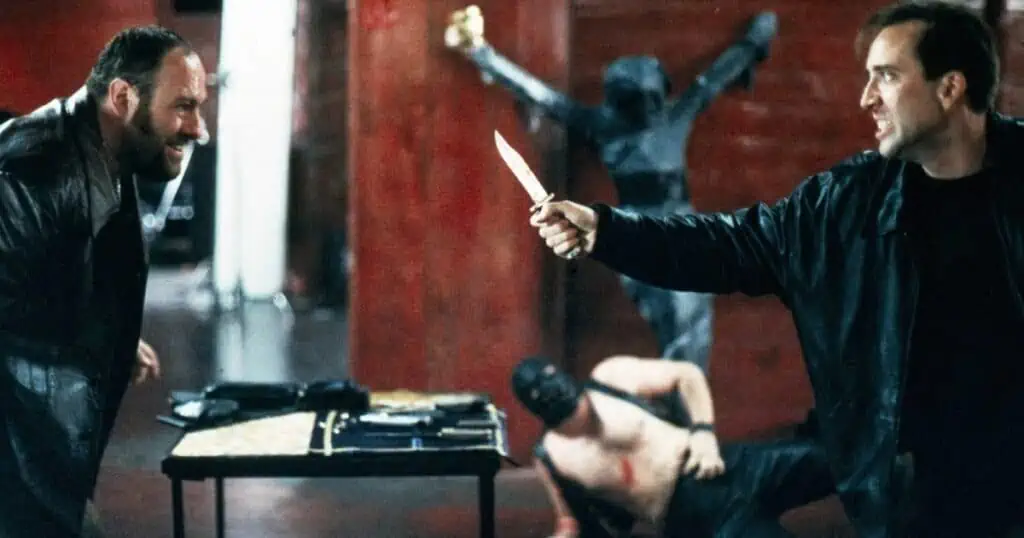
In the context of Cage’s filmography, 8MM is often seen as one of his more serious and subdued roles. It showcases his ability to immerse himself in heavy material without losing his distinctive screen presence. He strikes a delicate balance between desperation and morality, allowing the audience to feel Welles’ ethical struggle and gradual descent into obsession. It’s a performance that defies the criticism often leveled at Cage for going over the top, proving his capacity for sincerity and emotional depth.
What stands out is the way he humanizes Welles, making the character relatable, particularly in his fight to maintain his sense of decency in the face of human nature at its absolute worst. His expressive eyes and subtle facial expressions convey volumes about Welles’ internal struggle, allowing the audience to connect with his plight on a visceral level.
Throughout the film, Cage carefully modulates his performance, starting with a sense of professional detachment that gradually erodes as Welles becomes more entangled in the case. One of the most striking aspects of Cage’s performance is his ability to convey Welles’ determination and revulsion simultaneously. In scenes where Welles is forced to confront the darker aspects of human nature, Cage’s portrayal is a masterclass in conflicted emotions.
He’s determined to get to the truth and find justice for the voiceless, but at what cost? And how much will his journey into the depths of depravity forever change him?












Follow Us!