

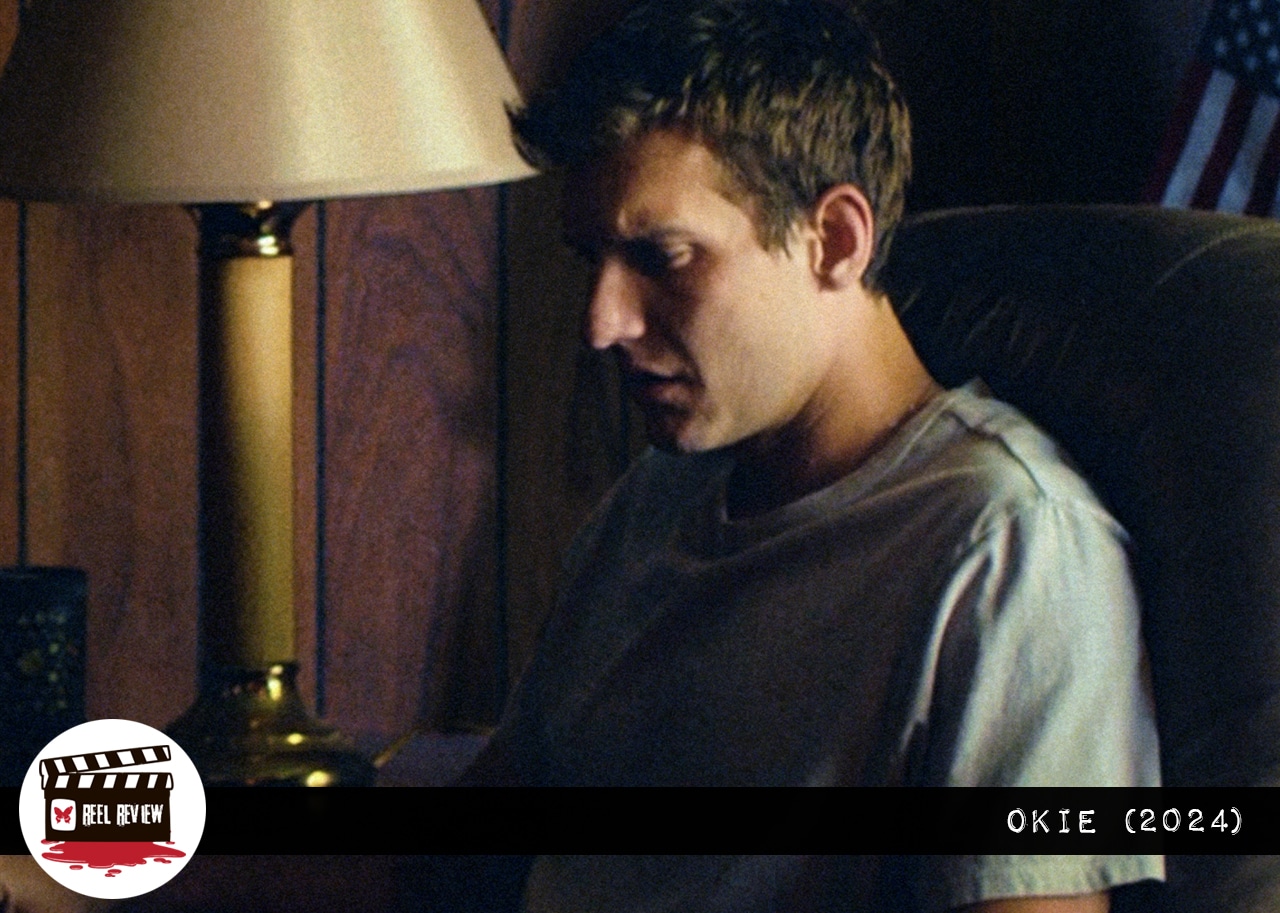
Steeped in small-town drama, “Okie” traverses the miles between who we were and who we hope to be and reminds us why we can’t go home again.

No time to read? Click the button below to listen to this post.
Many of us long to leave our past in the rearview mirror, jumping at the chance to start over and become better versions of ourselves. It’s part of what makes life as exhilarating as it is terrifying: our opportunity to shed our old skin and step into a new reality.
Still, the past is a clingy mistress, often sadistically stubborn in her refusal to let go of us fully. We can try to run, hide, and reinvent ourselves. We can craft a new backstory and give ourselves a storyline worthy of main character status. Yet, who we are is primarily shaped by who we have been and where we come from. So much of what we try to put behind us—pain, loneliness, disappointment—informs our present. It’s the foundation upon which our worldview is constructed.
Our origin story is always a part of us, no matter how much we desire to rewrite it.
The new psycho-thriller comedy Okie was directed by Kate Cobb, an actor-turned-filmmaker known for her roles in Shameless and New Amsterdam) and written by Kevin Bigley, an actor known for his roles in Animal Control and Upload. Both also star in the film.
The story follows a man whose forward momentum is derailed by a detour to the past in which he must reconcile the damage he’s left in the wake of his great escape.
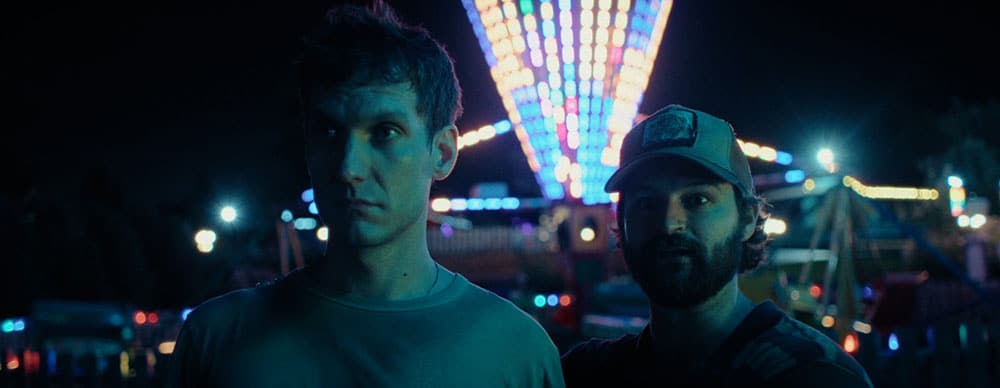
Louie (Scot Michael Foster) is an acclaimed writer who has made a killing off a series of novels chronicling his experiences growing up in the forgotten wasteland of middle America. His books feature characters ripped from his real life, including people he grew up with—friends and family members—that he paints in a decidedly unflattering light.
After his father’s death, Louie must return to his hometown to gather his father’s belongings. What was supposed to be a quick trip under the radar turns into a somewhat tense reunion with those who once meant the most to Louie—and those most hurt by his betrayal.
While there remains a strong bond of love and friendship, there’s also an underlying current of animosity among those Louie left behind and hung out to dry, including his childhood best friend, Travis (Kevin Bigley), and his first love, Lainey (Kate Cobb). When the three reunite over drinks, fireworks, and reminiscing, Travis and Lainey pepper him with questions about how he represented them and their town in his books, much to the discomfort of Louie (nicknamed by the townsfolk as “Lucky” Louie).
As he grapples with his feelings about his past and his present, including an impending wedding he seems woefully unprepared for, Louie begins to lose time and his grip on reality.
Maybe it’s because he’s struggling with guilt over exploiting the vulnerable for financial gain—or simply resents having to answer for his choices. Maybe it’s a form of self-sabotage. Or, perhaps, those he hurt simply demand retribution.
It’s unclear if the residents in the town are exaggerated caricatures, seen through the unflattering lens through which Louie paints them in his novels, or if this is the bleak reality of a dying town—haunted by dead dreams—with few options for those who remain.
It can be read either way, and both interpretations are intriguing for the film’s deeper themes.
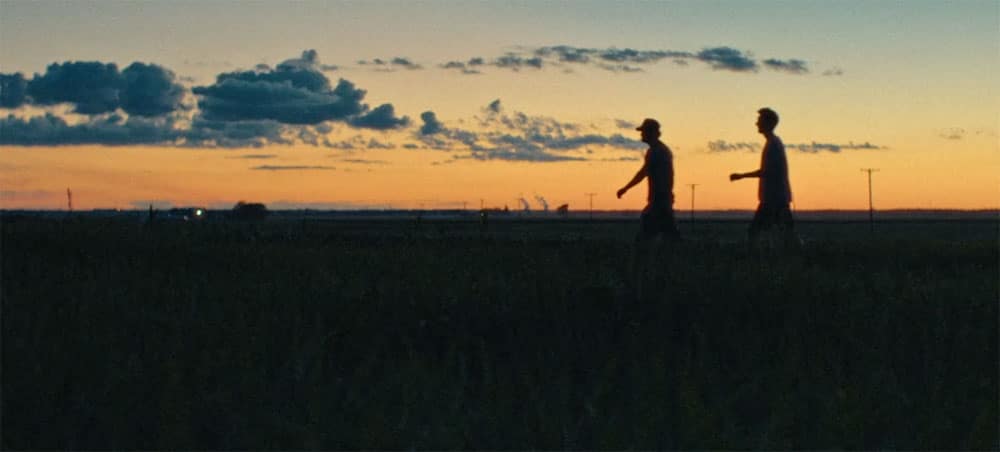
When Louie looks in the mirror, does he like what he sees? Or is he only a reflection of how those around him view him?
In his “real” life, he’s a big shot, attracting adoration and hangers-on as a result of his fame and fortune. But, back home, he’s just Louie. He’s just a kid from Nowhere America who got lucky (hence the nickname), and he’s not fundamentally better than anyone he grew up with—no matter what he tries to tell himself.
Is it this shifting perspective that causes his mind to shatter?
OKIE is billed as a comedy, and there are moments of levity and charm; for the most part, however, it’s a character drama about returning to your roots and remembering who you are.
Filmed in rural Illinois, where the husband-and-wife filmmaking team of Bigley and Kobb first met, there’s an authenticity to the setting that will resonate with anyone hailing from a small town—especially from the South or the Midwest. It’s the kind of place where so many spend their whole lives. Some are trapped due to poverty and circumstances. Others are perfectly content in a place where everyone knows their name, and they can be exactly who they are.
While Louie tries desperately to forget, Travis and Lainey cling to their happy memories of the past and the time when Louie was a significant and meaningful part of their lives—a time when they thought they’d be friends forever.
There’s a powerful scene at the end of the film where Lainey reminds Louie that he’s not a local, not anymore, and we feel the weight of that means for Louie and for those he left behind.
Louie may be the hero of his own story, but he’s not the hero of the film. That honor belongs to the town and its residents. Louie is just a character in the town’s story—a sobering and humbling revelation.
If you’ve ever had to confront your past, even as you attempt to reframe and reshape your relation to it, Okie will hit you with potent emotional force. It’s raw, real, and deeply relatable.
Overall Rating (Out of 5 Butterflies): 3.5
OKIE is set to release on VOD on November 8th via Gravitas.











Follow Us!