

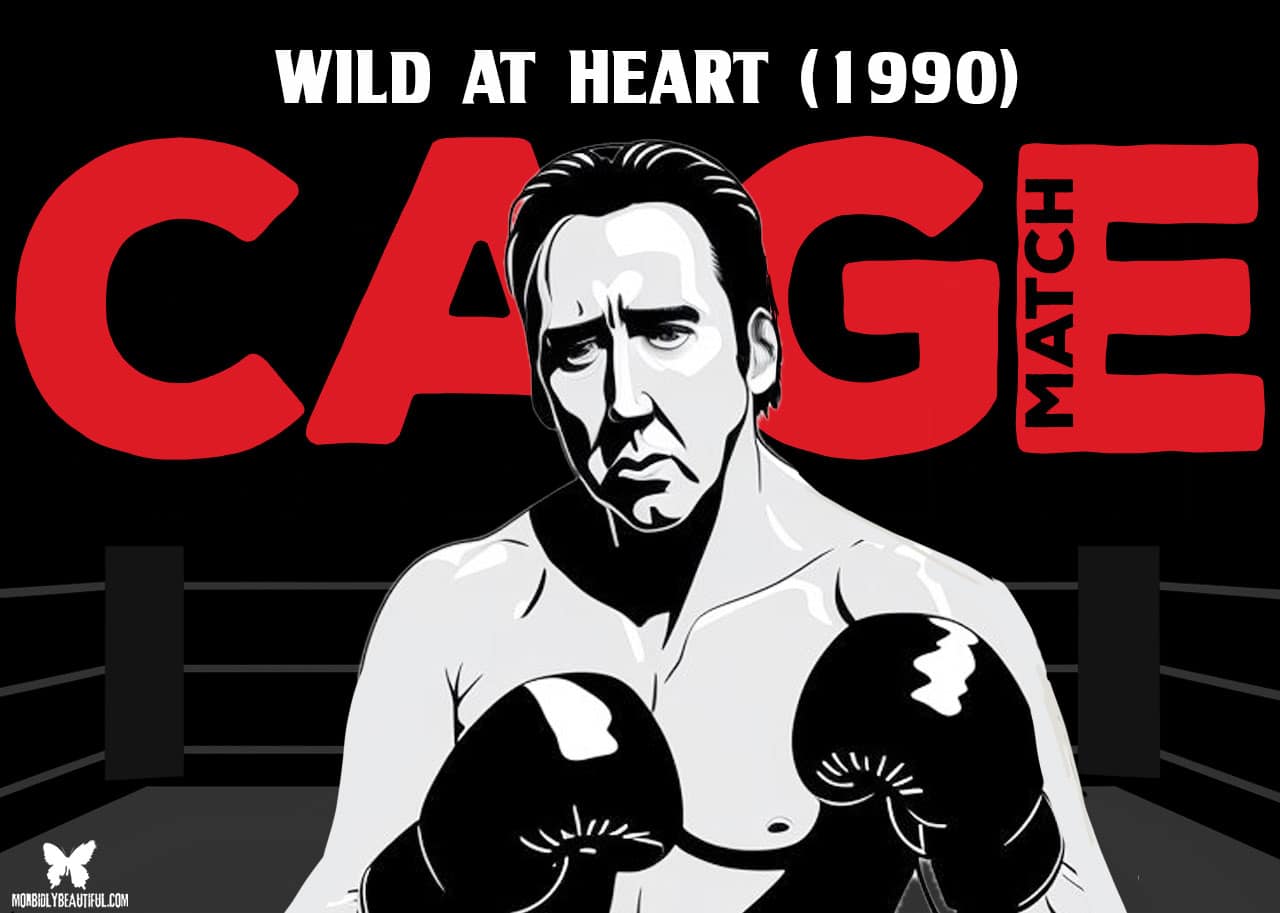
David Lynch’s “Wild at Heart” is a blazing, unforgettable tale of love and chaos, anchored by Nicolas Cage’s career-defining performance.
No time to read? Click the button below to listen to this post.
IN THIS CORNER: KELLY MINTZER
The Lowdown
Something important to state at the top: I’m not a huge fan of David Lynch’s work. I’m a MASSIVE fan of who he was as a person and an artist. I have nothing but respect for someone so uncompromising and deliberate in their vision. But. That vision is not always for me.
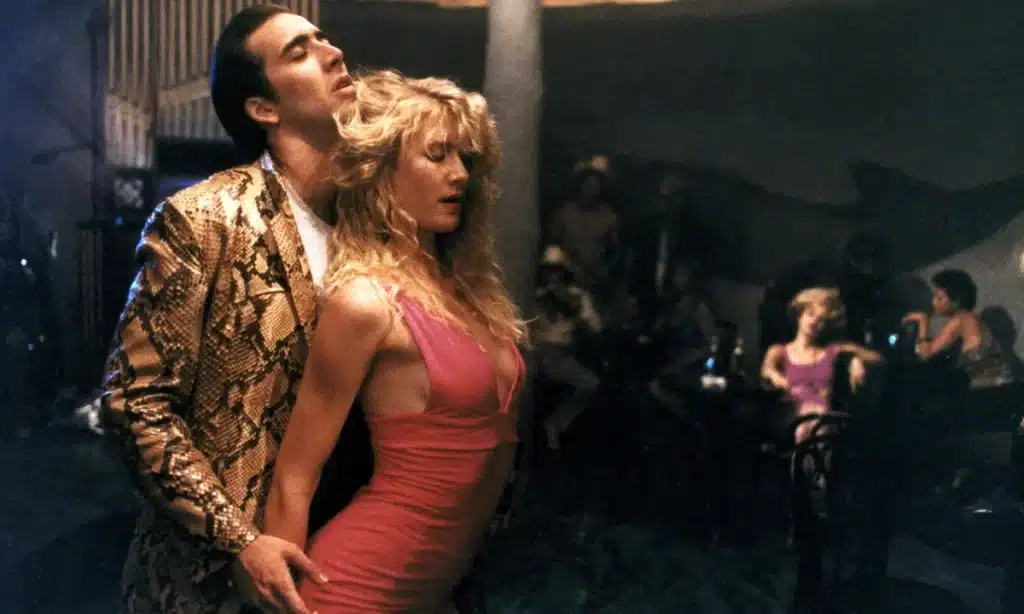
I can’t say Wild at Heart completely changed my alignment, but it is probably the Lynch movie I’ve most enjoyed (owed in at least a large part to the performances of Nicolas Cage and Laura Dern, who are just absurdly compelling and watchable).
Please forgive the comparison, but it reminds me a bit of a smarter, more cerebral and dreamy True Romance. It has that same troubled lovers on the run and against the world vibe—but of course, because it’s Lynch, there’s a sense of unreality.
Much like Blue Velvet, Wild at Heart has a few moments pertaining to sexual assault that make me uneasy; I’m not suggesting these things should never be in movies or that Lynch handles them poorly. I’m not saying that at all. I think he’s very much on the right side of these conversations, so this is me, as a reviewer who is also a person with her own biases and hangups, saying that it did add a bit of an acrid taste I didn’t entirely care for.
However, I did enjoy spending time with Lula and Sailor as they tripped through Lynch’s unique and vivid interpretation of a rotting American Dream. I always appreciate his camera eye; there is no denying he is an artist.
There is, of course, a healthy dose of the uncanny and weird. This is David Lynch, after all. If you bet money that Glinda the Good Witch WASN’T going to show up… well, pull out that billfold friend because it’s time to pay up.
It’s strange, of course, and intentionally a bit alienating. But I actually think it’s a pretty good entry point for Lynch. It’s a bit more accessible while not sacrificing any of what makes Lynch so visionary.
The Cage Factor:
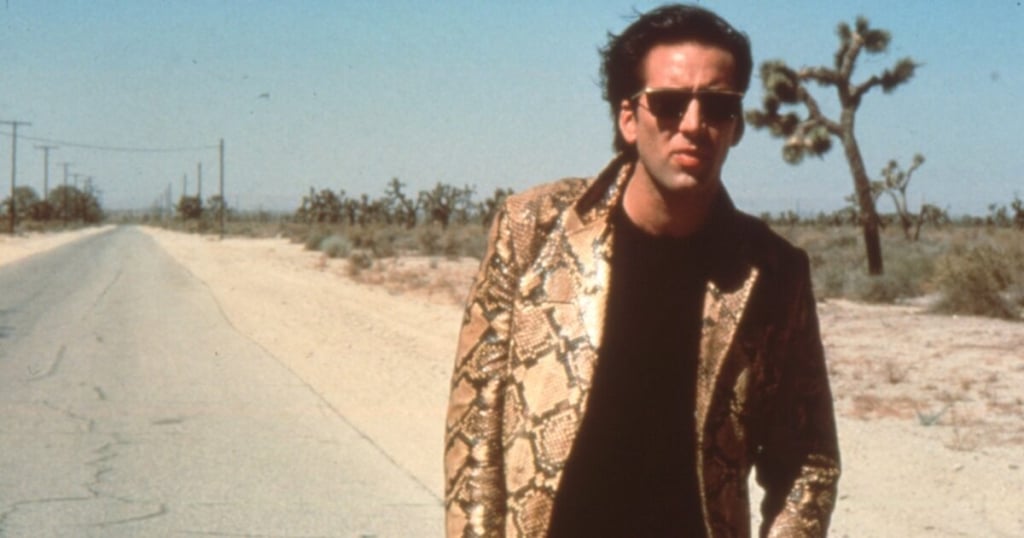
This is a Cage fighter. Not that this is the most important metric, but has Nic Cage ever been hotter than in this movie? But it also feels like the kind of role that young Cage was made for—maybe one very similar to either the person he was or envisioned himself as. He’s compulsively watchable, and working under a director as idiosyncratic and odd as Nic himself, he really shines.
AND IN THIS CORNER: STEPHANIE MALONE
The Lowdown
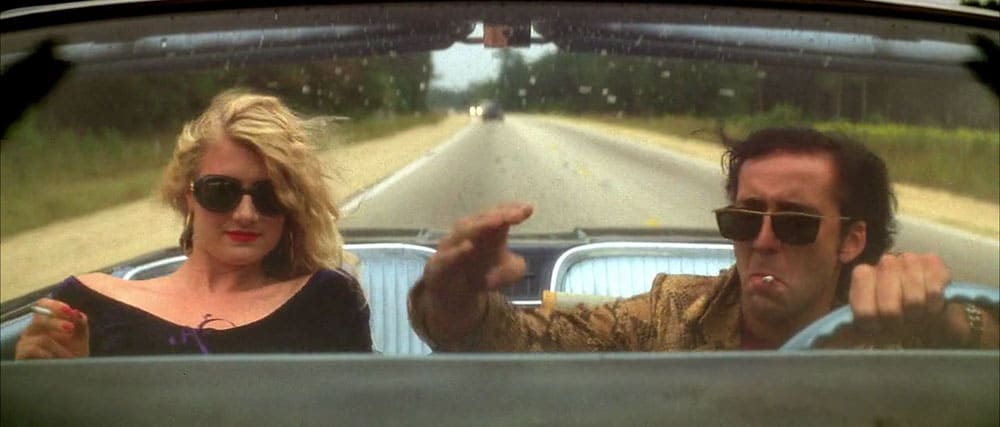
David Lynch’s Wild at Heart is a fever dream of love, violence, and surreal Americana that burns with the intensity of a thousand suns—a delirious odyssey that stands as one of the most electrifying entries in both Lynch’s provocative filmography and Nicolas Cage’s gloriously unhinged career.
Released in 1990 and crowned with the prestigious Palme d’Or at Cannes, the film represents Lynch at his most audaciously unrestrained, a love letter to cinematic rebellion that simultaneously deconstructs and celebrates the romantic road movie. It remains a crucial Lynch text that explodes narrative conventions with gleeful, anarchic energy.
The film becomes a twisted fairy tale, with The Wizard of Oz serving as a recurring motif. It dances on the razor’s edge of horror and hilarity, with Lynch plunging us into an exaggerated world of grotesque villains and dreamlike detours.
From Willem Dafoe’s chillingly grotesque turn as Bobby Peru to Diane Ladd’s Oscar-nominated performance as Lula’s unhinged mother (mom to Laura Dern in real life), every character feels like a distorted reflection of some universal human desire or fear.
Yet, even within Lynch’s bizarre and nightmarish flourishes, this remains a poetically beautiful and resonant film about love’s capacity to transcend even the most hellish circumstances.
It’s this emotional earnestness that makes the movie so unforgettable, and it’s Lynch’s ability to weave this earnestness into his chaotic, hyper-stylized world that elevates WILD AT HEART to one of the director’s most essential works.
Few films capture the madness and beauty of love quite like this one. It’s not just a must-watch—it’s an experience you won’t soon forget.
The Cage Factor:
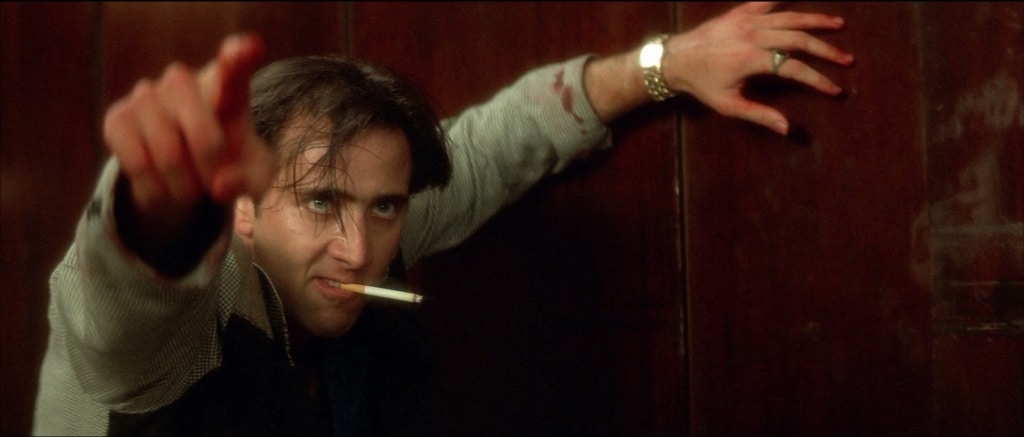
At the center of this hypnotic maelstrom is Nicolas Cage as Sailor Ripley, a performance so wildly charismatic and searingly sincere that it demands to be regarded as one of the best in his career.
Cage has always been a chameleon, but in Wild at Heart, he isn’t just playing a character—he embodies an archetype of rebellious love and untamed masculinity. Sailor, clad in his iconic snakeskin jacket (“a symbol of my individuality and belief in personal freedom”), feels like the living embodiment of rock ‘n’ roll: brash, romantic, and utterly authentic.
With shades of Elvis Presley and James Dean, he’s simultaneously tender and feral, heartfelt and unpredictable. His chemistry with Laura Dern’s Lula Fortune is white-hot, creating one of the most palpably erotic and emotionally charged on-screen romances in cinema history. Together, they’re Bonnie and Clyde by way of Elvis and Marilyn, fleeing from a fractured, grotesque world that mirrors their own wounded souls.
Cage’s ability to oscillate between raw vulnerability and volcanic intensity makes Sailor a deeply human figure—an anchor of truth amid Lynch’s surrealist madness.











2 Comments
2 Records
Radio Dave Cisco wrote:
Stephanie Malone wrote:
What a kind comment. Thank you so much! It was such a thrill to be able to cover this one and wax poetic about a film that holds so much meaning and importance for so many of us. I’m very glad it meant something to you as well, and I can’t thank you enough for taking the time to read and share your thoughts. It means the world.