


“Never Have I Ever” is a tense psychological thriller about manipulation and secrets—a game of cat and mouse that keeps you guessing.
No time to read? Click the button below to listen to this post.
Never Have I Ever is primarily a two-hander. Andrew Lee Potts plays Sam, a struggling, alcoholic screenwriter who is having a horrible day that begins with him losing his wallet, keys, and computer password (which he stupidly—and unbelievably—keeps written on a piece of paper in his wallet).
After someone breaks into his house and erases his recently finished screenplay, he’s about to lose his lucrative job, forcing him to pay back a significant advance that will bankrupt him.
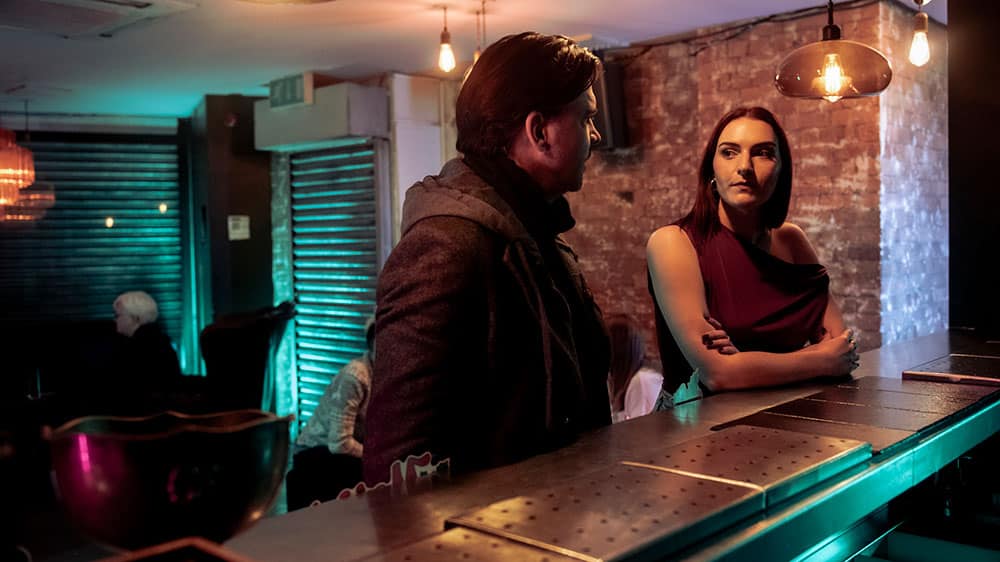
Enter Mara, played by Beatrice Fletcher, a mysterious grief counselor who meets him in a bar and offers to buy him a drink when the bartender refuses to let the prickish Sam simply “owe” him for the drinks he can’t afford.
Sam isn’t remotely grateful for the act of generosity, but he begrudgingly spends some time chatting up the pretty lady for no other reason than a thinly veiled desire to bilk her for more drinks. Mara eagerly obliges him in a way you can’t imagine any sane woman to do. She is happy to keep the booze flowing if he just spends a little time with her and makes pleasant conversation.
Sam, however, seems incapable of pleasantries, and his company feels about as rewarding as a root canal.
It’s immediately clear Mara wants something more from their encounter, but what and why?
Eventually, their conversation morphs into the titular game of ‘Never Have I Ever’ as Mara tries to manipulate Sam into sharing the sordid details of his very dark past.
I recently listened to a podcast where the hosts bemoaned the abundance of recent films centering around wildly unlikeable characters.
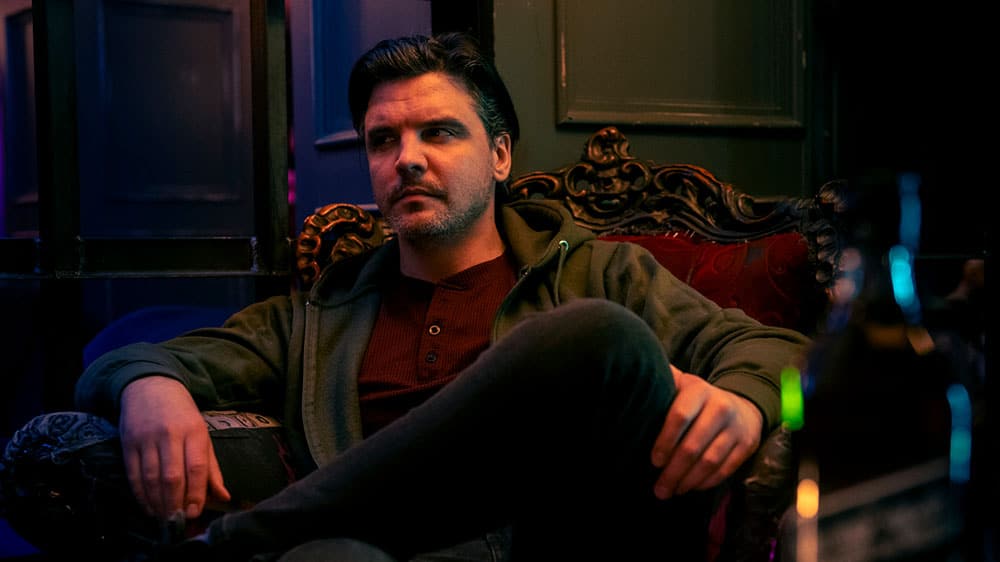
Sam is utterly despicable. Of course, that’s intentional. He’s a bad dude who fully deserves what’s coming to him. But it might have helped to try to humanize him somewhat before pulling the rug out from under him.
As it stands now, he’s so cartoonishly evil that we can’t invest in his plight (though it should be said that Potts is excellent at making us dislike him, which is entirely the point).
Yes, there’s some satisfaction in seeing him twist under the knife. But it would have been far more effective to give him some depth and complexity, making the slow reveal of how terrible he’s been all the more impactful. Even the film’s frequent flashbacks paint him in the most unflattering light possible.
However, people harboring dark secrets tend to be very good at wearing masks, especially narcissists like Sam, who makes a living crafting stories.
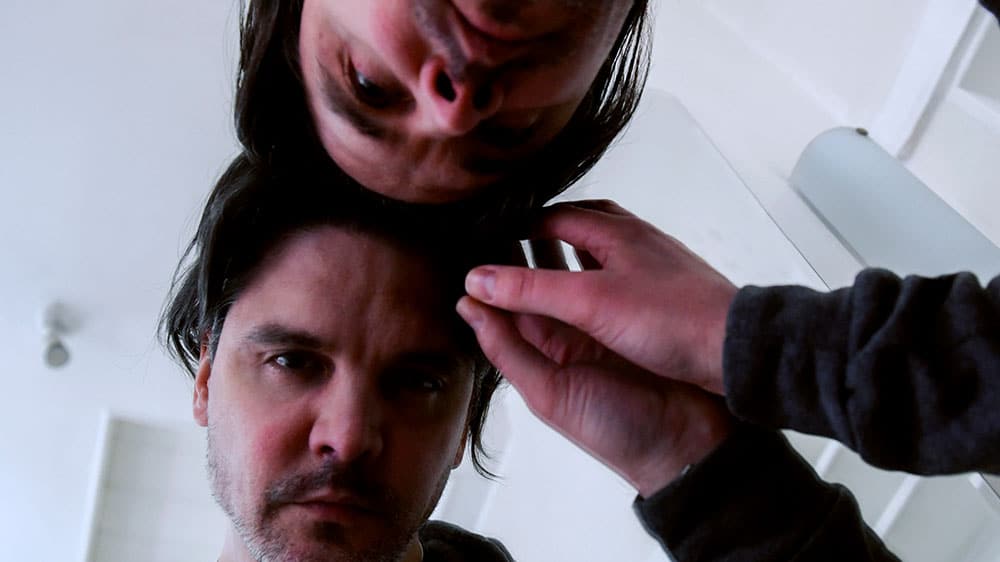
Sam isn’t a wolf in sheep’s clothing; he bares his teeth often—really, every chance he gets—and has no qualms with literally everyone around him clocking him as a grade-A asshole. You expect there to be some reason for his loss of humanity, some inciting trauma, but he remains irredeemable.
The fact that he’s so insufferable makes this hard to watch, as we have to spend much time with him. The carefully constructed multi-pronged attack against him would work so much better if we could be anxious for him and concerned about who might be messing with him and why.
The film becomes substantially more compelling in the latter half when we switch to Mara’s perspective, and Beatrice Fletcher is captivating.

Once she started sinking her hooks into Sam, I became fully invested and eager to see the story unfold.
There are some clever tricks here, and it’s a bold move to treat your real protagonist and most interesting character like a side character for the first half of the film while centering the narrative on a highly off-putting antagonist.
The slow build and perspective switch is intentional and not without merit, but it does require more patience than some viewers may have—especially during conversational scenes that go on far longer than necessary.
It’s rare that a film’s payoff is far more satisfying than its setup, but Never Have I Ever is one of those films. It mostly sticks the landing, even if it stumbles a bit getting there.
This is a low-budget indie film funded with support from a Kickstarter campaign, and its budget limitations are clear. With that said, Rickard uses his limited resources wisely, and the decision to limit the characters and locations was a smart one. I was never taken out of the film by technical failures, and director Damon Rickard (making his feature debut, co-writing the script with star Andrew Lee Potts and the film’s composer, Mitch Bain) displays obvious talent behind the camera.
Keeping the film tight and focused worked well for the narrative, which is far more interested in the human psyche and internal conflict as opposed to visceral horror.
It may be too slow and dialogue-heavy for many viewers, but there is undoubtedly something compelling about watching the psychological game of cat and mouse unfold.
Overall Rating (Out of 5 Butterflies): 3
NEVER HAVE I EVER is available on digital and on-demand beginning January 28, 2025.








Follow Us!