

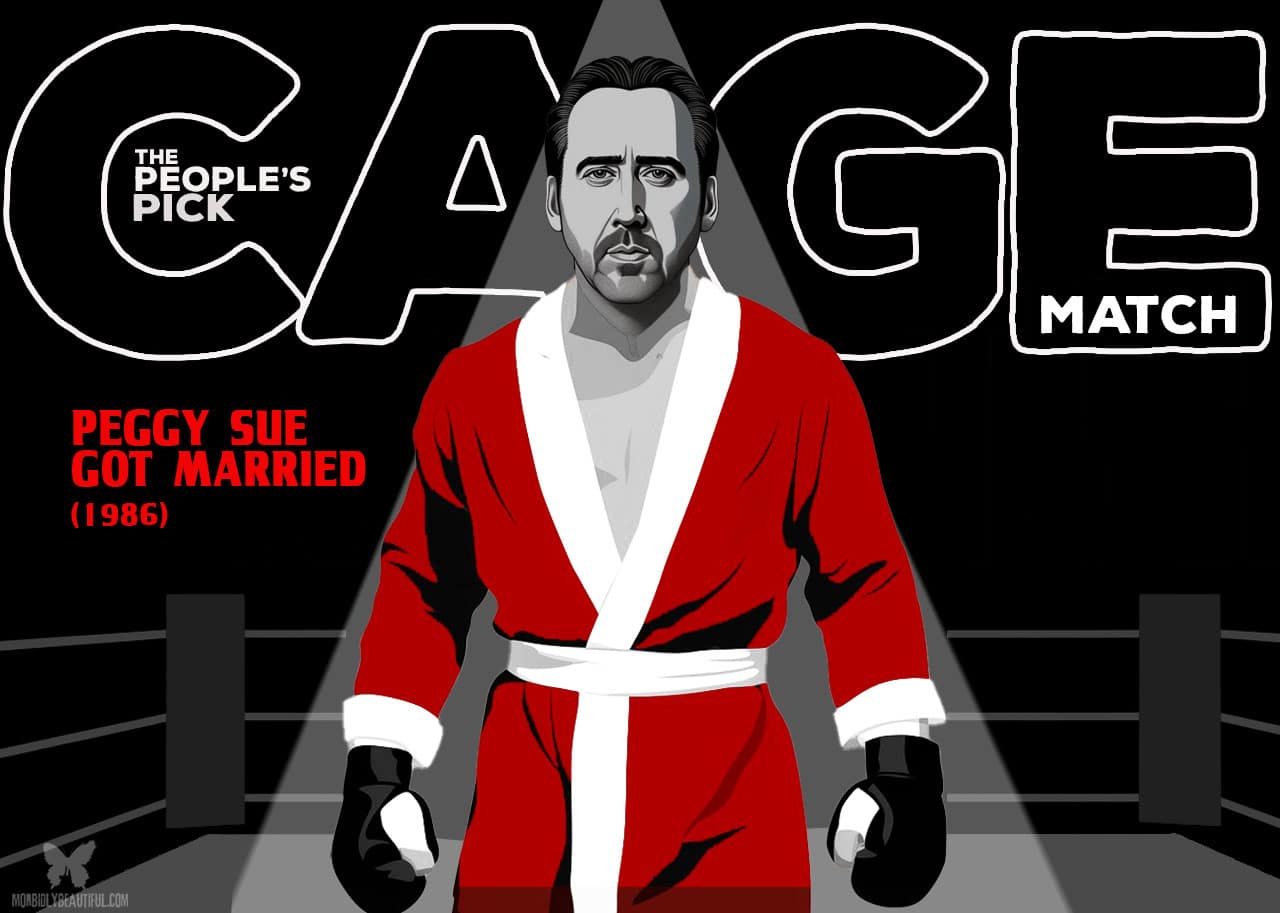
“Peggy Sue Got Married” is sweet and charming, but its claim to pop culture infamy is Cage’s wildly eccentric take on a teenage heartthrob.
No time to read? Click the button below to listen to this post.
It’s rom-com week in the Cage. The random number generator gave us Honeymoon in Vegas, a prime example of early ’90s Cage in full screwball mode—showcasing his manic energy, over-the-top outbursts, and comedic chops before he pivoted to Oscar-winning drama and action-hero status. For the People’s Pick, we travel further back in time to check out Peggy Sue Got Married—a fascinating early glimpse into Cage’s fearless commitment to bizarre acting choices, proving that even in a sentimental time-travel dramedy, he was determined to be the weirdest thing on screen.
Does it work? That’s debatable, and debate it we do!
IN THIS CORNER: KELLY MINTZER
The Lowdown
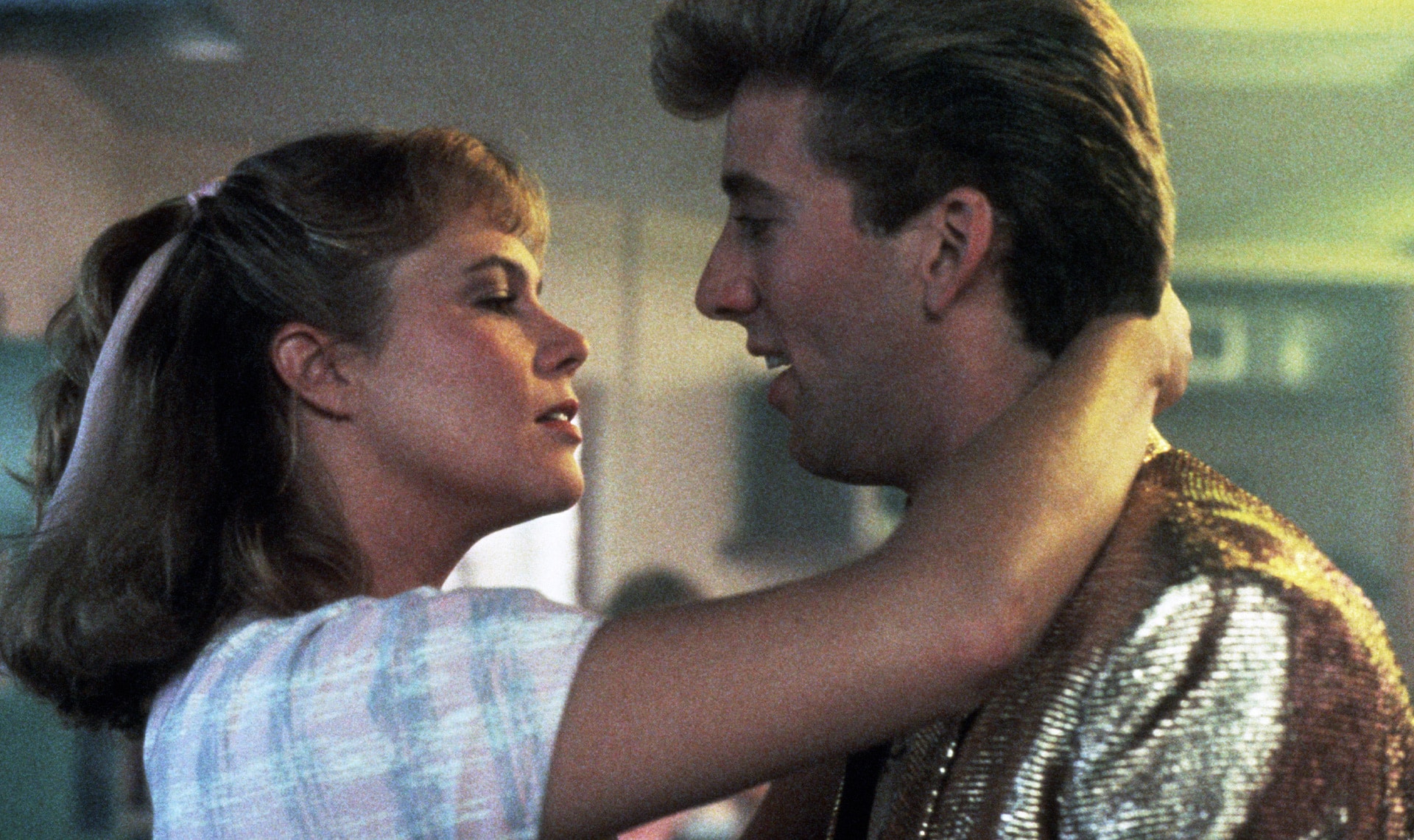
Boy, I didn’t like Peggy Sue Got Married. Let’s just get that out of the way at the jump.
For the second time in a week, I found myself watching a rom-com co-starring Nicolas Cage, where I REALLY wanted the female lead to take some time to herself, evaluate her relationships, and NOT end up with her leading man.
The film’s fundamental conceit is that the titular Peggy Sue goes to her high school reunion with her tail between her legs. Her marriage to Nic Cage’s Charlie has gone tits up, and she’s feeling—in general—that the dew is off the figurative rose. She suffers a medical event and either goes back in time or goes into a coma or (in one of the movie’s more bizarre decisions) does both.
She gets to relive her youth and see and appreciate it through experienced eyes. Hey, this isn’t a bad idea for a movie. And the parts where Kathleen Turner’s Peggy Sue gets to celebrate a refund youth, take chances she’d missed, and forge new friendships are all quite moving.
The problem here is Charlie. Both the character, as written and Nic Cage’s absolutely bananas performance. Y’all. Charlie fucking sucks.
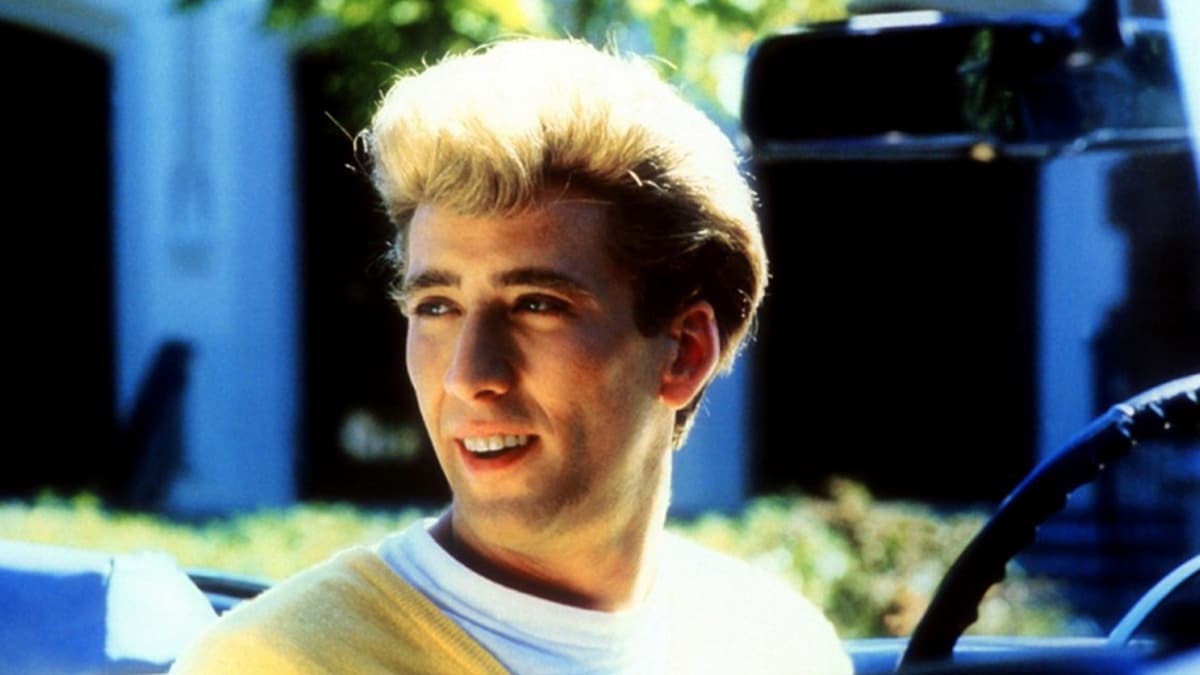
I guess we’re supposed to see him as sympathetic. I don’t. He’s self-pitying, weirdly aggressive, conceited. And for some absolutely impossible to explain reason, Cage delivers the entire performance as if he’s suffering from a head cold. It seems Charlie is supposed to be popular, but Cage is playing him like the archetypical dork character, all nasal, whiny inflections, and twitchy physicality.
I’m not suggesting that movies need to only offer us the iconography we know, but there is not one endearing thing about this character, and to make matters worse, we have to LISTEN to him, and god, I just wanted him to blow his damn nose.
In most romantic comedies, Charlie would be the character Peggy Sue was with at the beginning, and there would be some other, better romantic foil our heroine ended up with—a role that Nicolas Cage played quite well in the superior in literally every way, Valley Girl. Instead, Peggy Sue Got Married tries to convince us that he only seems like the wrong guy at the beginning and the past gives us additional context and depth to his character.
Except it doesn’t at all. The more I knew of Charlie, the more insufferable I found him.
I don’t know if different acting choices could have saved Charlie’s character. I frankly doubt it. But they would have helped. What the hell was Nicolas Cage doing? And why was he allowed to do it?
Well. Because of Coppola privilege, one has to assume. I cannot imagine any reason other than good ol’ nepotism that Francis Ford Coppola—by every reasonable metric, a superior director—would allow this performance to happen.
The Cage Factor:
Rat in a Cage. I grant that rom-coms aren’t my jam, but I’ve loved some. Hell, I’ve loved some we’ve done for this column! Moonstruck is literally perfect. But this? It’s just unpleasant. And it’s really hard to get on board with a rom-com where the rom is so incredibly stomach-turning.
AND IN THIS CORNER: STEPHANIE MALONE
The Lowdown
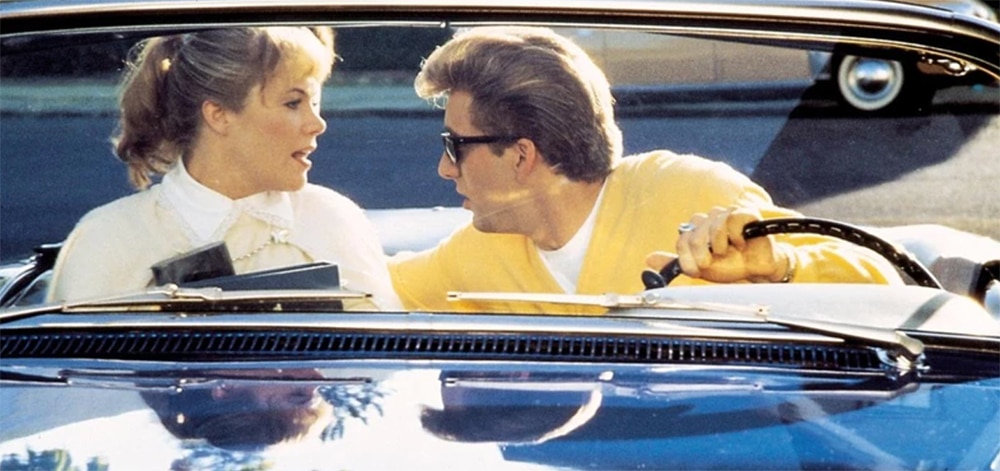
If you could travel back in time and relive your high school years, knowing everything you know now, would you? That’s the existential crisis at the heart of Peggy Sue Got Married (1986), Francis (sans the Ford for this outing) Coppola’s dreamy, bittersweet dramedy about regret, second chances, and the weird, unshakable pull of the past.
But let’s be real—this movie is best remembered today for one thing: Nicolas Cage’s absolutely bonkers performance.
Peggy Sue (played with radiant melancholy by Kathleen Turner) is a 43-year-old woman on the brink of divorce from her high school sweetheart, Charlie Bodell (Cage). When she faints at her high school reunion, she wakes up in 1960, back in her teenage body but with all her adult memories intact. Instead of sheer panic (or an immediate trip to Vegas to bet on future sporting events), she decides to re-examine her past, maybe even make different choices—like not marrying Charlie in the first place.
What unfolds is an oddly touching mix of comedy, nostalgia, and midlife crisis-fueled time travel shenanigans.
Coppola crafts a film that feels whimsical and melancholic, with a light science-fiction premise that never overshadows its emotional core. It’s not Back to the Future. But in its own wistful way, it taps into that same longing for a do-over, a chance to fix (or at least understand) our past mistakes.
The making of Peggy Sue Got Married wasn’t exactly smooth sailing. Kathleen Turner was reportedly miserable working with Cage, and their on-screen tension likely reflects some real-life animosity. In her 2008 memoir, she even accused Cage of being difficult and unprofessional—an accusation that led to a lawsuit from Cage himself.
There were also studio nerves about Cage’s performance. Reportedly, executives begged Coppola to fire him. But Coppola, either out of nepotism or sheer curiosity about how far Cage would take it, stood by his nephew.
The result is one of the strangest yet strangely fitting performances in 1980s cinema.
Despite the weirdness, Peggy Sue Got Married is primarily a heartfelt, occasionally surreal look at love, regret, and the roads not taken. It’s a sweet, sentimental time-travel film with moments of genuine emotional depth—if you can get past Cage sounding like a rejected Looney Tunes character. (You could be forgiven if you can’t.)
Whatever you think of Cage in this very singular performance, it’s hard to deny that Turner is phenomenal. The nostalgia is thick, and the themes are universal.
It’s not a perfect film; that much is true. The ending is a bit of a cop-out, and the pacing drags in places. And it’s not hard to understand why Turner and the studies executives questioned Coppola’s judgment for letting Cage go so far off the rails. However, it does make this film extremely unique and unlike any other nostalgic rom-com you’ll ever see.
Is that a good or bad thing? Judging from these two very different reviews, that’s up for debate.
The Cage Factor:
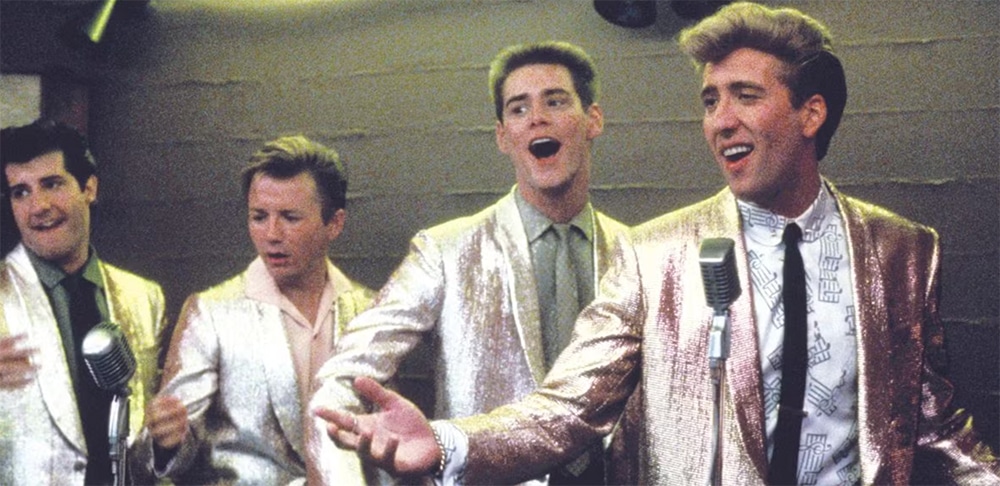
Look, it’s no secret that Cage makes choices. Big ones. Bold ones. Often baffling ones. And in Peggy Sue Got Married, he outdoes himself. Playing teenage Charlie Bodell, Cage affects an absurdly high-pitched, nasal voice. It’s so bizarre and off-putting that Kathleen Turner famously said in interviews that she “hated” working with Cage and found his performance deeply frustrating.
So why did he do it? Well, Cage has claimed he wanted Charlie to sound like a “teenage horse,” inspired by the cartoon character Pokey. Coppola, his uncle, allegedly tried to talk him out of it, but Cage insisted—and because he was already proving himself to be a rising star, the director relented. The result? A love interest so strange that you almost root for Peggy Sue to run off with literally anyone else.
And yet, in its own warped way, Cage’s performance works. His weird voice, his exaggerated facial expressions, his manic energy—they all make Charlie Bodell feel like a man-child who would eventually become the kind of emotionally stunted adult Peggy Sue wants to escape from. It’s maddening but undoubtedly memorable.
This one is tough for me to rate. It’s a strange performance from a young Cage in full experimental mode, testing boundaries and swinging for the fences. It certainly won’t work for everyone, yet it is a fascinating glimpse into his early career that proves just how fully committed to being fully weird he’s always been—unafraid to go for broke and stick to his guns, even as a young gun in Hollywood.







Follow Us!