


Whether explicitly written as autistic or not, “Longlegs” heroine Lee Harker is a potent affirmation of the autistic experience.
No time to read? Click the button below to listen to this post.
EDITOR'S NOTE
The following article contains an in-depth analysis of Longlegs, a film currently in theaters. As a result, you are strongly encouraged to watch the film before reading this analysis to avoid any significant plot spoilers. You can read our review of the film here.
Having spent most of my life as an undiagnosed autistic person has left me with a quandary as a writer. I now constantly re-evaluate films I have watched from the perspective of someone who is now diagnosed to see how it informs my viewpoint on films I have loved my whole life.
We all bring our lives and our experiences to the films we watch. It’s natural, and it could be the factor that causes a story to strike a chord with us on a visceral and cerebral level or not.
Like many viewers, when I walk into a theater, I am bringing a lot of baggage with me. I’ve got my suitcases of trauma and neurodivergence packed tight, and sometimes they pop open and spill out over two or so hours, but it’s a safe environment for that to happen in.
This might not be a profoundly ‘highfalutin’ think piece worthy of mountains of social media praise. Still, I think this is an important discussion now that we live in a post-release world where Osgood Perkins’s latest horror show, Longlegs, is available to the masses.
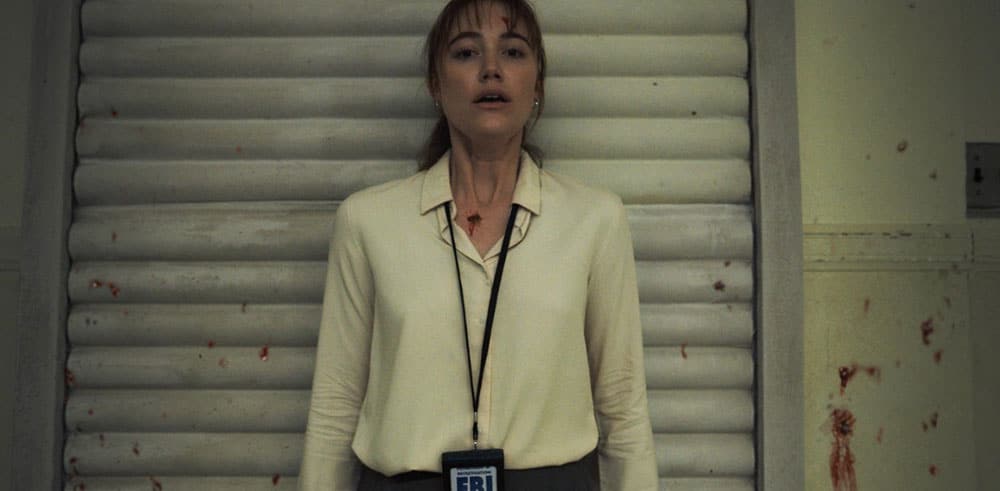
Within ten minutes of the movie, I knew that many in the audience were sitting with an unalienable fact that they might not even be able to identify with: Lee Harker, Maika Monrore’s intrepid and quiet FBI agent character, is autistic.
Whether Perkins or Monroe meant for Lee to code autistic is neither here nor there; art is meant to be subjective in this nature anyway.
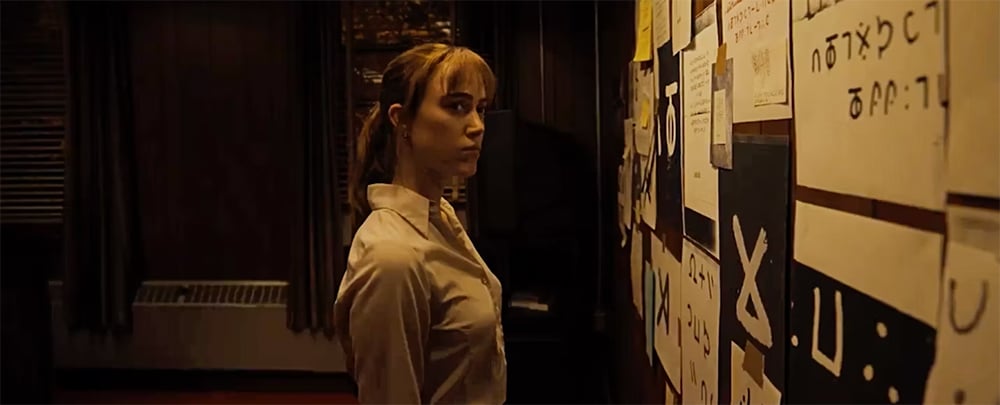
Due to the film’s period setting, Lee would never have been able to get a proper diagnosis. The film is set in the 1990s, meaning that understanding the differences and nuances of autism in women was still a far-off dream—a dream about a good twenty to thirty years in the future. This is a reflection of the failure when it comes to autism research. It’s something that autistic women still have to battle.
Most research at the time frames Longlegs covers would have been mostly centered around young white cis male boys, which is why we now have so many women and other marginalized identities currently being diagnosed with autism well into adulthood.
Autism isn’t a fad; we simply have more knowledge than we did in the past, which is a positive result of research efforts.
During my appointment to receive the results of my testing, the psychiatrist looked at me and told me that, while the signs of autism were there even in my childhood, I wouldn’t have been diagnosed then due to being a high masking and low support needs individual, meaning that I can blend in with allistic people well enough and can mostly function within their societal standards to the point I would have merely been deemed odd or eccentric.
Thus, leaving Lee’s possible autism ambiguous or up to the audience makes sense as a stylistic and thematic choice.
Though I would love to hear Perkins’s and Monroe’s thoughts on Lee’s autism, I understand any decisions not to address this facet of the story early in the game.
The movie is fresh and deserves some time to generate organic discussion. As a horror writer and filmmaker, I have done this with my own film work as a way to speak to social barriers that prevent people from being properly diagnosed and allow audience inference.
Specifically, the character Gray, from my forthcoming film Bystanders, is written as an undiagnosed autistic young man who falls through societal cracks in a horrific and traumatic way, and Catherine, from my unproduced screenplay Housewife, is written as an undiagnosed autistic woman navigating 1960s society.
On a personal and artistic level, I am excited to see where the larger discussion of Lee’s neurodivergence goes.
Lee goes against the stereotypical grain of autistic representation.
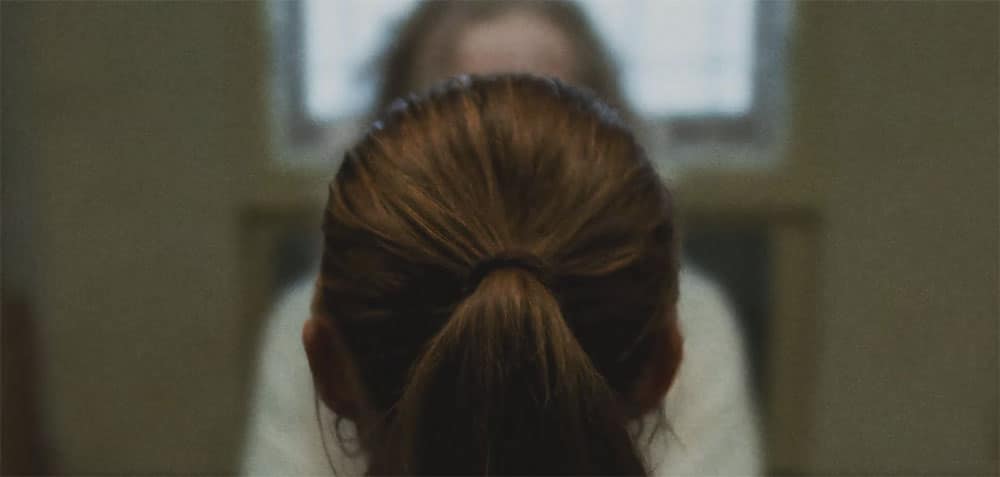
She’s a low support needs individual. She’s able to hold a job. She’s highly efficient despite not being extremely sociable and unable to fit seamlessly into social situations. In fact, her efficiency can be deemed a byproduct of her autism.
Lee has a high level of pattern recognition to the point that this could be debatably supernatural within the context of the film. Yet, her ability to cipher through details that have previously been a mystery is a product of pattern recognition skills common within autistic individuals.
Society often thinks of pattern recognition skills as related to numbers and math, but the reality is far more complex. Autistic brains latch on to patterns, which can include words, letters, puzzles, social and life events, and more. Lee spends time with evidence for the Longlegs case, and due to her ability to hyperfocus on the task, she can decipher not only his letters but also the decades-old cracks in the mystery behind the meticulously planned dates of the murders.
Lee’s social issues pervade the film from the beginning.
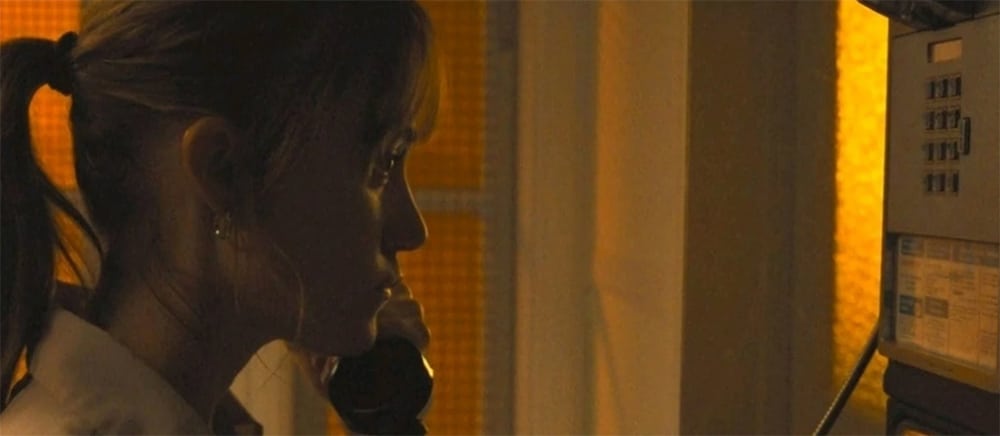
One moment that made me laugh because it speaks to the autistic social anxiety experience is when Lee balks at meeting Agent Carter’s (Blair Underwood) wife, Anna (Carmel Amit), and daughter, Ruby (Ava Kelders), and then goes on to have stilted uncomfortable conversation with Ruby in her room. Lee has trouble holding eye contact and often turns away from people rather than looking at them head-on. The few times she looks at characters head-on are pivotal to the narrative and often turning points for her arc.
Lee also possesses flat and measured effects while communicating.
Autistic individuals can have a flat affect while speaking, causing some to find them dry or unemotional, though not all autistic people have a flat affect. She has a straightforward way of communicating, not mincing words like allistics. Some people may view Lee as a rude character (i.e., in the aforementioned scene where she doesn’t want to meet Carter’s wife and daughter), but she speaks sincerely and directly.
However, despite Lee’s lack of social skills, she seems to care deeply for those around her and is greatly affected by others’ emotions.
Monroe does a fantastic job of showing Lee wordlessly processing her feelings and her reactions to what is happening around her, communicating that she has a rich interior world.

This arguably pairs with Lee’s strong sense of justice, a common trait in autistic and other neurodivergent individuals. She’s morally unambiguous in a movie filled with characters who err on the Lynchian side of ambiguity.
There isn’t some big underlying plot twist regarding Lee’s allegiances in the movie. Lee is simply Lee, a woman striving to do meaningful work and make a difference in a disordered world.
There are no ill machinations or underlying subtext, which is displayed in her arc and actions.
When faced with decisions, she makes the difficult choice to minimize harm and protect those around her, even though that choice requires her to eventually kill Agent Carter and her own mother, Ruth (Alicia Witt), in the film’s heartstopping resolution. Even when other characters are making arguably confusing decisions and acting out of line with their character, Lee is the character who consistently makes sense and has a strong moral compass.
Autism comes with comorbidities, like most illnesses. A common comorbidity is post-traumatic stress disorder (PTSD). Australian National University did a study and concluded that autistic people are predisposed to developing PTSD. Autism and PTSD have symptoms that overlap and sometimes feed into one another if you are diagnosed with both. These symptoms include hypervigilance, social difficulties, sensory sensitivities, emotional dysregulation, repetitive behaviors, and so on and so forth.
Lee has the hallmarks of PTSD as a result of childhood trauma.
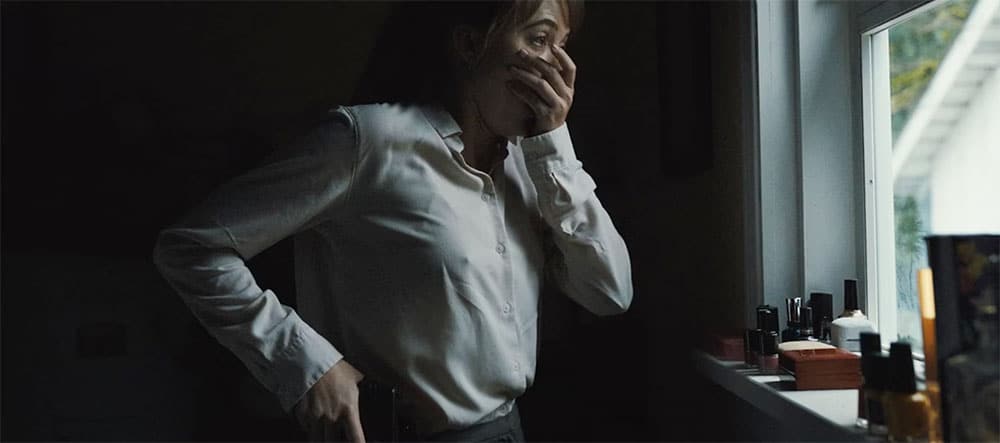
One of those key issues is the gaps in Lee’s memory. Memory deficits are common in multiple types of neurodivergence, including autism. Naturally, the throughline here is that Lee’s autism would compound the traumatic memory loss she experiences regarding her encounters with Longlegs (Nicolas Cage) as a child.
Researchers are currently doing studies regarding autism, PTSD, and memory function within children, so there are likely discoveries on the horizon in this specific area that will better speak to this unique experience. I can, however, speak on a personal level as an autistic person with a well-documented case of PTSD starting from the time I was a teenager. I have memory gaps. It’s scary. You wonder how you possibly could have ever forgotten parts of your own trauma.
The thing is, you didn’t forget. Your brain repressed them to protect you. Details of my childhood resurface in my day-to-day life, triggered by sometimes nothing at all.
Lee is isolated from those around her, even her mother.
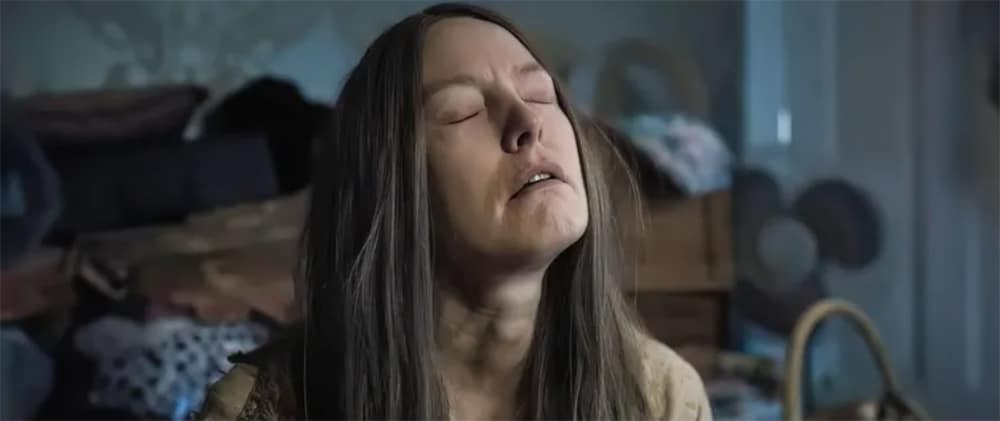
Lee’s character is solitary, the only child of a single mother. Her childhood is marked by loneliness, with no family or friends. Even Lee’s mother hits on how isolating Lee’s childhood was and why the intrusion of Longlegs was such a traumatic event.
She is set apart from her fellow FBI agents, often working long hours alone while trying to crack the Longlegs case.
Whether by choice or societal alienation, autistic people are often extremely isolated from those around them because they are different. Whether it comes from painful societal misunderstandings, allistic individuals and their lack of empathy, or the myriad of other complications through at autistic people, isolation may appear to be a safer option than ridicule and further trauma.
Lee Harker is a character that goes beyond the awkward female FBI agent pursuing a serial killer in a male-dominated landscape narrative that Jonathan Demme set forth in Silence of the Lambs, a comparison that I have seen time and time again while researching, and sadly, finding nothing regarding Lee’s character.
Whether Lee’s autism is creator-intended or not, it opens up an important discussion regarding autism within mainstream entertainment and the lack of positive, nuanced, and empathetic portrayals.
Autistic people are allowed to have their existence affirmed by characters that aren’t explicitly stated as or even originally intended to be autistic. That’s the beauty of art and analysis, the ability to see and be seen.
The autistic experience is varied, and it’s time that our art starts to reflect that freely.










7 Comments
7 Records
Leianna wrote:
Jayson dawn wrote:
Stephanie Malone wrote:
Thank you for your thoughtful feedback and perspective. We truly appreciate it.
Jamie Alvey wrote:
Hi Jayson,
I appreciate you taking the time to offer up your point of view here, and I wanted to reply with some clarification on my view of Lee and autism in regard to your thoughts. I agree, it is not perfect representation, as we are just not there yet. I will say it is a step in the right direction because most of autistic representation in horror is a lot like movies like The Darkness (2016) and The Daisy Chain (2008). The Daisy Chain is perhaps one of the most upsetting portrayals of autism in horror I have personally ever seen and equates autistic children to violent changelings. However, people are allowed to feel affirmed by imperfect and even problematic representation as act of radical reclamation. For example, many trans women have reclaimed the Sleepaway Camp movies and find comfort in them even though they are inherently problematic. A lot of autistic women and femme nonbinary individuals have found a lot of comfort and power in Lee. It’s not a bad thing for people to feel seen. I am roughly Mika Monroe’s age and a late diagnosed autistic woman. I debated even writing this piece because there are always downsides to these portrayals, but I figured the good it would do would always outweigh the bad? So I went for it.
I did not see Lee as particularly superhuman gifted, nor did it seem that Lee regarded herself as such. The film itself comments on that. Carver mentions Lee got 8 numbers right and “beat the machine.” Lee counters that she also missed 8. So, in universe, Lee’s not inherently supremely gifted omnipotent being. She has strong intuition and pattern recognition but she is far from the harmful prevalent savant stereotype that autistic people are trying desperately to outrun. I believe acting like Lee is just marvelously gifted instead of having great observation skills and intuition is greatly overblown and perhaps a reaction to the norm of how autistic characters have to be perceived as the greatest at something alive in order to be seen useful. (To be fair, I think the FBI agents were exploiting Lee to an extent.)
I also did not see where Lee was cured. It could be interpreted as such, but seeing as it’s the climax of the movie we don’t have the time to delve into that plot point. (In my opinion she shows autistic traits when she first meets Longlegs and before because she is a solitary child wrapped up in her own interests, not unlike many autistic girls.) I have followed similar discourse closely to develop my feelings and opinions on the matter. I assume you are referring to where her mother shot the doll. We have no evidence this cured her of her autistic traits, but we do know it unleashed a barrage of repressed traumatic memories that she needed to remember to properly save Ruby. In my opinion, this isn’t just an autistic narrative, it’s a trauma narrative, and to look at it solely from one perspective instead of a double-barreled one is reductive. Memory gaps and PTSD are common in autistic women. I read that scene as dealing more with trauma narrative that is baked into the autism one. The black smoke was released as was the bad memories. I also never viewed Lee as cursed. She wasn’t cursed. She was failed by people around her, mostly her mother who was desperately trying to keep her safe.
I also want to mention that I like in narrative that Lee was not scolded for speaking bluntly or not making eye contact. I have been treated like utter trash my whole life for those two elements of my core being, and I have some trauma from that as well. So, I might be taking crumbs there, but it was nice to not see her outwardly judged for autistic traits that I have struggled with and continue to. (Being told you’re weird and off putting from the time I was a child really did a number on me.)
This is simply how I interpreted those elements, and I hope this gives you a better view of my own interpretation of the events as a late diagnosed autistic woman in her early thirties with childhood trauma and PTSD. I think that life experiences truly color the perception of this narrative, and I frankly am sorry that it was not as affirming for you as it was for me because I know life has the tendency to beat down autistic people in varying ways and different reads of this likely come from that stigma. However, I cannot extricate my read of Lee from my own unique experience, and likely you are in the same boar. Again, it’s all rough around the edges, but this might be the push we need to get more autistic horror creatives in the seat. (Though in good conscience I cannot assume that Oz Perkins or Mika Monroe are not on the spectrum because of how vast it is and how deeply personal it is to share your diagnosis with the world.) I’m still sussing out what it would take to academically define an autistic horror canon and discuss that with the world at large.
A movie like this is going to generate a lot of discussion, and this is exactly what I wanted this piece to do.
Again, thank you,
Jamie
Dmitry wrote:
Being autistic myself I really enjoyed “autistic vibe” of the movie.
I myself have a great job with high salary. So why can’t Lee has one? Not every autistic is a low-income person with everyday struggle. And she’s not gifted, she’s just good at pattern recognition (like me, LOL).
Her “blank face” is very nice. Her hyperfocus on the case is also marvelous.
Eye contact is a terrible thing. It really hurts for me, so I perfectly understands Lee not making it.
I don’t recognise the end of the movie as “ASD cure”. For me it looks more like constant PTSD experience from childhood finally comes to an end.
David Cooke wrote:
Nancy wrote: