


Metallica brought the horrors of war to the MTV masses with their devastating music video “One”—including disturbing anti-war film scenes.
No time to read? Click the button below to listen to this post.
Displaying a marketing savvy well beyond their years, Metallica’s first-ever music video eschewed the “leather jackets and motorcycles” trappings of many of their peers, going straight for the jugular with an offering that was equal parts invigorating and horrifying. And while they were far from the first metal band to tackle a heady topic, their video for “One” touched a chord with many thrashers of the era (this reviewer included), giving us something to think about while throwing devil horns and banging our heads.
This was the evidence that many of us needed to combat the, at the time, prevailing theory that metal musicians were all rage-fueled Neanderthals without a coherent thought between them.
In this month’s Metal and the Macabre series (check out last month’s here), we examine the unexpected but brilliant marriage of Metallica’s lyrically potent metal megahit “One” with the impactful anti-war film Johnny Got His Gun.
The Details
Director: Bill Pope (jam segments) & Michael Salomon (Johnny Got His Gun inclusions)
Editor: Michael Salomon
Released: January 20, 1989
Length: 7:45
Label: Elektra
Album: …And Justice For All
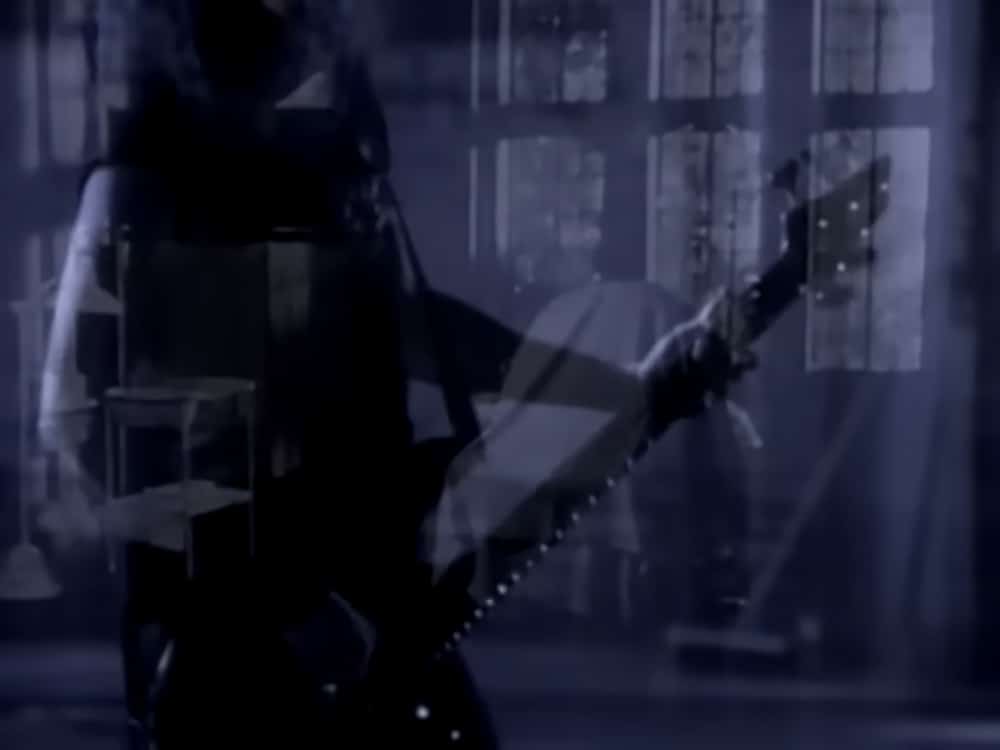
In an abandoned warehouse somewhere in Los Angeles, lit only by light streaming through large pane windows, three musicians (two guitars, one bass) form a semi-circle in front of a fourth player seated at his drum kit. A large overhead fan casts staccato shadows across the players’ bodies; dressed in jeans and t-shirts, filmed in a blue-hued monochromatic style, they’re not what one might initially expect from the kings of thrash metal. They seem, for lack of a better word, nearly ordinary. The music video, however, will prove to be anything but.
Explosions and gunfire are heard, soft but insistent, before the melodic guitar intro kicks in.
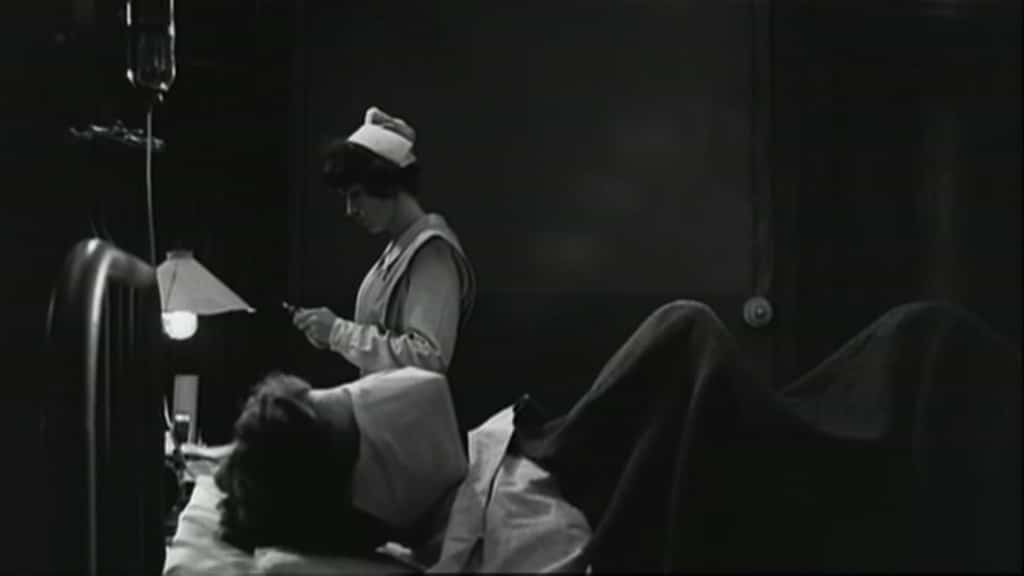
Cue scenes from the 1971 film Johnny Got His Gun, many in black & white, some in color, interspersed with footage of the band. Military doctors discuss the injuries received by a young soldier, one surgeon lamenting that if he had known how extensive the damage was, he’d never have kept the soldier alive. The color scenes, which signify Joe’s recollections and daydreams, conflict with the black & white scenes of his hospitalization, offering a grim dichotomy between the life he had and his current state.
There’s a subtle, possibly unplanned incongruity between the scenes of Metallica’s technical prowess butting up against Joe’s quadriplegic existence. These are musicians at the height of their powers, while the young soldier has been robbed of his ability to do anything at all.
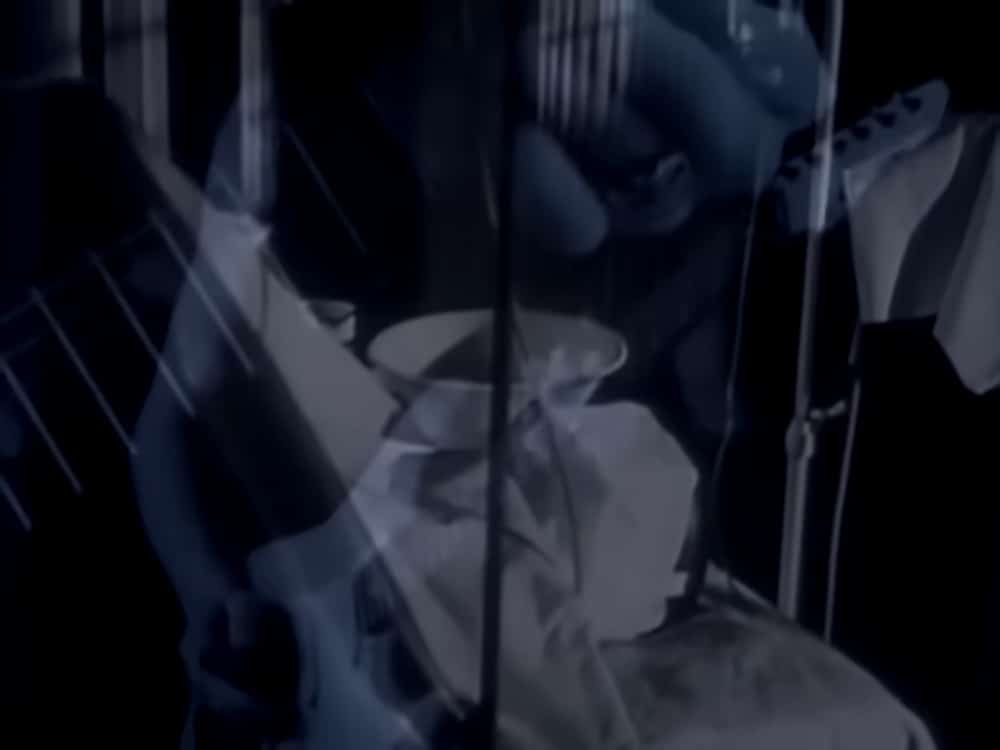
As the music gets heavier and heavier, with mini guitar solos sprinkled throughout and Lars Ulrich (drummer) making increasingly aggressive percussion faces, Joe’s mental state progressively deteriorates to the point where he’s mentally screaming for his mother, for the nurse, for anyone at all to help him.
It’s when the double-bass drums kick in, and the song finally ventures into full thrash territory, replete with an absolutely killer solo by Kirk Hammett, where Joe finally manages to communicate with his superiors and the medical staff, begging for them to kill him; to be released from his state of wakeful nothingness. And though the nurse makes a valiant attempt, his superiors intervene, keeping him alive.
As the song reaches its crescendo, James Hetfield’s lyrics perfectly encapsulate the young soldier’s living nightmare.
Darkness, imprisoning me
All that I see, absolute horror
I cannot live, I cannot die
Trapped in myself, body my holding cell
Landmine, has taken my sight
Taken my speech, taken my hearing
Taken my arms, taken my legs, taken my soul
Left me with life in hell
The music video ends with a color shot of one of Joe’s memories, some manner of congregation, before changing to a black-and-white outro of him lying in an infirmary bed, alone and forgotten.
Johnny Got His Gun
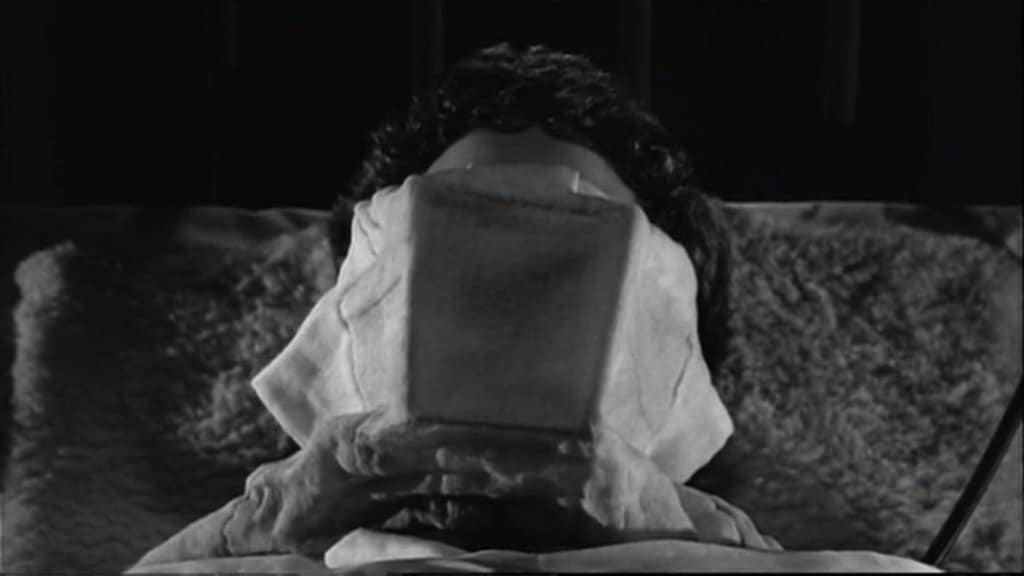
Initially an anti-war novel written by Dalton Trumbo and published in 1939, the film Johnny Got His Gun (also directed by Trumbo in 1971) was distinctly at odds with much of the fare coming out of Hollywood at the time.
War comedy Kelly’s Heroes had been released to great acclaim the prior year, downplaying the horrors of combat in favor of a daring heist and witty banter. Also released in 1970 were M.A.S.H, Patton, and Tora, Tora, Tora, films that focused on WWII and the Korean War, all of which minimized the aftereffects of violence in favor of laughs, drama, and thrills.
Though the Hays Act was long since dead and buried, Hollywood was (and frequently still is) all about entertainment first, keeping the overall carnage to a minimum.
Based on, and essentially identical to, the 1939 novel of the same name, Johnny Got His Gun focuses on WWI soldier Joe Bonham, who awakens in an Army hospital after being struck by an artillery shell. He soon comes to realize that not only has he lost all his limbs, but he has lost the use of his eyes, ears, nose, and mouth as well. He is little more than a husk of his former self, a body strapped to a medical bed. His mind, however, is still perfectly coherent, and he quickly grasps the misery of his situation.
Unable to verbally communicate and without the means to end his own life, he resorts to banging his head against the pillow in Morse code, requesting to be euthanized.
The Army refuses to grant his request, stating that such an action would violate military regulation. Joe realizes, to his horror, that he will be forced to live out the rest of his days as a prisoner in his own body, stripped of everything that makes him human, waiting for old age to claim him.
Though it won accolades at the 1971 Cannes Film Festival, Johnny Got His Gun, which was independently released, was largely forgotten soon after its debut, overshadowed by its Hollywood peers. But some things simply won’t stay buried for long, and the film’s popularity surged after the “One” music video aired on MTV. It is now considered a cult classic and has been released on DVD, in addition to being available for streaming on YouTube.
As a young lad who grew up watching the aforementioned war films and TV shows, in addition to cartoons like G.I. Joe, most of which kept the aftermath of combat on the periphery, my mind was absolutely blown by the simple yet effective imagery on display in the “One” video.
Monsters and the supernatural are all well and good, but there is something singularly terrifying about being a prisoner in one’s own body, fully coherent yet unable to interact with the world around you. Begging for release and having it repeatedly denied. There was a horror that was all too plausible, contrasting sharply against the admiration for a war that other period films had cultivated in me. I still love those old war movies, of course, but my enjoyment is thoroughly tempered by the understanding that behind all the glory, comradery, and thrilling action sequences are real victims who experienced truly appalling injuries and unimaginable mental anguish.
The closest analog to Joe’s plight that I can think of would be sleep paralysis.
The National Institutes of Health (NIH) defines sleep paralysis as the phenomenon in which resumption of consciousness occurs while muscle atonia of REM (rapid eye movement) sleep is maintained, leading to intense fear and apprehension in the patient as the patient lies awake without the ability to use any part of their body.
People who suffer from sleep paralysis are frequently aware of their surroundings but are unable to move or speak and suffer from overwhelming feelings of fear, panic, and/or helplessness. Many people liken it to demonic possession, in which an entity has taken control of their body, haunting them while the victim is unable to cry out or defend themselves. From the outside looking in, that doesn’t SOUND like the worst thing ever. However, those who have lost control of their own bodies, whether by sleep paralysis or panic attacks or whatever, can attest that it is the most terrifying thing they’ve ever experienced.
Final Thoughts
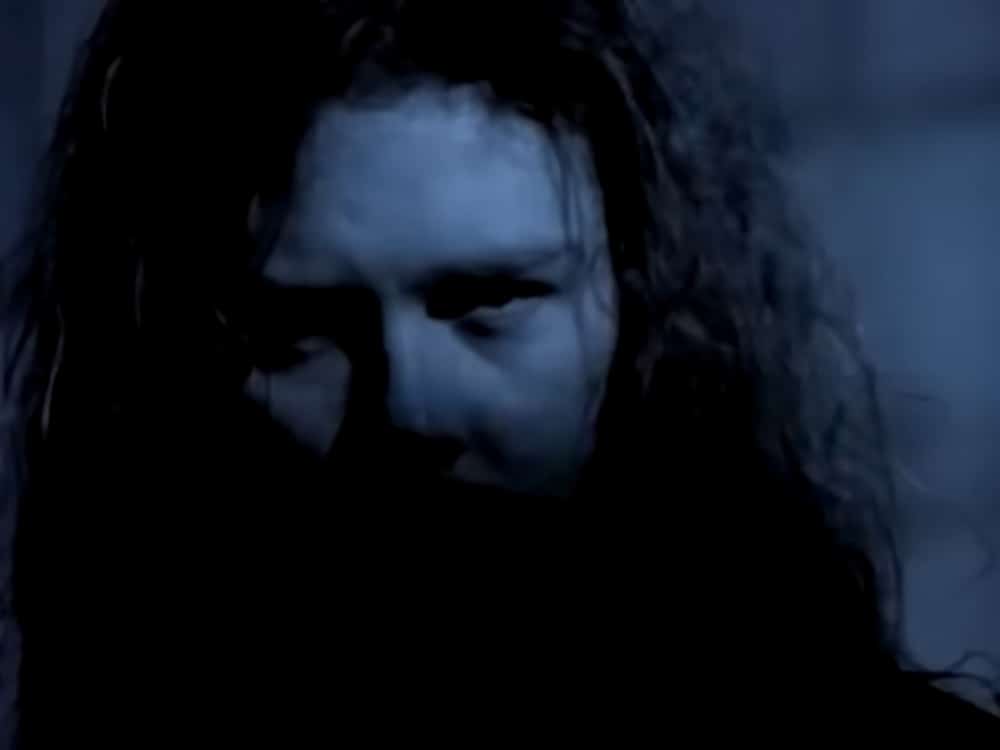
Even now, it’s impossible to overstate just how groundbreaking the video for “One” was back when it was released.
Metallica was, at the time, still an underground band, albeit one which was right on the cusp of becoming a household name. “One” and its thought-provoking music video (which instantly became the number one requested video on MTV) brought them firmly into the limelight, establishing them as bonafide superstars and paving the way for their continued success. As an impressionable young metalhead (12 years old when this video dropped), nothing could have prepared me for just how visceral it would be.
To this day, I can’t think of too many fates more horrifying than Joe Bonham’s plight in Johnny Got His Gun.
If you haven’t seen the video or it’s been a while since you last watched it, I urge you to pull it up on YouTube and experience for yourself what all the fuss was about.





Follow Us!