

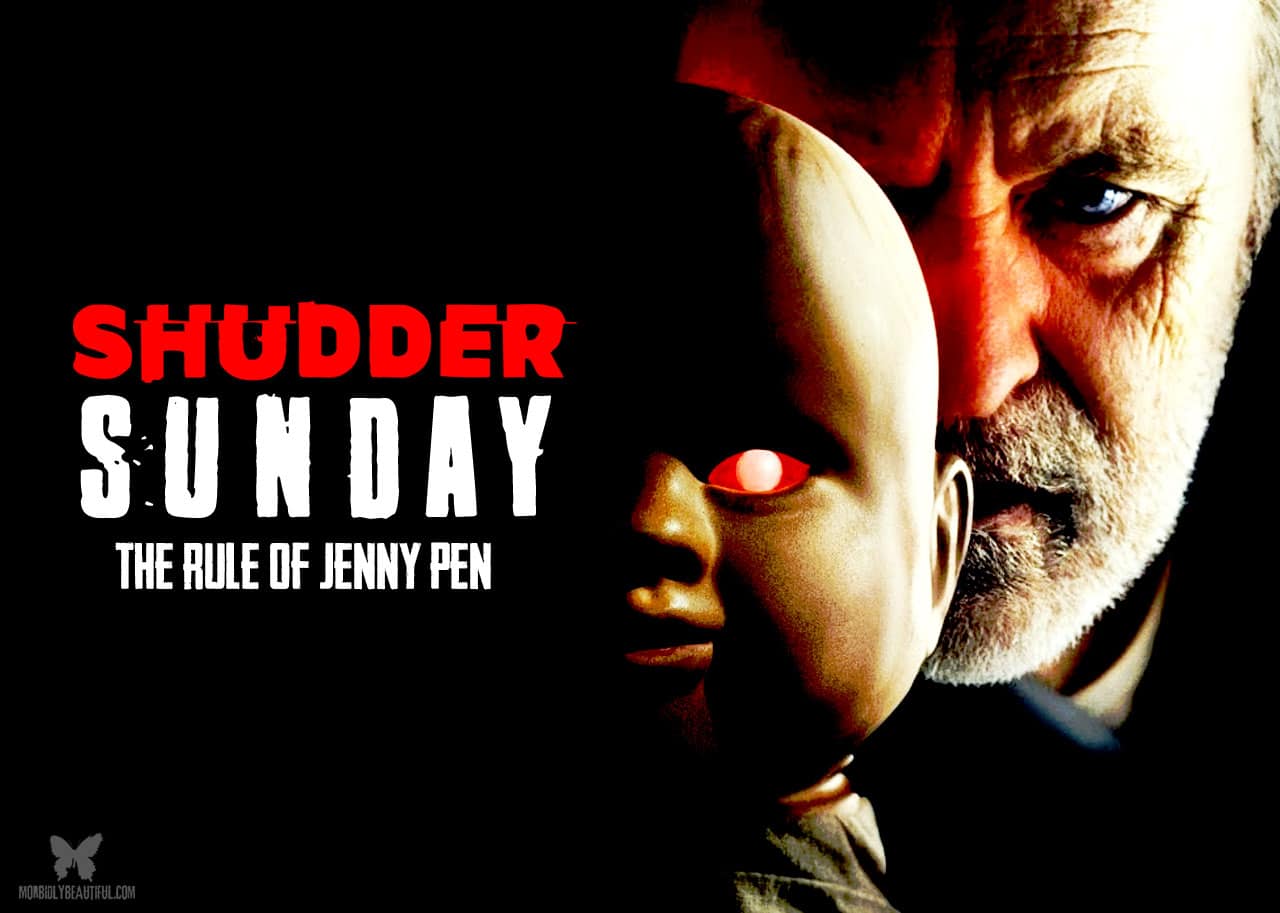
Those able to stomach the dark themes will find “The Rule of Jenny Pen” a fascinating rumination on power dynamics and ageing.

No time to read? Click the button below to listen to this post.
Back in the early 2000s, a cat belonging to a Rhode Island nursing home seemed to know exactly when people were going to die. The domestic shorthair, named Oscar, would snuggle up beside a patient and nap; within a few hours, the patient passed away. By 2015, Oscar had accurately predicted over a hundred deaths. The story garnered a lot of attention in the media and even impacted popular culture, with Stephen King’s 2013 novel Doctor Sleep featuring a similarly gifted feline.
Despite being dubbed the “Angel of Death,” Oscar was not considered to possess any malice as a cat—in most portrayals, in fact, the comfort he offered patients in their final moments painted him in a favourable light.
The new film by Kiwi director James Ashcroft, The Rule of Jenny Pen, imagines Oscar’s opposite: an Angel of Death who is all malice and one who not only signals death but sometimes brings it about himself.
Ashcroft likes to challenge his audiences.

The director’s 2021 effort, Coming Home in the Dark, is a grim and savage film that deals explicitly with racism and child abuse.
If anything, Jenny Pen is even heavier in tone. When Judge Stefan Mortensen (Geoffrey Rush) suffers a stroke during one of his trials, he is moved into a care home against his will. A proud and somewhat pompous man, he has to endure the infantilization that elderly people are subjected to in such places, as his dignity is whittled away.
More than happy to speed up this process of dehumanisation is Dave Crealy (played by a terrifying John Lithgow), a fellow patient who feigns infirmity during the day but at night roams the corridors looking for patients to terrorize with his doll, Jenny Pen.
While Stefan is initially hopeful that he can fully recover and be released, Dave seems determined to remind him of the terror of being a captive in his own body.
THE RULE OF JENNY PEN is a film about power, the dynamics of which are alluded to in an early line: “Where there are no lions, hyenas rule.”

Dave, the film makes clear with his screeching laughter, is the hyena. Though he has felt overlooked all of his life, in the valley of the blind that is the nursing home, Dave is the one-eyed king.
Stefan is in the opposite situation: having once wielded the power to decide the fate of others, he now finds himself with less freedom than is afforded the prisoners he sentenced.
It is in this debilitating setting that Dave is able to abuse his newfound authority, with the staff of the nursing home either oblivious or wilfully ignorant of his cruel acts.
Power and its abuses here hide something animalistic beneath.

As the recurring nature documentaries on the television sets make clear, the nursing home reverts existence to one in which might is right—the final stage in a loss of dignity is a reduction of the human to the animal.
Dave preys on the weak because that is the way of the natural world. His apparent anger at seeing anyone else happy or free is mixed with a simple need to check any rising challenge to his power. With only Stefan’s very much diminished lion to stand against him, the cruelty of Dave becomes inevitable. But it is no less shocking.
If this sounds like hard viewing, that’s because it is.
In otherwise pretty dark times, it can be hard to justify layering on the misery in our leisure time, but there are plenty of reasons to give Jenny Pen a chance. Top of the list are the performances of Rush and Lithgow, who commit so willingly to their roles that we share Stefan’s indignation and seethe at Dave’s cruelty.
The film also features its fair share of dark humour, with Lithgow’s performance as a self-aware psychopath offering Three Stooges-like japes as readily as quietly menacing stares.
Behind Dave’s apparent joviality, however, is a rage that threatens at any moment to bubble over, creating almost painful levels of tension.
The film is unfailing in its depiction of the bleak reality of elderly care.

Yet, there is also something feverish about the film as Stefan’s brain, of which he was once so proud, begins to fail him, and entire hours become unexperienced voids.
The speculation was that Oscar the cat possessed supernatural abilities. In that connection with a higher power, there was an undeniable comfort in its company. The power that Dave wields, however, is terrifying because of how dreadfully human it is. His abuse of authority sucks away hope for the future and leaves only the prospect of unending cruelty.
Such a bleak worldview can be tough for an audience to stomach. Those willing to endure such a reality, however, will find much to like about Jenny Pen, a tight, well-constructed, brilliantly-acted film with much to say and says it well.
Out of the many horror films that deal with the claustrophobic terror of entrapment and the subsequent loss of self, this one may hit the hardest.










Follow Us!