

“The Rule of Jenny Pen” explores the overlooked horror of aging and how society’s dismissal of the elderly creates fertile ground for terror.
No time to read? Click the button below to listen to this post.
Let us acknowledge immediately and with no hesitation that we, as a culture, have failed our elderly.
We have treated them as an afterthought at best, more often as a joke. As we’ve seen actors age-yes, even the unspoken royalty of the American sect-we’ve seen Jack Nicholson, Diane Keaton, Steve Martin, Morgan Freeman, and on and on, relegated to the strange corner of film where we sort of coo and say “isn’t it adorable, they think they’re people?”
So often in cinema and TV, romance for the elderly is treated as a punchline instead of a very real, natural, and human part of life. But bad news, all. It’s coming for us.
That is, arguably, a large part of the brilliance of The Rule of Jenny Pen, a movie that made me more tense than anything I’ve seen in the past 10 or so years.
I am, as are many readers, an old and hardened horror fan. I began my love affair with the genre in my early teens and am now holding onto my 30s by the jagged tips of my fingernails. Which is to say: I’ve seen it all. And I am not easily shaken.
Would I say The Rule of Jenny Pen is the scariest movie I’ve ever seen? No, but then again, what is frightening is subjective.
However, I remote watched this with my partner, who made a very trenchant and frankly unshakable point:
Jenny Pen deals with several kinds of terror, but it tackles a universal (if we’re lucky—and what a quandary, that) kind of horror-that of aging, the great leveler.
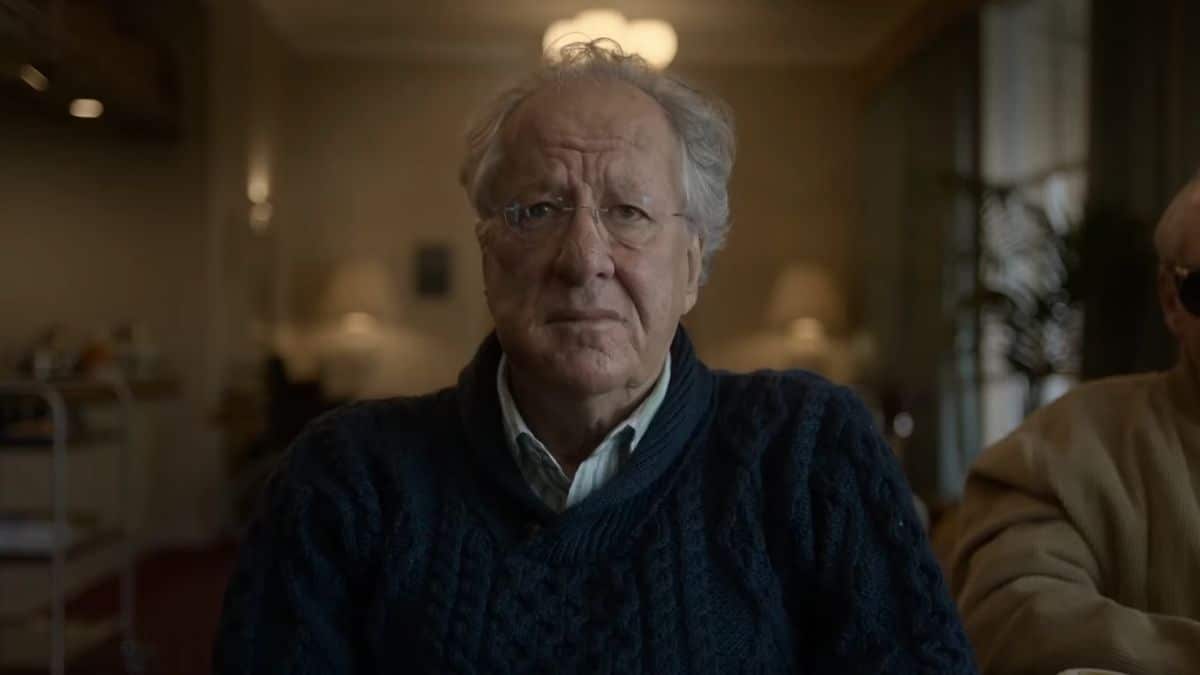
Geoffrey Rush (brilliant, pompous, not entirely sympathetic, and how brilliant, that?) plays a highly educated, erudite judge who is reduced to assisted baths, forced companionship, and, alas, the attentions of John Lithgow (so much more on him later) and Jenny Pen.
The Rule of Jenny Pen reminds us that we often treat our elderly strikingly similarly to how we treat children; despite the years and lived experiences that the residents of Rush’s nursing home can claim, we watch them enduring what is functionally a children’s birthday party entertainer performing for them.
This does lead to a bleak and delightful laugh when the singer attempts to insert Rush’s name into his song. The judge destroys him with a look so withering that he retreats well before he gets into the verse.
Despite that triumphant moment, however, Jenny Pen uses a very clever conceit—that John Lithgow’s brilliantly unhinged villain can flourish in this institutionalized setting because the elderly are a sort of invisible people in our society—to create a sense of deep and abiding anxiety.
Because here’s the thing: we often relegate the elderly to being innocuous. As if they cease being human, in all its nuanced and wonderful and—let’s be honest—often awful reality after the age of 60.
Consider how we do not readily permit people (particularly women, but that is more of a The Substance conversation) to look their ages. And when they do, the opportunities become far more limited. We (well, some of us) talk a lot about the idea of no longer being taken seriously as a sexual possibility after a certain age.
But what about being taken seriously as a threat?
The Rule of Jenny Pen suggests that age affords Lithgow’s sadistic inmate a level of immunity, not because of respect or reverence, but because of underestimation and invisibility.
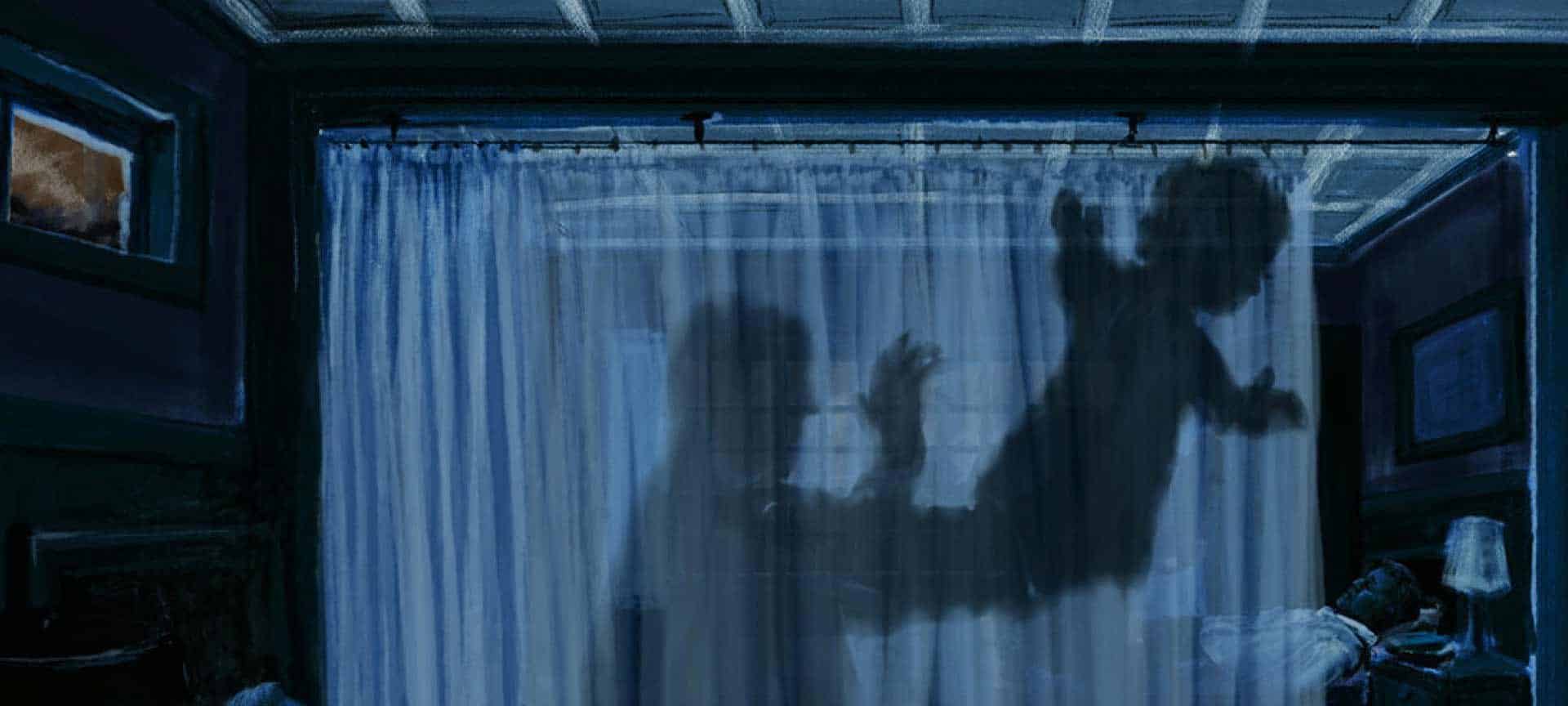
While he revels in this, the other side of this blade is that he can terrorize at will, and the young-to-middle-aged attendants don’t even mark it. After all, how much damage can a nearly octogenarian do?
Jenny Pen rather brilliantly reminds its audience that we do not stop being people because we age.
There’s almost something inspiring in it, were it not for the absolutely bonkers cruelty of Lithgow’s character, who proves that we do not outgrow bullying.
And if you will indulge me, because I know I’ve already run long… but Jenny Pen suggests (quite rightly) that nursing homes often recreate the exact sort of institutions we experienced as children in school, which cultivated bullying and allowed it to flourish.
And to return to my thesis about the invisibility of age, the staff simply believes that at a certain age, people become anodyne and harmless.
A cloak of invisibility is a powerful thing. While there have been properties that have dealt with the tragedy of neglect, Jenny Pen goes a step further and looks at those who might take advantage of the freedom afforded them by the infantilization of the elderly.
It examines the ways that viewing the elderly and infirm as harmless children, as invisible, as less than, not only dehumanizes them, but also actively endangers them.
While Geoffrey Rush is doing borderline career-best work here, it is John Lithgow, arguably our best living actor, who truly steals the show.
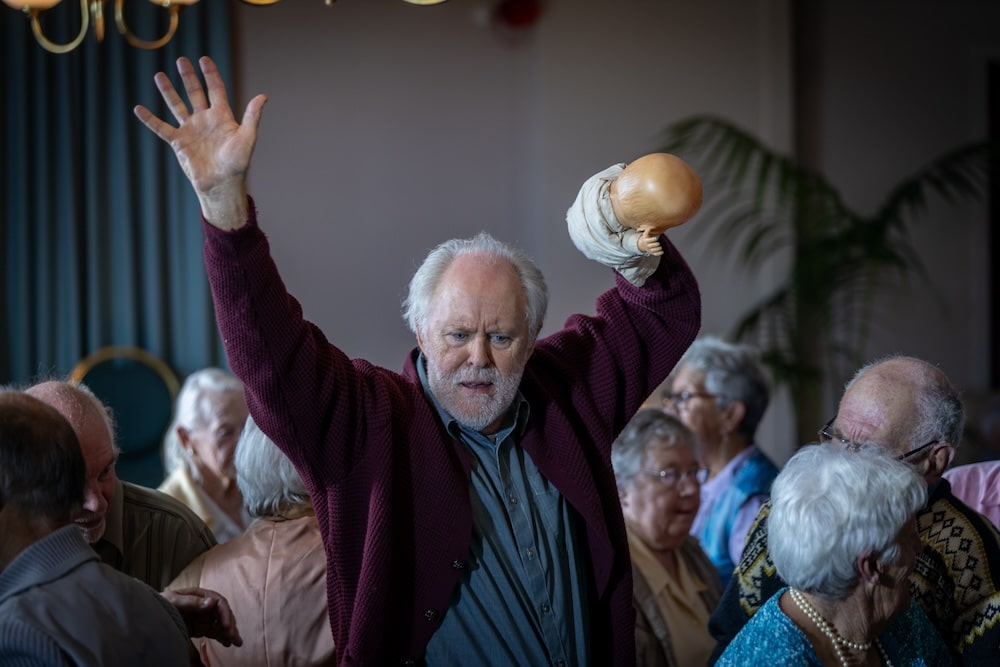
He is magnificent; a villain who towers over (even at 79, Lithgow is a staggering 6’4) his domain… who, despite how fucking dreadful he is reminds you… getting older doesn’t take away your power.
I am glossing over the ways the movie examines the way age traps you in your own body and terrorizes you; that’s been discussed, and while I’ve no doubt the filmmaker intended that conversation, I think it’s sort of the tip of the iceberg that’s already peaking over the water line.
However, it warrants at least a passing notice, given the way our own government is currently attacking Social Security, a fundamental right intended to help dull the sting of the indignity of aging.
Fuck Elon Musk. Fuck 45.
(Sorry if you thought I wouldn’t go political here, but watching the elderly and disenfranchised being ignored… well, given the state of things, it would be remiss and willfully blind not to comment on.)
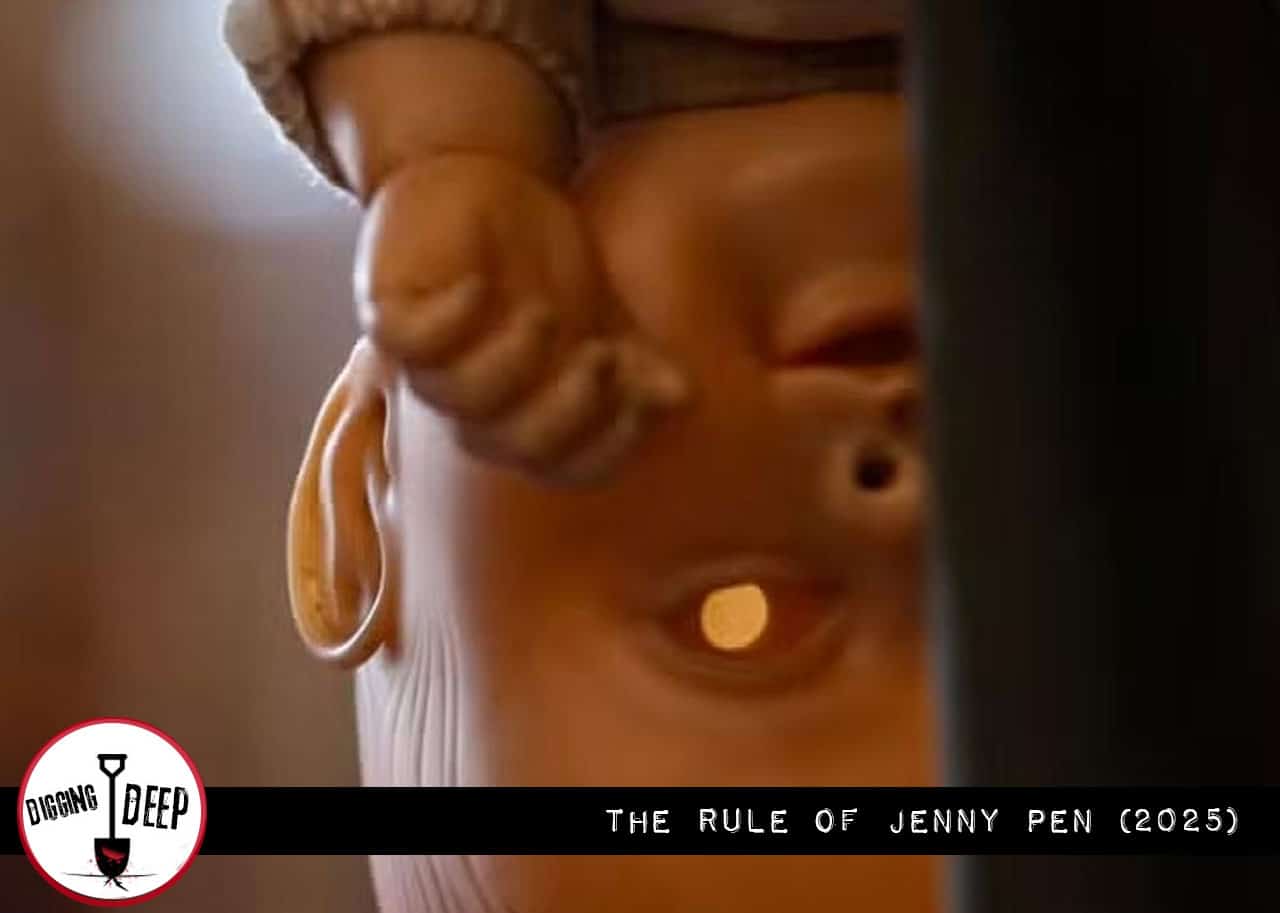
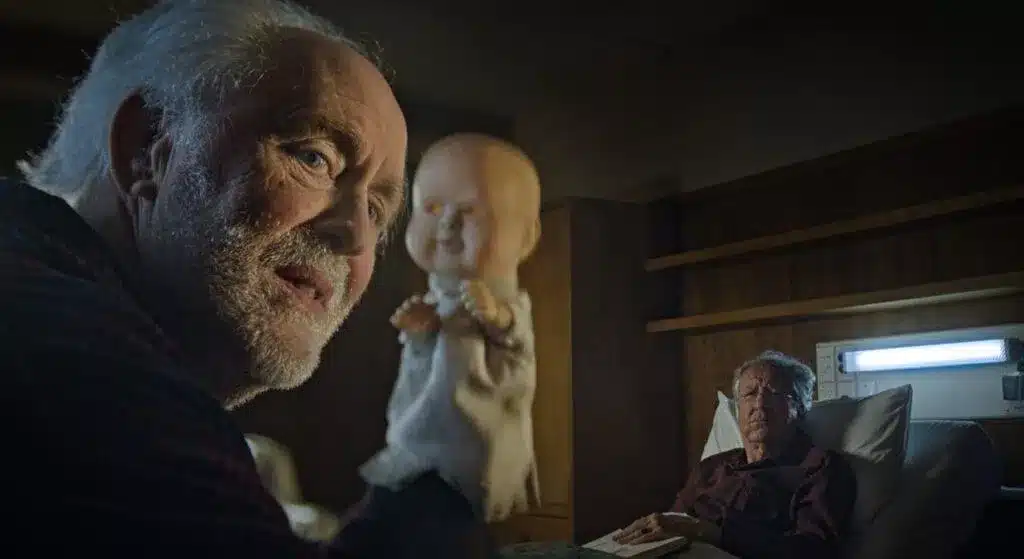
Jenny Pen herself is an immediately haunting horror symbol; a dementia puppet with red light often shining through her eye holes.
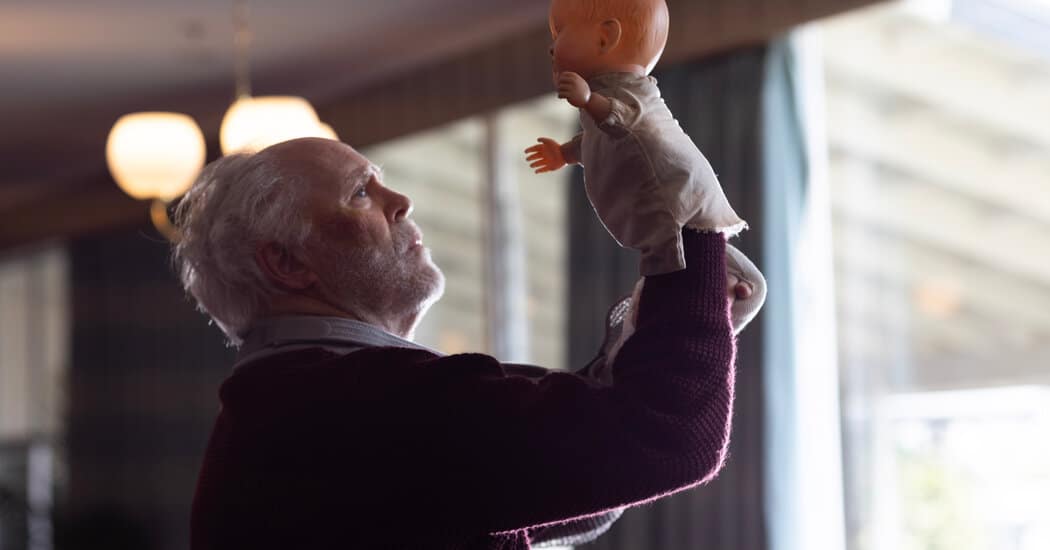
She feels alive, even as she also feels like a reflection of Lithgow’s mania. And again… I sometimes argue that we are generationally divided by our personal Lithgow era. For many, he is the Cliffhanger/Blowout villain (and Blowout is perfect, I will accept no arguments), but for me, he was 3rd Rock from the Sun—a magnificent comic actor.
And then again, for younger audiences than me, he is the best Dexter big bag.
What a goddamn actor. The writing, the directing, the acting… across the board, it’s great.
Lithgow straps this movie to his broad shoulders and drags you to fucking hell with him. A next-level talent who gives you no chance to catch your breath.
There is so much more to say about this movie; from the basic notion of losing your power to the idea of suffering in the name of maintaining a perceived legacy (because who cares about your legacy if every night Jenny Pen is coming to your room, demanding you lick her asshole?). It’s all brilliant and complicated and wonderful.
Stephen King praised it, and it’s no surprise; his own relatively recently released masterpiece, Holly, wrestles with the same idea that aging doesn’t make us less than, and it doesn’t make us safer. In fact, in some ways, it makes us more dangerous, because we begin to be underestimated.
But we do not, in fact, become less human because we age—and that means the horrifying as well as the good.









Follow Us!