


We celebrate the 45th anniversary of “Alien”, a colossal titan of science fiction horror that still echoes in the film industry to this day.
No time to read? Click the button below to listen to this post.
My personal experience with Alien starts off when I was very young, probably finding this film at an age that I shouldn’t have. The grip of fear the Xenomorph held over me for years is truly something I have yet to rediscover. From the eerie silence and claustrophobic Nostromo closing in, inducing anxiety, I found my first final girl within Sigourney Weaver’s Ripley. Although I was young, seeing such a powerhouse of a woman go head to head with the terrors within space opened my eyes to a whole new love in Sigourney.
Alien is a film I rewatch yearly; it never gets old or predictable. There’s so much more to this film than what’s on the surface.
I want to dive in and discover some of the hidden tales and details and highlight what makes Alien stand the test of time.
Back in 1974, a young John Carpenter was directing and writing his first ever feature-length film, Dark Star, a low-budget Sci-Fi film where a group of scientists go toe to toe with an alien in space. The film was co-written by Dan O’Bannon, who also worked special effects on the project. Dark Star was a comedy, but O’Bannon saw within a terrifying tale to be told.
With only the first half of a script in hand, he and executive producer and co-writer Ronald Shusett made a pact to develop each other’s films. On the same day, Total Recall and Alien were born.
When O’Bannon was hired to supervise special effects for a doomed Alejandro Jodorowsky production of Dune, his work on Alien was temporarily shelved. However, when he discovered a collection of H.R. Giger’s work, he was inspired to rush the script’s completion, finishing within three weeks.
O’Bannon was the unsung hero of the Alien franchise; he fathered the idea and relentlessly fought for it to remain the story he had imagined from day one.
With the push of Star Wars revitalizing the Science Fiction genre, Ridley Scott won the battle to direct after reading the script in only 24 hours. He flew to Hollywood seventeen hours later to get the ball rolling on production.
Giger’s artwork is so iconic, chilling, disturbing, and beautiful—inspired by his own dreams. Everyone wanted him involved with the film. The studio initially found his work grotesque and appalling due to its blatant sexuality. When they agreed to bring Giger on board, the overt sexuality of the art had to be toned down.
It’s obvious the aesthetic of Alien is a love letter to Giger’s collective works. His work is meant to make you feel uncomfortable and make your skin crawl. It makes you want to look away while also seducing you and compelling you to seek out more.
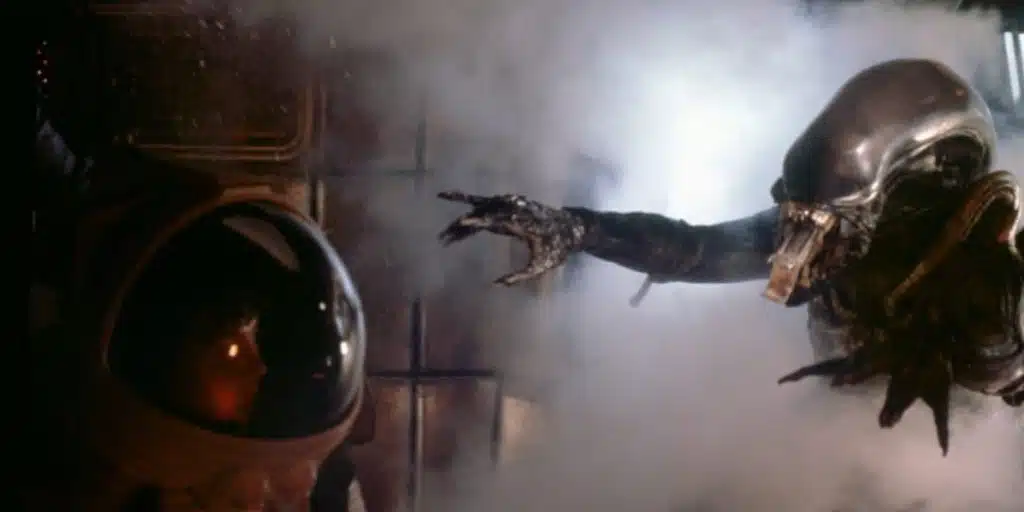
The terrifying Xenomorph, now considered one of the most iconic creatures in all of cinema, doesn’t make its first appearance in the film until the one-hour mark. In total, the creature gets only four minutes of screen time. This restrained use of the film’s biggest attraction helps enhance its impact and the fear it instills in audiences.
No images of the creature were released during the film’s marketing campaign, ensuring the appropriate level of shock and awe when moviegoers laid eyes on the Xenomorph for the first time.
Of course, there’s also the unforgettable design of the face hugger, which rivals the terror of the Xenomorph. Its flesh-like, spider-esque design evokes the true fear of suffocation, something that has yet to be replicated in horror.
Of course, it wasn’t just the aliens that made this genre classic such an enduring masterpiece.
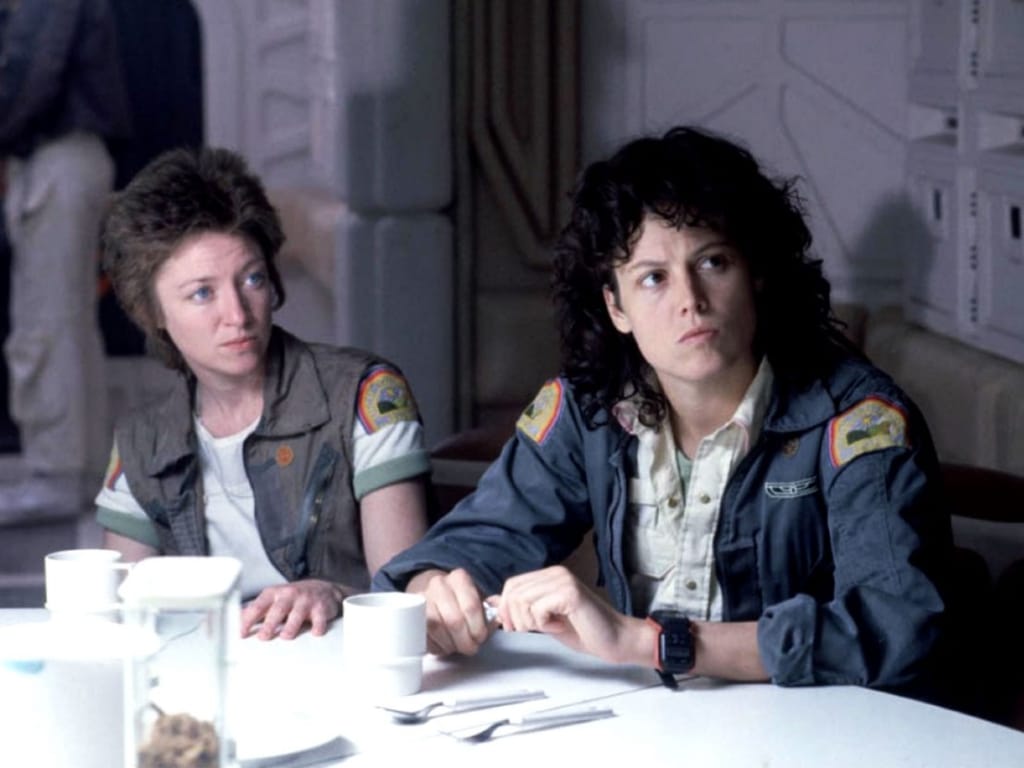
As the only member of the Nostromo crew to survive the harrowing intergalactic encounter, Ellen Ripley, played by Sigourney Weaver, is iconic for her bravery, leadership skills, and ability to remain cool and collected under unthinkable pressure.
Weaver was drawn to the character because she was originally written as a man. Writer Dan O’Bannon had planned for the entire Nostromo crew to be male, but changed Ripley’s gender after realizing the studio believed in “the return of the woman’s movie”. It was unusual then for a woman to be so front and center as the primary protagonist and action hero.
The up-and-coming actress, who began her career on Broadway, thought the character’s straightforward nature and many progressions made her interesting to play. Her powerful and gripping performance helped usher in the age of the Final Girl, along with Jamie Lee’s Curtis (Halloween) and Marilyn Burns (The Texas Chain Saw Massacre) just a few years prior. Her onscreen presence commands the room and drums up drama.
Even without nabbing top billing (that honor went to Tom Skerrit), Ripley made Sigourney Weaver a household name, and it’s hard to imagine the franchise without her.
Alien grossed 100 million worldwide against a budget of 11 million. It captured the arts and minds of moviegoers and won an Oscar for Best Visual Effects. Despite that, critics weren’t immediately in love, arguing that the film lacked adequate character development. That’s difficult to imagine now that the film has rightfully secured its place as one of the greatest and most influential science fiction and horror films ever.
In 2002, the Library of Congress deemed the film “culturally, historically, or aesthetically significant” and selected it for preservation in the United States National Film Registry. In 2008, the American Film Institute ranked it the seventh-best film in the science fiction genre, and Empire ranked it the 33rd-greatest film of all time.
Spawning many sequels and giving birth to a franchise still going strong forty-five years later—including the upcoming Alien Romulus, releasing in August of this year—Alien’s tidal wave of pop culture and cinematic influence still ripples today.









Follow Us!