


Seventy years later, the thrills of Hitchcock’s masterful “Rear Window” are more relevant than ever, and its influence is hard to deny.
No time to read? Click the button below to listen to this post.
Seventy years ago, one of the best movies ever made premiered at the Venice Film Festival. There were no crashes, no car chases. 90 percent of it took place in a cramped New York apartment. Still, somehow, every moment is riveting.
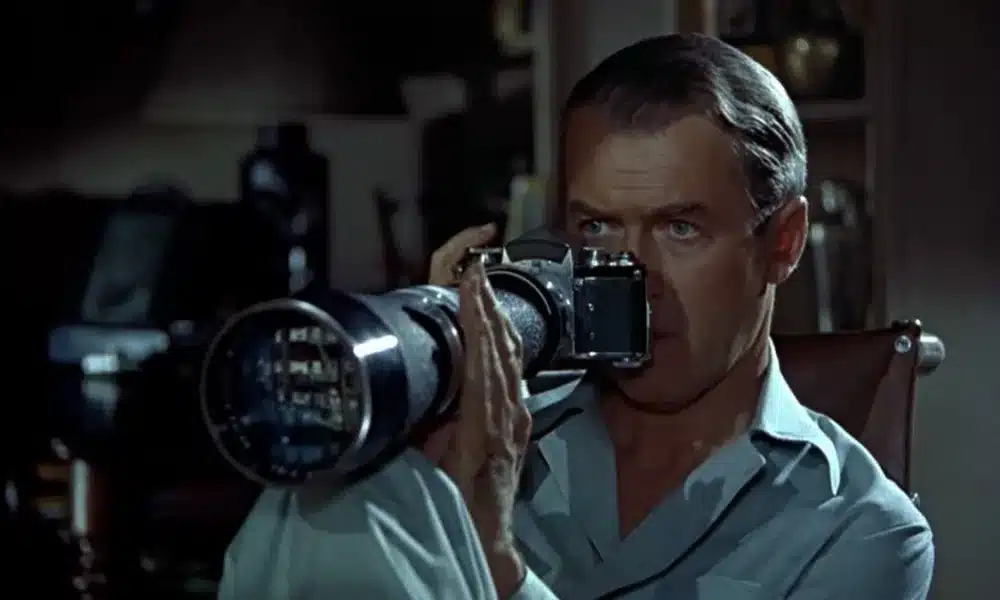
Rear Window has in its story the seed of a fascination that has only grown in the passing decades. Long before the internet, before the “man with a video camera” meta-style of the mid-nineties, Rear Window lays bare the fascination of the voyeur, the thrill of watching, and the fear of being watched.
LB “Jeff” Jeffries (a very sweaty Jimmy Stewart) is a famous photographer stuck at home with a pair of broken legs. He’s cranky, hot, and trapped in a tiny apartment with nothing to do but stare out the window. Fortunately, his window looks out to an apartment complex, where he’s passing the time by watching the private lives of his neighbors. All too soon, he begins to suspect one of his neighbors, salesman Lars Thorwald, of murdering his wife.
With the help of his nurse (the incomparable Thelma Ritter) and girlfriend (Grace Kelly at her most glittering), Jeff works to find evidence even as Thorwald plans his escape.
One of the greatest things about this movie is that it is about watching; it is about us, the audience.
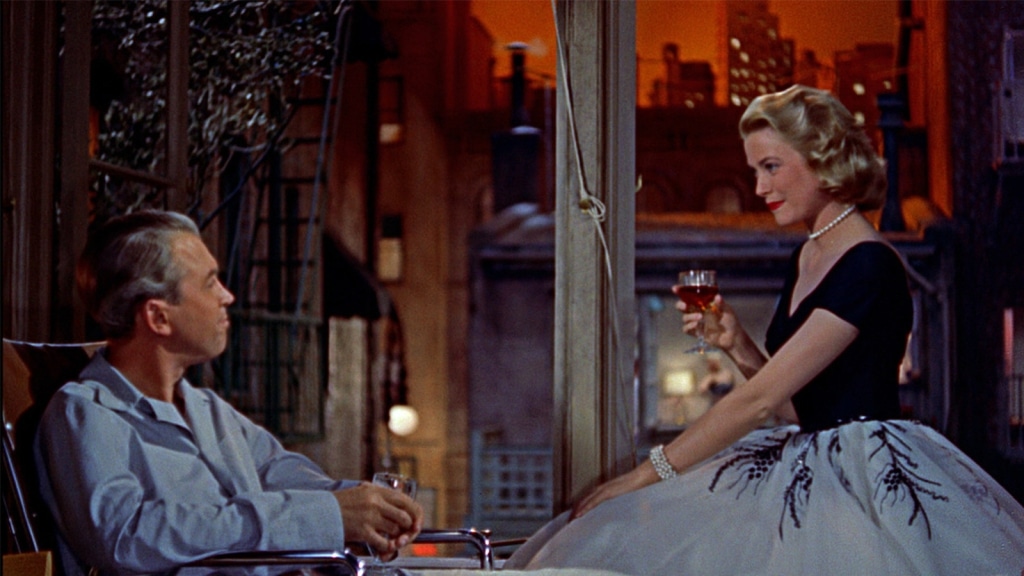
Jeff switches, looking from one window to the other as you would swipe a TikTok video, making wisecracks and inferences like those of his friends. While Lisa and Stella both rail against Jeff’s shamelessness, they can’t help but comment on what they see. The story has already drawn them in.
A lesser movie might have stopped there, but Rear Window is the richer for the many snatches of lives being lived in the other apartments across the way. From the frustrated musician (whose apartment holds the famous Hitchcock cameo) to Miss Lonelyhearts, whose ugly night out almost shames our heroes into submission.
These stories intertwine with Jeff’s and each other. We know the family with the little dog as Jeff does. They, too, have their story and their conclusion.
The casting here is also perfect.
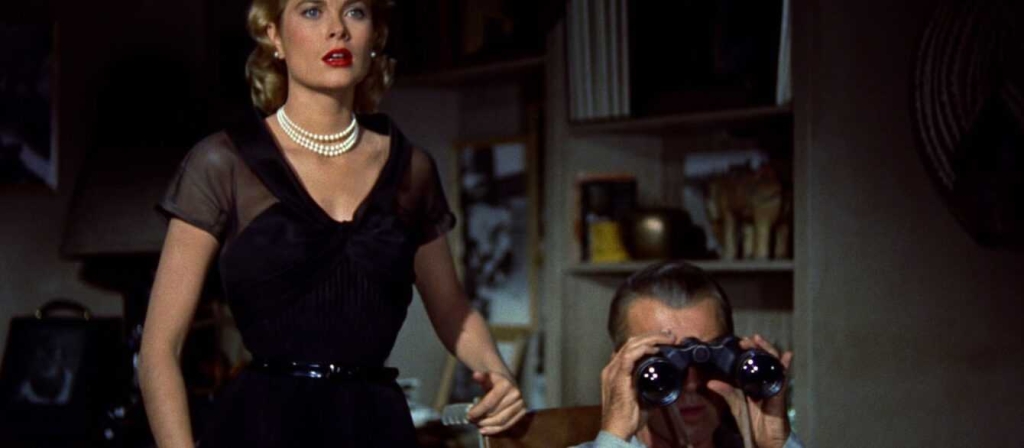
Jimmy Stewart’s face tics with an anxiety that foreshadows his deeper obsession in Vertigo. Grace Kelly is cool and charming with a cheeky grit that demolishes everything in her path; Thelma Ritter’s caustic blue-collar charm makes even the most stagey dialogue seem natural.
Wisely, there is a minimal score in the film, so the sounds we hear are snatches of song or conversation, cars honking, and a radio dial turning stations. When the radio is silent, there is nothing at all to take us out of feeling this was our window; these are our neighbors.
So when Thorwald looks back at Jeff, straight into the camera, we’re caught looking, too. We’re complicit.
Decades later, we see this same of paranoia threaded through everything from VHS to AfrAID. The fear your secrets will be exposed, the illusion of power that the camera gives the operator. The seductive nature of hidden lives and the power of seeing too much.
If Psycho is the progenitor of the modern slasher, then Rear Window is the forbearer of found footage horror—which isn’t bad for 1954.
Overall Rating (Out of 5 Butterflies): 5










Follow Us!