


“Realm of Satan” explores the Church of Satan in an experimental, visually striking, but surface-level portrait that fails to illuminate.

No time to read? Click the button below to listen to this post.

The world of Satanism has long been misunderstood, sensationalized, and demonized (pun intended).
In a media landscape that often frames Satanists as dangerous deviants, documentaries like 2019’s Hail, Satan? worked hard to humanize members of The Satanic Temple—revealing a socially progressive activist organization fighting for equality, secular justice, and separation of church and state. That film dismantled myths and gave us a surprising and empathetic look at people reclaiming Satan as a symbol of resistance to tyranny.
Scott Cummings’ Realm of Satan treads similar territory but with a crucial difference: instead of following the activism of The Satanic Temple, it turns its lens on The Church of Satan, the atheistic, anti-religious organization founded by Anton LaVey in 1966.
The Church embraces Satan not as a literal figure but as an emblem of individualism, pride, and indulgence. Their philosophy rejects absolute morality, dismisses notions of good and evil, and champions a guilt-free, non-destructive embrace of earthly pleasures.
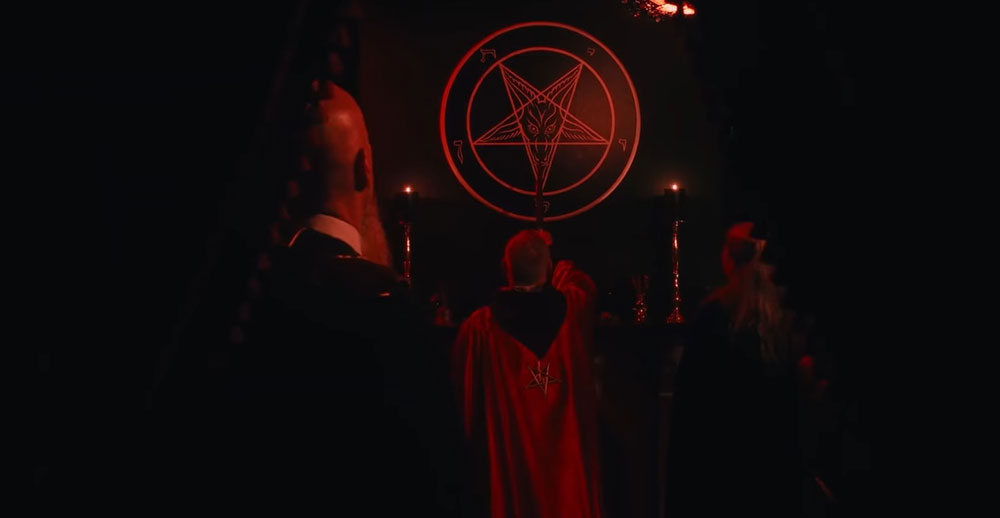
On paper, this could be riveting. What draws people to this controversial organization? How does it function in an era when religion and politics are weaponized daily? What do its members believe, and how do those beliefs shape their lives?
Sadly, Realm of Satan doesn’t deliver answers.
Instead, the film offers a largely experiential portrait, weaving together fragmented vignettes of members going about their daily routines. There’s almost no dialogue, little context, and virtually no attempt at deeper exploration. What emerges is not revelation but spectacle. It plays like a kind of promotional video that feels more performance art than authentic.
Cummings relies heavily on surreal sequences, cinematic tableaux, and special effects that only distance us further from the subjects, leaving us with a film that is both surface-level and oddly dull for such a compelling subject matter.
That doesn’t mean Realm of Satan has no merit.
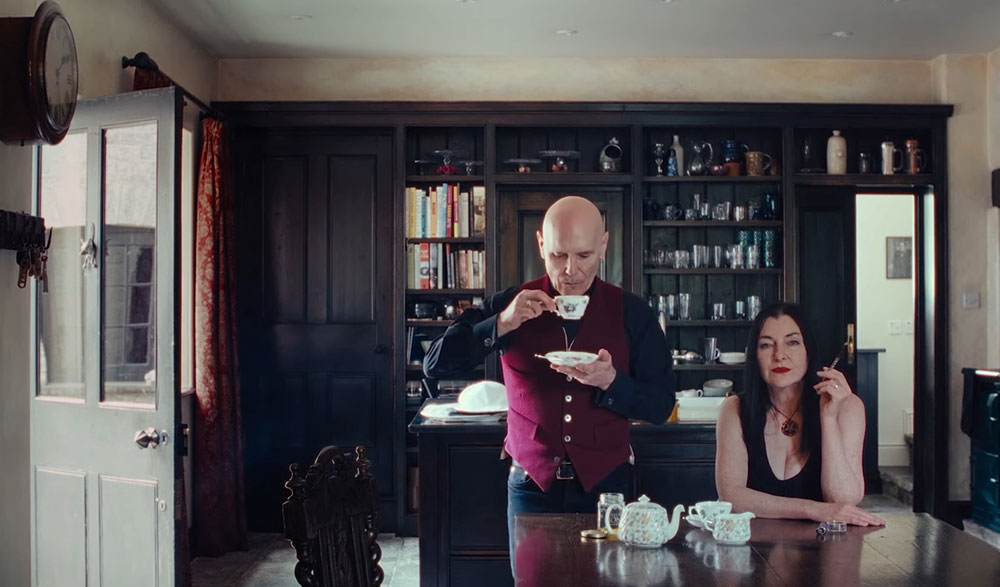
There’s something admirable about normalizing what’s often seen as “abnormal.” The everyday banality of Satanists washing dishes, preparing meals, or lounging in their homes pushes against the caricature of Satanism as purely sinister. In showing that these individuals live regular lives—albeit surrounded by gothic décor and pentagrams—the film makes an important point: what seems transgressive to the outside world is just ordinary life for them.
But Realm of Satan never moves beyond surface imagery.
The mystery remains carefully preserved, the cultivated aesthetic left intact, and the opportunity for true understanding missed. Viewers hoping to connect with the people behind the myth will walk away empty-handed.
We never learn what motivates them, what fears they wrestle with, or what joys they pursue. The Satanists here feel like characters playing themselves, not fully realized human beings.
That’s frustrating, because there’s much worth exploring.
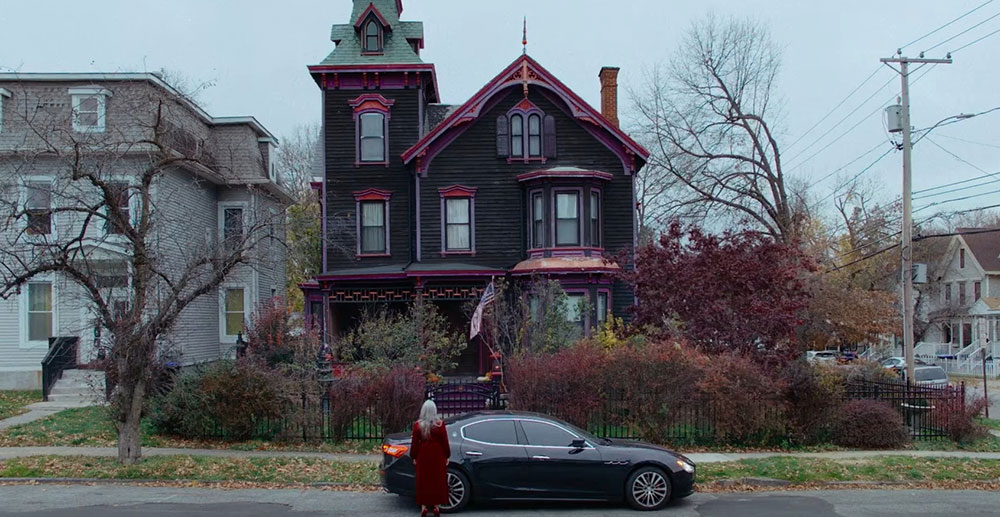
The Church of Satan’s embrace of sex positivity, inclusivity, and queer representation is culturally vital. Their philosophy of controlled indulgence and rejection of shame could offer powerful commentary on repressive religious dogma.
And for horror fans who’ve long empathized with society’s misfits and monsters, the Church’s embrace of “outsider identity” should resonate. But instead of insight, we’re left with aesthetic spectacle.
The film does contain moments of power. The opening image of a goat’s bloody birth is haunting, a metaphor for life’s messy beginning and the inevitability of death. It’s a reminder that no matter where we fall on the spiritual spectrum—Satanist, Christian, or otherwise—we all share the same fears, traumas, and longings for love and acceptance. Unfortunately, such moments are rare.
In the end, Realm of Satan is intriguing but unsatisfying. It celebrates weirdness without ever unpacking it, and while it may appeal to those drawn to its outsider chic, it never digs beneath the surface.
I didn’t love the film, but I love that it exists. It destigmatizes, normalizes, and challenges stereotypes, even if it fails to illuminate its subjects.
For a more provocative and revealing exploration of contemporary Satanism, Hail, Satan? remains the superior choice.
Overall Rating (Out of 5 Butterflies): 2.5












Follow Us!