


“The Lady of the Lake” weaves true crime with the paranormal to confront abuse, injustice, and the hauntings we carry within.

No time to read? Click the button below to listen to this post.
“With each step we take, we walk on the remains of all living things that came before us. The entire world is haunted,” paranormal investigator Amanda D. Paulson reminds the audience during the documentary The Lady of the Lake.
As Ryan Grulich’s film shows, it isn’t just ghosts who haunt us – it’s our memories and traumas, as well as the injustices that comprise a significant part of our shared history.
Grulich, who directed, wrote, and produced The Lady of the Lake, has created an unforgettable film about the murder of Hallie Illingworth by her husband.
He combines true crime with the paranormal, and he uses the film to bring attention to the violence and injustices women face to this day.
Hallie was born Hallie Latham in Kentucky, where she took on a parental role in a family of 13 children. She lived in South Dakota and Seattle before relocating to Port Angeles, Washington, where she worked as a waitress at the Lake Crescent Tavern (now known as the Lake Crescent Lodge).
At the Tavern, she met her third husband, Montgomery “Monty” J. Illingworth.
Monty was extremely abusive; during their brief marriage, she often had black eyes, and he once strangled her so badly that she was unable to talk for several days. In December 1937, Hallie vanished.
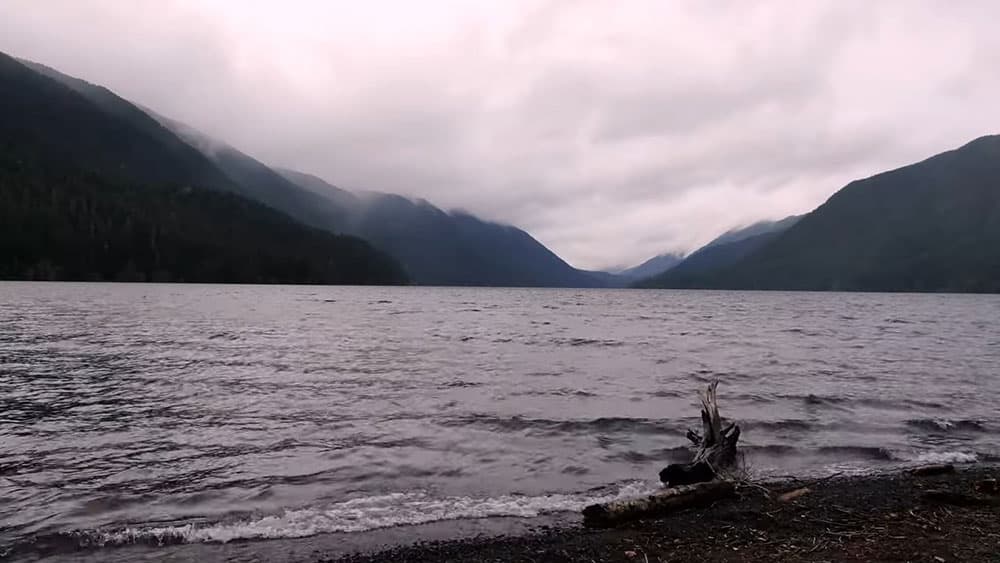
Three years later, Hallie’s hand rose out of Port Angeles’s Lake Crescent (thought by many to be bottomless), startling two boaters.
Dr. Harlan McNutt, who examined Hallie’s body during the investigation into her murder, confirmed how unusual it is for a body to rise to the surface, let alone with a single hand sticking up. Hallie had been beaten and strangled, and her body was hog-tied and wrapped in blankets.
To make this discovery even more disturbing, she had gone through the process of saponification, a post-mortem phenomenon where chemical changes in a corpse transform body fat into a waxy, soapy substance called adipocere.
Monty’s trial didn’t begin until February 1942. His jury consisted of 11 men and one woman. He was originally charged with first-degree murder, but he was convicted of second-degree murder instead, and he only served nine years in prison for the horrific murder of his wife.
The legal system, which should have provided justice for Hallie, failed.
Is it any wonder that Hallie is believed to haunt Lake Crescent?
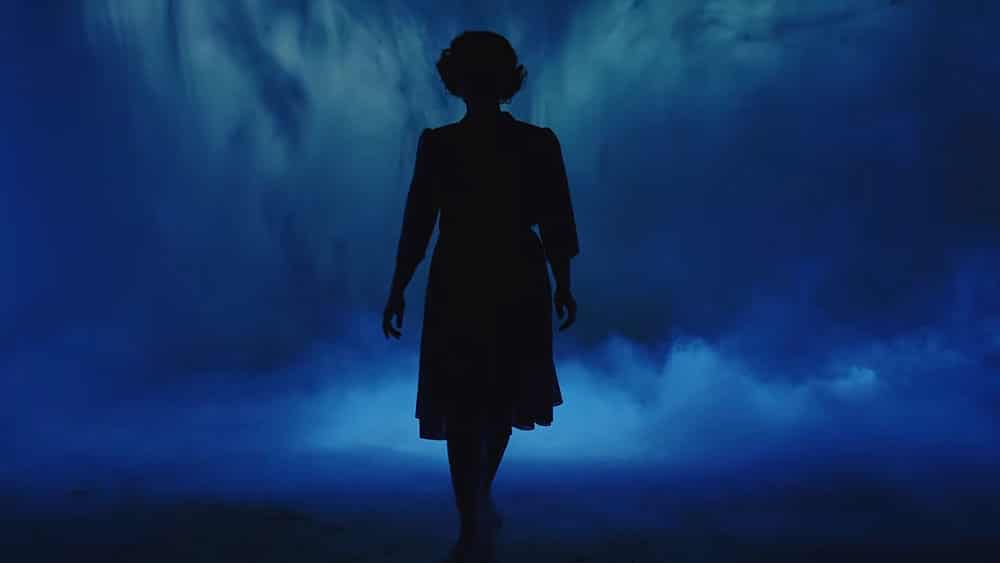
She was a victim of abuse whose murderer got the legal equivalent of a slap on the wrist, as Dr. McNutt notes.
Now, at least 100 Port Angeles residents say they have seen her ghost floating on the surface of the lake, hovering in the tree line, and on the trails in the forest that surround the water.
Paulson, who runs the paranormal-focused blog Pretty Fn Spooky and has a wealth of historical knowledge as a museum docent, leads The Lady of the Lake’s investigation into Hallie’s ghost. She wonders what was left undone in Hallie’s life and what dreams she wasn’t able to accomplish in her short life.
Is her ghost haunting Lake Crescent because she didn’t get the justice she deserved?
Paulson sees history and hauntings as inextricably linked, saying that for her, “History was kind of a one-track way to experience the paranormal more.”

Paulson also has a personal history that draws her to Hallie’s case. Like Hallie, Paulson’s mother was in an abusive relationship with her partner. In The Lady of the Lake, Paulson reveals that she has trauma from that experience, which she hasn’t even unpacked yet.
During her childhood, she lived in a haunted house with her mother at a point when her mother was struggling with substance use. Paulson internalized her feelings; their house was full of ghosts, and Paulson’s nights were filled with nightmares.
As an adult, Paulson now uses her extraordinary sensitivity to dial into the spirit world and connect with entities that we cannot see.
Why was Hallie chosen as the subject of this documentary?
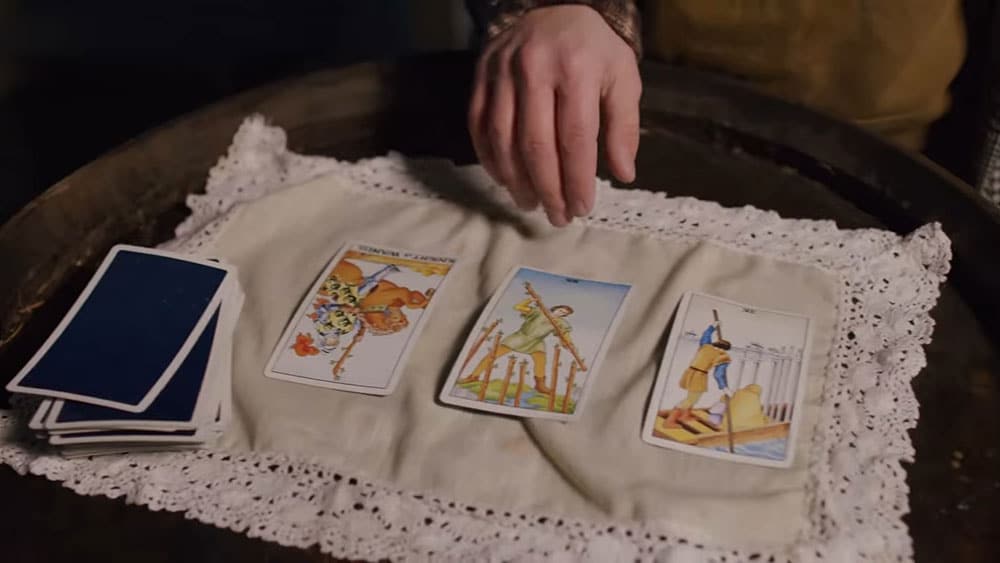
There have been tons of deaths in and around Lake Crescent; even the serial killer Israel Keyes dumped a body in the lake. What makes Hallie stand out is that she was the only one ever “given up” by Lake Crescent; she’s the only one who rose to the surface, demanding that someone pay attention and find answers to why this beaten and strangled woman was thrown into the cold water.
“Investigating the paranormal is a way to grapple with your own mortality and the fact that you will one day die,” Paulson says as she looks for Hallie’s ghost.
Is looking for Hallie’s ghost also a way for Paulson to make peace with her turbulent past? Is she able to “help” Hallie in a way she might not have been able to help her own mother, also a victim of abuse, when she was a child?
The Lady of the Lake calls attention to these questions and many more involving the prevalence of domestic violence (and the lack of accountability for it) that exists to this day. It also asks questions about life after death—questions no one can answer for certain.
Like Hallie’s ghost, perhaps we are all existing in a liminal space, caught somewhere between different phases of life and death.
Overall Rating (Out of 5 Butterflies): 3.5












Follow Us!