Headlines and Horror: The Long Walk (2025)


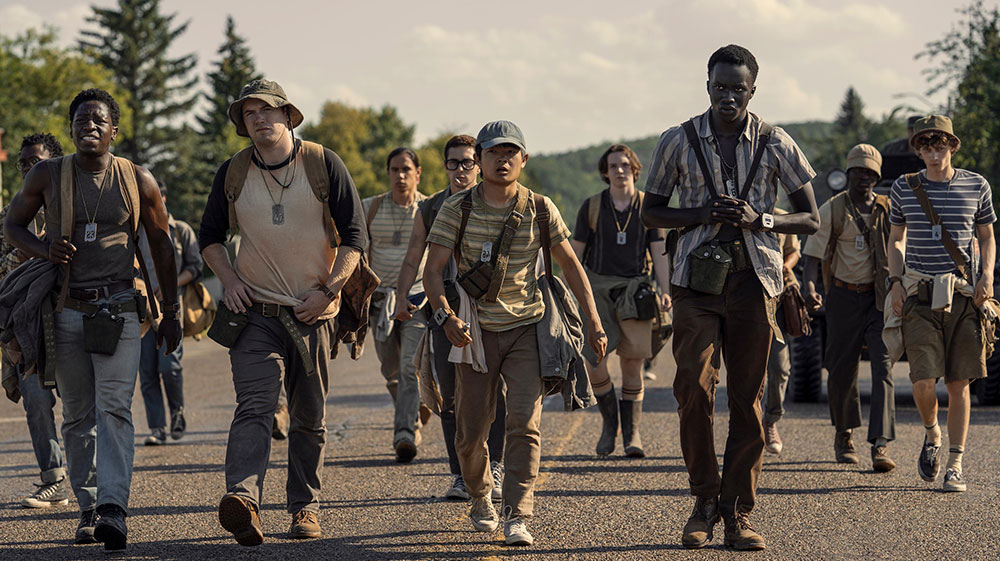

“Any game looks straight if everyone is being cheated at once.”
Stephen King’s The Long Walk has always been one of his bleakest and most haunting works. It’s a story less about monsters lurking in the dark and more about the systems that force us to become monsters to one another.
Now adapted into a 2025 feature film, The Long Walk feels like a mirror held up to our modern moment, reflecting back our own politics of spectacle, cruelty, and control.
Directed with unflinching brutality and anchored by career-defining performances from David Jonsson and Cooper Hoffman, the film marries King’s bleak vision with striking cinematic artistry. It’s a beautifully crafted, suffocatingly tense piece of cinema. Gorgeously shot yet emotionally devastating, it’s a film that proves horror doesn’t need supernatural terrors when the system itself is the predator.
The film strips away comfort to reveal the architecture of authoritarian power. In doing so, it becomes more than just dystopian horror; it becomes a commentary on the world we’re sleepwalking through right now.
In King’s imagined America, the titular Walk is a government-sanctioned competition where 50 boys march until only one survives. On paper, it’s voluntary. In practice, it’s ritualized violence disguised as entertainment.
The boys volunteer, but their “freedom” is a trap. Lured by wealth or escape from poverty, they step into a system where the rules are rigged against them. It’s the same ideological bait-and-switch we see today, where authoritarian figures frame exploitation as ambition and oppression as opportunity.
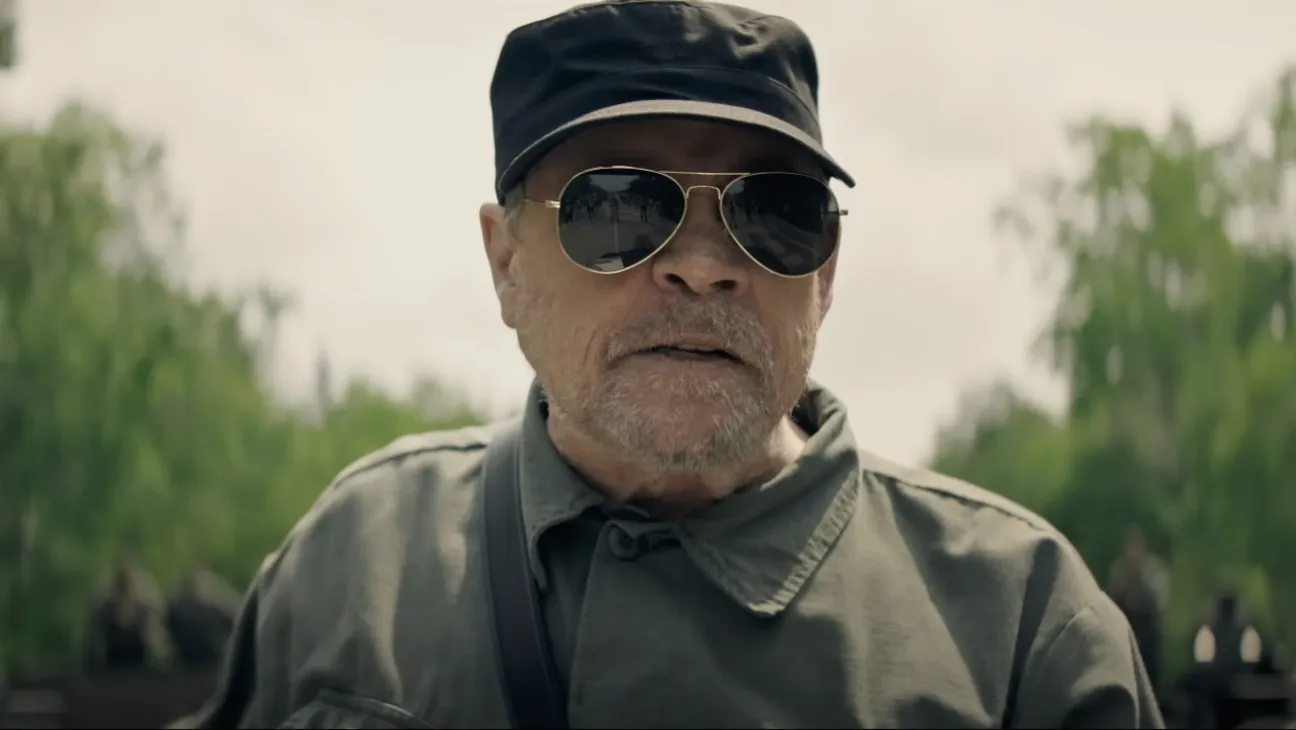
The Major, who presides over the Walk with a smile and a gun, embodies this perfectly. He’s an authoritarian figurehead: a blustering avatar of cruelty who justifies suffering by calling it “laziness conquered” or “manhood earned.”
His rhetoric echoes the hollow promises of contemporary strongmen who conflate obedience with virtue.
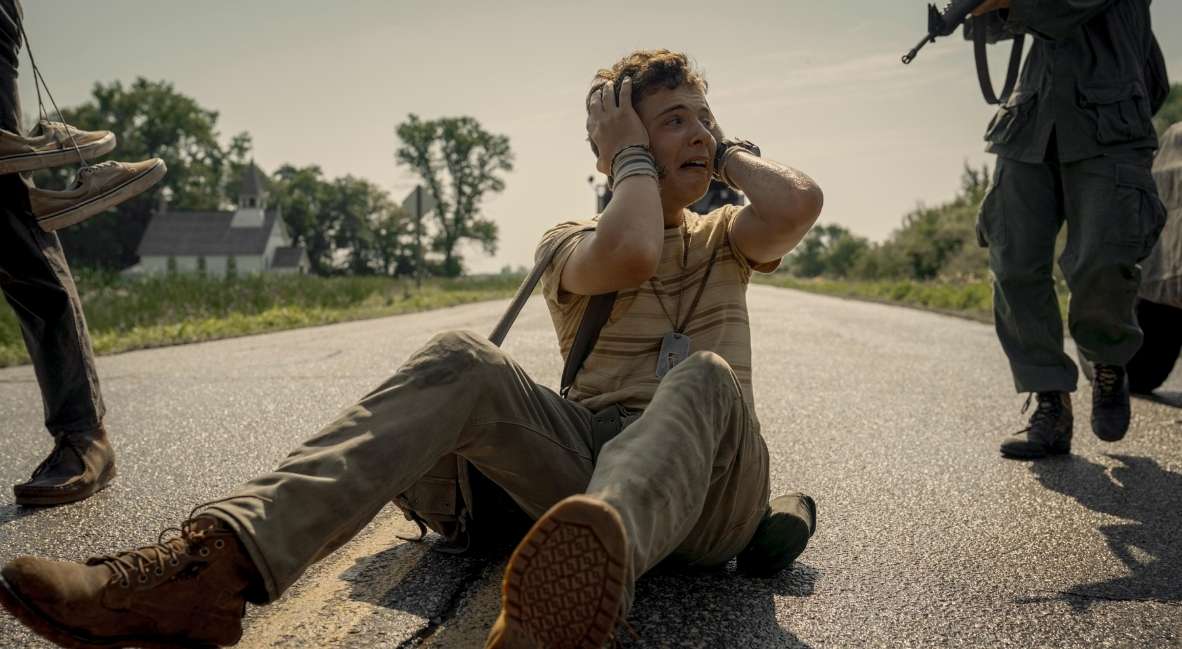
Violence in The Long Walk is not just the spectacle of boys being shot when they falter. It’s the slow rot of the human spirit.
The Walk weaponizes both physical and psychological torment. Sleep deprivation, blistering feet, and endless miles break the body, while the psychological toll—the slow death of empathy—breaks the soul. Director Francis Lawrence wisely avoids gratuitous gore, instead focusing on reaction shots, ragged breaths, and the boys’ haunted faces. This is horror through empathy, where every death devastates.
The cycle of violence echoes outward. Ray Garraty (Hoffman) is haunted by grief and revenge, his survival instincts sharpened into something darker. David Jonsson’s Peter McVries becomes the soul of the story, embodying the fragility of camaraderie in a world where compassion is punished. Their dynamic reminds us that oppressive systems don’t just consume lives; they fracture bonds, recycle trauma, and turn victims into perpetuators of cruelty.
Like modern disaster tourism or the viral obsession with violent news clips, The Long Walk asks: when does witnessing atrocity become complicity? When does consumption turn into endorsement?
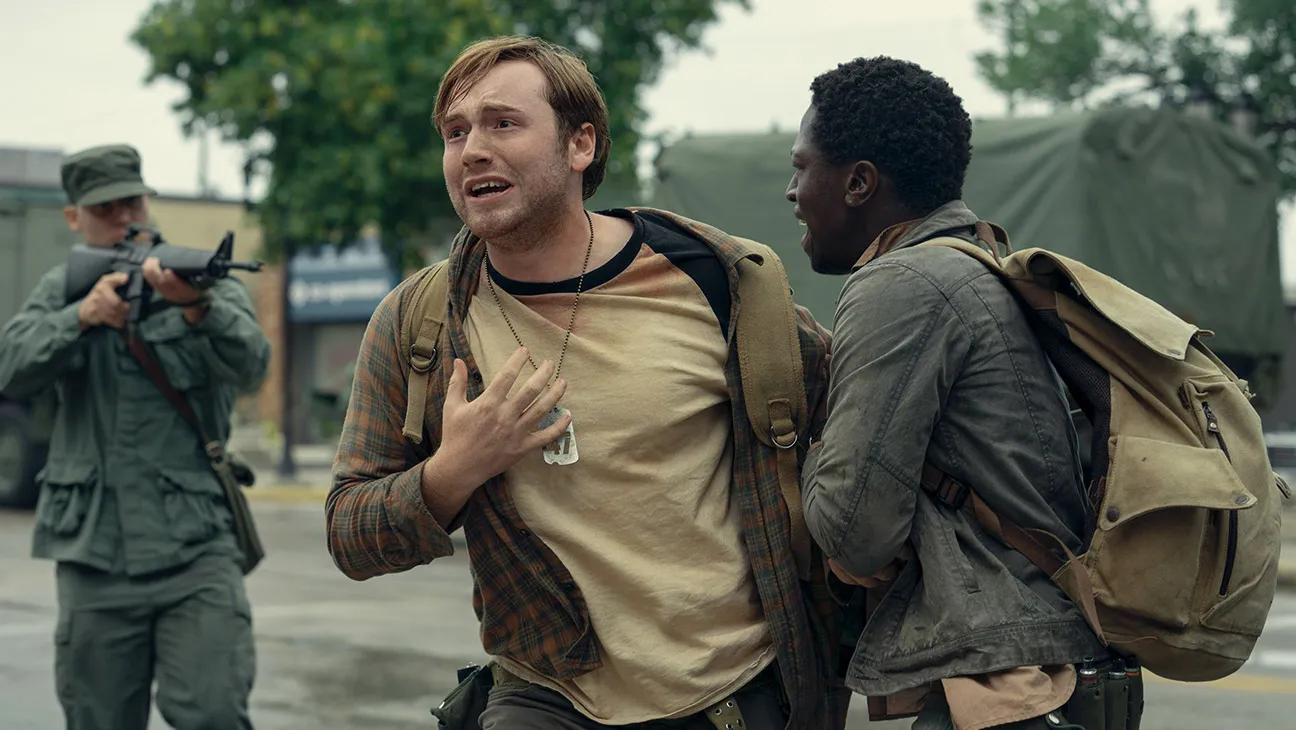
The Walk is framed as a test of “manhood”—endurance, toughness, domination. Softness is punished. Compassion is weakness. The Major’s rhetoric is steeped in toxic masculinity, reducing survival to brute strength and endurance.
Yet the film subverts this. Jonsson and Hoffman deliver remarkable performances that highlight moments of tenderness amid brutality.
Their chemistry grounds the story in humanity, showing that true strength lies not in domination but in connection. The film even hints at queer intimacy between Ray and Pete, transforming their bond into the emotional heartbeat of the film. This subversive choice reframes survival not as competition, but as defiance through love —a radical counter to authoritarian ideals.
King’s novel ended in nihilism, but the film version introduces a glimmer of hope: the radical suggestion that defiance is possible.
That even in the face of systemic cruelty, one can imagine something different.
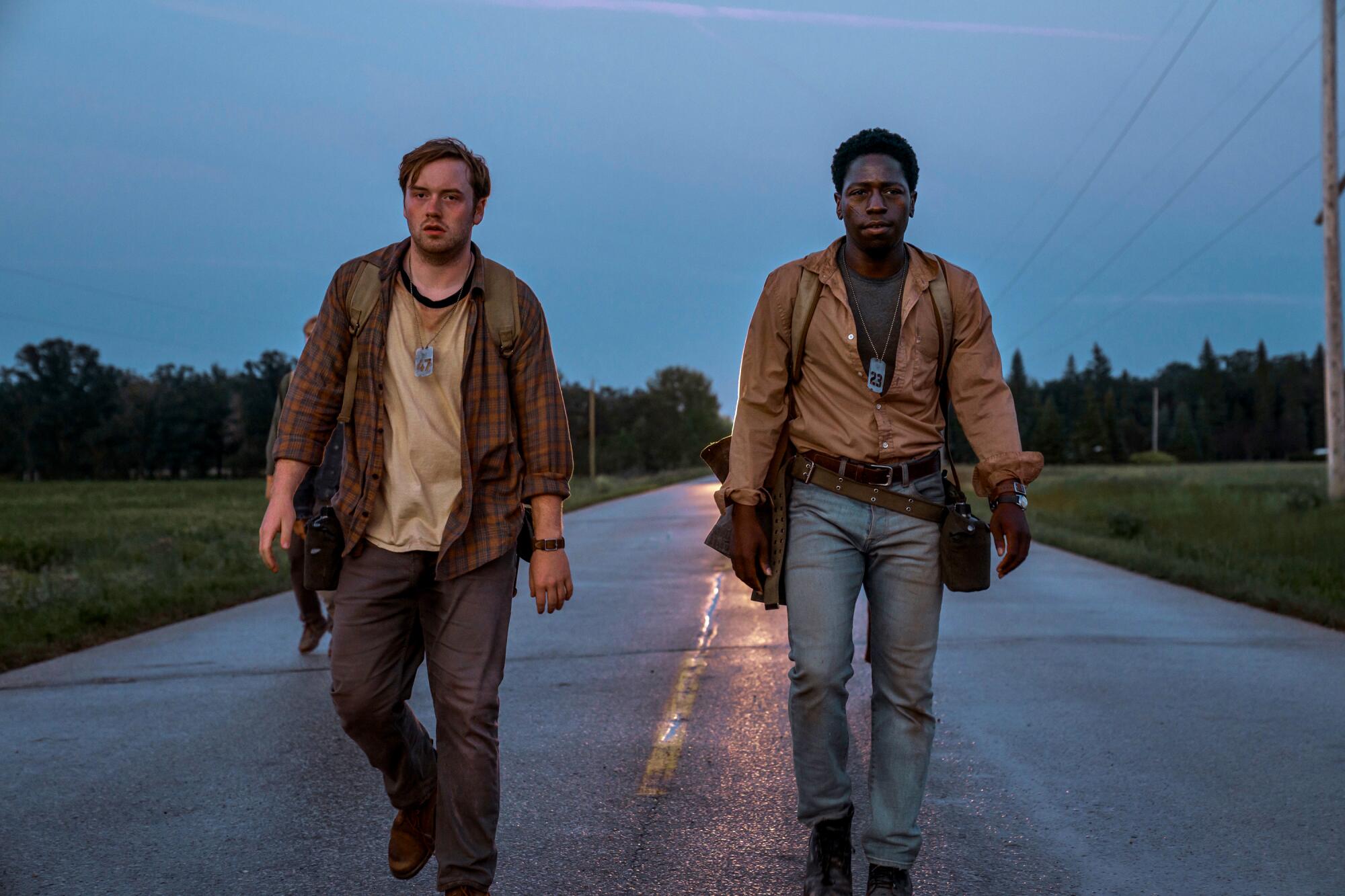
In the end, The Long Walk is more than a faithful Stephen King adaptation. It’s a cultural reckoning. The film forces us to confront the machinery of power that thrives on division, spectacle, and dehumanization. It examines how authoritarian systems weaponize violence, masculinity, and the illusion of choice to keep the oppressed in line, while convincing them to compete for scraps instead of demanding change.
It’s also a beautifully crafted work of horror, one that suffocates, unsettles, and refuses to let go. Its artistry heightens its allegory, making the political themes hit all the harder.
By marrying haunting performances, stark visuals, and unrelenting tension with razor-sharp sociopolitical commentary, the film transcends its genre trappings. This is horror as a mirror, horror as a protest, horror as an endurance test.
As harrowing as it is, however, the film ultimately insists on possibility. It challenges us to consider that survival can mean more than endurance. That true rebellion begins when we refuse to keep walking the path set before us.
In our cultural moment, where despair is easy currency and cynicism feels default, the film’s act of narrative resistance is quietly radical. It suggests that horror can not only reflect reality but gesture toward rebellion.
While The Long Walk works as a biting allegory, it also succeeds as a deeply unsettling work of horror cinema in its own right.
The direction is taut and immersive, placing the audience alongside the Walkers on the road. The cinematography alternates between stark realism—dust, sweat, endless pavement—and surreal, dreamlike flourishes that evoke disorientation and madness. The sound design is masterful, amplifying footsteps, silence, and ragged breaths into instruments of dread.
Performances across the board are superb. Hoffman gives Ray Garraty a magnetic fragility, torn between survival and humanity. Jonsson, soulful and empathetic, anchors the story in emotional truth. Their interplay is what makes the film shattering rather than hollow, and what elevates the horror beyond an endurance test into tragedy.
Even the score contributes to the suffocating atmosphere: minimalist yet haunting, it grows heavier as the Walk stretches on, underscoring the endless march toward death.
It’s this fusion of craft and allegory that makes The Long Walk one of the most potent King adaptations to date. And in a world where we are all being asked to keep walking, it’s a story that also feels essential.

She’s a lover, he’s a fighter. Together, they’re CHEER AND LOATHING. Tune in to hear your hosts, Stephanie (Cheer) and Casey (Loathing), clash over the films they love — and the ones they love to hate.
In this holiday extravaganza episode of Guilty Pleasures, join hosts Stephanie, Kelly, and our newest addition, Jonathan (Jack was tied up in tinsel and couldn't join us), as they unwrap the bizarre and unhinged world of holiday cinema. They dive into the depths of Elves, a film that's as chaotic as it is entertaining. It's a sleigh full of questionable decisions, diabolical dialogue, absurd plot twists, wildly offensive antics, and unhinged holiday mischief.
And that's not all! In the second half of the podcast, join your festive cinephile friends for a look at four more ”nutty as a fruitcake” holiday treats: A New York Christmas Wedding, Elf Bowling, A Medea Christmas, and Jack Frost. Plus, we each offer a bonus Christmas flick guaranteed to make you say, ”Ho, Ho, HO-LY Hell!”
Expect laughter, disbelief, and a spirited debate about what truly makes a movie a guilty pleasure. Don't miss this festive journey through the weirdest corners of holiday films!






Follow Us!