

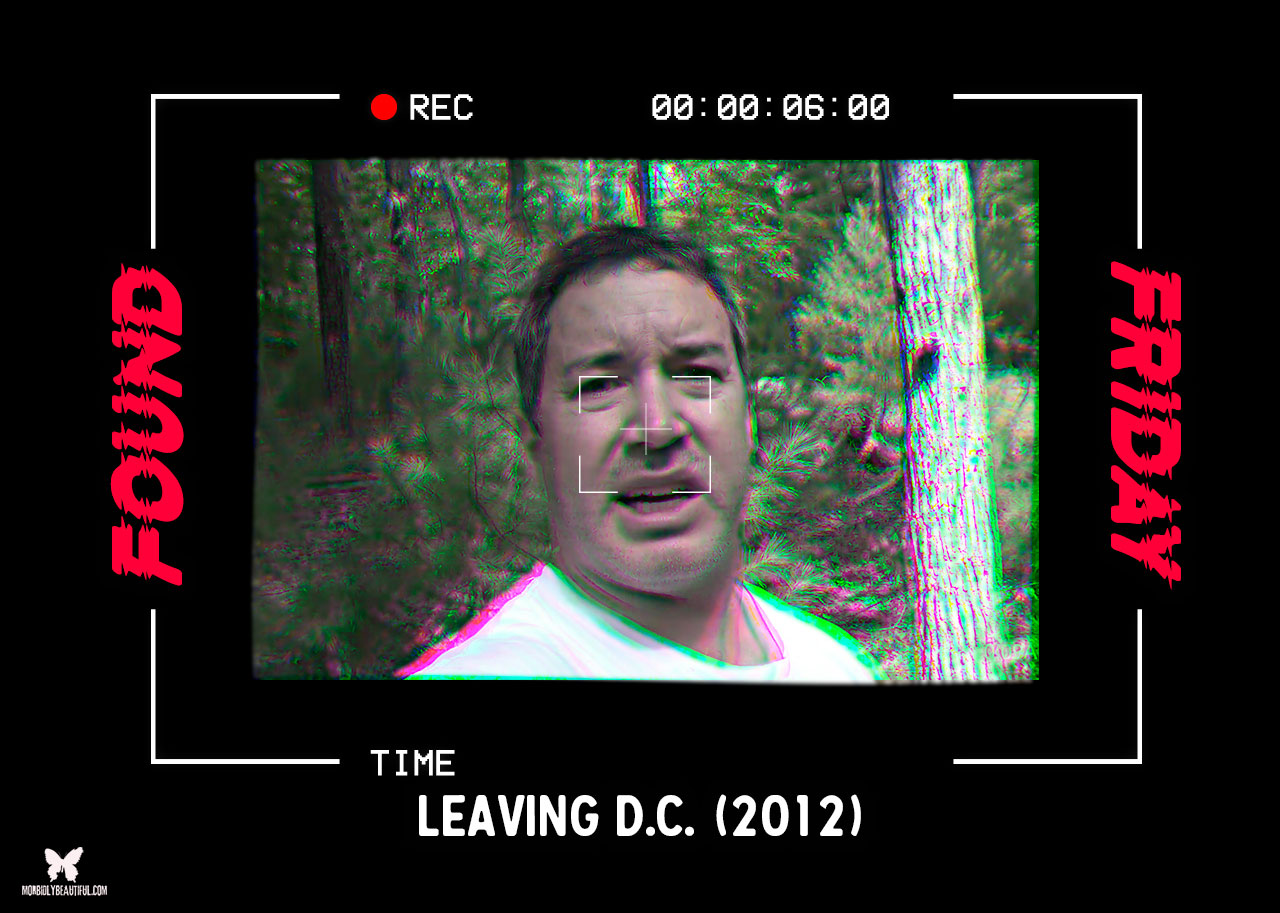
“Leaving D.C.” is a chilling, minimalist found-footage gem about isolation, obsession, and the horrors that echo when no one’s listening.
No time to read? Click the button below to listen to this post.

If you’re a fan of found-footage horror films, you likely find yourself constantly chasing that elusive gold standard of authenticity. You know the feeling: that uneasy sense that you’ve stumbled upon something real, something not meant for you… something you can’t look away from.
Leaving D.C. (2012), written, directed, and performed almost entirely by Josh Criss, is one of those holy-grail films that reminds you why the sub-genre offers so much potential for a truly unforgettable, haunting experience.
I stumbled upon this hidden gem thanks to a Reddit group dedicated to found footage. What I found was an immersive, highly effective exercise in minimalism that trades spectacle for subtlety, and jump scares for the slow suffocation of solitude.

The premise is disarmingly simple.
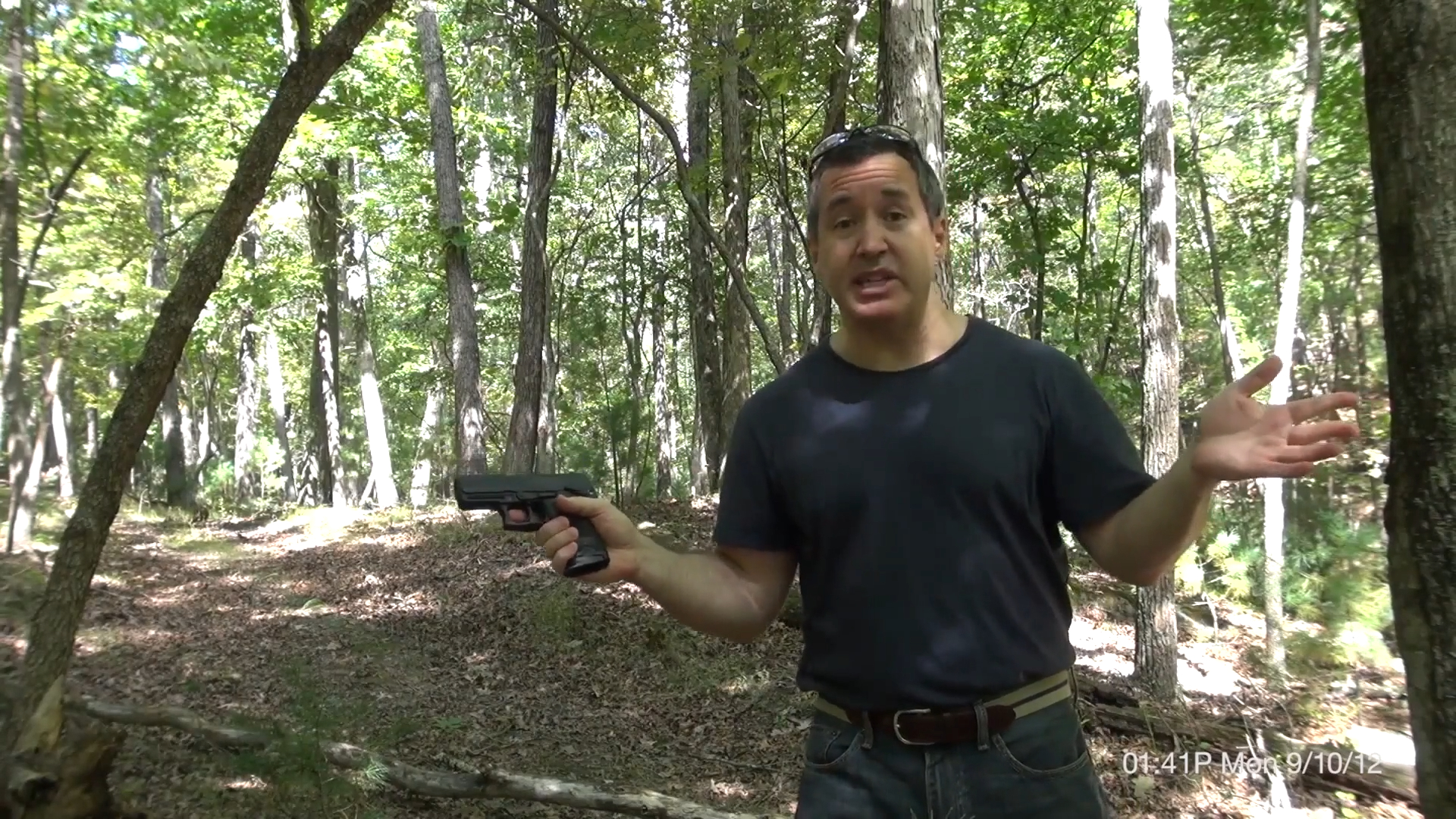
Mark Klein, a city transplant with obsessive-compulsive disorder, relocates to an isolated home in rural West Virginia, seeking tranquility and a fresh start. To maintain a sense of connection with his old life—and the people from his OCD support group in Washington, D.C.—he films regular video updates documenting his new home, his routines, and eventually, the strange disturbances that begin plaguing him at night.
At first, it’s all harmless documentation that feels like a mix of necessary self-therapy and a longing for connection despite isolation. It’s a way to feel seen and ease the loneliness.
However, when Mark begins hearing inexplicable knocking outside his bedroom window, human-sounding whispers, and the mournful song of an unseen flute, the tone shifts from diary to distress signal.
What makes Leaving D.C. so effective is its commitment to realism.

Criss crafts a wholly believable character in Mark. He’s awkward, lonely, proud of his “dream home,” yet quietly terrified of the silence he’s chosen. He begins setting up recorders and cameras, analyzing the sounds, replaying the footage, and obsessing over details. His logic and precision make sense; it’s how someone with OCD might cope with uncertainty.
What’s unnerving is how rational he remains even as things become increasingly irrational. Criss’s performance as a man suffering from OCD is naturalistic and grounded, never exaggerated or played for pity. He feels like a real person. He’s methodical, anxious, lonely, and trying his best to keep control in a situation that’s steadily slipping out of his hands.
As Mark begins to mix alcohol with his medication, the deterioration feels painfully human.
The film’s structure, composed entirely of his recorded updates, invites us to become both voyeur and confidant. We don’t just watch Mark’s unraveling; we participate in it. And we can never be sure whether he’s documenting a haunting or his own breakdown.
When the police dismiss him and online paranormal forums mock his claims, you can sense the sting of isolation tightening around him like a noose.
The film’s use of sound design becomes its primary vehicle for fear.
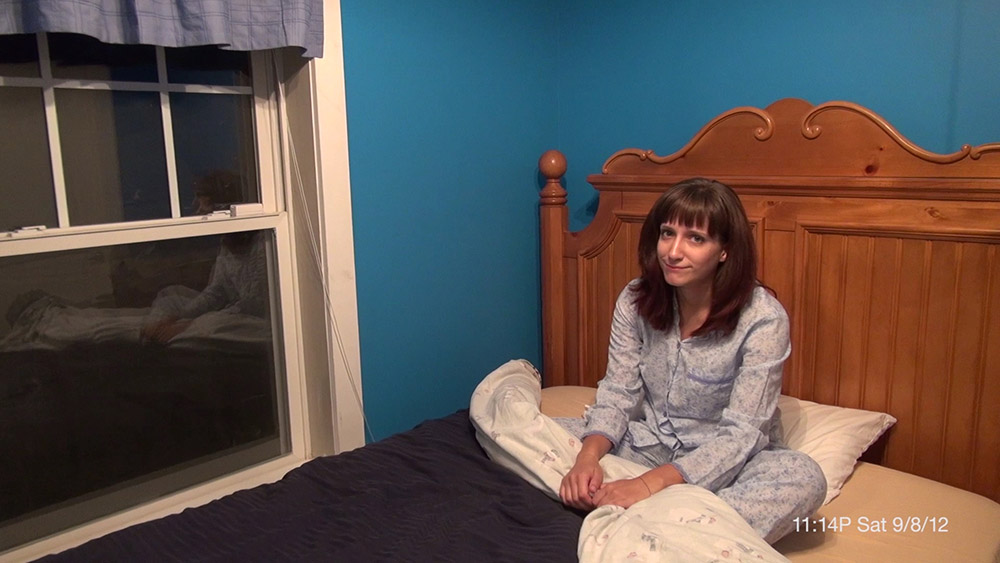
With minimal visuals and no visible ghosts, the unseen grows monstrous. The woods, so vast and indifferent, become a mirror for Mark’s solitude and anxiety. It’s a masterclass in how to make atmosphere do the heavy lifting.
While many found-footage films rely on chaos and shaky-cam panic, Leaving D.C. opts for the slow decay of human connection. It’s less about what’s outside Mark’s cabin and more about what’s eating away at him inside.
His yearning for acknowledgment—the way he reads into too-brief messages on a greeting card, or his clumsy attempts to flirt with a woman who doesn’t reciprocate—exposes a painful truth about modern loneliness.
When the only people listening are miles away on the internet, how do you know what’s real? How do you tell the difference between haunting and heartache?
Even the film’s ambiguity works in its favor.

Criss never fully confirms whether Mark’s experiences are supernatural or psychological. It’s possible that he’s the victim of some cruel, unseen presence. But it’s equally possible that he’s been undone by the echo chamber of his own mind.
Yes, the ending is abrupt, even frustrating, and one that denies us complete resolution. But that denial feels purposeful. Mark’s story was never about answers. It was about the compulsion to seek them, to make sense of the senseless, and to be seen doing so.
In that sense, Leaving D.C. becomes a metaphor for the horror of creating content in the void. It’s about speaking to people who may not be listening, and trying to prove something you can barely articulate to yourself.
For those who appreciate slow-burning tension and naturalistic storytelling, this film is a gem. It’s proof that horror doesn’t need elaborate setups or special effects to crawl under your skin.
Josh Criss transforms budgetary limitations into strengths, crafting one of the most authentic and quietly terrifying found-footage experiences.
Overall Rating (Out of 5 Butterflies): 4











1 Comment
1 Record
Tommy wrote: