
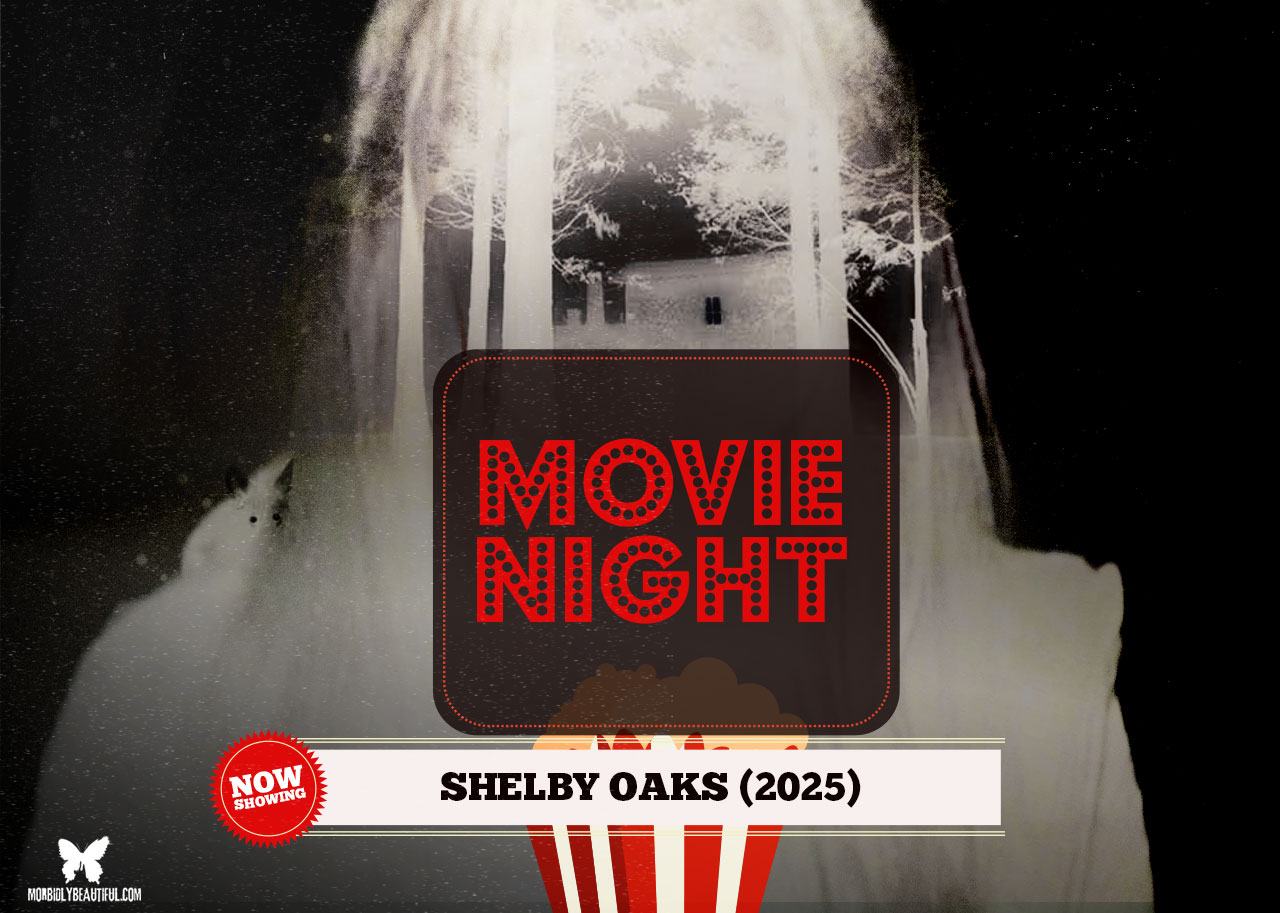
“Shelby Oaks” blends found footage, family trauma, and atmosphere for a film haunted by passion and potential—even if its story falters.

No time to read? Click the button below to listen to this post.

There are some films you critique with your head and others you respond to with your heart. Shelby Oaks is the rare kind that asks for both. Before diving into what works, or what doesn’t, I want to start by saying this: I’m genuinely happy Shelby Oaks exists. Its mere existence is a triumph of independent spirit and perseverance.
The story behind the film is almost as fascinating as the movie itself. What began as a small-scale YouTube concept—a found footage series about a paranormal investigation team called the Paranormal Paranoids—eventually evolved into a full-length feature backed by a major distributor and one of the biggest names in modern horror. That trajectory alone is remarkable.
This is the feature debut of Chris Stuckmann, a filmmaker whose name many horror fans already know from his wildly popular YouTube channel, where he’s built an audience of over two million subscribers through insightful reviews and genuine passion for cinema.
Making the leap from critic to creator is one of the hardest jumps in the business, but Stuckmann does it with sincerity and ambition to spare.
Co-written with his wife, Sam Liz, the story holds deep personal resonance for Stuckmann. He’s been open about how the themes of loss, separation, and desperate searching were shaped by his own life—particularly his painful estrangement from his sister after she left the Jehovah’s Witness faith he was raised in.
That emotional truth hums quietly beneath the surface of Shelby Oaks, giving it a heart and humanity that separate it from the typical supernatural mystery.

When early financing attempts fell through, Stuckmann turned to the community that had supported him from the start. His Kickstarter campaign didn’t just succeed; it shattered records, becoming the highest-funded horror film in Kickstarter history, raising nearly $1.4 million from almost 15,000 backers.
The campaign was more than a fundraiser; it was a movement. He offered fans a “mini film school” experience, documenting the filmmaking process from the inside out. That transparency made backers feel like collaborators rather than donors, creating one of the most engaged audiences any indie film could ask for.
Even more impressive was the film’s reach. Shelby Oaks caught the attention of Mike Flanagan, who joined as Executive Producer after viewing an early cut. His endorsement led to the film being picked up by Neon, the indie powerhouse. Neon invested even further, funding reshoots and post-production enhancements to polish the film for a theatrical release.
No matter how you feel about the finished product, the story of SHELBY OAKS is a powerful example of how modern filmmaking can evolve: community first, industry second.

The story centers on Mia (Camille Sullivan), a woman still haunted by the disappearance of her sister Riley (Sarah Durn), a popular YouTuber who led a group of paranormal investigators known as the Paranormal Paranoids. A decade after Riley vanishes during an investigation in the eerie town of Shelby Oaks, a mysterious VHS tape surfaces in a shocking way. And it might hold the key to her fate.
Mia, aided by a documentary crew chronicling the case, begins her own descent into the places her sister last explored: decaying prisons, ghost towns, and the rotting heart of her own fear.
The first half, shot in a mockumentary style that merges found footage with ‘true crime’ doc aesthetics, is gripping and immersive.

There’s a sense of unease baked into every frame, helped immensely by the film’s grounded realism.
Sullivan is phenomenal as Mia, embodying both exhaustion and obsession. You believe her fear, her grief, and her need for answers.
The atmosphere is one of the film’s greatest strengths. Stuckmann and cinematographer Nico Navia create a haunting sense of place through the desolation of their locations: the rusted bones of an abandoned prison, a forest-shrouded amusement park, and other liminal spaces that feel spiritually contaminated.
It’s deeply eerie, resulting in the kind of horror that creeps under your skin instead of jumping out from the shadows.
When Shelby Oaks leans into this mystery, it’s excellent. It’s patient, moody, and unsettling. You can feel the influence of both found-footage tension and classical ghost stories. It’s a love letter to the horror that raised Stuckmann, while still trying to say something new.
Unfortunately, the film doesn’t fully sustain that energy.

The second half trades in its slow-burn intrigue for a more conventional narrative… and that transition doesn’t quite work. What began as a mysterious, emotionally driven story starts to feel like a collection of familiar horror tropes.
The problem isn’t a lack of effort. You can feel Stuckmann’s passion in every frame. The issue is structure. The tone shifts from intimate and haunting to something broader and less distinctive. Answers arrive that feel less compelling than the questions, and the ending lands with a frustrating abruptness that undercuts the film’s earlier promise.
There are still flashes of brilliance, including moments of genuine dread, a few clever scares, and a consistent visual confidence. But the film’s reliance on (admittedly effective at times) jump scares in its latter half feels at odds with the atmospheric tension that works so well early on. The final act may not ruin the experience entirely, but it does deflate it.
It’s disappointing because you can see the potential for greatness.
It’s a movie built on sincerity, and that sincerity shows. It’s technically accomplished, emotionally resonant, and visually striking—just uneven in execution.
The result is a film that’s often good, sometimes great, and occasionally frustrating.

If you’re expecting something revolutionary, you may walk away disappointed. But if you appreciate horror made with heart, ambition, and atmosphere, there’s plenty here to admire. It’s ultimately an impressive debut that doesn’t quite stick the landing.
Stuckmann shows real promise behind the camera, and while Shelby Oaks doesn’t hit every note, it’s the kind of imperfect debut that makes you excited for what comes next.
Do I wish it were better? Of course. But I’d rather watch a flawed film that swings for the fences than one that plays it safe. Shelby Oaks may stumble, but it stumbles forward. And it does so with passion and a love for horror that can’t be faked.
I left wishing for more… but only because there’s something substantial here worth wishing for.
Overall Rating (Out of 5 Butterflies): 3


Follow Us!