

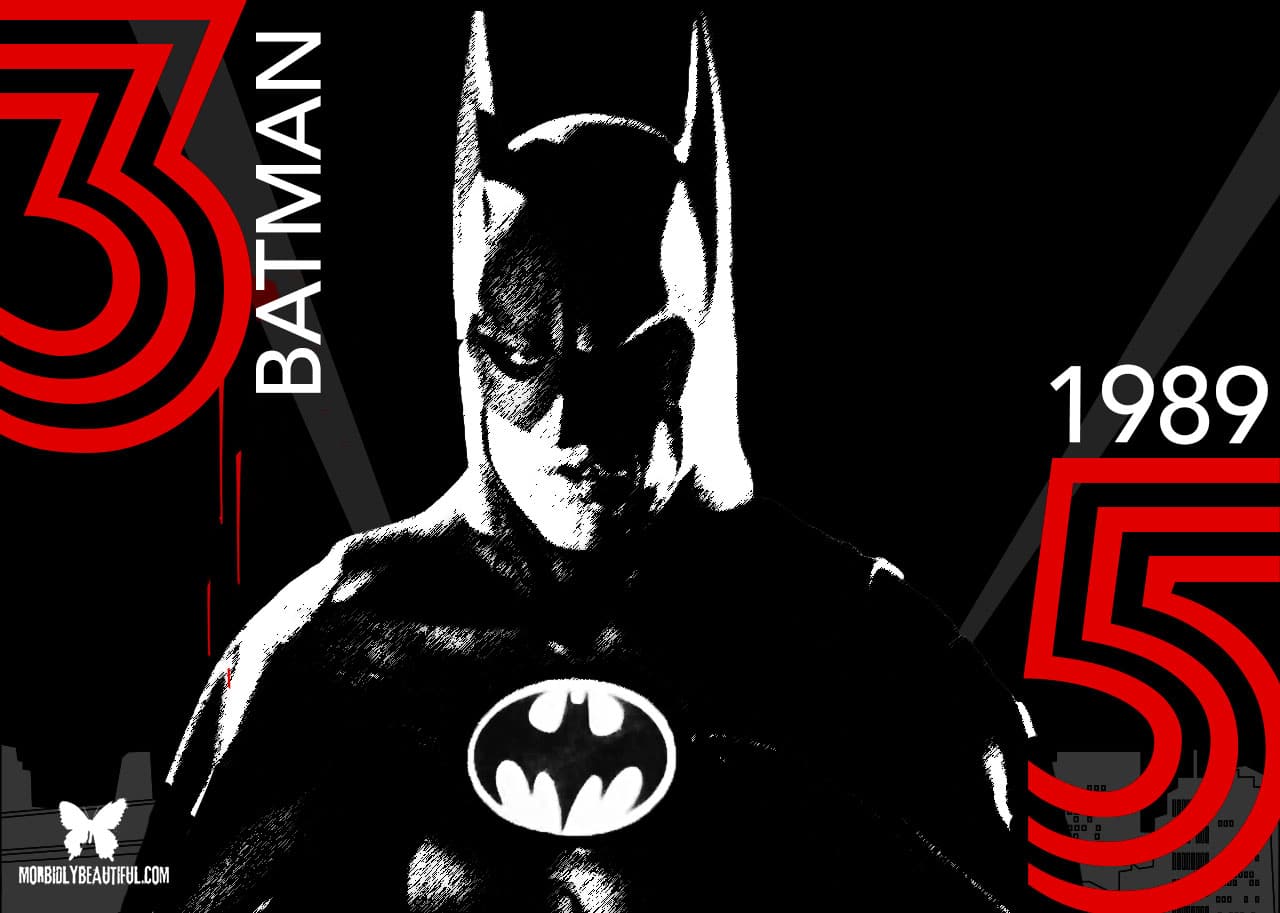
The signal of 1989’s “Batman” continues to loom over an overcrowded genre thirty-five years later because of a singular vision on screen.
No time to read? Click the button below to listen to this post.
For the past sixteen years, superheroes have been the dominant presence on the big and small screen. It’s almost difficult to imagine a time before one spandex-clad do-gooder after another headlined their own battle against the gathering forces of evil. For a period, they were contained to the summer blockbuster season, when kids on academic hiatus spent lazy June, July, and August days (or nights) crowding into an air-conditioned theater for the holy communion brought forth from the alter of heavy hitters like Marvel and DC.
In 2008, Jon Favreau’s Iron Man and Christopher Nolan’s The Dark Knight changed the game completely, breaking new ground and signaling to Hollywood audiences that were ravenous for more comic book movie escapism.
In the wake of these blockbusters, it seemed like every comic character vaguely familiar to the public nabbed their own adventure, whether on cable or in a local Regal Cinemas. Superhero hype was real, spawning a mega-successful shared cinematic universe for Marvel (dubbed the MCU) and a messy, often disjointed series for DC that launched in 2013 with Zack Snyder’s Man of Steel.
For a stretch, Marvel and DC proved to be just as invincible as some of the protagonists we were rooting for.
Marvel produced grand slam after grand slam, while DC gathered something of a cult following with the “Snyderverse,” but the box office numbers soon began to dwindle. As of writing this, the DCEU has concluded on a whimper with Aquaman & the Lost Kingdom, and Marvel saw one of their lowest box-office performances with The Marvels.
Fatigue (yes, fatigue) set in, and the quality dwindled as both studios succumbed to an aura of indifference surrounding their projects, which oftentimes were muddled under layers of increasingly questionable visual effects and lackadaisical stories cobbled together to meet demand.
Now, I want you to picture a time well before the oversaturated market we know today; walk back with me to 1989.
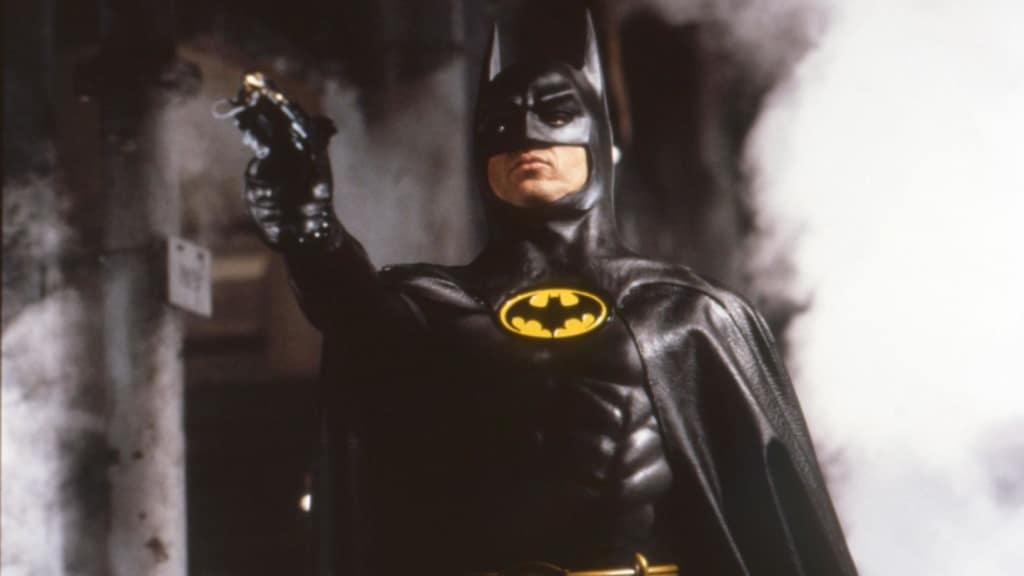
During the summer of ‘89, superhero cinema was a rare breed.
In 1978, Warner Bros. released Richard Donner’s Superman, a warm and welcoming epic that held a reverence for its source material. Anchored by a tremendous performance from Christopher Reeves, Superman was as comforting to the soul as a radiant sunbeam. It’s a bonafide classic that continues to enjoy a quietly faithful fan base that nestles it deep within their own Fortress of Solitudes.
By 1987, the Superman series was rapidly losing altitude, sputtering out under increasingly poor production. The kryptonite blow came in 1987 with the abysmal Superman IV: The Quest for Peace. But jetting in on Superman’s billowing cape was a dark vigilante about to launch another wave of “Batmania.”
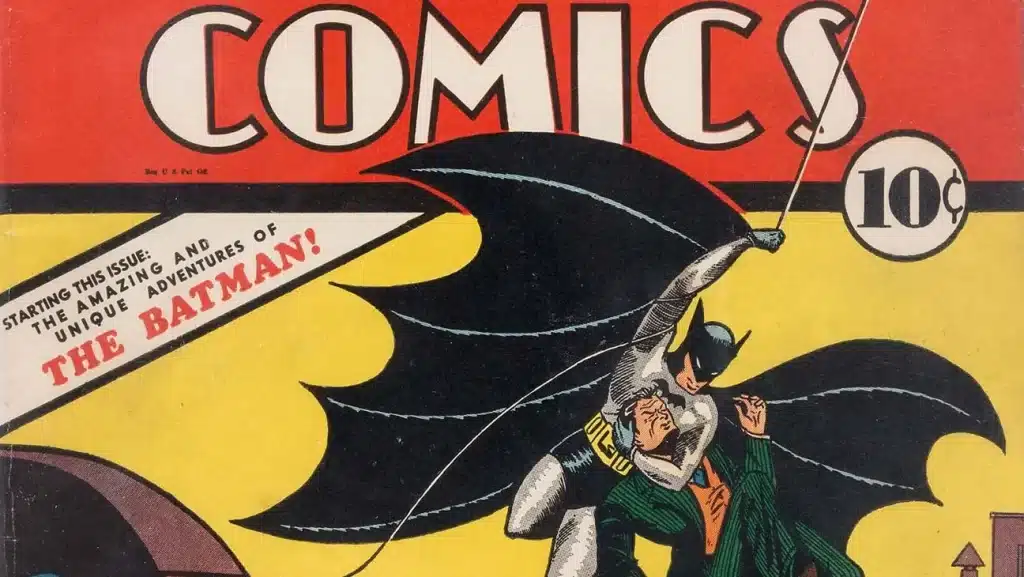
Batman first appeared in 1939 in Detective Comics #27, the brainchild of artist Bob Kane and (then uncredited) writer Bill Finger, in an attempt to capitalize on the success of superheroes following the smash success of Superman a year earlier (this era would be known as the Golden Age of comics).
Proving wildly popular with his gritty war against crime, Batman eventually nabbed his own standalone comic in 1940.
The early appearances of “the Bat-Man,” as he was often referred to, found the Dark Knight packing a pistol (seriously!) and never batting a Bat-eye at bumping off a thug in his quest to eradicate criminals from the mean streets of Gotham (it wouldn’t be called “Gotham” until Batman #4 in 1940).
This would all change, as eventually Batman would make the shift into much more wholesome territory, taking on a young sidekick, Robin, and even teaming up with Superman for World’s Finest.
It was also during this time that the “Bat-Man” would make his cinematic debut in two separate serials, with 1943’s Batman, which starred Lewis Wilson as the first thespian to don the cape and cowl in a story heavily inspired by the ongoing second World War, and 1949’s Batman and Robin, which starred Robert Lowery as the dark detective.
In 1954, the Comics Magazine Association of America was formed in response to psychiatrist Fredric Wertham’s book Seduction of the Innocent, which argued that comic books were a menace contributing to a rise in juvenile delinquency.
The CMAA would rush to establish the Comics Code Authority in 1954, an effort to regulate what was appearing in the panels of America’s funny books.
This pushed publishers like DC into reimaging their famous heroes with a more kid-friendly approach, and would usher in what we know as the Silver Age of comics.
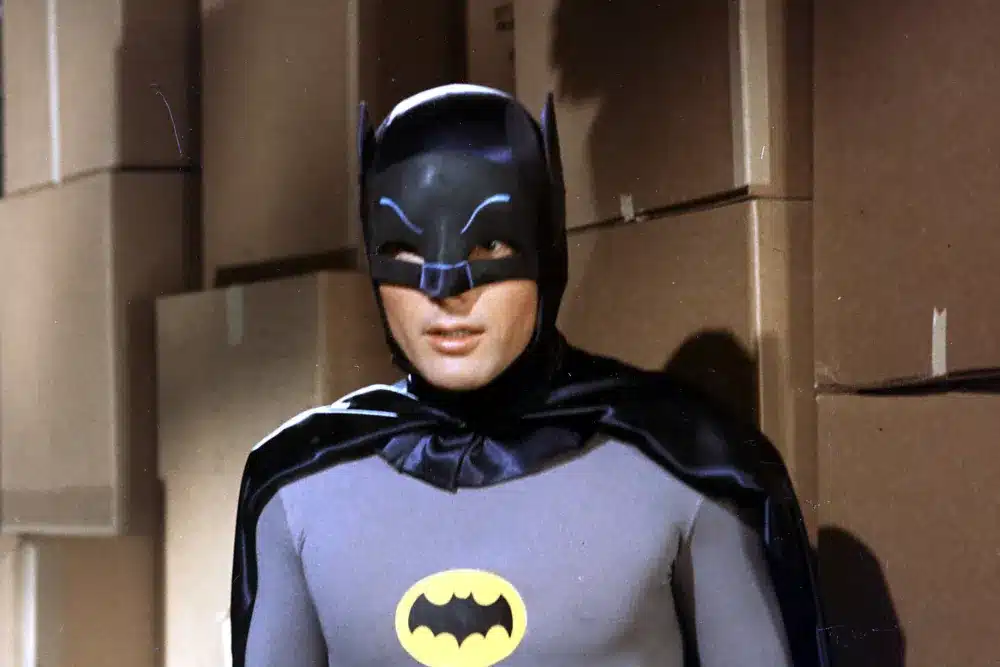
Armed with a bevy of whimsical plots that pitted the Caped Crusader against an army of eccentric baddies, the Silver Age paved the way for Adam West’s legendary television (and movie) turn in 1966. The third screen iteration of Batman, the campy TV series, would become a staggeringly high note in pop culture history (launching the first wave of “Batmania”).
However, many Batman devotees soon began grumbling over the zany “ZAP! POW! BAM!” antics of the Technicolor Batman and Robin, with the series bowing out in 1968.
As America entered the 1970s, the Silver Age of comics transitioned to the Bronze Age, an era that welcomed a return to more serious subject matter. Batman traded in his battles with extraterrestrials for gritty, noir-caked tales that would ultimately lead to three particularly important titles in Batman’s history – Alan Moore’s Batman: The Killing Joke and Frank Miller’s The Dark Knight Returns and Batman: Year One.
It was through these series and the shift in tone that began in Batman #227 that comic fans would rejoice in the return of the hero they recognized from the earlier years.
Through this renaissance, the comic book movie and the accompanying hype took shape as we know it today.
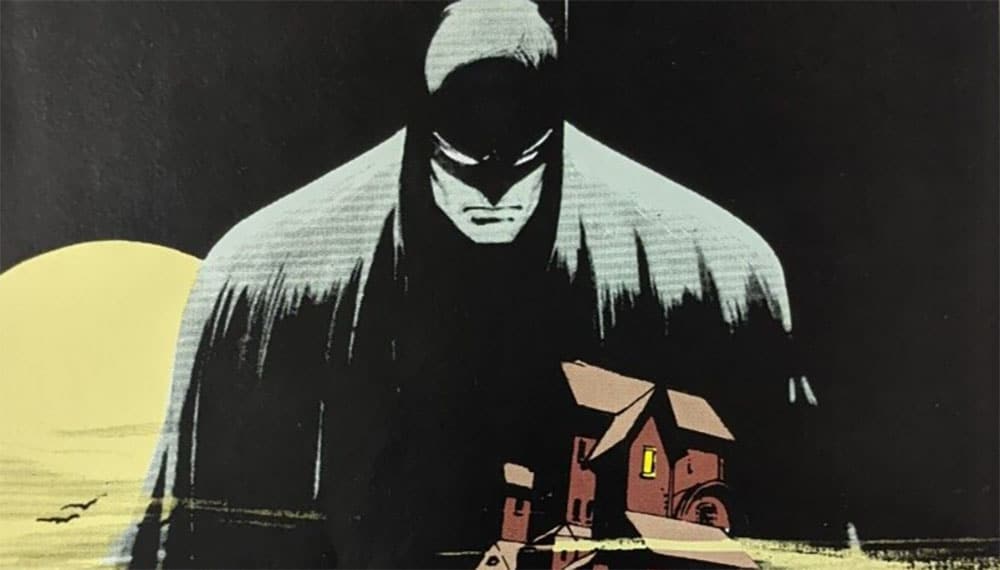
In Hollywood, producers Benjamin Melniker and Michael E. Uslan (a mega Batman fan who penned a must-read book for bat-fans entitled The Boy Who Loved Batman) had purchased the film rights for the Caped Crusader.
A feature was being shopped to various studios, with the project finally blossoming at Warner Bros., the folks behind Donner’s Superman.
The studio would turn to young director Tim Burton, who was enjoying a meteoric rise to fame with films like 1985’s Pee-wee’s Big Adventure and 1988’s Beetlejuice, the latter of which had teamed Burton with star Michael Keaton.
With nearly everyone eager to make a dark and serious Batman film (fueled by inspiration from the recent Bronze Age run), a script was penned by Sam Hamm and Warren Skaaren.
Cameras began rolling on the cinematic venture that proved a phenomenon in more ways than one.
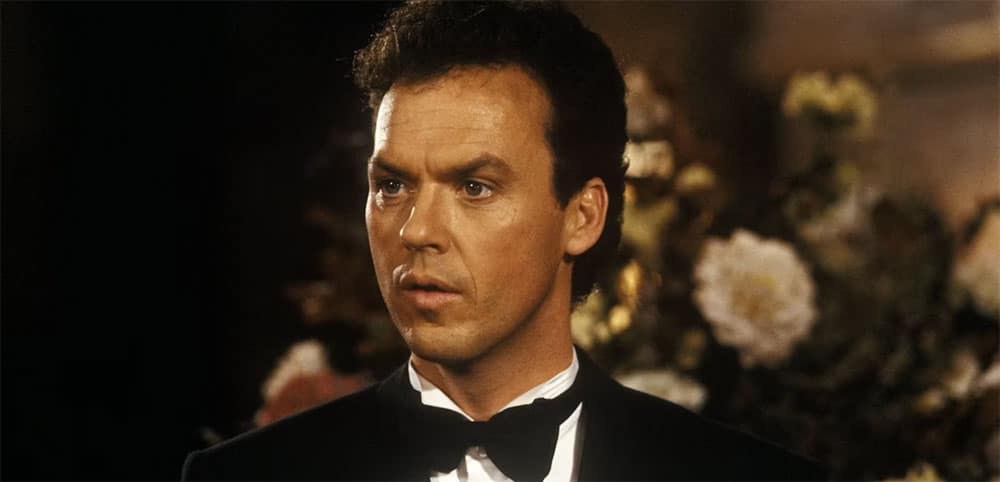
A swarm of A-list talent signed on, including veteran Jack Nicholson (who demanded top billing) as the Joker, Batman’s arch-nemesis. On Nicholson’s purple coattails was Kim Basinger as Vicki Vale, Billy Dee Williams as Harvey Dent, Hammer Films alum Michael Gough as Alfred Pennyworth, Jack Palance as Carl Grissom, Robert Whul as Alexander Knox, Pat Hingle as Commissioner Gordon and, perhaps the most controversial of all, Keaton as Bruce Wayne/Batman — Mr. Mom himself.
A simple Google search of “fan reactions to Michael Keaton as Batman” will lead you to a glorious little slice of fanboy history.
It will bring you a snippet of a news broadcast where fans are asked to voice their reactions to the announcement of Keaton’s casting as the Dark Knight, all of which grouse and bemoan the news, labeling Keaton a wimp, too small, not sexy enough, and cursed with a thinning hairline, among other complaints.
The newscaster goes on to say that fans flooded the studio with letters urging Warner Bros. to reconsider their decision. It’s fucking hilarious.
It’s also amazing that very little has changed since 1989, as casting announcements still leave fans seeing red, with angry keyboard warriors rallying in social media comment sections to bitch and complain before they’ve even seen a glimpse of what is on the horizon.
As production wadded on for Burton and his crew, anticipation was ticking higher and higher by the day. It wouldn’t be long before a trailer would finally make its way into theaters, with droves of curious fans packing the seats to nab a first glimpse of what promised to be one of the biggest films of 1989.
Again, the nightly news was there to capture the bubbly feedback, with many female viewers gushing over how “sexy” Keaton was (hey, wasn’t he not sexy enough?!), while others raved over the make-up on Nicholson’s Joker. And it seemed almost all were thrilled by the quick shots of the Batmobile and Keaton’s legendary line, “I’m Batman,” with several attempting their own impersonations.
It was an event that paved the way for the modern comic book movie landscape, where fans now wait (on the internet, that is) for the first trailer drop so they can pour over each and every frame. It signified that trailers were now an official event unto themselves.
So came June 23rd, 1989, the theatrical debut of Batman.
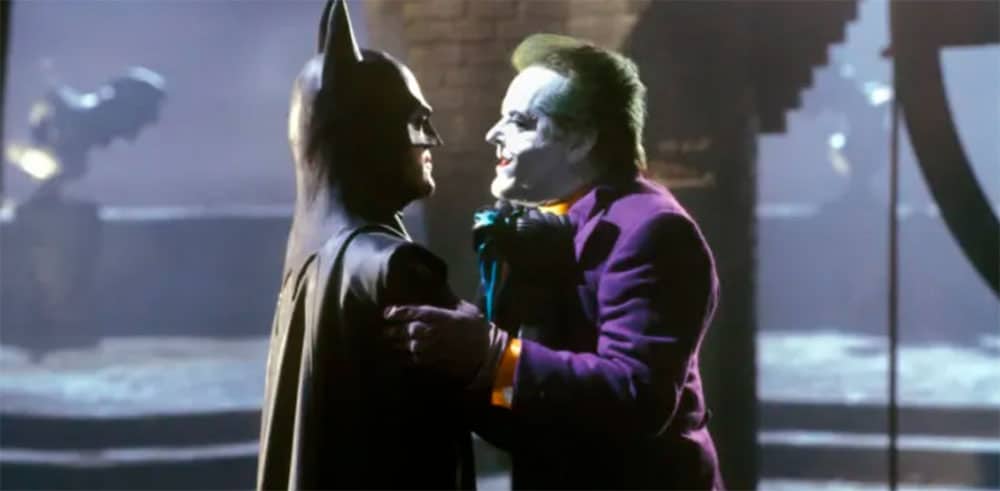
Fans swarmed theaters to the tune of Prince’s soundtrack, and the second wave of “Batmania” was officially in full swing, with Burton’s epic nabbing the top spot at the box office with a mega haul of $40 million, the highest gross for a superhero movie at the time.
Batman would pass $100 million in just eleven short days while $750 million in merchandise moved off store shelves. Critics noted that the film was dark but complementary, while fans rejoiced that this wasn’t their dad’s Batman. No, this was Grandpa’s Batman, the one who struck fear in the hearts of bad guys everywhere.
The work of the team that set out to make Batman was complete, and the memories of Adam West dancing the Batutsi were exorcised from the memory bank.
Meanwhile, Hollywood seemed to realize they had a contagious bug on their hands – superhero movie fever (at least, the first detected hints of it). In its wake, Batman nabbed a sequel in 1992, Batman Returns, which wouldn’t quite enjoy the original’s success.
Despite being peeved at the attention he received, Burton returned to direct Batman Returns, spinning an even darker follow-up that kept many families at home. In addition, a grim cartoon entitled Batman: The Animated Series, which mimicked the tone and look of Burton’s Gotham, debuted on Fox Kids in September of 1992 to rave reviews from critics and audiences.
To this day, Batman: The Animated Series continues to enjoy a following on par with Batman 1989.
Much like the Superman franchise before it, the Batman series began to suffer from increasingly poor quality.
In 1995, with Burton and Keaton long gone, Val Kilmer would don the cowl for Batman Forever, another star-studded venture that began incorporating the campier elements of the ’66 television series. Under the direction of Joel Schumacher, there seemed to be a desire to explore darker themes. Still, it was obvious that corporate greed was digging in deeper, as there appeared to be a stronger emphasis on pushing toys into the hands of children.
And while many fans (myself included) quite liked Kilmer as Batman, he’d handed the cape and cowl over to heartthrob George Clooney for 1997’s Batman & Robin, which marked the total collapse of this Bat-universe straight into the fiery depths of neon buffoonery.
With the embarrassing reaction to Batman & Robin, it would be eight years before the guardian of Gotham City would return triumphant in 2005’s Batman Begins, kicking off a beloved trilogy that would mirror the legacy of Batman 1989’s production and release.
Many dismissed the chatter of a new Batman film, the terrifying memories of Clooney’s nipple-clad goof flashing a credit card still being fresh in the medulla.
Debuting in June 2005, Batman Begins proved a hit, with word-of-mouth boosting the film’s box office in the wake of its release.
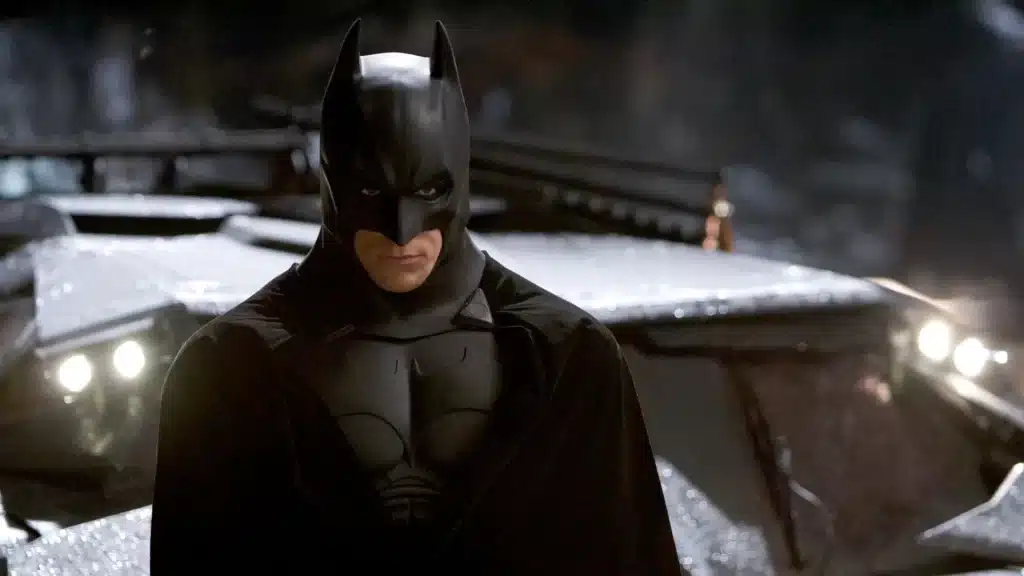
This naturally greenlit a sequel, with the announcement of Heath Ledger taking over the role of the Joker, news that threw nearly every fanboy into a fit of rage. How could a pretty boy like Ledger ever be successful in that role?!
Once again, fan’s knee-jerk response would prove faulty, as Ledger’s turn was unlike anything comic book fans had seen before, earning the late actor a posthumous Oscar.
The Dark Knight trilogy would conclude in 2012 with The Dark Knight Rises, released to impossible hype. The trailer’s description would leak online before debuting, fans salivating for a crumb of what followed in the wake of The Dark Knight. With Bale bowing out on a mostly celebrated final outing (some claimed the film just couldn’t compete with The Dark Knight), he’d pass the Batarang to Ben Affleck, whose casting in 2016’s Batman v Superman: Dawn of Justice was met the same backlash that greeted Keaton in the’80s.
There was a stream of outrage, but much of the protest was muted by the first glimpse of Affleck donning a familiar armored bat suit, which made comic purists drool onto their keyboards.
We’d relive this again to a much smaller effect when it was revealed the Twilight heartthrob Robert Pattinson would take over the role in 2022 for a new series that kicked off with The Batman.
So here we are, thirty-five years on, with ten actors who have portrayed the Dark Knight (look it up for the complete comprehensive list that includes the small screen portrayals and voice actors), and America still keeps returning to one man – Keaton. Yes, the first man they furiously doubted could do the role justice. Why is that?
What is it about Keaton, and more specifically Batman 1989, that still lures us back?
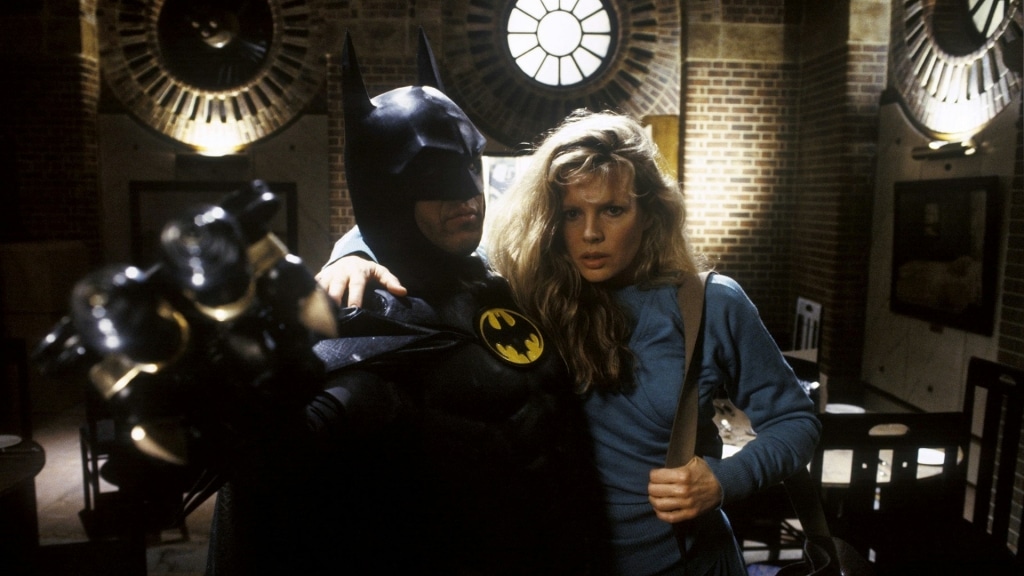
Of course, there is the nostalgia, which is to be expected. Time is typically an ally to entertainment, but I think we continue to return to Keaton and Burton’s Batman universe because of the mystery surrounding both the world and the portrayal of the character.
With Nolan’s Dark Knight trilogy, he went to exhausting lengths to explain every inch of Batman lore, which is wonderful, but it doesn’t bewitch in the same manner that Burton’s universe did. Nolan revealed how the magician does his tricks. Burton, on the other hand, liked to keep secrets.
It’s important to understand that this is not a compare-and-contrast type of reflection. No, we are here to understand the importance of what Burton accomplished, and part of that is understanding Batman’s overarching history and how it shaped our current perception of superhero cinema and its culture.
With superhero entertainment currently the fast food of the megaplex, we can point to Burton’s film as the foundation — not Donner’s Superman or the 66’ Adam West adventure.
No, it’s Burton who would engrave the commandments into stone, much like a comic book movie Moses.
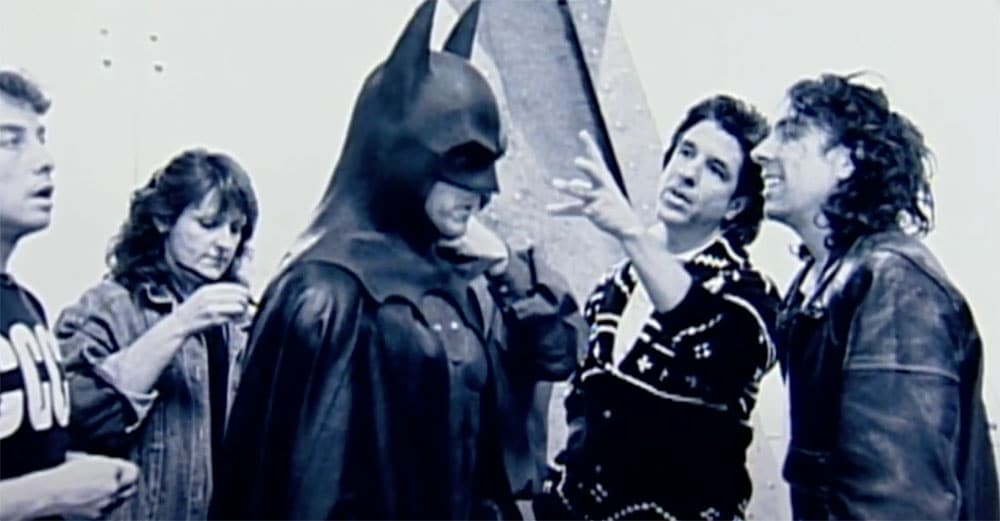
He’d show us how it was done, sometimes inadvertently, yet always in his own horror-centric way. Long before he’d succumb to green screens that robbed him of his in-camera artistry, Burton had a way with atmosphere. Batman is no exception. It could only have been made by one man, a budding auteur with a trained eye for art direction.
It has a DNA all its own. It has its own sense of surreal wonder as it transports us to the dampened streets of Gotham City (constructed on massive sound stages and backlots), a metropolis reaching into the sky and where time has been spun on its head.
Art Deco stylings intermingle with gothic cathedrals, gargoyles peering down onto steamy streets where citizens dash around in garb that looks lifted from the 1930s.
Prowling the labyrinth of rooftops is the Bat-Man, who drops in on thugs silently as they trade stories about the “Bat.”
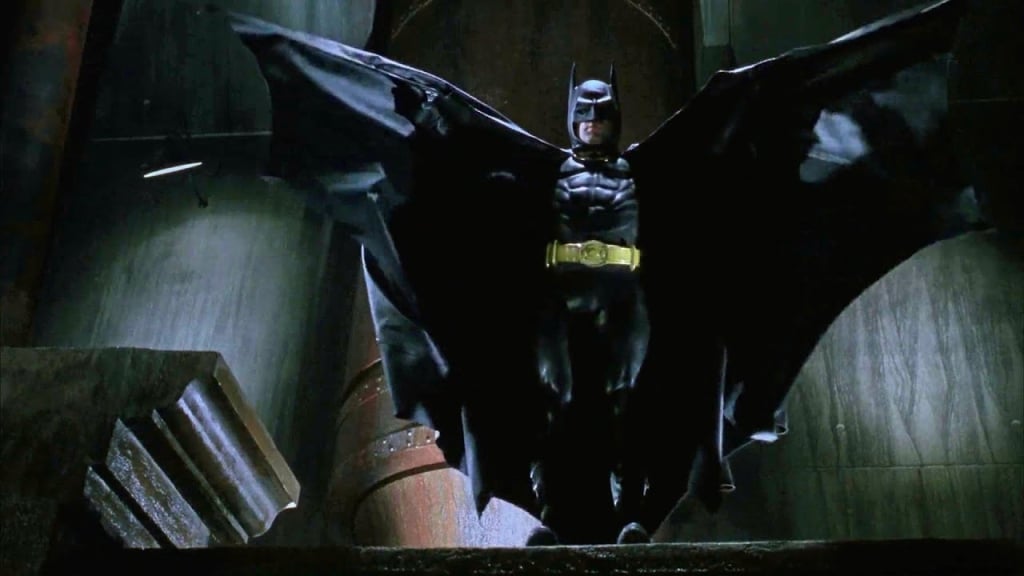
“There AIN’T no Bat!” one of them declares, even as we can clearly see the sweat beading on his brow and the dark circles under his eyes, suggesting his line of work isn’t allowing for many peaceful nights.
Ah, but here’s our symbol of justice descending like Dracula in search of a pulsating jugular vein.
A scuffle ensues, and one crook is knocked out cold while the other stammers in terror. “Don’t kill me, man! Don’t kill me!” In a whisper, the Bat assures him, “I’m not going to kill you.” He wants this pathetic excuse for a human to tell all his friends about him. “What are you?!”
The Bat replies with an answer that has sent ripples into the pop culture galaxy. Two immortal (and often mimicked) words. “I’m Batman!”
What follows this classic prologue is a film that seems more preoccupied with giving the Clown Prince of Crime an origin story, which is fine, even if it glosses over our titular hero a bit. Still, the mystery holds firm in the brooding strings of Danny Elfman’s iconic score, which swells and gallops on an earworm melody. “Where does he get such wonderful toys?!” the Joker asks.
On the street sits what many consider to be THE definitive cinematic Batmobile, designed by Julian Caldow, and swooping through the sky is the roaring jet power of the mighty Batwing. That is a great question from our merry prankster. Where DOES he get this stuff?! Sure, he’s got a bottomless bank account, but did he build these? Does he have himself a Lucius Fox? This only fuels our thirst for a deeper understanding of this weird figure of the night.
And what of Bruce Wayne, you ask?
Why, he’s just as peculiar as Batman, an awkward eccentric who is both unsure at a party and fumbles through a date with Vicki Vale. Still, his idiosyncratic charm is like chum in the water for Vicki’s affection, drifting out of the screen and into the hearts of women everywhere.
Keaton’s Wayne is a tortured weirdo, the type of character Burton favors, which entrances us even further.
Moreso, Keaton’s Batman emerged when cinematic heroes possessed a level of vulnerability that now seems like a thing of the past. As I said before, the superheroes of today don’t ever seem in mortal peril. They get knocked around, and then they get right back up (cue Chumbawamba), making short work of the threat in front of them in the blink of an eye. Keaton’s Batman aches, both internally and externally. He wants to open up to someone, but the words just don’t come out.
During the final physical battle, his Batwing crashes to the street, with Batman emerging battered and bloody, only to trudge after the Joker up a seemingly endless set of cathedral stairs, where he is kicked around by a handful of goons. He eventually holds his own, but not before the baddies land a few punches.
Affleck’s Batman, he is not. He’s not blasting his way through alien armies or duking it out with Superman. It’s a battle between men, with one armored up a tad more than the others.
Perhaps that is why Burton’s Batman continues to shine bright all these years later.
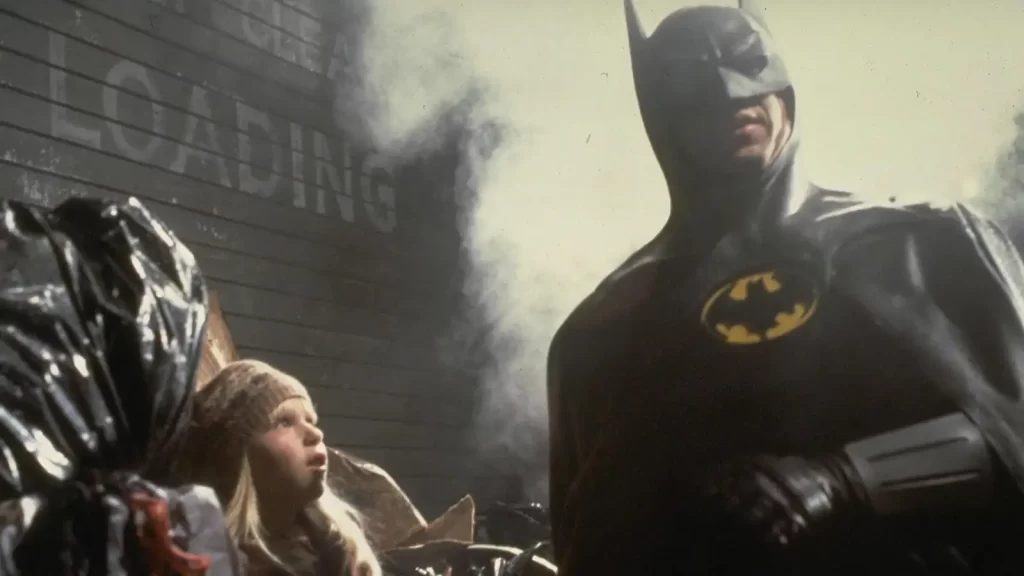
If there was a boardroom of suits leering over Burton as he worked, you certainly don’t sense it. It doesn’t feel like it was produced out of a mandated formula; rather, it seems like a gurgling vat of chemicals all its own.
It’s unabashed fantasy with a smear of the macabre, dancing its way into a carnival of chaos that charms even as it mildly disturbs. It’s a bit too edgy for children, yet we show it to our kids anyway, mostly because there is something so sterile about superhero cinema today.
There are moments that still make us gasp, a respectable feat when you consider much of the breathless in-camera wonder has all but zoomed out of modern efforts.
And while it may be indirectly responsible for some of the more toxic traits of fanboy fanaticism, you have to give Batman the respect it deserves because it was responsible for lighting a fire of passion in the hearts of comic book fans everywhere. It forced Hollywood to take this stuff seriously (at least for a while) because we, the fans, take it seriously.
It’s where we go to lose ourselves from a long day at work. To forget about that nasty break-up. To hide from the bully on the playground or from that boss who never even says good job. It’s ultimately responsible for why the fans line up as far as the eye can see outside of Hall H at San Diego Comic-Con.
It’s why they pack in like sardines in front of names like Kevin Feige, to google the first glimpse of the next comic project and to pick it apart in – to quote Dr. Frank-N-Furter, — “antica…… passion!”
Batman 1989’s lore has continued long after the curtain closed in 1992.
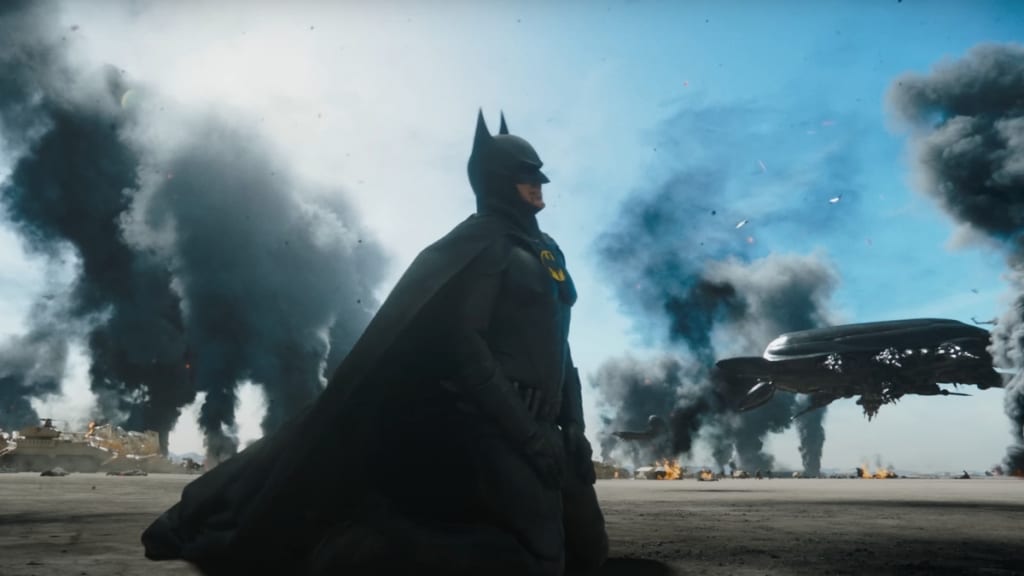
Last year, Keaton fans got a massive treat with the actor reprising his role in The Flash, a film that was met with a tepid response from the public. However, Keaton’s return was celebrated and even noted as the bright spot in the troubled production.
Meanwhile, comic shops have seen the arrival of a spin-off comic that furthered Burton’s universe, and toy lines like McFarlane and Sideshow Collectibles churn out keepsakes for fans to add to their collections.
A new novel also looms on the horizon, which aims to fill in the gap between Batman ’89 and Batman Returns, something that I’m sure will be a success.
When Donner’s Superman arrived on screens in 1978, it came with a tagline: “You’ll believe a man can fly.” An entire generation did indeed believe ONE man could defy gravity.
In 1989, Batman convinced an entire generation that it was possible for them to fly by letting them identify with the hero on the screen. You know, that guy with a thinning hairline and the one they deemed “too wimpy.” They imagined themselves on a ledge over a city, calling out for a savior. They imagined themselves swooping in to save someone in peril from the Joker. They imagined that THEY were behind the wheel of the Batmobile, and they were swooping over Gotham in the Batwing.
It’s why an entire generation stood in plastic Batman masks and chintzy fabric capes or projected themselves onto the action figure they clutched to their chests, confidently declaring in triumphant unison, “I’m Batman!”











Follow Us!