


Color and wardrobe choices in “The Uninvited” play a surprisingly revealing role in unraveling this supernatural horror mystery.
No time to read? Click the button below to listen to this post.
I love summer horror movies, but The Uninvited (2009) is probably one of my nostalgic favorites. I love that lakehouse and the way the sun reflects off the water.
I love it when horror combines beauty and terror; it’s an art form. Sometimes, our nightmares materialize in the daytime, much like Midsommar (2019). We think we’re safe in the sunlight, that once its rosy fingers touch us, there is nothing to fear. The truth is, psychos operate in daylight, too.
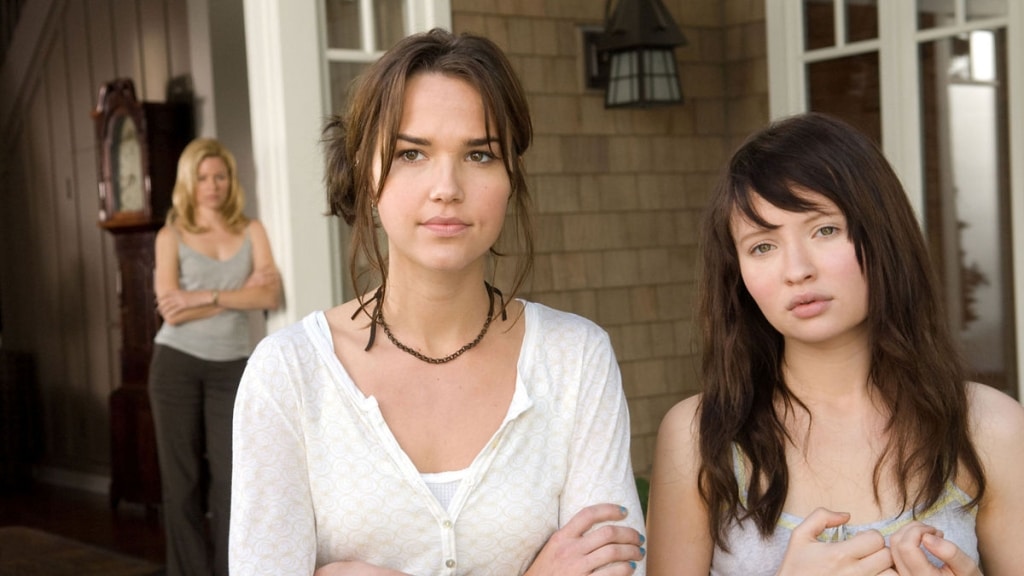
The Uninvited focuses on two sisters, Anna (Emily Browning) and Alex (Arielle Kebbel), who face off against their father’s new fiancee, Rachel (Elizabeth Banks). It’s a moody psychological horror film directed by the Guard brothers. It is a remake of the incredible 2003 South Korean horror film A Tale of Two Sisters (an adaptation of a popular Korean folk tale).
In this article, I’ll explore how color and costuming are used in The Uninvited to provide insight into character motivations and reveal subtle clues about the film’s core mystery.
WARNING: Spoilers abound as I reveal key plot points in my analysis. If you haven’t seen the film, I strongly encourage you to watch it before you read more. It’s available to stream on many platforms, including Prime Video and Paramount Plus.
Inner Ugliness
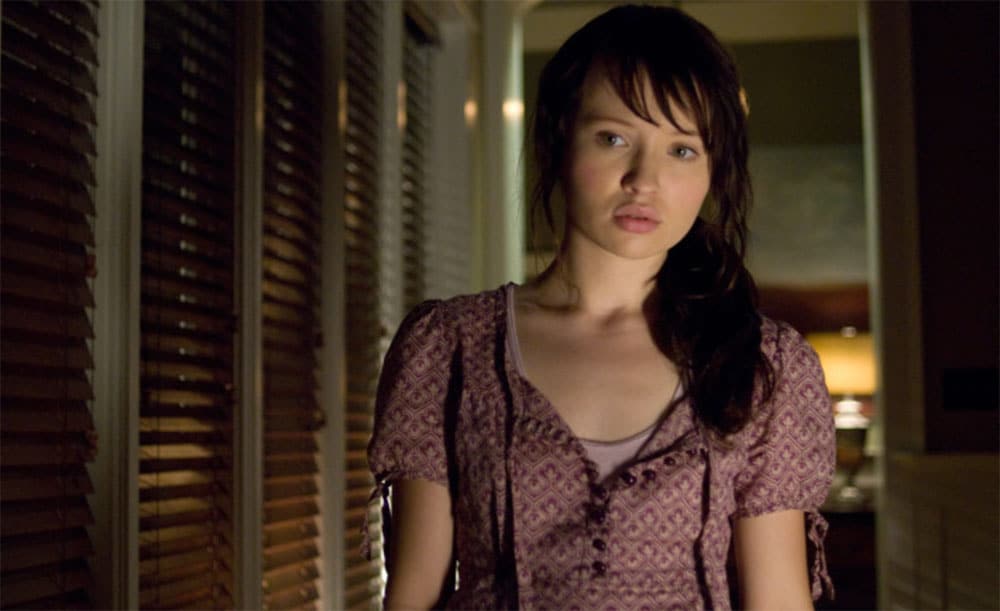
Many don’t notice a character’s color choices unless they’re dramatic. However, costume designers and wardrobe supervisors spend a lot of time developing a character’s looks so that their outward appearances reflect their inner selves. The character, it’s implied, is telling their story on another canvas.
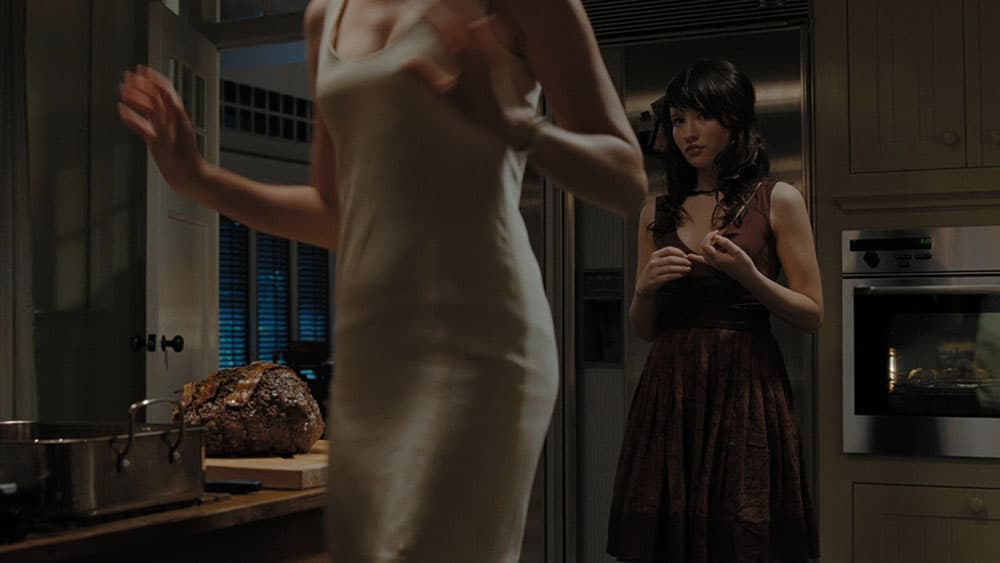
The color symbolism in The Uninvited isn’t subtle. Still, I never noticed or appreciated these thoughtful choices until I thought about why all of Anna’s outfits are so ugly (in my opinion). Everything Anna wears has shades of murky brown, non-gauzy, looking almost rotted, while Rachel’s clothes are see-through and in peaceful colors in contrast.
Anna has just returned home following a stint in a psychiatric institution after a suicide attempt on the heels of her terminally ill mother dying in a tragic house fire. She has no memory of the fire, but recurring nightmares plague her. Back at home, she is reunited with her older sister, Alex. She also learns her father has a new girlfriend, Rachel, who was her mother’s live-in nurse.

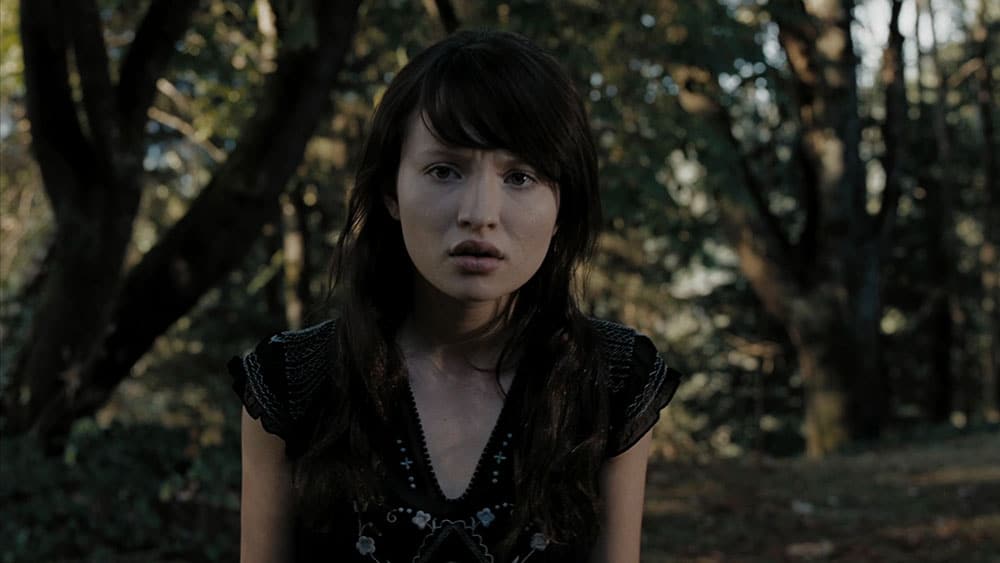
In an early scene, Anna is with her old boyfriend, Matt. He wants to have sex, but she doesn’t. Her look is quite vibrant here—she is dressed in red, likely symbolizing her anger. Also, she represents an all-American girl in red, white, and blue.
While in the hospital, Anna wears a tan sweater and gray and blue sweats. She wears a blue and white dress and a pale green cardigan when she returns. She looks washed out and non-vibrant.
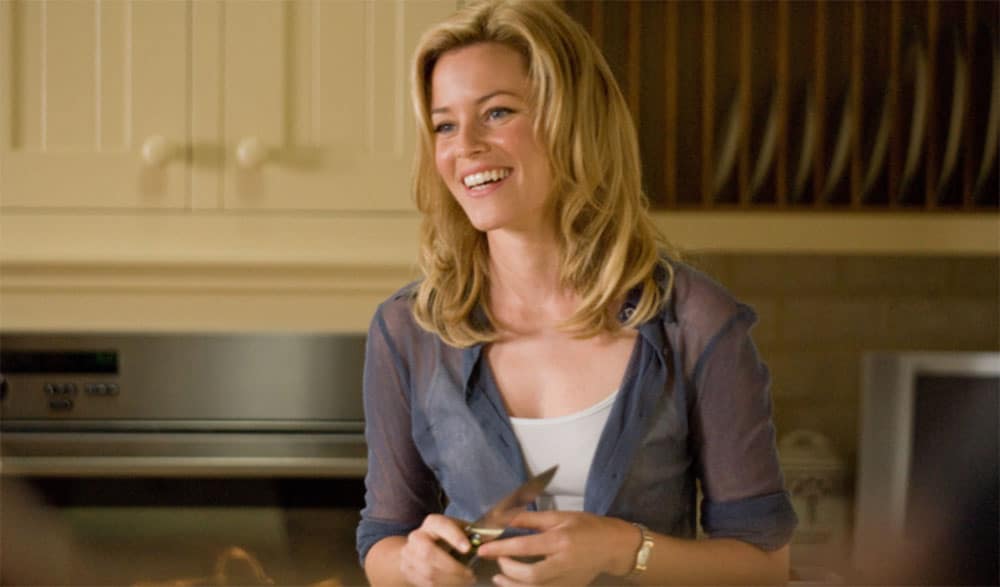
When we first meet Rachel, she wears workout clothes, a form-fitting light grey hoodie and yoga pants. There’s nothing to hide. She showers and changes into blue jeans and a gauzy blue shirt, reminding me of ocean colors.
Rachel’s intentions are clear; she desires to make friends with Anna.
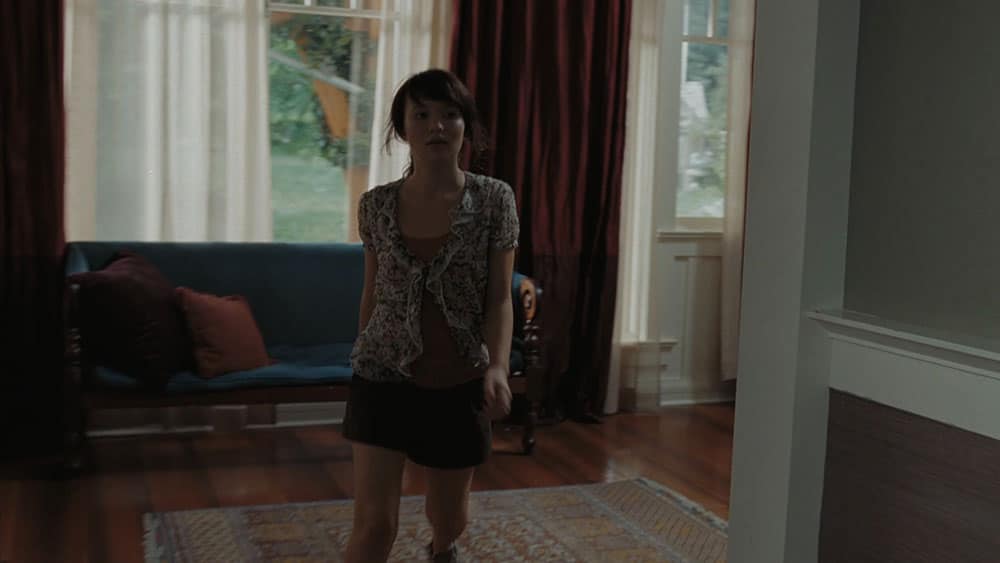
Anna also wears a gauzy shirt when she comes upon Rachel in her house, but it’s brown and white and not transparent. At this point, we can’t tell her intentions from her clothes; even the whiteness of Anna’s gauzy shirt is opaque.
The next morning, we see Anna wearing an off-white shirt dress over a dark brown swimsuit; the colors are sickly orange and dirt brown—not at all summery. Meanwhile, Rachel is the picture of summer: white shorts and an ocean-blue tank top.
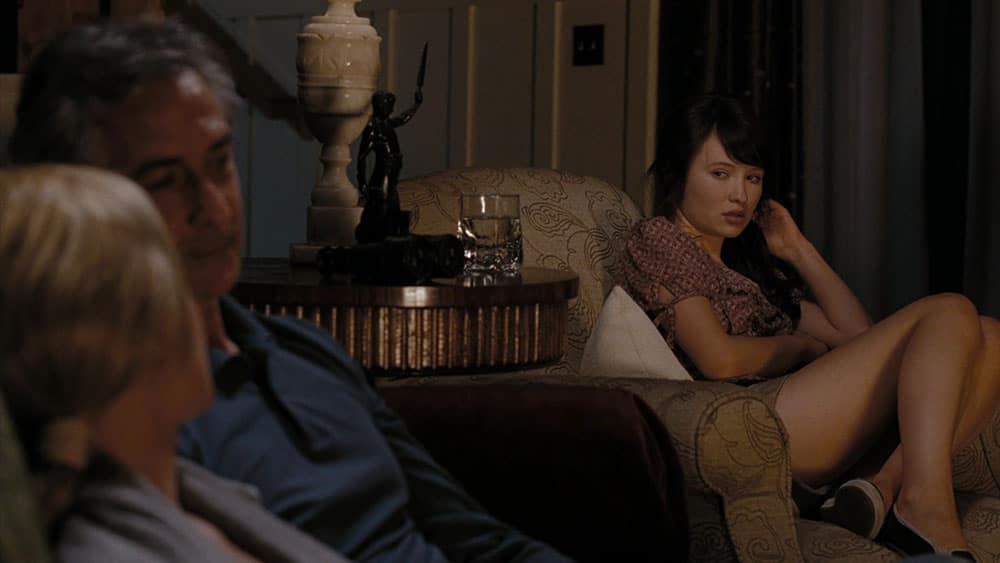
Anna wears a pretty but dark brown dress during a party, while Rachel wears white. While Anna is shrouded in darkness, Rachel appears to have pure intentions. Because we see events through Anna’s eyes, we believe she is deceptive and hiding her true intentions, putting on an air of innocence. Yet, the costume department is giving us clues that she is who she says she is, and it’s only through Anna’s eyes that darkness gets reflected on her.
Hiding in Plain Sight
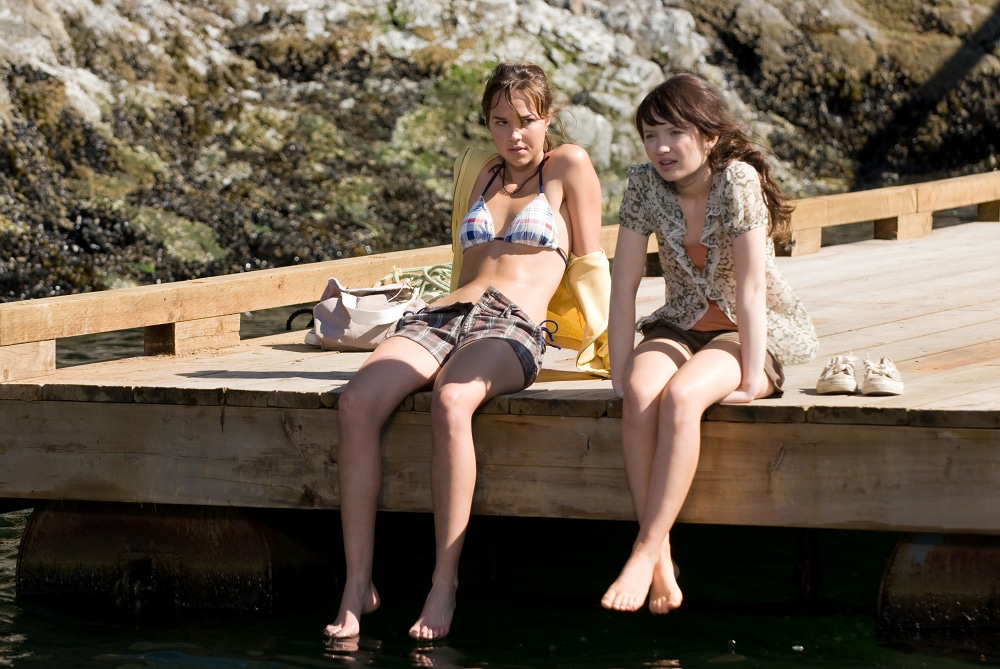
The few times Anna wears light colors, I think it’s to fool Rachel or when it reflects her supernatural experiences (white). Other times, dark colors cut across the lighter shades (i.e., her plaid shirt when Matt’s body is found). She also wears lighter colors to convince others to believe her, such as when she’s wearing blue with her dad and trying to contact the police about Rachel.
What Anna wears in the end scene has to do with her forced restraint. Now, she’s peaceful, just like before she went to the mental hospital. This makes her colors hazy.
Everything Anna wore made her look washed out, but that was entirely intentional and a purposeful choice by the costume designers. The darker her intentions, the deeper brown her clothes get—like the murky earth six feet down, where all the bodies are now buried.












Follow Us!