


“Starve Acre” is a beautiful but bleak and haunting meditation on grief and the ghosts of memory anchored by two tour de force performances.
No time to read? Click the button below to listen to this post.
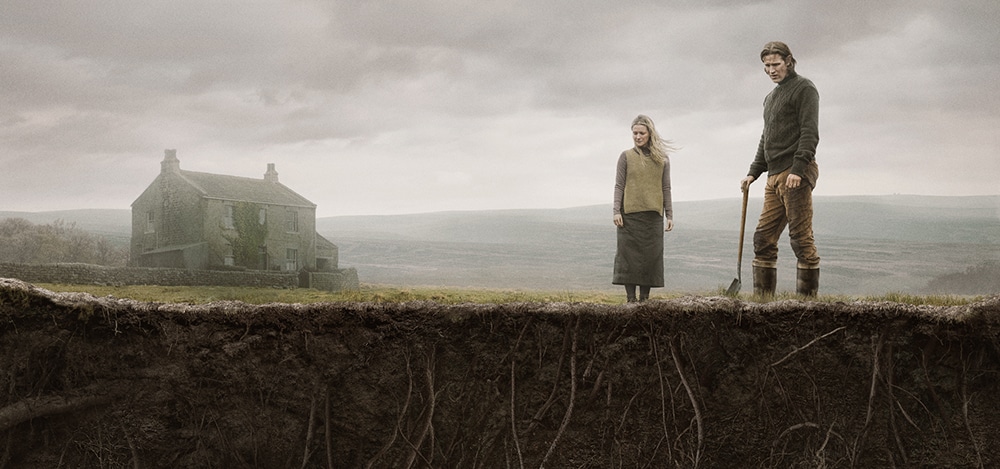
In rural England’s bleak, windswept landscape, director Daniel Kokotajlo’s Starve Acre takes root — a mesmerizing folk horror tale burrowing deep into the soil of human suffering.
Adapted from Andrew Michael Hurley’s celebrated novel, this 2024 offering delivers potent atmospheric dread, weaving a tapestry of loss, trauma, and the ineffable power of memory.
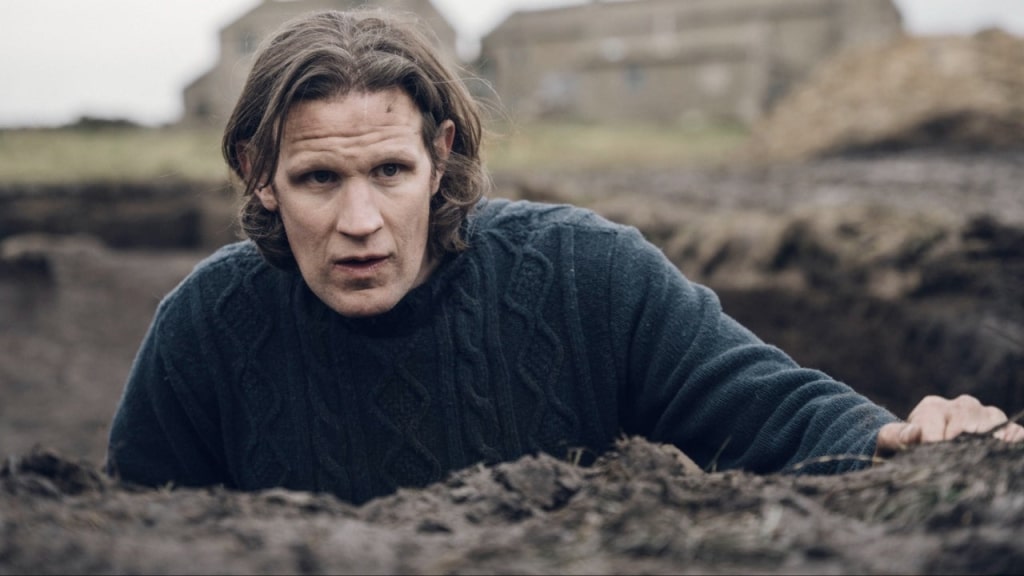
Matt Smith and Morfydd Clark deliver tour de force performances as Richard and Juliette, a couple grappling with the tragic loss of their young son, Ewan. Smith (House of the Dragon, Doctor Who, Last Night in Soho), in particular, brings a raw, haunted quality to Richard, a man desperately clinging to rationality as the world around him unravels.
Clark, known to genre fans for her role in Saint Maud and Crawl, brings a nuanced depth to Juliette. She portrays her grief and unraveling with a haunting intensity. Clark’s Juliette is a study of barely contained anguish, her grief threatening to consume everything in its path.
Their performances are complemented by a strong supporting cast, including Erin Richards and Robert Emms.
Kokotajlo’s direction is assured and subtle, allowing the story’s horror to seep in gradually rather than assaulting the viewer with cheap scares.
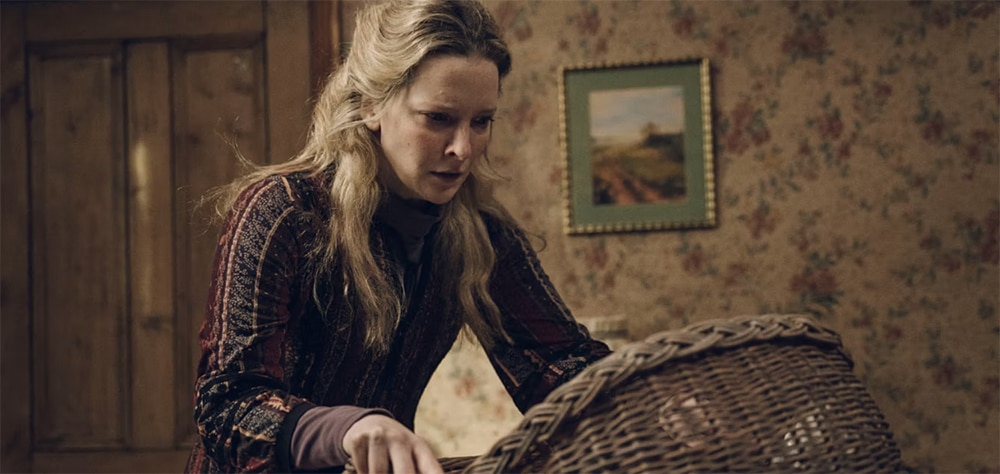
He creates a world where the line between reality and nightmare is perpetually blurred, reminiscent of Robert Eggers’ The Witch or David Bruckner’s The Ritual.
Adam Scarth’s cinematography is breathtaking, capturing the harsh beauty of the English countryside with a painterly eye. Every frame is composed with exquisite care, the desolate landscape becoming a character in its own right. The Yorkshire moors are captured in all their bleak beauty, translating Hurley’s evocative prose about the English countryside into stunning visuals.
The plot follows Richard and Juliette as they return to Richard’s family home, the titular Starve Acre. This place, named after a field believed to be cursed and unable to yield crops, offers hope for a better life and a stark reminder of a haunted past.
As the couple attempts to process their grief, they become estranged and consumed by their parallel quest for answers.
Juliette turns to the occult for comfort and hopes that the barriers between life and death can be lowered so she can reconnect with her lost son. Richard becomes obsessed with unearthing an ancient oak tree, once believed to possess mystical properties, that was removed from the property generations ago. As he digs deeper, quite literally, into the past, the boundaries between memory, grief, and supernatural horror begin to blur.
Matthew Herbert’s score is an ominous presence that thrums beneath the surface of every scene. It creates a creeping unease that never lets the viewer settle.
Starve Acre excels in its use of horror as a metaphor.
It invites the audience to an intellectually stimulating experience that challenges perceptions and interpretations.
The titular farm, with its poisoned soil and dark history, becomes a potent symbol of inherited trauma and the toxic nature of unresolved grief. The mysterious oak tree is a brilliant central metaphor – a force that nourishes and destroys, much like the memories that sustain us while keeping us rooted in pain.
The film also examines how hope can be both a lifeline and a source of torment, refusing to let the characters heal.
Starve Acre’s exploration of how the past refuses to stay buried is reminiscent of Ari Aster’s Hereditary, another tale of generational trauma manifesting as supernatural horror. Both films force us to question the nature of reality, blurring the line between genuine supernatural occurrences and the projections of a fractured psyche.
One of the most potent scenes involves the discovery of a partially mummified rabbit, a moment that manages to be both viscerally disturbing and deeply symbolic. This rabbit becomes a totem, a harbinger of the thin veil between life and death that permeates the film.
If the film has a weakness, its deliberate and contemplative pacing, akin to the slow growth of a plant, may test viewers’ patience accustomed to more conventional horror fare.
However, this pacing is a deliberate choice by the director to build tension and create a sense of unease, and it offers rich rewards for those willing to surrender to its hypnotic rhythm.
This film demands and deserves multiple viewings, each passing revealing new layers of meaning and foreshadowing.
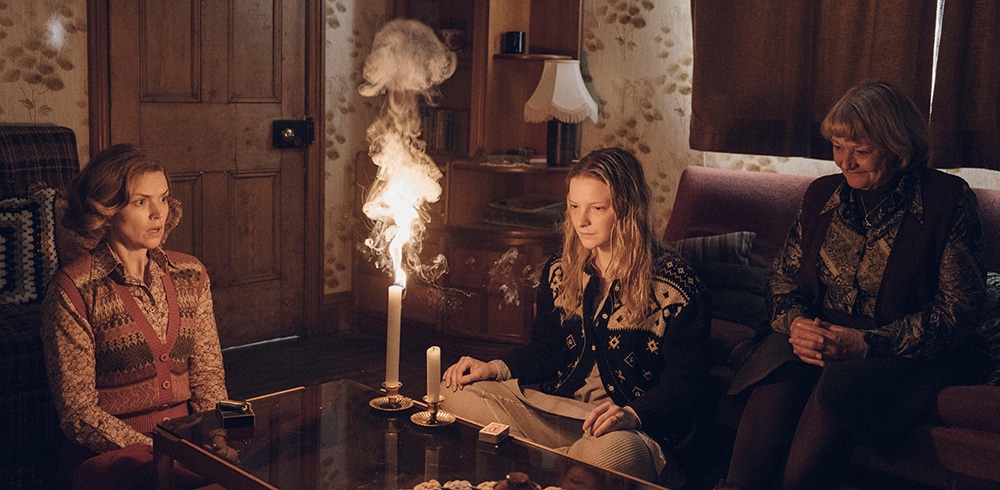
The production design is impeccable, evoking the feel of classic 1970s British horror films like The Wicker Man or Blood on Satan’s Claw.
The costumes and setting ground the film firmly in a specific time and place while still feeling oddly timeless, adding to the dreamlike quality of the narrative.
As the story unfolds, we’re given shocking glimpses of Ewan’s violent tendencies before his death, adding another layer of complexity to the parents’ grief intermingled with crippling guilt and uncertainty.
Ultimately, STARVE ACRE is a triumph of mood and metaphor.
It’s a film that uses the trappings of folk horror to deeply explore human themes of loss, memory, and the sometimes destructive power of hope, inviting the audience to a journey of introspection and connection.
Admittedly, that’s not exactly an innovative approach, and you’ve undoubtedly seen many other films explore the supernatural-as-metaphor-for-human-trauma trope before, including in another recently released British folk horror film, The Moor, which we reviewed here.
However, Starve Acre excels not by reinventing the genre but by honoring what makes it so compelling and relatable.
Starve Acre is a film that plants its roots deep in your psyche, growing into something beautiful, terrible, and unforgettable.
Overall Rating (Out of 5 Butterflies): 4.5
STARVE ACRE opens in theaters and arrives on demand on July 26.








Follow Us!