


“Trap” is at its best when you suspend disbelief and accept the film for what it is: an enjoyable serial killer romp with great performances.
No time to read? Click the button below to listen to this post.
Josh Harnett is a likable guy. It could be those deep, feeling eyes or that cheeky little side smile, but I’d say that in many cases, the audience is won over by him before he even opens his mouth.
Trap twists this natural charisma to deliver one of the hammiest but also most enjoyable serial killer roles in recent memory. The lion’s share of that fun comes from an in-form Harnett, who at all times seems to be having a blast.
I have three Josh Harnetts that linger in my memory. First is his character in The Faculty, a lazy but intelligent high-schooler who has lost his comb but found ecstasy; second, his silver-tongued I’m-a-nice-guy-but-am-I-really turn in the criminally underrated Lucky Number Slevin; and finally, most likely because it is very recent, his 100% prime beef scientist in Oppenheimer. The first two are troubled characters who hide a caring heart behind quips and cynicism. However, Trap flips this formula effectively for a character who hides a cruel and murderous streak behind feigned normality and good manners.
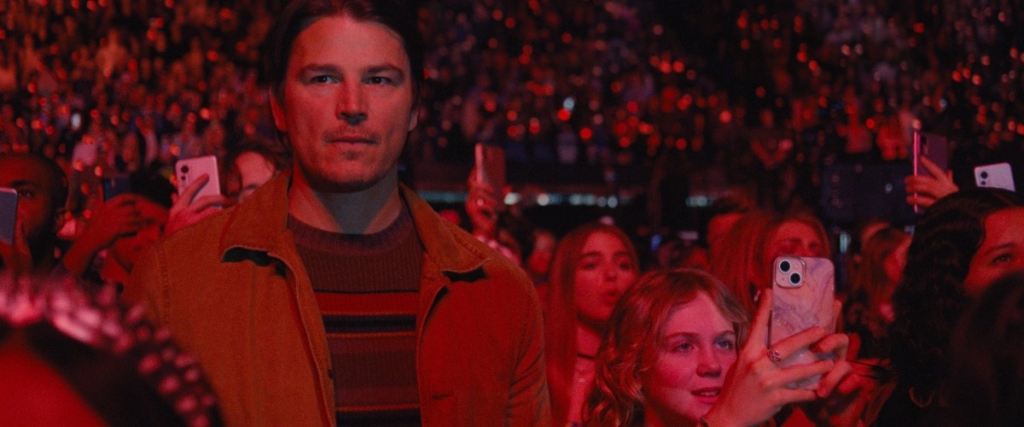
Harnett plays Cooper, a caring dad who is always ready with cheesy jokes and who is taking his daughter to a concert by the hugely famous Lady Raven (Saleka Shyamalan). When a clerk at the concert reveals that the concert itself is a trap set by the FBI to catch the infamous serial killer “The Butcher” (none other than Harnett himself), Cooper must balance his care for his daughter, Riley (a fantastic Ariel Donoghue), with a desire to elude the authorities.
As might be expected, the Shyamalan premise becomes increasingly nonsensical when analyzed, but it opens up opportunities for twists and wild performances.
While perhaps oddly small for the popularity of its headline act, the concert venue works brilliantly as a setting for this cat-and-mouse pursuit. In this place, it is possible to become invisible through crowds, but with agents posted at every exit, it is challenging to leave undetected.
It also works as a cauldron of bubbling-over hysteria, pairing well with Cooper’s increasingly strained attempts to keep his rage under control as the net cast to catch him tightens.
Harnett really shines as he shifts between mild-mannered dad and cornered killer, with smiles becoming sneers and then smiles again in quick succession.
Because of this constant rising and dropping of formality and the sense of persistent entrapment, the film works best when it stays with the concert venue. Later scenes away from the venue struggle to provide the same sense of intrigue.
The movie can sometimes lack tension.
Firstly, while the audience can revel in Hartnett’s performance, Cooper is irredeemable as a character, repeatedly showing a complete apathy for the suffering of others—in fact, showing quite the taste for it (unfortunately, being a good dad and husband does not balance out your karma for torturing and dismembering twelve innocent people). This means it is difficult to root for him in the same way you might if he wasn’t so into the whole murdering thing.
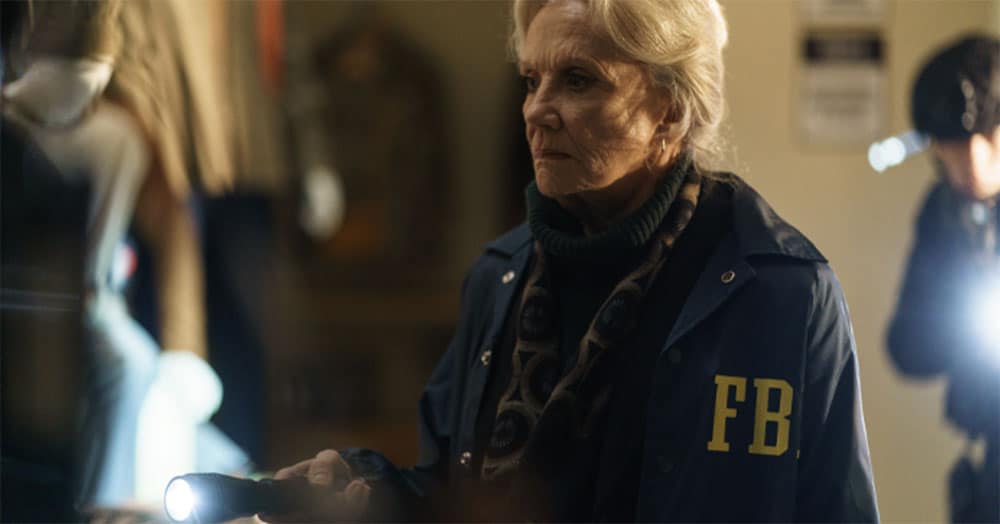
Secondly, the tension is lessened by the somewhat hapless FBI, who make exceptions for celebrities, drop clues as to their processes, and seem unrealistically averse to shooting dangerous criminals, along with an ‘FBI profiler’ who is never really convincing in her performance.
This is a shame because the movie would undoubtedly have been elevated by a ‘Sherlock vs. Moriarty’ or ‘Yagami Light vs. L’ dynamic in which two brilliant but tortured individuals try to outwit one another.
As it is, the authorities prove easy prey for Cooper, who blags his way out of every confrontation like a slightly bored Keyser Söze.
This leads to Trap’s biggest problem: it’s about as realistic as Police Academy.
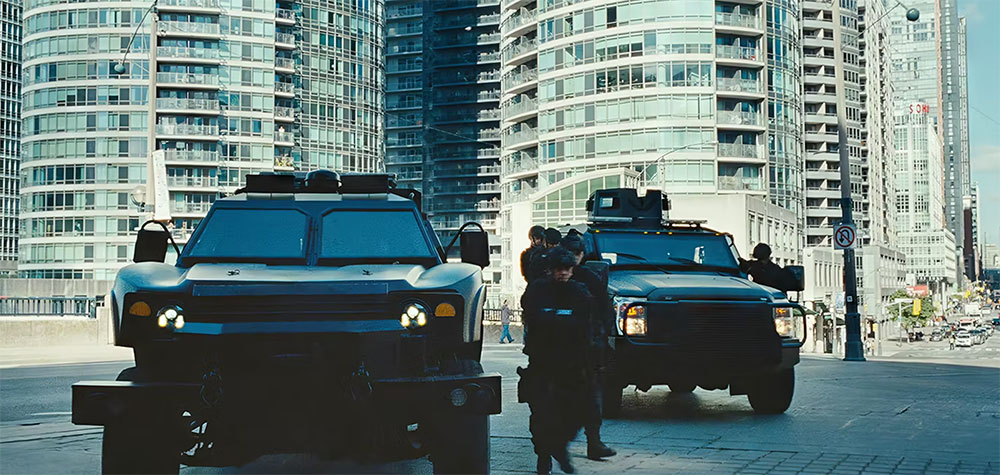
The very idea that the FBI would collaborate with a pop star to ensnare a notoriously violent serial killer, placing him – trapped and desperate – amongst a large crowd made up of mainly teenage girls is so far-fetched as to be just plain silly (though perhaps the most staggering thing of all is that Lady Raven, who seems a stand-in for the real-life Taylor Swift, would not have a huge entourage that shadowed her every step).
Though I won’t give details to avoid spoilers, aside from the exposition-speckled dialogue, the supporting characters often make baffling decisions that aid in Cooper’s escape, once again making the formula not so much ‘how is he going to get out of this one?’ as ‘look how much fun he is having making these guys look dumb.’
Perhaps this is because the film knows where its strengths lie—the whole narrative seems designed to allow Harnett to shine.

And shine he does, giving a fantastic campy turn as a serial killer who loves his kids as much as he loves that killing.
While there are some hackneyed scenes of Freudian issues that try to explain the madness, they should be ignored, and for the most part, can be.
Mention should also be given to Ariel Donoghue and Alison Pill, who offer convincingly humane contrasts that allow Harnett to react with a practiced restraint and a smile more terrifying than any of his actions shown on screen.
If you are not a fan of Shyamalan’s mode of filmmaking—which could be described as a narrative ‘trap’ of betrayed expectations—and need a logical basis for every twist and turn of the narrative, you may wish to knock a star off this score.
If you can get on board with a movie that, despite its obvious flaws, allows an actor to play against type and nail it with a performance of giddy menace, you will leave the cinema more than sated.
Overall Rating (Out of 5 Butterflies): 3.5











Follow Us!