


“The Substance” is a visceral, mind-bending body horror that ferociously dissects Hollywood’s obsession with youth and beauty.

No time to read? Click the button below to listen to this post.
The Substance is the new Horror feature from France’s bébé terrible, Coralie Fargeat (Revenge, 2017). The opening sequence focuses on an actress’s Hollywood star being installed on Hollywood Blvd. However, over time, it begins to crack and fade with the seasons and the passing foot traffic. Cracks appear in the star. The ketchup from a discarded burger mars the broken tribute with claret-colored grime.
This is a poetic (if obvious) form of storytelling: the symbolism of a fading Hollywood star, old and forgotten, lost among the dirt of L. A.’s constantly changing landscape, perfectly setting up our protagonist.
Demi Moore as Elisabeth Sparkle, an aging Hollywood starlet desperately clinging to her fading youth. Margaret Qualley is Sue, a gorgeous young rising talent eagerly waiting for her chance to steal Elisabeth’s position as Hollywood’s next icon.
The disturbing twist is that Sue and Elisabeth are inexplicably linked.
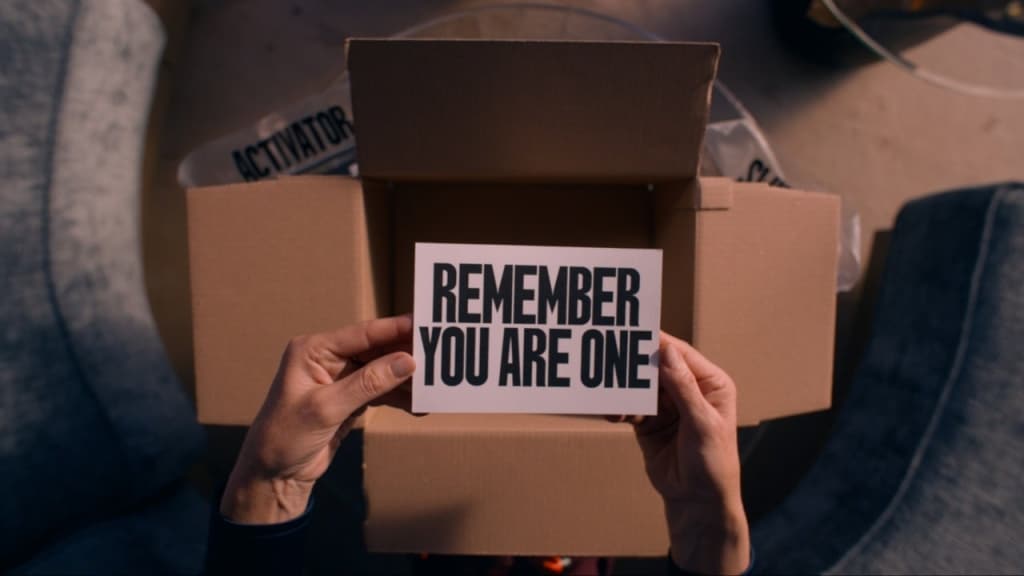
After surviving a car crash without any serious injuries, Elisabeth’s attending nurse, a stupidly handsome young man, secretly slips a small paper package into her pocket after examining her. The words “It changed my life!” are written on the paper, and a slick USB device accompanies it.
After Elisabeth is cruelly fired from her beloved home workout show (for being too old), she turns to the paper package and watches the content on the mysterious USB. It’s a simple video advertisement that wouldn’t look out of place in Zuckerberg’s self-promotional ads.
Pulsating, reverberating beats underscore music video-esque aesthetics as a monotonous male voice asks, “Have you ever wanted to be a better version of yourself?” I was reminded of Patrick Bateman’s self-indulgent ramblings around his favored beauty routines in American Psycho.
Demi Moore is incredible, and as I watched her move through the grieving process, I couldn’t help but feel a visceral reaction.

If you consider Demi Moore’s career trajectory in recent years, there is a meta aspect at play here.
The press has been less interested in her work and keener to sensationalize her love life and private affairs, often commenting on her age and lack of cosmetic surgery as though the natural aging process in women is something to both fear and ridicule.
In Hollywood, aging actresses are often treated like pariahs or cast (if at all) as unassuming spinsters or creepy old hags. Societal beauty standards propagate a culture where we eat our young and murder our old in our culture’s status quo. Fargeat satirizes this notion in increasingly disturbing ways.
As things spiral for her, Elisabeth decides to follow the instructions on the USB: go to an address to retrieve a package containing ‘The Substance’.
Elisabeth nervously skits around L. A., hiding beneath a beautiful yet concealing trenchcoat and huge designer glasses as she stalks the less Boujey backstreets. Her pickup point is situated in a derelict building concealed beneath a broken shutter door that only opens partway. She crawls beneath the door among the trash and discarded beer cans, calling to mind imagery of a desperate addict willing to crawl through literal filth to receive their fix.
Sue is the Hyde to Elisabeth’s Jekyll, and she is born of Elisabeth herself in a particularly jarring sequence. Having taken ‘The Substance,’ we see Elisabeth’s body undergo a violent and disturbing transmutation.
As her light fades, she births Sue from her mutilated body—a younger, perkier version of Elisabeth who isn’t entirely a clone but is more akin to a representation of what the host (Elisabeth) most covets in her own bodily form.
Margaret Qualley is a joy to watch as Elisabeth’s narcissistic, parasitic twin, Sue.

Her ability to switch from seductive vixen to ultra-violent maniac is showcased in a scene that starts as hilarious. However, before long, the audience is again averting its gaze from the wanton cruelty depicted before them.
The rules for using ‘The Substance’ are simple: you live one week in your original form and one week as your shiny, sexy new Doppelganger. You feed and switch every seven days; abuse these rules and woe betide you because, GOOD LORD, are there consequences.
Fargeat perfectly balances satirical drama with body horror, the likes of which would make Brian Yuzna and David Cronenberg blush.
My issue with many modern body horror movies is that they use the gimmick of body horror as a selling point. Still, they rarely, if ever, deliver on their promise of actually showing the horror onscreen.
The Substance delivers in ways that even I wasn’t prepared for.
When I tell you that this is Gonzo Body Horror and that audiences simply aren’t ready for it, I mean it.

There are scenes where particular mutations are hinted at, and I found myself thinking, “No way are they gonna go that hard,” but every single time, my expectations were subverted in the most shocking of ways.
An example is a sequence where Coralie Fargeat takes the gruesome climax of Yuzna’s Society and gives her own satirical spin which is somehow FAR more gruesome while maintaining a darkly humorous tone.
Another grueling scene calls to mind Brundlefly’s Museum Of Curiosities in Cronenberg’s The Fly.
Moore’s heart-wrenching and fearless acting heightens these depictions.

Despite the unflinching gratuity onscreen, we are instead focused on Elisabeth’s trauma and grief.
The Substance is deeply sad in the same vein that The Fly is heartbreaking. Not only are these characters losing their bodies, but they’re also losing their own humanity in the process.
The Substance screening I attended was scheduled as the last film of the Edinburgh International Film Festival. It was part of a deaf-friendly captioned showing with a BSL interpreter introducing it (thank you for the inclusivity here). The unexpected treat around watching this film subtitled was the descriptive captions, which read “wet squelching noises” — perfectly summing up the grotesque imagery in the movie.
My favorite thing about attending intimate screenings of disturbing films is observing how the audience reacts.
In my screening, a gentleman was fighting for his life between fits of nervous laughter, and a couple in front of me was dry-heaving before one of them eventually ran from his seat.
Attending this screening felt akin to the glory days when I attended the Edinburgh Film Festival’s screening of Gaspar Noé’s Irreversible back in 2003, where a dozen of us strangers stood up in unison after the film’s climax and applauded despite our utter shock over whatever the hell we just witnessed.
If Fargeat’s Revenge is a Rape/ Revenge movie, then The Substance is a Body-revenge movie.

Those of us who suffer from debilitating illnesses or disabilities have a painful understanding of how terrifying our body can be when it suddenly revolts against us.
The Substance‘s body horror is juxtaposed with gorgeous Cinematography reminiscent of Twin Peaks or A Clockwork Orange, and the nightmarish transformations are contrasted by lingering shots of perfect posteriors.
The shifts between imagery which aims to tantalize or, to make one horny as the camera lingers upon ass shots is suddenly replaced with nightmarish Body-Horror flashes that feel physically shocking in their unpredictability.
The Male Gaze itself is satirized through camera angles. Whenever we see Elisabeth’s former sleazy manager (brilliantly played by Dennis Quaid) or his execs in suits, we view them from her POV: through a fish-eyed lens where their features are contorted and exaggerated, revealing tobacco-stained teeth and bulging, penetrative eyes.
This subversion of the Male Gaze to instead depict the female audience member’s POV is intended as satire, and while it is very funny, it also succeeds in causing disgust in the viewer, regardless of gender identity. This is clever because it forces men into the shoes of femme-presenting people who are often on the receiving end of unwanted, lecherous stares.
Elisabeth’s addiction to fame leads her down a path to a more devastating addiction: the addiction to changing one’s own natural body, whatever the cost.
One may begin to question if our own body image is so repulsive and distorted that we feel the need to prune and cut bits off. Would we feel satisfied with old age, or would we also take ‘The Substance’ in our desperation to cling to our fading youth?
This film will surely be divisive.
I found myself laughing during darkly funny scenes where other audience members covered their mouths in shock. The humor may go over the heads of casual Horror fans, but who can blame them when their senses are consistently being assaulted by the heinous and horrific visuals onscreen?
Where many modern directors use body horror merely as a clever visual sting or as symbolism for underlying themes of addiction and gender dysmorphia; for example, The Substance delivers upon its promises.
This film will have you excitedly questioning, “Are they REALLY going to show this?!” as you immediately regret not covering your eyes during the more challenging gore scenes.
The Substance is deliberately provocative, however. It has fun with its more outlandish themes. The ending is simultaneously hilarious, shocking, cruel, revolting, and so over-the-top that people will be discussing it for years to come.
Coralie Fargeat reminds us of the glory days of the 1980s, when hot, tight bodies were squeezed into spandex, and peak Body-Horror movies were almost entirely cultivated with practical FX.
If Hollywood does indeed eat its young, then one may conclude that Fargeat cannibalizes the works of Julia Ducournau and Gaspar Noé while giving her own unique flavor to the tradition of French New Wave Extremity cinema.
Hilarious, shocking, and absolutely bonkers, Fargeat once again proves that her work isn’t just style over substance.
Overall Rating (Out of 5 Butterflies): 5
THE SUBSTANCE will be released in UK & US theaters on September 20th.












Follow Us!