


A quintessential ‘80s cult classic, “Valley Girl” offers a synth-soaked ode to teen angst while introducing Nicolas Cage as a cult icon.
No time to read? Click the button below to listen to this post.
This week’s Cage Match (as chosen by the random number generator from among Cage’s entire filmography) happened to be the actor’s most celebrated film, Leaving Las Vegas, delivering his first Oscar nomination and only Oscar win. While it’s hard to argue that the film isn’t a masterful piece of celluloid, it’s also a heavy and emotionally devastating watch. To balance the bleakness, we put two of Cage’s early comedies up for a vote: Peggy Sue Got Married and Valley Girl.
By an overwhelming majority, you asked us to enter the ring with Nicolas Cage’s first starring role, Valley Girl.
IN THIS CORNER: KELLY MINTZER
The Lowdown
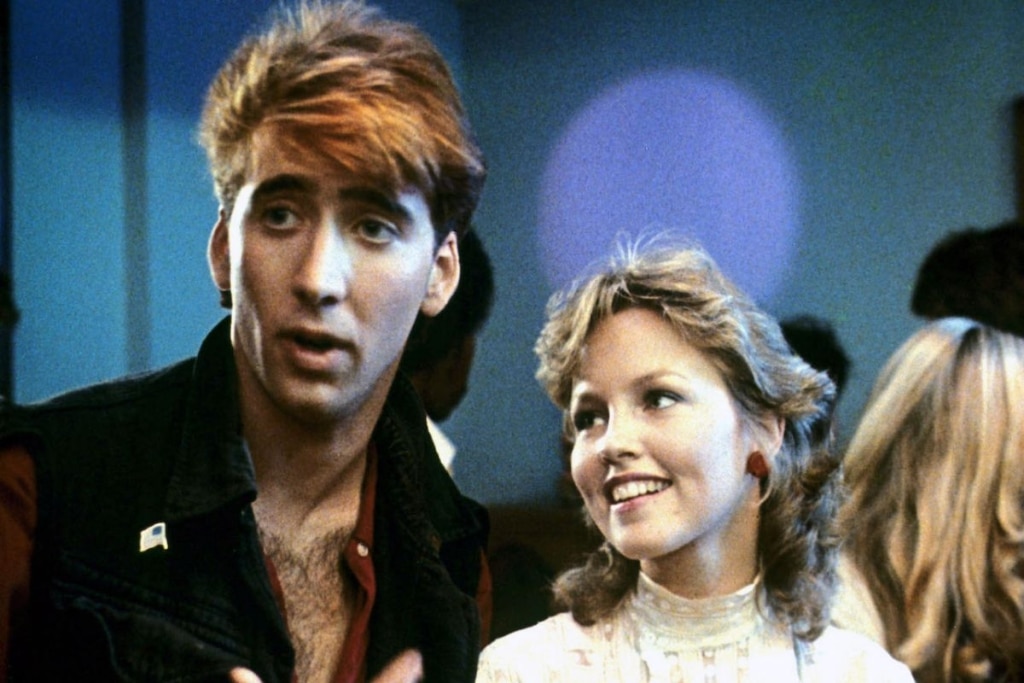
Julie sucks. I want to say that early because I suspect it’s going to be a frequent and necessary refrain in this review of Valley Girl, a movie I mostly liked. Unfortunately, the titular valley girl, Julie, is a trashcan.
The film has the same basic setup as a million teen comedies: a girl from one group falls for a boy from a separate group. Do their differences keep them apart? Kind of. Does it really make sense why? Not really. In this particular case, popular valley girl Julie is dating Tommy, a 45-year-old real-estate agent pretending to be a high school student (nota bene, I MAY be editorializing a bit here) but falls for Nicolas Cage’s “punk” (this is what the movie tells us, though there isn’t much to visually underscore the notion).
The two start dating and have what seems to be an extremely idyllic relationship, but Julie’s friends don’t like him and tell her that she needs to choose between him and them.
I think we’re supposed to be sympathetic to this plight, but it’s really hard to get on board with. Her friends are terrible; they are willing to tell her to fuck off if she stays with a guy they don’t even know but have determined they don’t like. Even worse, she has to get back together with the guy who is basically Drew Barrymore’s terrible fiance in The Wedding Singer. This terrible behavior seems to make the decision pretty damn easy.
Additionally, we have seen nothing endearing at all about Julie and Tommy’s relationship. The movie STARTS with them breaking up because she’s gotten bored with him.
To be fair to Julie, it’s possible that she suffers by her inevitable comparison to Cher in Clueless, the Amy Heckerling masterpiece (and one of the finest comfort movies ever made) that absolutely must have been inspired by Valley Girl. Unfortunately for Julie, she lacks any of the shading and dimension Cher has and just comes across as fickle and terrible.
I could dedicate a whole page just to the bonkers fashion (Julie dresses like a 37-year-old receptionist) or to the greatest character in the movie, Julie’s dad, but I’m already running long, so let’s get to what we all came here for…
The Cage Factor:
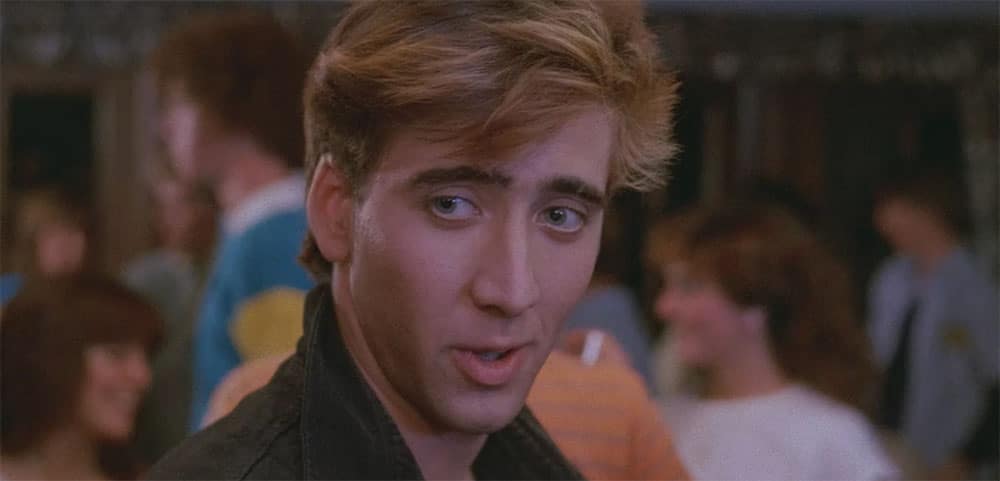
It may seem like I’ve forgotten the man of the hour in this movie, but trust me, I haven’t. Yes, I’m calling this one a Cage Fighter. This is Nicolas Cage so cute, endearing, and charming that you get why this girl would fall for him hard and fast. He starts out a bit insufferable (a lot of borderline negging that felt pretty gross but was-again, the 80’s-played for cute), but that changes relatively quickly.
There are flashes of the unhinged Cage we’ll all come to know in the next several years, but in 1983, he is mostly just totally adorable. It’s a light, easy watch, and he really has the most magnetic presence on the screen. You can’t look away (even if he’s not the most convincing punk).
AND IN THIS CORNER: STEPHANIE MALONE
The Lowdown
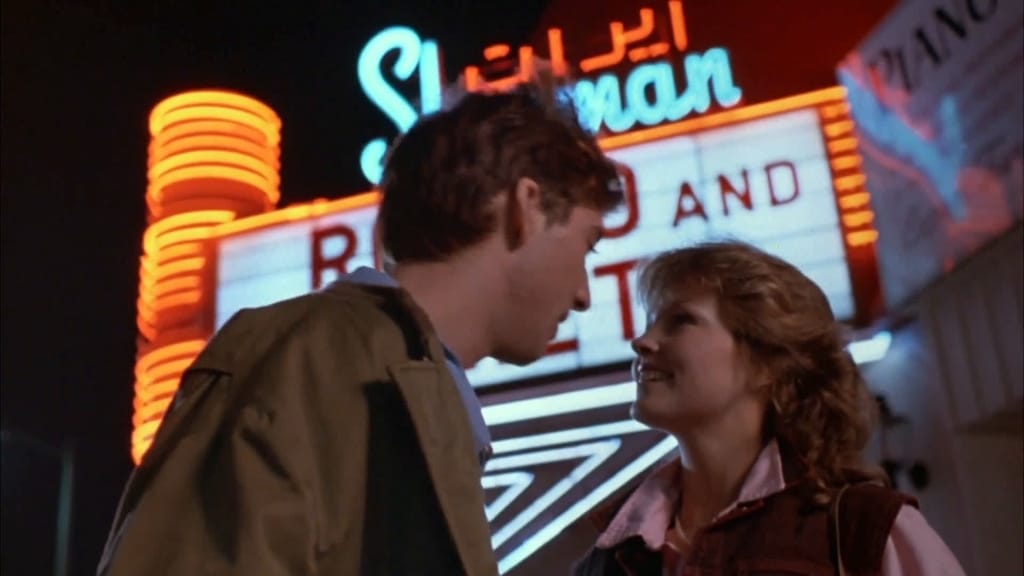
While not a box office smash upon its initial release, Valley Girl found a dedicated cult following through home video and cable TV airings. Its quotable dialogue, killer soundtrack, and iconic fashions cemented its status as a beloved time capsule of ’80s teen culture. As critic Roger Ebert noted, the film “captures a specific time and place with perfect pitch.”
From the moment the opening chords of The Plimsouls’ “A Million Miles Away” kick in, propelling us into the sun-drenched suburbs of the San Fernando Valley, it’s clear that Valley Girl is a shimmering, neon-tinged ode to the trends, trappings, and social divides that defined 1980s Southern California youth culture.
Anchored by the breakout performance of a young Nicolas Cage, it’s a modern spin on the Romeo and Juliet tale, chronicling the forbidden love between a preppy “Valley Girl” named Julie and a punk rocker named Randy from the “wrong side of the tracks” in Hollywood.
Julie, the luminous Deborah Foreman (horror fans will likely recognize her from the cult classic horror film April Fool’s Day), imbues her character with a bubbly charm and underlying vulnerability, making her transition from preppy princess to rebellious romantic thoroughly convincing. But it’s Cage, in his first major starring role, who truly steals the show. His Randy is a marvel of anarchic energy and punkish cool, his lanky frame and tousled mane conveying an effortless, devil-may-care allure.
The chemistry between Cage and Foreman is electric, their palpable on-screen rapport elevating the film’s central romance to the realm of the truly swoon-worthy. Randy is the kind of character you can’t help but root for, even as he navigates the social divide that separates him from Julie’s privileged world.
Valley Girl paved the way for countless teen comedies and romantic dramas that would follow in its footsteps, establishing the “girl meets boy from the wrong side of the tracks” trope. Its influence can be felt in everything from Pretty in Pink to 10 Things I Hate About You.
But the original remains the definitive encapsulation of ’80s youth culture — a delightful, nostalgic trip back to a bygone era and a synth-soaked ode to the universal joys and pains of first love.
The Cage Factor:
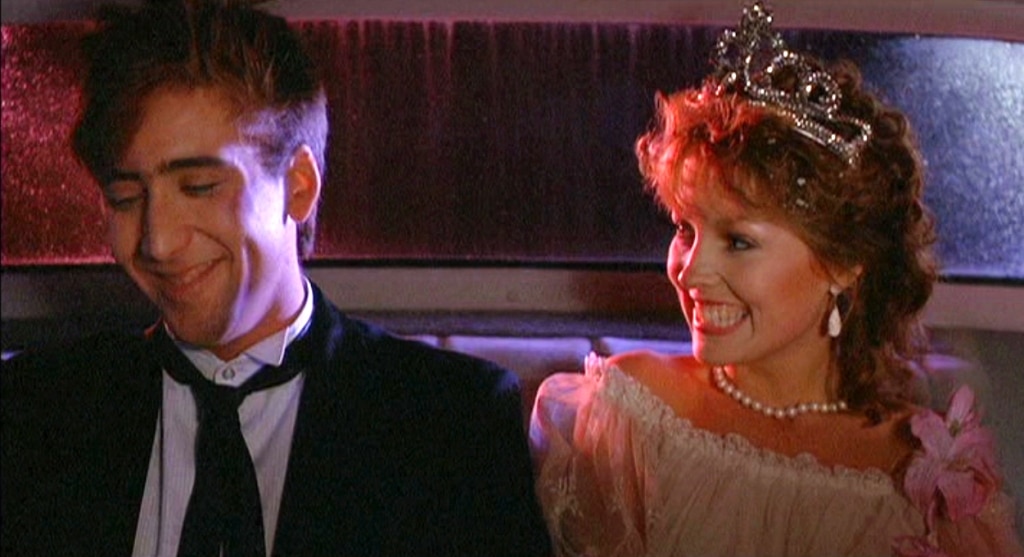
For those uninitiated in the ways of the Cage, Valley Girl serves as a delightfully entertaining gateway, a chance to fall under the spell of an irresistible performance that would help launch one of the most singular and celebrated careers in modern cinema.
At the time of the film’s release, Cage was a relative unknown, with only a handful of minor film and television credits to his name. But from the moment he first appears onscreen, striding into Julie’s world with a rakish grin and a punk-rock swagger, he commands attention. He manages to elevate a character that, on paper, could have been a one-dimensional stereotype. Randy, the ostensible “bad boy” from the wrong side of the tracks, could have easily devolved into a clichéd caricature. But in Cage’s deft hands, the character becomes a fully realized, captivating individual — equal parts swaggering bravado and shy vulnerability.
The film offers a tantalizing glimpse of the eccentric, larger-than-life screen presence that would make Cage one of the most captivating and unconventional leading men of his generation.
Roger Ebert, in his glowing review, praised the actor’s “manic energy” and “offbeat charm,” noting that he “steals the movie” with his magnetic screen presence. In many ways, the film serves as a vital blueprint for the Cage persona; the flashes of wild unpredictability, the irresistible blend of intensity and vulnerability — it’s all there, in nascent form.









Follow Us!