


“Rumble Fish” is a stunning cinematic masterpiece and a pivotal film in Nicolas Cage’s burgeoning career, showcasing his early promise.
No time to read? Click the button below to listen to this post.
IN THIS CORNER: KELLY MINTZER
The Lowdown
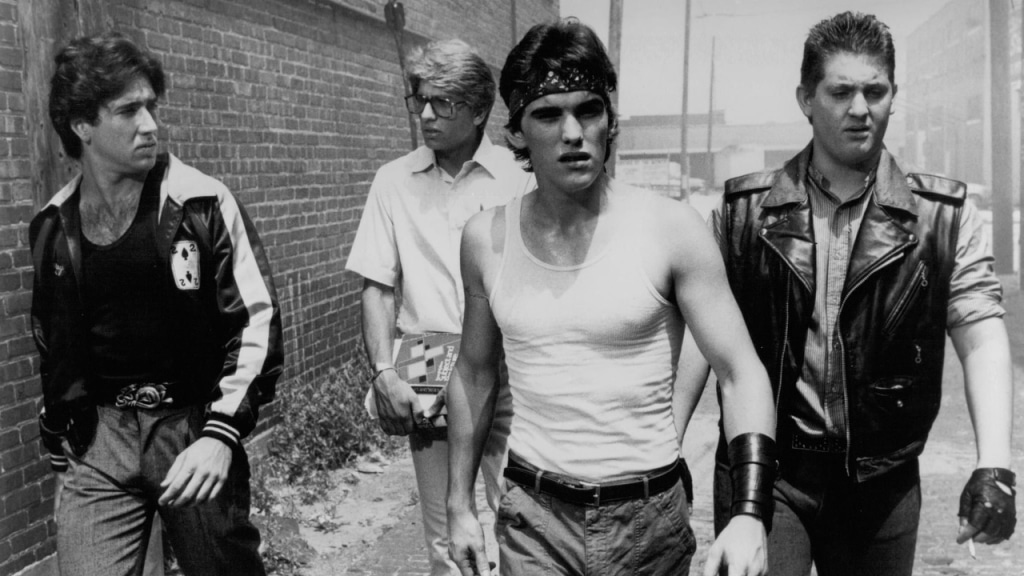
A proposed drinking game for the Coppola classic Rumblefish: take a drink every time someone says “Rusty James”. Do not actually do this. Your liver, fearing for its life and wondering what it ever did to you, will rebel and pull itself forcibly from your body.
I’m perhaps a bit glib, but only in an effort to establish early and off the bat the idiosyncratic rhythm of Rumblefish, less a narrative, more a tone poem. The very basic thrust of the bare-bones plot could be summed up as “a few days in the life of Rusty James, juvenile delinquent with brother issues and a strong antipathy for shirts with sleeves, who everyone calls exclusively by both first and last name.” And it’s fucking rad.
The film is helmed by a veritable murderer’s row of young actors: we’ve got Matt Dillon as the previously mentioned Rusty James, our guy Nicolas Cage as a somewhat duplicitous member of his entourage, Diane Lane, who is so stunningly beautiful and sharp in it you almost forgive how fleshed out her character isn’t, Laurence Fishburne, at a time when he was still billed as “Larry Fishburne”, and baby Mickey Rourke, who genuinely took my breath away when he entered the movie.
Despite being a movie focused on teen characters, Rumblefish doesn’t feel at all like a young adult film. I don’t think too many teenagers would recognize their own angst within its scenes, which doesn’t make the pathos or emotions on display any less real.
It feels more like a movie for adults to look at and see their younger selves within.
The Cage Factor:
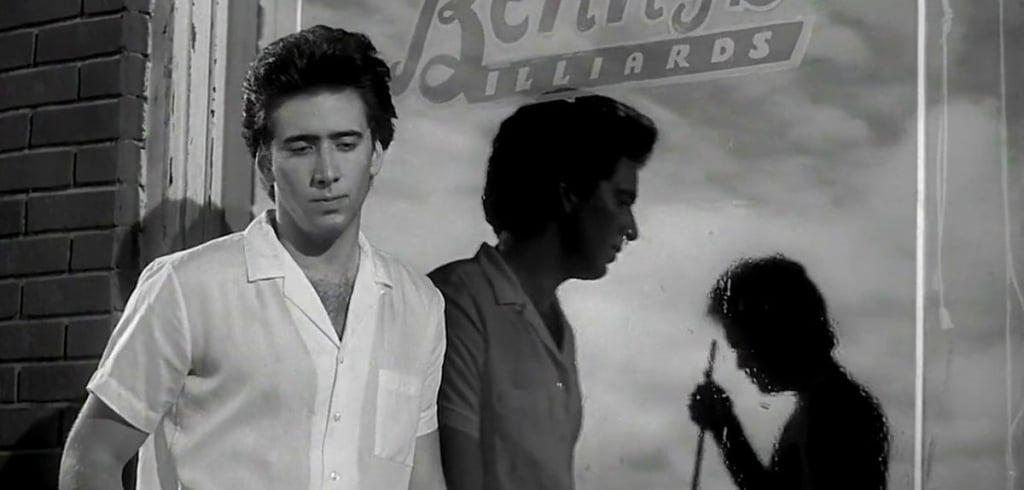
I obsessed over this one a little. As far as simply its assessment as a film, it’s the best movie we’ve watched besides Leaving Las Vegas. So, in that respect, it’s a Cage Fighter. It’s a great movie and should be watched. However, if my assessment of it is as a Nicolas Cage movie, I’m giving it a Cautious Cage simply because there is very little Cage to write about. It’s Matt Dillon’s movie, then Mickey Rourke’s. Nic Cage is on screen for probably less than 10 minutes, so if you are watching BECAUSE of him, proceed with caution.
But — and this is a big BUT — if you are looking for an amazing movie with the added charm of a few minutes of Nicolas Cage doing a relatively restrained performance, you can’t do any better.
AND IN THIS CORNER: STEPHANIE MALONE
The Lowdown
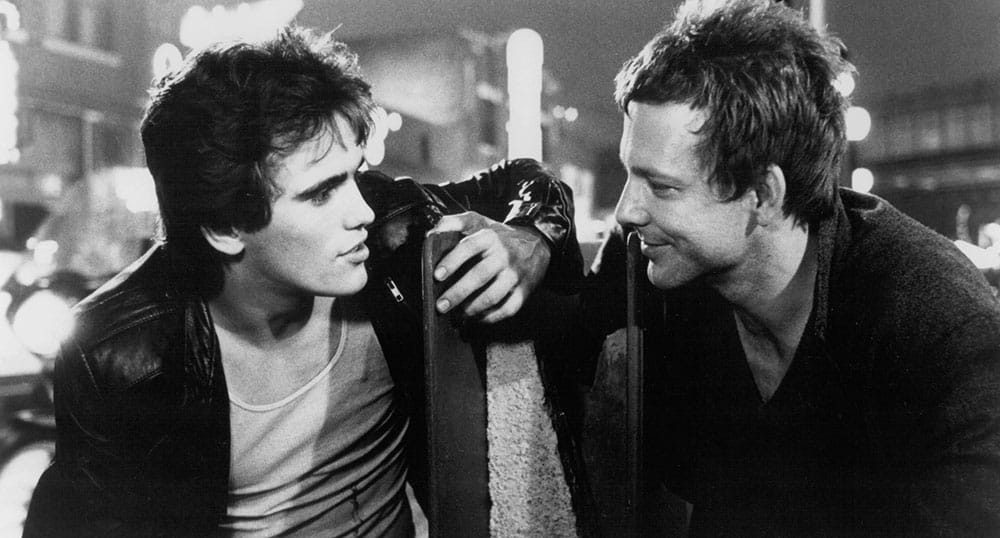
Francis Ford Coppola’s Rumble Fish is often hailed as a cinematic masterpiece, both for its aesthetic achievements and the depth of its narrative. Based on S.E. Hinton’s novel, it combines coming-of-age themes with avant-garde filmmaking, presenting a stylized and almost surreal portrayal of disaffected youth.
Coppola approached the film as an experiment in form, taking risks that few filmmakers of his stature would have dared at the time. Having just come off the commercial failure of One from the Heart (1982), he wanted to return to his roots by making a smaller, more personal film. Rumble Fish allowed him to explore experimental filmmaking while staying grounded in a story about the struggles of American youth.
Coppola himself has described Rumble Fish as his most personal film, as it deals with themes of sibling rivalry, a topic that resonated with him.
It’s often seen as a meditation on time and identity.
The film feels more like a piece of visual art than a conventional narrative-driven movie, elevating it as a cinematic experience.
At the time of its release, Rumble Fish received mixed reviews, with some critics hailing it as a masterpiece while others found its experimental nature alienating. Over the years, however, its reputation has grown considerably. Its themes of alienation, identity, and the search for meaning resonate with audiences, particularly those familiar with the struggles of adolescence.
The film’s striking visuals, innovative sound design, and nuanced performances make it one of Coppola’s most remarkable works.
The Cage Factor:
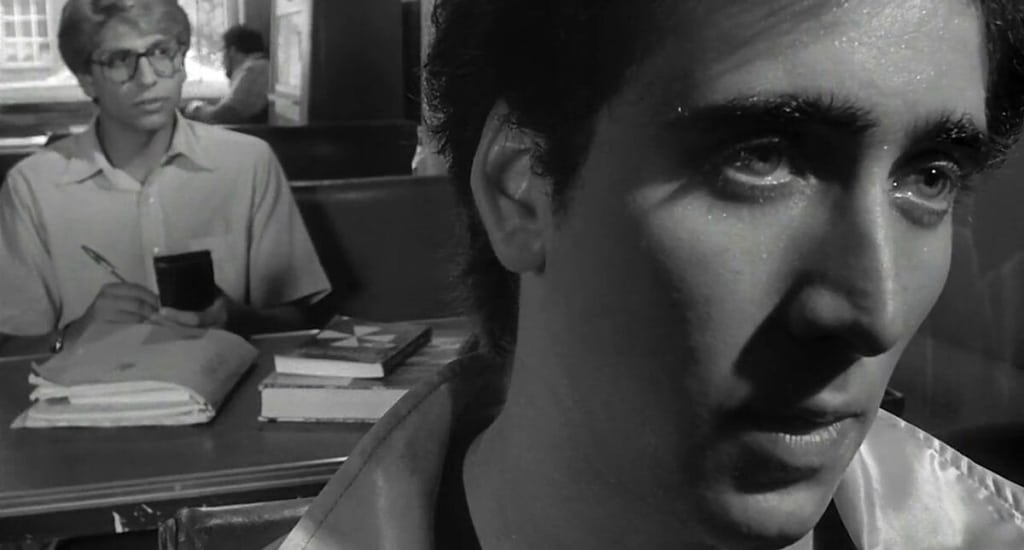
The film marked a significant turning point in Cage’s career, showcasing the early seeds of his distinctive acting style. His ability to play characters that simmer just below the surface would become a hallmark of his later work, and RUMBLE FISH provides an early glimpse of his evolving craft.
Though Rumble Fish is often remembered (rightfully so) for Matt Dillon’s lead role as Rusty James and Mickey Rourke’s haunting portrayal of The Motorcycle Boy (he’s so unbelievably good that it’s almost unnerving), Nicolas Cage delivers a significant, if somewhat understated, performance as Smokey, Rusty James’ friend turned rival.
Cage’s portrayal of Smokey is pivotal because he represents the foil to Rusty James. Where Rusty is impulsive and trapped in a cycle of self-destruction, Smokey is calculating and ambitious, carefully positioning himself to take over Rusty’s life and even his girlfriend. Cage plays Smokey with a quiet menace and simmering ambition, revealing his character’s ruthlessness without overt expressions of villainy.
This was one of Cage’s early roles, and while his screen time is relatively limited, it foreshadows the intensity and unpredictability he would later become famous for. It was an early peek at his versatility and range as an actor.




Follow Us!