


“Nightmare” ambitiously weaves together sleep paralysis and pregnancy anxiety but suffers from tackling too many themes at once.
No time to read? Click the button below to listen to this post.
In the opening frame, the narrator tells the audience, “One in three people suffer from sleep disorders,” with a creepy building in the background and even creepier music playing. Thus begins a slow-paced plot that pulls the viewer along a long, winding road to an unsatisfactory ending.
Nightmare begins with viewers inside an apartment. The camera pans every room while a couple argues outside the doors about how to get in. Each room is filled with garbage and clutter—the remains of the previous owner.
The film’s visual and auditory elements are crucial in its storytelling.
The dim lighting casts numerous shadows, while quietly unsettling music adds unease. Director Kjersti Helen Rasmussen skillfully peels back the layers of the plot, often in a non-linear fashion, challenging the audience to piece together the narrative and keeping them fully immersed in the story.
Rasmussen bravely tackles a topic that millions suffer from but is least understood: sleep paralysis.
The subject is shrouded in myth and mystery, and every culture has recorded accounts of experiences over the years, including experiences of pressure on the chest as if something is suffocating them and shadowy figures visiting. This exploration is sure to captivate and engage the audience.
Sleep Paralysis is a topic with more than enough material to cover in a movie, but Rasmussen throws another into an already murky pot: pregnancy.
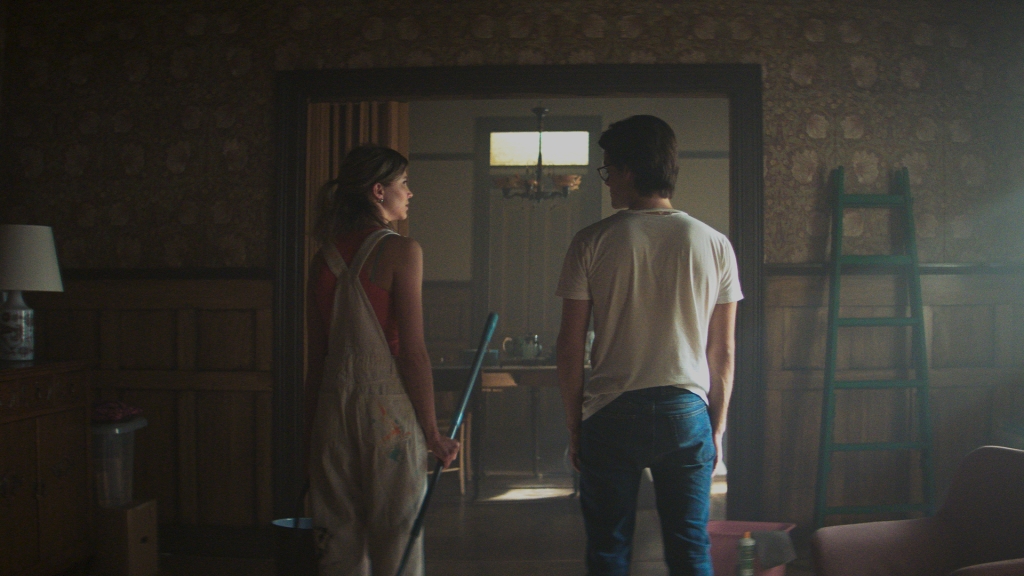
The plot centers around a couple, Mona (Thelma’s Eili Harboe) and Robby (Herman Tommeraas), who buy an apartment in a spooky building. They can afford it because of Robby’s new job and because they purchased it at the asking price. We learn that the previous owner, a pregnant woman, died mysteriously, leaving behind a shroud of unanswered questions.
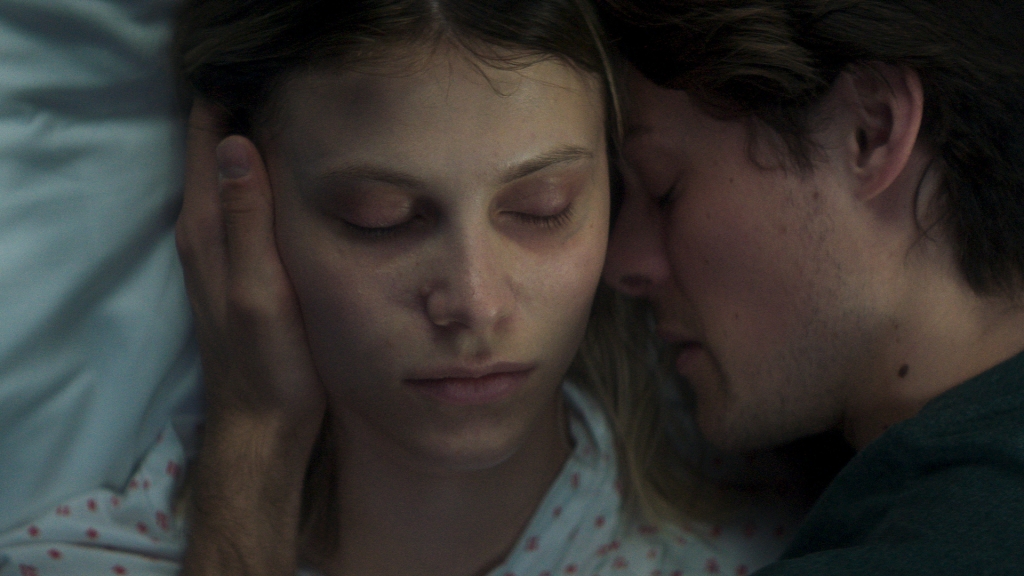
Soon after they move in, Mona begins experiencing nightmares and has difficulty determining what is a dream and what is reality.
What follows is Mona’s disjointed journey through an Alice in Wonderland-type ride of events that happen to her.
There is a twist in that forked road when Mona discovers she’s pregnant because that seems to be the trend in the building where Mona and Robby purchased their apartment. The women in the building become pregnant.
Nightmare opens with an introduction to sleep paralysis but takes a parallel trip down the road, traveling through the complications of relationships.
What starts as a horror film, with its eerie setting and unsettling events, takes a surprising turn.
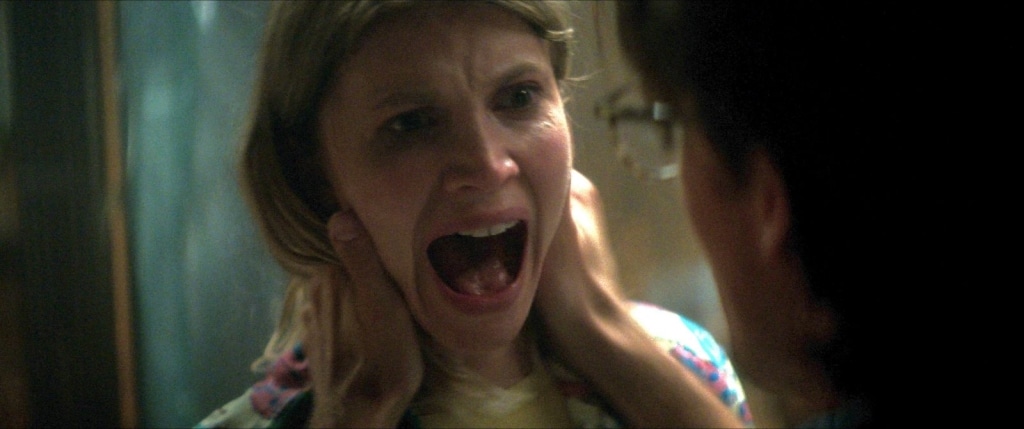
Rasmussen’s focus shifts from the horror aspect to a more psychological thriller as she delves into the complexities of a woman’s relationship with the men in her life, adding a new layer of intrigue to the narrative. This unexpected shift will keep the audience on the edge of their seats.
Mona talks to Robby, the doctor, and her friends, but no one listens to her needs. She tells the doctor she wants an abortion, but he tries to guilt her into not having it. Robby wants to have children, but Mona doesn’t.
That is the underlying message of this movie, as her neighbor is also struggling with dealing with a new baby. We hear the bits and pieces from the husband, Martin (Peter Forde), and interactions with his wife, Siren (Gine Therese Grønne).
Another woman is surrounded by men directing her to make decisions she disagrees with but still does what they want. Siren’s final choice causes her to jump off the balcony of their building.
At its core, Nightmare is not just a horror film.

It’s a thought-provoking exploration of how the world treats women.
It critiques the gender dynamics that often dictate women’s lives, making the audience reflect on the societal pressures and expectations that women face. This critique is sure to leave the audience feeling thoughtful and reflective.
Rasmussen tries too hard to convey her point about women and their relationships with the people in her world. This distracts from the story about sleep paralysis, which was the original focus of the movie.
When the movie redirects back to the Mare or monster in Mona’s nightmares, the visuals and shadowy photography make it difficult for the viewers to tell what is real and what isn’t. This might be Rasmussen’s point.
Unfortunately, that point was lost in the film’s unsatisfactory ending.
The ending left it open to the viewer’s interpretation without any answers. The different arcs in Nightmare give viewers a cloudy message. Is it about sleep paralysis and Nightmare daemons, or is it about how women are treated in the world?
With a tighter focus and less confusion, this could have been a knockout.
Instead, it’s a solid effort but not quite a fully satisfying watch.
Overall Rating (Out of 5 Butterflies): 3








Follow Us!