

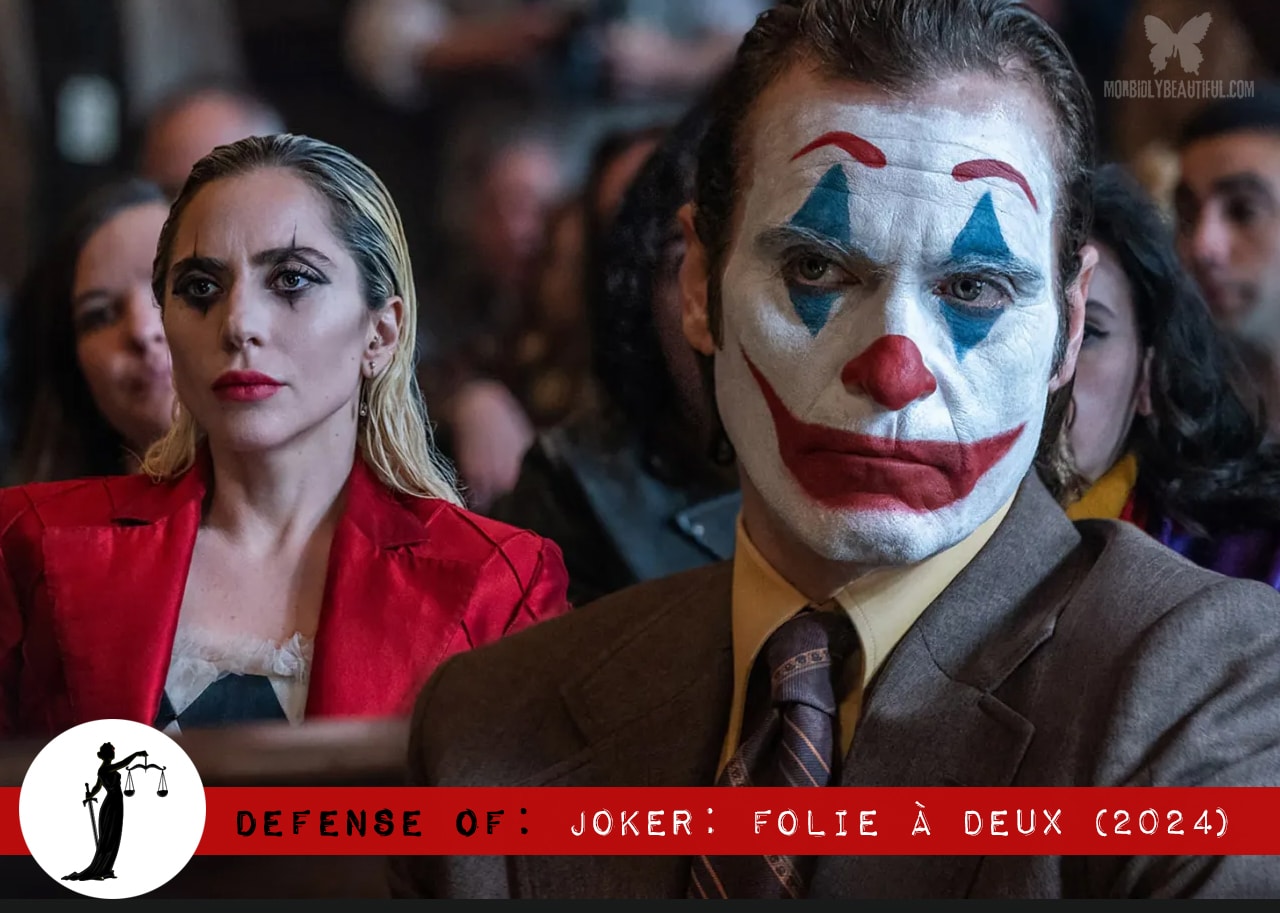
“Joker 2” is a haunting musical tragedy that strips away comic book fantasy to confront the devastating reality of mental illness.

In a cinematic landscape dominated by formulaic superhero narratives, Todd Phillips’ Joker: Folie à Deux (2024) emerges as a bold, polarizing deviation that has sparked intense discourse among critics and fans alike.
Despite strong performances, stylish direction, gorgeous cinematography, and compelling narrative choices, it has been widely derided and hailed as an abject failure.
The film’s reception reveals as much about our relationship with art and expectations as it does about the movie itself. Far from being a conventional sequel, this musical psychological drama subverts expectations while delivering a poignant meditation on fame, mental illness, and the toxic nature of fandom.
The decision to follow up 2019’s wildly successful Joker with a musical was met with immediate skepticism. Yet this creative choice serves as more than mere provocation. Rather, it’s essential for exploring Arthur Fleck’s fractured psyche. The musical numbers aren’t simply entertaining interludes; they represent the fantasy world Arthur constructs to escape his painful reality. Through song, we experience his delusions of grandeur, his desperate longing for connection, and the fleeting moments of joy in an otherwise bleak existence.
Phillips doesn’t give audiences what they want; he gives them what the story demands.
In an era where fan service often trumps artistic integrity, this commitment to vision over marketability is both refreshing and necessary. The film asks us to examine our own complicity in a culture that creates, elevates, and then discards its heroes (or antiheroes) when they no longer serve our needs.
Perhaps the most meta aspect of Joker: Folie à Deux is how its reception mirrors its themes.
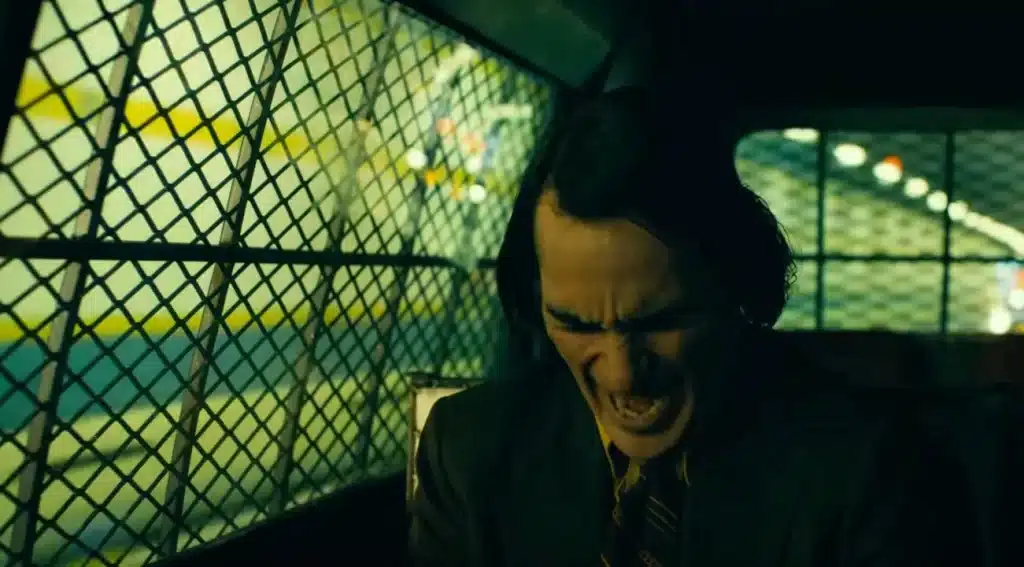
Just as Arthur’s supporters abandon him when he fails to embody their anarchic fantasies, many fans have rejected the film for not delivering the Joker they imagined. This reaction underscores a crucial point: we often claim to want originality while secretly craving the comfort of the familiar.
The film’s criticism of toxic fandom isn’t a middle finger to its audience, as so many have suggested, but rather a thoughtful examination of how we interact with art and artists. It challenges us to consider why we demand that characters conform to our expectations and what it says about us when we reject complex, human portrayals in favor of simplified archetypes.
The reimagining of the Joker-Harley Quinn dynamic has been particularly contentious. By giving Harley (Lady Gaga’s “Lee”) more agency and making Arthur the more dependent partner, the film subverts traditional power dynamics. This deviation from canon has upset fans who prefer the familiar abusive relationship depicted in comics and other adaptations. It’s worth questioning why we’re more comfortable with a Harley Quinn who suffers abuse than one who potentially manipulates or controls the Joker.
Joker: Folie à Deux strips away the mystique of its title character to reveal something far more unsettling—a broken individual failed by society, family, and the mental health system.
This Arthur Fleck isn’t the charismatic agent of chaos we’ve come to expect but rather a tragic figure whose delusions barely mask his profound loneliness and despair.

One of the most striking aspects of Joker: Folie à Deux is its unflinching confrontation with reality.
In media, particularly in comic book adaptations, we readily embrace the concept of the charismatic villain. We’re drawn to their theatrical madness, their grandiose schemes, and their rejection of societal norms. The Joker, in particular, has long served as a vehicle for our darker fantasies—a character who embodies chaos and operates outside the constraints of conventional morality.
However, Phillips’ film forces us to confront an uncomfortable truth: our fascination with fictional villains often stands in stark contrast to our indifference toward real-world issues that contribute to actual criminal behavior and mental illness.
The film presents us with a world where the justice system is broken, mental health care is inadequate, poverty and violence create cycles of trauma, and society discards those it deems inconvenient or uncomfortable.
These aren’t just plot points—they’re reflections of our reality, ones we often choose to ignore. The film’s genius, and perhaps its greatest source of discomfort, lies in its refusal to let us maintain this cognitive dissonance.
What makes many viewers uncomfortable is not just the film’s dark tone or its deviation from comic book conventions but its insistence on transforming entertainment into examination. When Arthur Fleck’s story stops being an exciting descent into villainy and becomes a tragic portrait of mental illness and societal failure, it ceases to be fun.
Instead, it becomes a mirror reflecting our own complicity in the systems that create real-world “villains.”
This confrontation with reality comes at a cost—both for the character and the audience.

For Arthur, the realization that his fantasies of importance and meaning are just that—fantasies—is devastating. For viewers, the realization that we’re watching not a supervillain origin story but a tragedy of mental illness and societal failure can be equally unsettling.
It presents a world where suffering doesn’t lead to empowerment, where mental illness isn’t a superpower, and where society’s neglect has real, devastating consequences. In doing so, it asks us to consider not just what we enjoy in our entertainment but what we ignore in our reality.
Arthur’s journey isn’t one of becoming a supervillain—it’s the story of a man desperate to matter in a world that has deemed him disposable.
The film’s ending has been particularly divisive, yet it serves as a perfect encapsulation of its themes. By denying Arthur (and the audience) a triumphant conclusion, Phillips reminds us that reality rarely conforms to our narrative expectations. The true tragedy isn’t that Arthur fails to become the Joker we want him to be—it’s that he was never capable of being that character in the first place.
JOKER 2 is not a disappointment because it fails as a film but because it succeeds in holding up a mirror to our own disappointments, delusions, and desperate need for meaning.

It’s a movie that dares to be real in a genre that typically trades in fantasy, and therein lies both its greatest strength and the source of its divisiveness. To dismiss the film for not meeting expectations is to miss its point entirely.
It’s precisely in subverting these expectations that Joker 2 achieves its most profound impact, asking us to examine not just what we want from our art, but why we want it. In doing so, it elevates itself beyond mere entertainment to become a thoughtful commentary on the relationship between art, artist, and audience in our contemporary culture.
Whether you love or hate Joker: Folie à Deux, its boldness in challenging both genre conventions and audience expectations makes it a significant work worthy of serious consideration.
In a cinematic landscape increasingly dominated by safe, formulaic content, perhaps what we need most are films that dare to disappoint us in all the right ways.







Follow Us!