

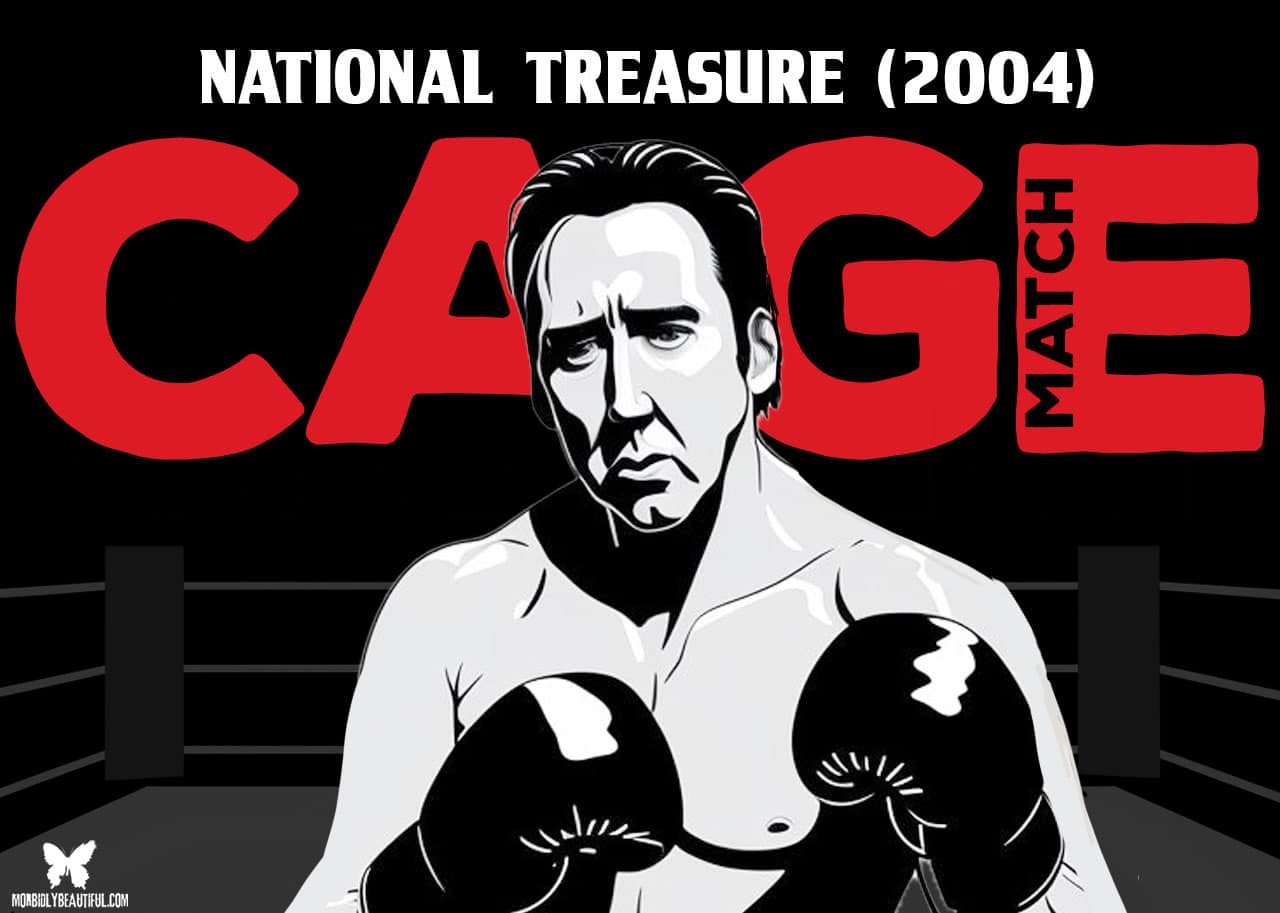
It may land among Cage’s most agreeable roles, but “National Treasure” causes extreme disagreement in this week’s Cage Match.
No time to read? Click the button below to listen to this post.
IN THIS CORNER: KELLY MINTZER
The Lowdown
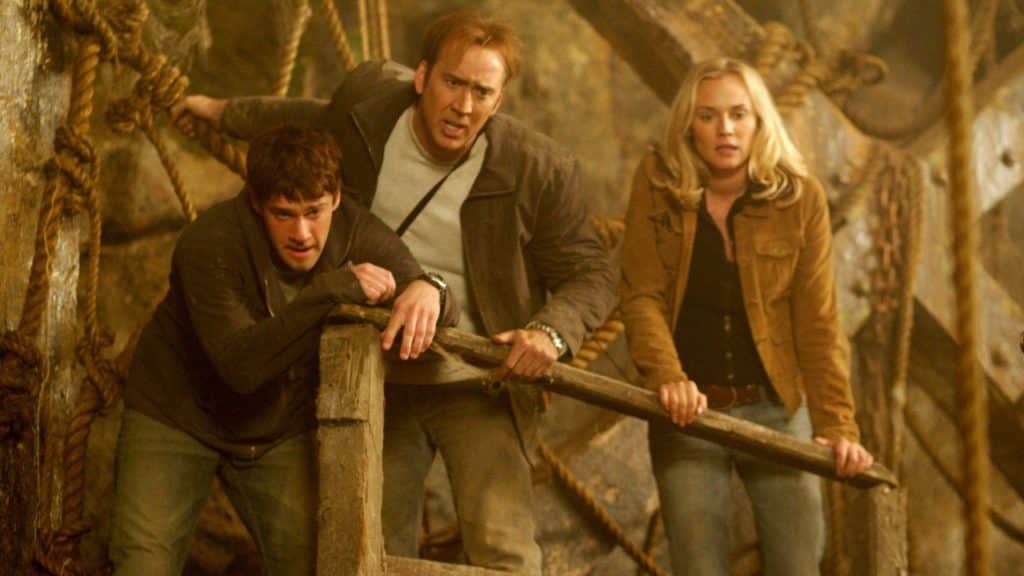
I, a woman who listens to far too many podcasts, was listening to a “How Did This Get Made?“ episode about The Pope’s Exorcist. Jason Mantzoukis—America’s sweetheart—referred to it as “The Catholic version of National Treasure” (something along those lines, please don’t quote me), which really elevated my expectations for the latter film.
This probably all seems irrelevant, but I promise there’s a reason for introducing this. Because here’s the thing: I did not particularly enjoy National Treasure. I wanted to! I really did! But yikes…it was not great.
I think there are two potential versions of this movie I liked: 1. The Raiders of the Lost Ark version or 2. The Oceans 11 version. This was, unfortunately neither, while sort of being both.
Ok, so let’s talk about it. Nic Cage is an independently wealthy (I guess?) guy who wants to find a treasure that is 100 percent a MacGuffin (and boy, do I have thoughts on that!), and to do so, he has to steal the Declaration of Independence. Ok. Alright. This is dumb, but I can work with dumb. Dumb is fine! Let’s see where they’re going with this.
For some reason, the heist isn’t the thing. The heist should be the thing. Nic Cage is able to purloin the Declaration as if it’s a pack of gum at a corner store instead of the most aggressively guarded document in the history of America. Additionally, for some reason, this very old piece of parchment that has been kept in a carefully climate-controlled environment for question mark years can be handled and fucking rolled like a Phish poster with no damage.
Alright. I’m already dubious. Then there’s the blond lady of it all, which gave me the heebie jeebies. Boy, I hate her treatment in this. It is condescending, insulting, and generally horrific. My mother, who watches most of these movies with me and is generally more forgiving of these kinds of infringements than I am, still recoiled a bit at Cage’s character repeatedly telling her to shut up.
If Indie is the comparison… he would have NEVER talked to Marion that way without getting a sock to the jaw.
And things just get stupider from there.
Why are there never guards? More importantly, why don’t they focus more specifically on either the heist or the quest? Trying to put equal emphasis on both shortchanges each. I don’t mind nonsense at all. You will never find a more ardent defender of The Mummy than I am. But this is serving too many masters while pleasuring none.
Oy. Alright.
The Cage Factor:
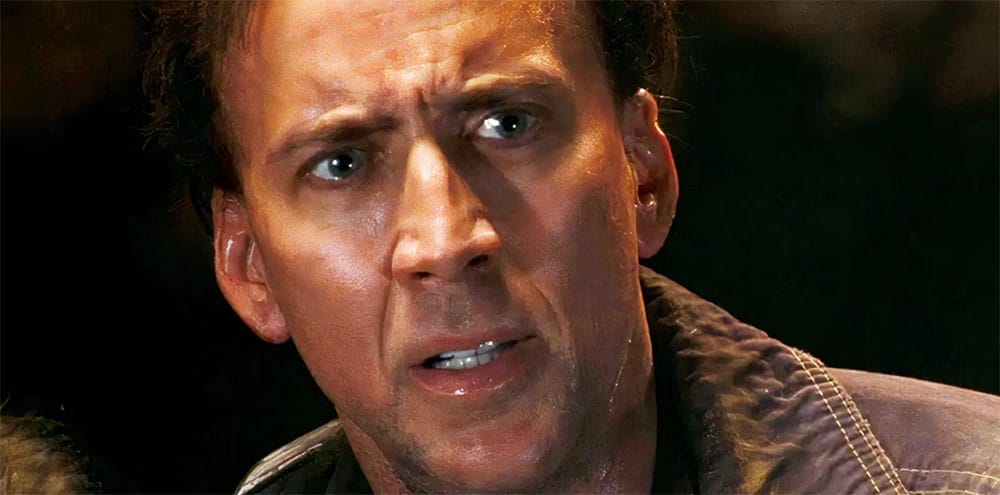
I am comfortable calling this a Cautious Cage. It’s fine? I guess? I actually enjoyed Seeking Justice more, which seems bonkers, but hell, we are what we are. I did not particularly care for this movie—it’s really dumb—but Cage is fun enough in it. He seems to be having a pretty good time, and I enjoy watching him do his thing. So sure. Why the hell not?
AND IN THIS CORNER: STEPHANIE MALONE
The Lowdown
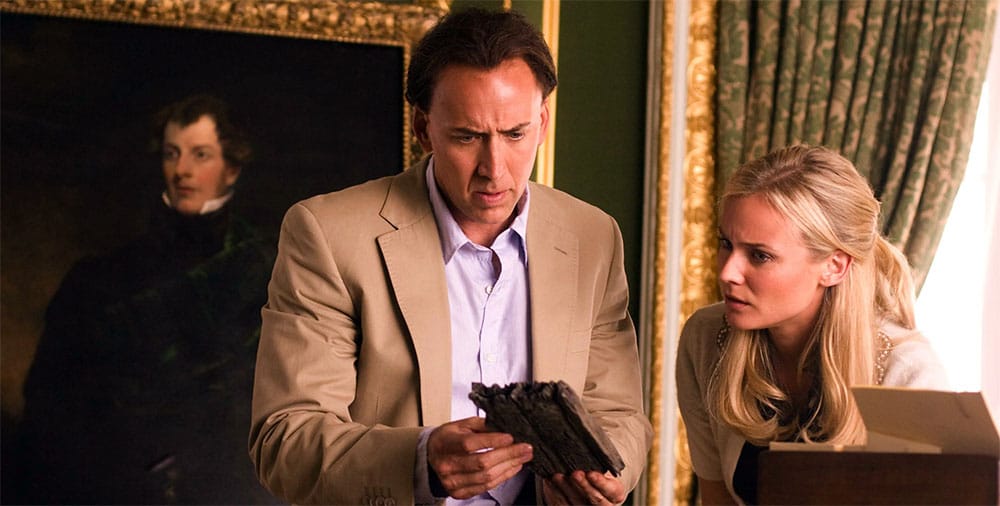
Throughout much of this Cage Match series, Kelly and I have been in a surprising amount of lockstep, almost always aligning in our opinions. However, it was inevitable that we’d diverge wildly at some point in our journey, and that divergence arrived at the most unexpected destinations. National Treasure? Are you freaking kidding me?!!
Any film that gives us such a memorable, meme-worthy line as “I’m going to steal the Declaration of Independence” has earned its place in the pantheon of cinematic greats.
National Treasure blends the nerdy allure of historical treasure hunting with the high-octane energy of a heist film led by the incomparable Nicolas Cage. Directed by Jon Turteltaub and produced by Jerry Bruckheimer, it offers an overly enthusiastic romp through (somewhat factual) American history.
The premise is, no doubt, absurd but also strangely irresistible.
The perfectly monikered Benjamin Franklin Gates (Cage), a history-obsessed adventurer, believes there is a hidden treasure map on the back of the Declaration of Independence. From the Knights Templar to Freemasons, the film cherry-picks the most intriguing aspects of conspiracy lore, tapping into the fantasy thrill of uncovering hidden secrets mixed with a distinctly American flair.
At its core, National Treasure succeeds because of its perfect pacing and indulgence in spectacle. It’s a rapid-fire chain of puzzles, chases, and historical tidbits that keep the audience engaged. It also plays into a sort of national pride—painting American history as this deep, mysterious lore that has hidden layers waiting to be uncovered.
There’s an almost jingoistic celebration of American symbols and history that might not sit well with viewers looking for a more nuanced or critical exploration of the past. Still, as someone who hasn’t exactly felt patriotic amidst the recent political climate, it’s a nice reminder of the great nation we aspired (perhaps still aspire?) to be.
National Treasure is not a masterclass in cinema—I get that—but it delivers exactly what it promises: a fun, engaging, and over-the-top adventure that doesn’t take itself too seriously. It’s the kind of movie I can watch multiple times and still get a kick out of. There’s a good reason it has enjoyed a lasting legacy, spawning a successful sequel and a loyal fanbase.
It’s a testament to the magnetic, unpredictable energy that Cage brings to every role, elevating a run-of-the-mill action script into something memorable and, dare I say, a national treasure in its own right.
The Cage Factor:
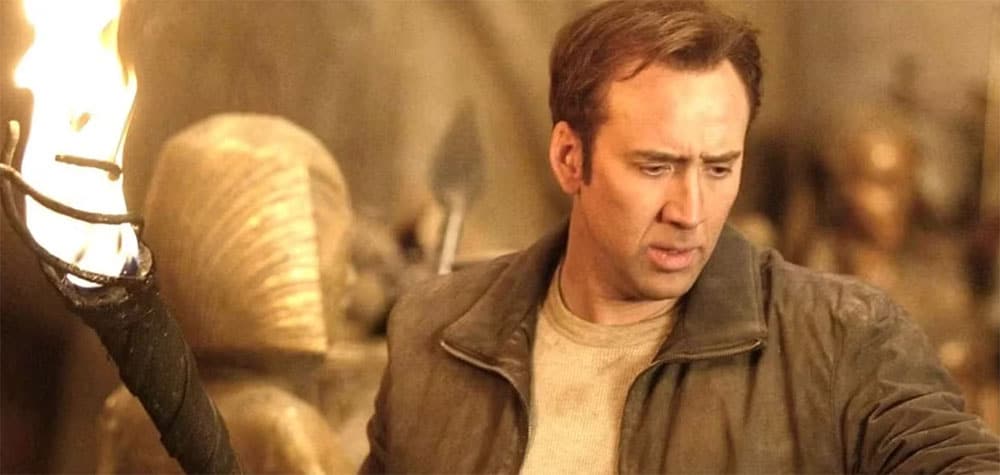
For Nicolas Cage, National Treasure marked a pivotal point in his career. Coming off the early 2000s with a few critically panned projects, this film offered Cage a resurgence by positioning him as a charismatic, yet slightly unhinged, action hero with a penchant for historical rambling. His portrayal of Ben Gates is classic Cage—veering between earnest patriotism and crazed obsession. He delivers every line with a sincerity that, in anyone else’s hands, might come off as campy or over-the-top, but Cage has a way of grounding even the most outlandish dialogue.
Is it essential viewing for Cage fans? Absolutely. Here, we get a version of Cage that embodies his versatile strengths. He’s nerdy but charismatic, intelligent, yet unpredictable. This performance sits comfortably as one of his most accessible and fun portrayals. It showcases the lighter side of Cage—his ability to carry a blockbuster with ease, shine as an eccentric leading man, deliver lines with a manic conviction, and make even the silliest plot points feel compelling.











Follow Us!