


The “Horror Heals” podcast explores the surprising and profound ways the horror genre aids in healing from trauma and building community.
No time to read? Click the button below to listen to this post.
In today’s chaotic world, we’re filled with much fear and uncertainty. We’re bombarded with distressing news stories and the sometimes crushing weight of modern anxieties. To make matters worse, we must navigate a fraught online and social landscape that can take a toll on our mental state. How do we manage all of that? It’s far from easy, but there are certainly bright spots and people committed to creating spaces of support and positivity.
I’m honored to interview two such people who lend a compassionate ear on their newest podcast, Horror Heals.
MORBIDLY BEAUTIFUL: Welcome to Morbidly Beautiful, Corey and Kendall Austin Stulce!
HORROR HEALS: Thank you so much! Thank you for having us.
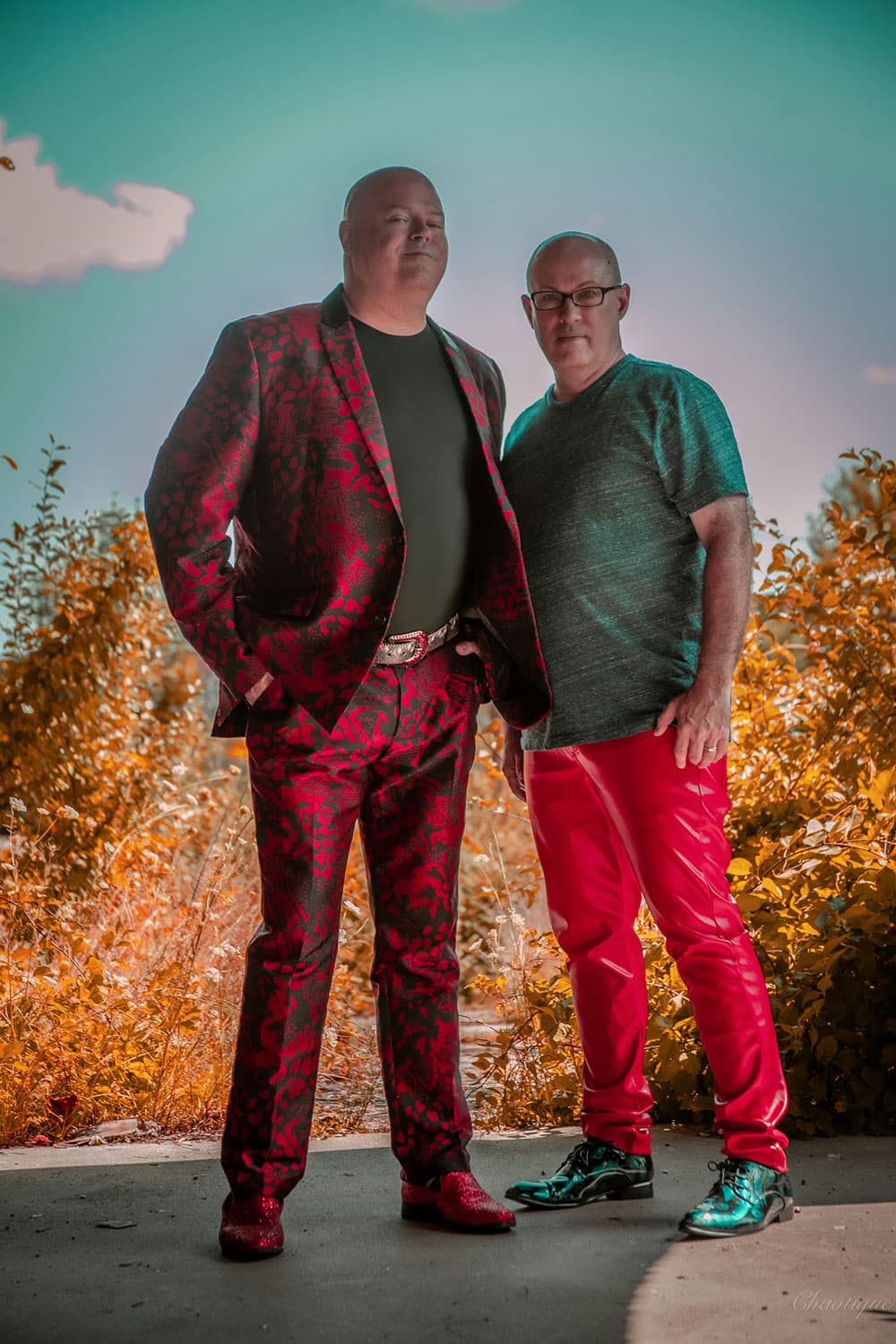
MB: Your podcast is making an incredible impact on the greater horror community. It’s been wonderful to listen to celebrities, filmmakers, artists, writers, and everyday horror fans share their stories. So, what inspired Horror Heals?
Corey: Well, I can tell you that story. So, Kendall and I have been podcasting for almost three years now. We started off with the podcast called Family Twist, which is about Kendall’s story as we found his birth family. Kendall was adopted as an infant, and we found his birth family and moved from California to New England to be closer to them. That’s when I discovered all these amazing East Coast horror conventions.
I was at Monster Mania in Cherry Hill, New Jersey, last March, and I was standing in line to meet Sam Raimi, the iconic director and creator of the Evil Dead series. At these cons, they’re packed, especially within the celebrity areas. There was a very popular celebrity there, and we were all jammed in there like sardines.
There was this young man in the next row who was clearly in some sort of distress. He was pacing back and forth. You just see on his face that he was not in a good place. I was about to say to him, “Hey, if you need to step out of the line and get some air or whatever, we’d be happy to let you back in when it’s your turn.” But before I could do that, the person next to him said, “Oh man, cool DVDs!” He was holding a stack of Raimi’s DVDs to get autographed, and suddenly, all the anxiety and distress washed away with a huge smile on his face.
They were conversing, and it was like they had known each other forever and were just chatting it up the rest of the time in line.
After I met Sam Raimi, I stepped away and had a realization, “Oh! That’s the podcast, Horror Heals!” That’s the healing power of horror.
Kendall: Before we started the Family Twist podcast, we bonded so early on, almost twenty years ago, over horror, and it’s a part of our daily lives. I thought way back how cool it would be to have a horror-based podcast, but then, of course, we had my family, and then it made sense to do Family Twist. I’m glad that Corey had that experience and that he called me immediately afterward. We had to talk about this.
Corey: It was a moment that I just knew immediately. I hadn’t heard of anything quite like that. We didn’t even realize at the time that it would become a companion piece for our other podcast. With Family Twist, we’re talking to people who have lifelong trauma because they’re adoptees or have discovered a DNA surprise. Then, of course, a lot of us in the horror community are also dealing with past trauma.
Horror is a way for us to feel better and escape for a little while. I think Kendall, being an adoptee, has always felt like an outsider. I’ve always felt like an outsider, too, and I think we bonded over that. It’s surreal. We just did an interview with an artist who had a DNA surprise and who is also passionate about horror.
We found this community, and it’s healing.
MB: I checked out your Family Twist podcast, and the episode I think listeners should dig into, that you recorded recently, was Lost and Found: The Adoption Story Behind Family Twist. That was a tearjerker, and I felt for your journey. How long have you been recording and producing Family Twist?
Corey: Almost three years in April. Kendall often says in Family Twist that he didn’t know how much he needed this podcast.
Kendall: Yeah, it’s funny, my mother died in 1980 and my dad in ’87, so for me it feels like the wounds are old. Finding this family is just a broad emotion that I never expected, for the good and for the not-so-great. I never felt rejected in my whole life. My parents helped me not to feel rejected, but then I found rejection when I found my birth mother.
Spoiler alert: She and I have never spoken. You know, I’m okay now with the fact. I don’t grieve it anymore. I think you grieve for a relationship that could have been, and I try never to wallow in self-pity. My mother died in 1980. I found my birth mother in 2017, and for me, it’s still been great to find and connect with everybody else in my family after all these years.
Corey: I’ve been a lifelong nerd, and I started going to comic book conventions when I was a teenager. But it wasn’t until I started going to horror conventions that I realized there’s something different about the horror community. It came to light when we moved to New England, and I started going to these East Coast cons. It’s like a family reunion when you go, and you see the same people, or you meet new people. Immediately, you know how to start the conversations, and everybody is kind and respectful because they get it.
We love gore, the blood and guts, and the craziness, but we’re also really good people.
MB: That brings me to your logo, the stitched heart. Green represents healing, renewal; and the orange, compassion, and thought. It’s inviting. I absolutely love the logo.
Corey: Yeah, a shout-out to our wonderful designer, Janna. She’s just a genius. We talked about what we wanted and gave her some direction. Then, she always comes back with eight to ten options. I mean, we almost immediately landed in favor of that logo. We love it. With each episode, together with the guests, we are metaphorically stitching and mending HOW to heal.
MB: I think you made a wise decision to keep your episodes at the twenty-to-thirty-minute mark because let’s face it, we’re content-fatigued coming out of COVID.
Corey: That was a conscious decision. It doesn’t always necessarily work out that way. But if we get somebody who’s just got a fantastic story and it ends up being fifty minutes, then we’ll just do it in two parts. We just feel like those twenty to thirty minutes, that’s a drive, that’s a workout, that’s taking a walk.
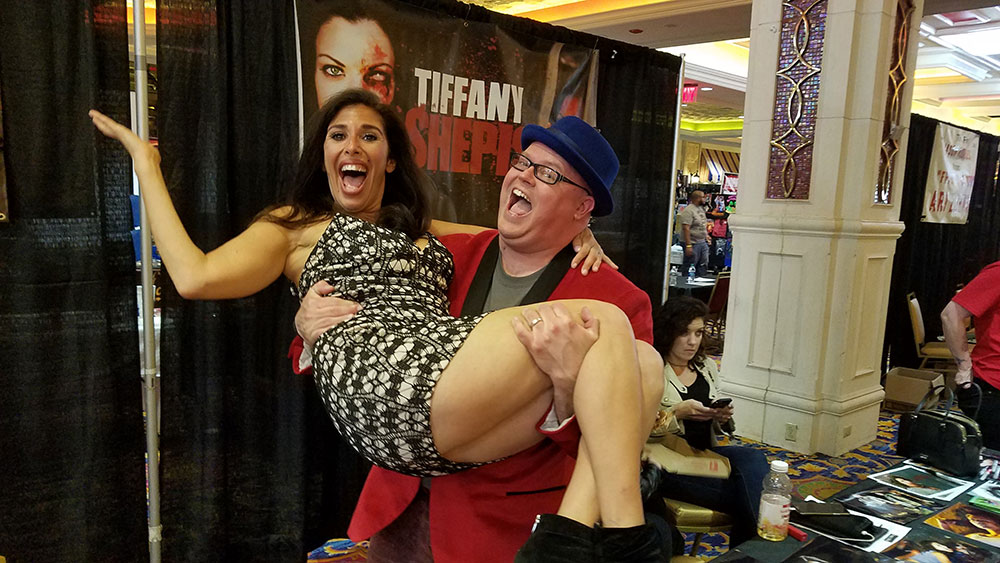
Corey and Felissa Rose
MB: Plus, I’m getting to know incredible people I’ve never heard of. You have individuals like Eerie Earl, a veteran sharing his experiences through art. Actress Adrienne King, I didn’t know to what extent she was being stalked. Jennifer Ginty and her brave creation of Moody, a therapeutic doll helping with PTSD. Laura Inlow created her own horror college community. Writer Dacre Black shared how he was bullied. I’m learning something from each guest, and I’m blown away. What do you think are the biggest issues for horror fans that you’ve interviewed from doing these episodes so far?
Corey: I think everybody’s story is unique, but there are similarities. There are a lot of people who have been dealing with some form of emotional or physical abuse that we’re all trying to work through, and we can relate. It’s kind of hard to put into words, like Andre Gower, who had a heart attack, unexpectedly. It was the Horror community that helped him get back. “We need you back! We need you at the conventions, you’re our guy, our leader.”
Kendall: I think that another common theme, which is related to that, is the anxiety that people are dealing with. I feel with every guest and most listeners, that’s a unifying theme because we stifle a lot of emotions and create anxiety within ourselves.
I definitely have anxiety and finally feel comfortable saying that, as I do have a savior complex in general. At some level, I never wanted to admit, “Hey, I have anxiety.” I kind of stigmatized myself because I never talked about that.
Corey: I think two reasons why we’re doing this podcast: one, to normalize talking about anxiety, mental health, and wellness. To get people to understand who might not be in the horror community, the power of horror, and we’re seeing it happen. Horror is always going to be there. But now we’re seeing it being respected more with the Oscar nominations that came out. Three horror movies are now nominated for Oscars. It’s incredible.
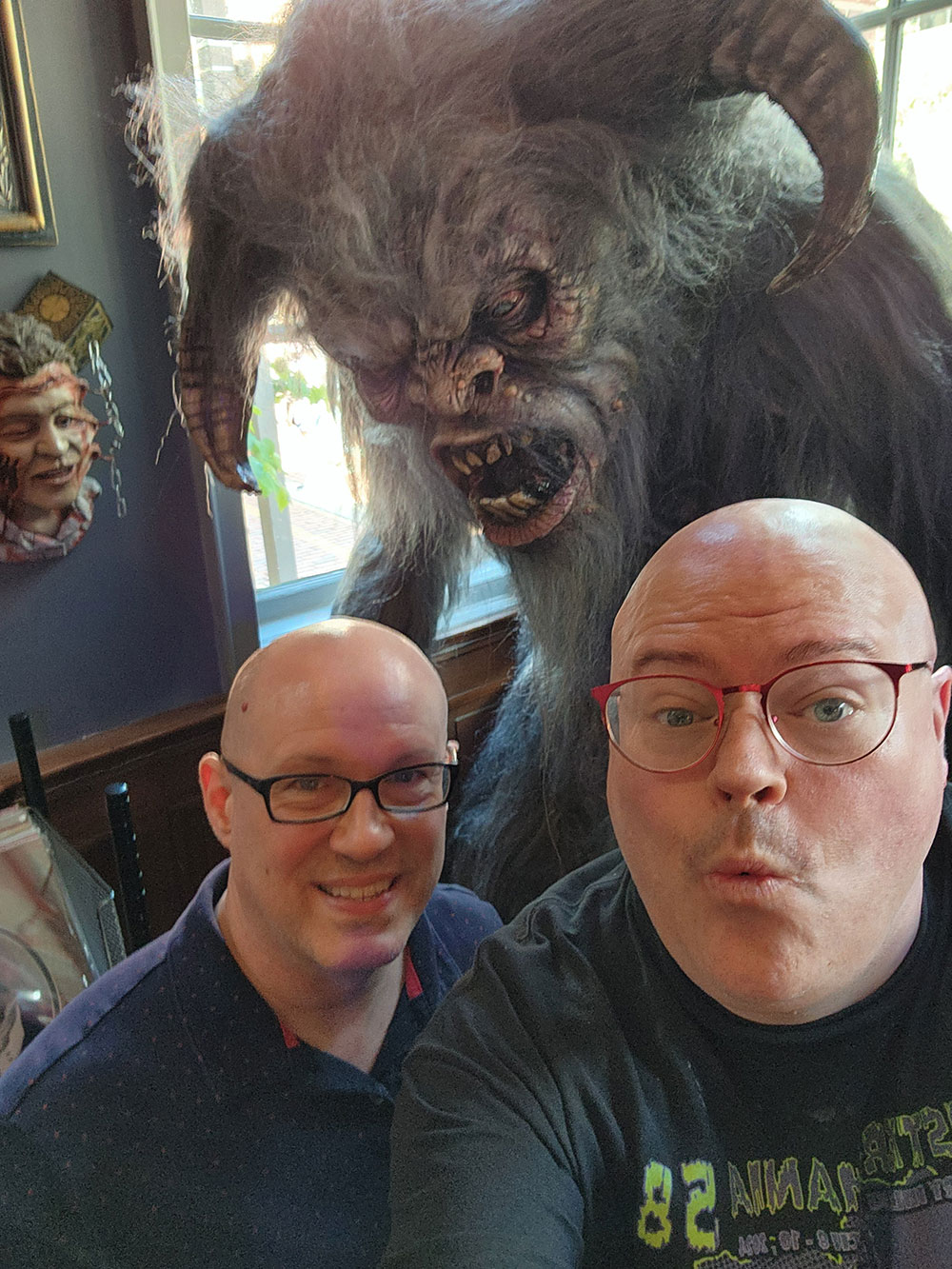
Kendall and Corey in Salem
MB: What are some of your favorite films? Fondest memories of watching them. Essentially, what brought you to the horror genre?
Kendall: I know it was my parents’ initial influence on me. My mother was never as okay with me watching scary movies as my dad was. I was super young, but I was sneaky. They would put me to bed as a seven-year-old, as I overheard their plans to watch a horror film. I remember literally crawling on the floor to the den where they would watch television with my head just peeking in enough to watch.
One thing that comes to mind is The Exorcist. I just love that series, but that first film I think is phenomenal. Then I gasped at one of the crucial moments. My parents realized I had snuck in, and my dad picks me up and says, “I’m sorry you saw that.” “Can I stay up and watch it with you?” “No!” He also quizzed me and both parents asked me, “Did you have nightmares as a result of this?”
My love for horror just continued from there. When my mother was out of town, my dad would allow me to and say, “Let’s not brag about this to your mother.” I would get to watch things that I’m sure other children weren’t allowed to watch.
Corey: I literally had the same experience. I remember my mom was watching The Exorcist, and when it first came on TV, I was lying down in the hall and couldn’t see anything. But I could hear when Regan started using the demonic voice. That’s what you can’t see. I think sometimes it’s a little scarier than what you can remember.
As a child of the 80s, TV was sometimes our babysitter. We had HBO, and there would be stuff on there that I would watch. I remember seeing Poltergeist when I was really young and very intrigued but also kind of scared. One of my buddies had a stack of Fangoria magazines and I hadn’t seen the movies featured, but seeing these images of crazy wounds and gore. I was hooked.
MB: Both of you sharing this is therapeutic. I also have fond memories of peeking in on the television after bed and being yelled at.
Kendall: I remember joking with my parents, saying, “I wish you guys would crunch your popcorn a little bit more, then you wouldn’t have heard me.”
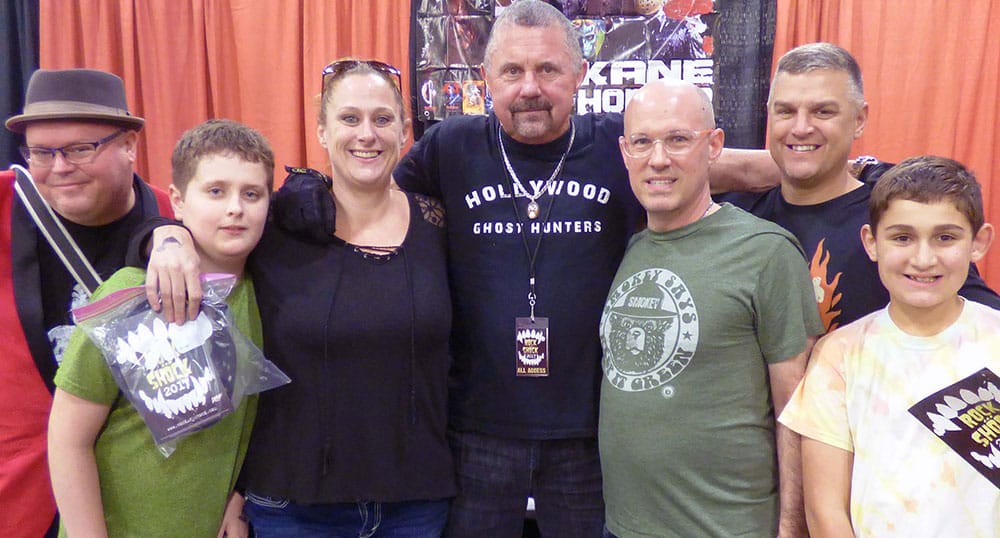
Kendall’s birth family with Kane Hodder
MB: I think this beautifully segways into how you bring your guests onto Horror Heals. Intuitively, you are connecting to what your guests may have encountered traumatically at a time in their lives when they were also discovering their love for horror. But what was going on in your lives when you were discovering things on an interpersonal level? Was life good? Not so good?
Corey: I had a challenging relationship with my father, who has passed. He died when I was seventeen, and so I still kind of struggle with that. I think there was some emotional abuse there for sure, but now it’s been decades, so I tried to really remember the good stuff. I was actually just thinking about this earlier today, he introduced me to my favorites, Saturday Night Live, The Muppets, Monty Python, and the weird stuff like Pink Floyd’s The Wall, the movie. He had a great sense of humor, and I think my siblings and I inherited that. It was a challenging time as a kid, but I like to look at both sides of the coin.
Kendall: It’s funny how you don’t think of these things at the time that they happened, but when you reflect on it, you realize how important horror was to you at various points in your life. And to that point, we were just talking about watching The Exorcist. It wasn’t long before that that my mother became ill when I was six, and she died when I was ten. My dad and I did the math after she died. She had spent more time in hospitals than out of hospitals in those four years. It isn’t lost on me, because when my mother was in the hospital, my dad and I would go home and watch horror movies together.
I never thought about how therapeutic that was for me until after she passed away. I was only ten but felt very grown-up. That’s the reason I think my love for horror only amped up. At that point, all bets were off. We could watch whatever we wanted all the time, and we did. It was a bonding moment for him and me as well, to enjoy that thing that lots of people in our tiny hometown would have thought was decadent.
But for him and me, it was like our little secret. It was therapeutic on many levels and has continued to be for me throughout my life.
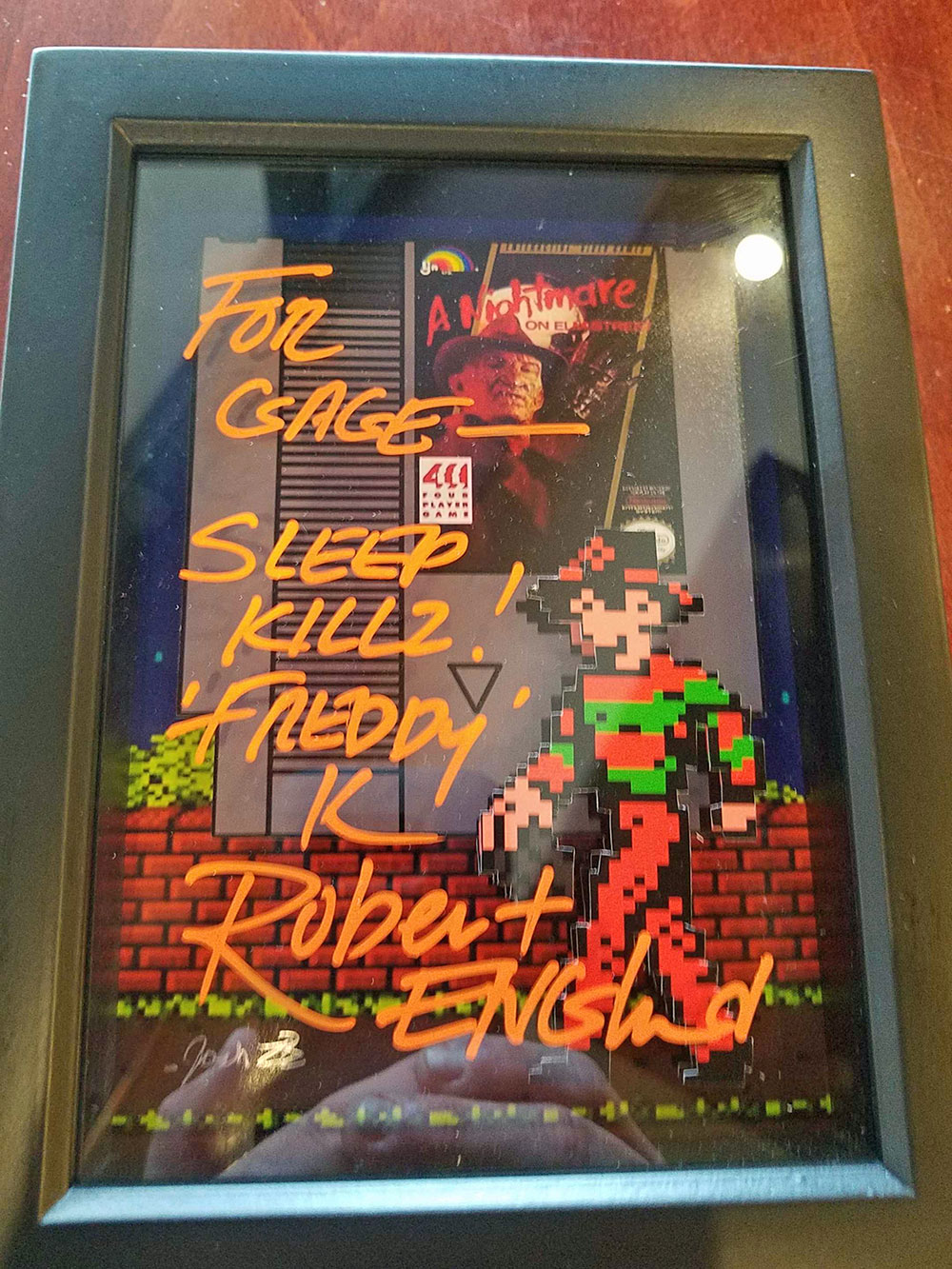
Gift for Kendall’s nephew Gage
Corey: Horror was an escape growing up. It was the eighties, so I think parents tended to be a bit looser about where their kids were and what they were up to. I would escape to a friend’s house on the weekends. We were ten to twelve-year-olds hanging out at all hours of the night.
My friend had a friend who was the kid who lived up the hill. His father owned an ice company with tons of trucks and ice machines. I don’t know where we got the idea, but the kid had a camcorder, and we decided to make our own Freddy movie. We even had the glove that you could buy from the toy store. I don’t remember what we did for the makeup, but it was fun and insane. We grabbed a bag of ice and lit it on fire because that’s how Freddy was.
MB: I LOVE it! OG fan filmmakers.
Corey: Here’s how dumb we were. Initially, I think it was my friend playing Freddy. Asking each other, “How long do you think you can be in the ice machine while the ice bag is on fire? Well, you don’t have to be in the ice machine while it’s on fire. You go again. Stop the camcorder. No, you get out, and then we’ll light it on fire.” We all took turns lighting it on fire with him.
Kendall: We’re going to need a parental warning.
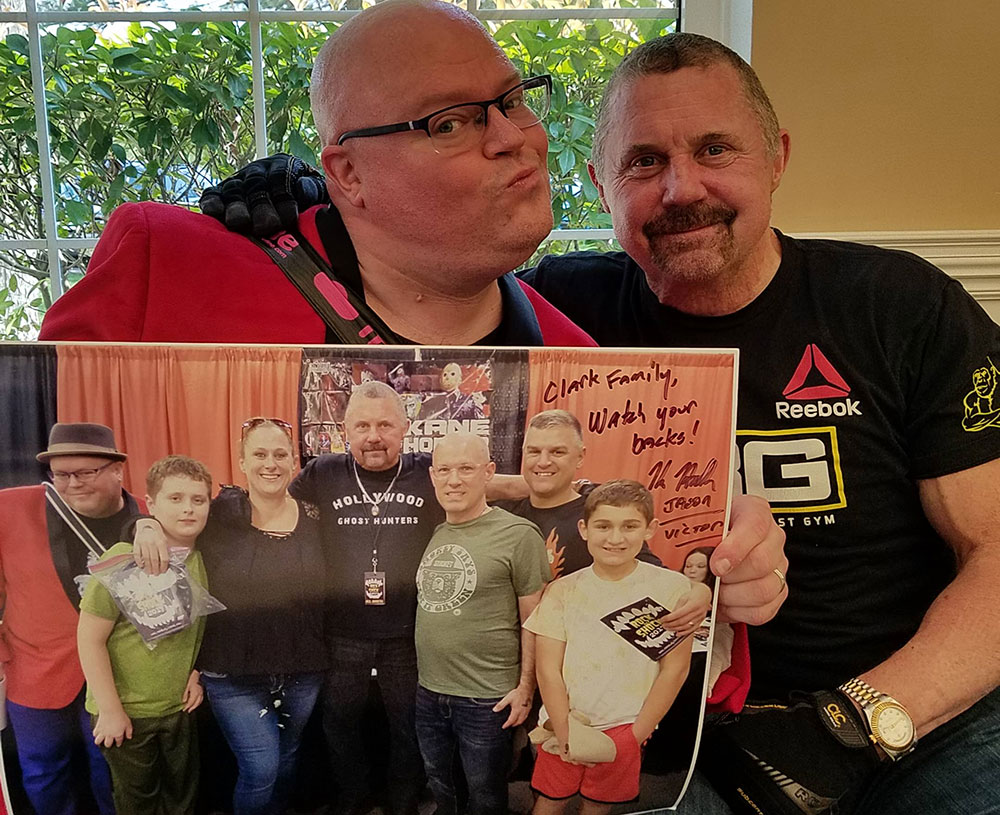
Corey and Kane Hodder with signed photo
MB: Folks, if you’re setting ice on fire, warning, don’t do this at home. Who would you love to meet and interview?
Corey: Kane Hodder as he’s got a touchstone to us. We went to a horror convention the day after we met Kendall’s birth family, and Kane was there, and we had this beautiful photo of us taken with Kane; he signed it. But for me, my number one is Jamie Lee Curtis. I mean, she is just such a badass person, and she has zero Fs to give. I love that about her. What a trailblazer and an ass kicker. I think she would be an amazing mother.
Kendall: I have to agree with him.
Corey: I recently recorded a solo episode, From Fans to Family, with a small group of individuals who met through The Movie Crypt podcast that Adam Green and Joe Lynch do. They became best friends from the live chats. Very, very cool people, and again, it’s great seeing how the work community comes together. I just sat back and listened to them talk, you could just sense the camaraderie. Since then, they’ve come together and met up at conventions. I’m just putting this out in the universe, but we would love to have both Adam and Joe come on as future guests for Horror Heals.
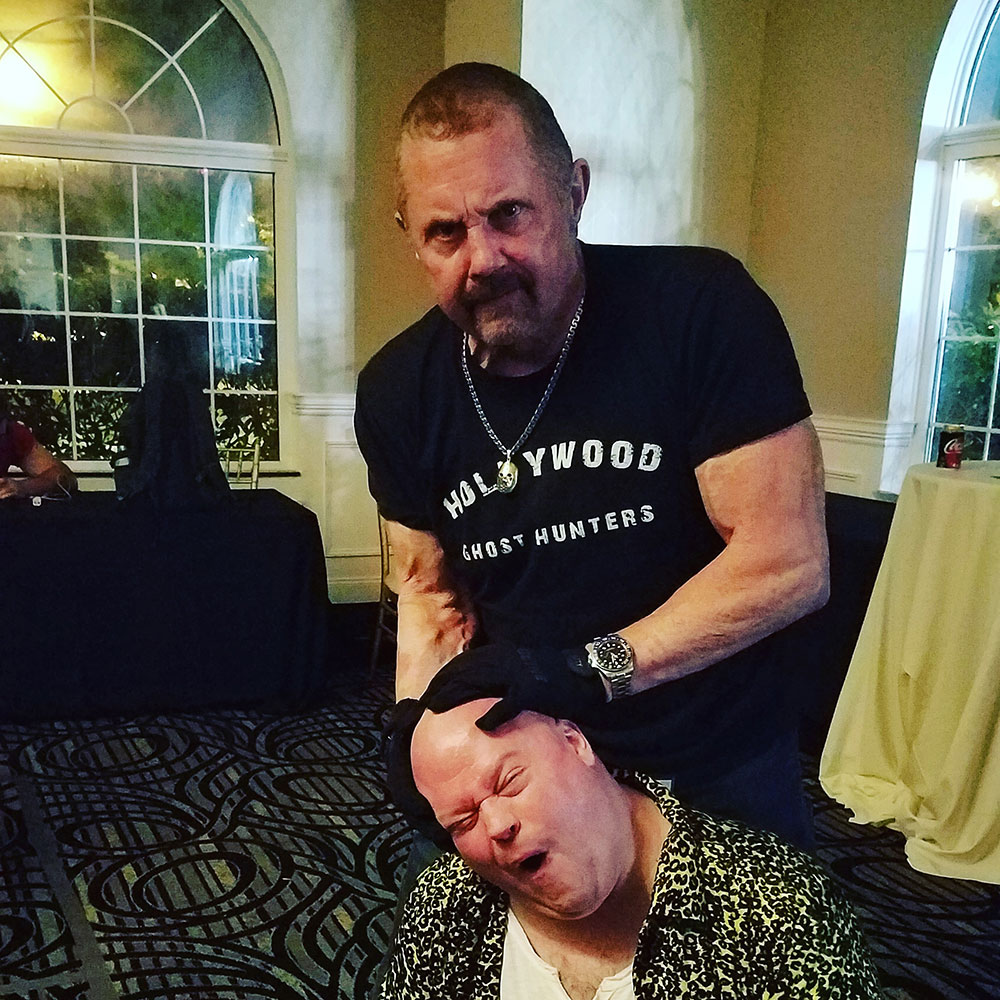
Kane Hodder crushes Corey’s head
MB: Now, who have you met and interviewed and did that experience leave a life changing indent on your soul?
Corey: So, my background is as a journalist, and I specifically went into entertainment journalism. I was a magazine and newspaper writer and editor for fifteen years. I first interviewed Kane back when I was in college, and that was awesome. Somewhat horror-related because of Young Frankenstein and the 1995 Dracula spoof, I got to spend an hour with Mel Brooks, and he’s my comedy hero. He couldn’t have been kinder, sweeter, and more genuine.
Now, Kendall thinks it’s absolutely ridiculous that I pay people for their autographs, but he was completely starstruck when we met Jody Watley. I interviewed her, and we went to her show when we lived in California. After the show, he was practically speechless.
Kendall: I never get starstruck, but I could not be around Jody. I joked with her too, “When I thought I was straight, I was in love with you.” She got a kick out of that. Jody was very kind and appreciative of the audience. She sounded like she did in the eighties.
Corey: Solo or with a band, she’s full-on Jody.
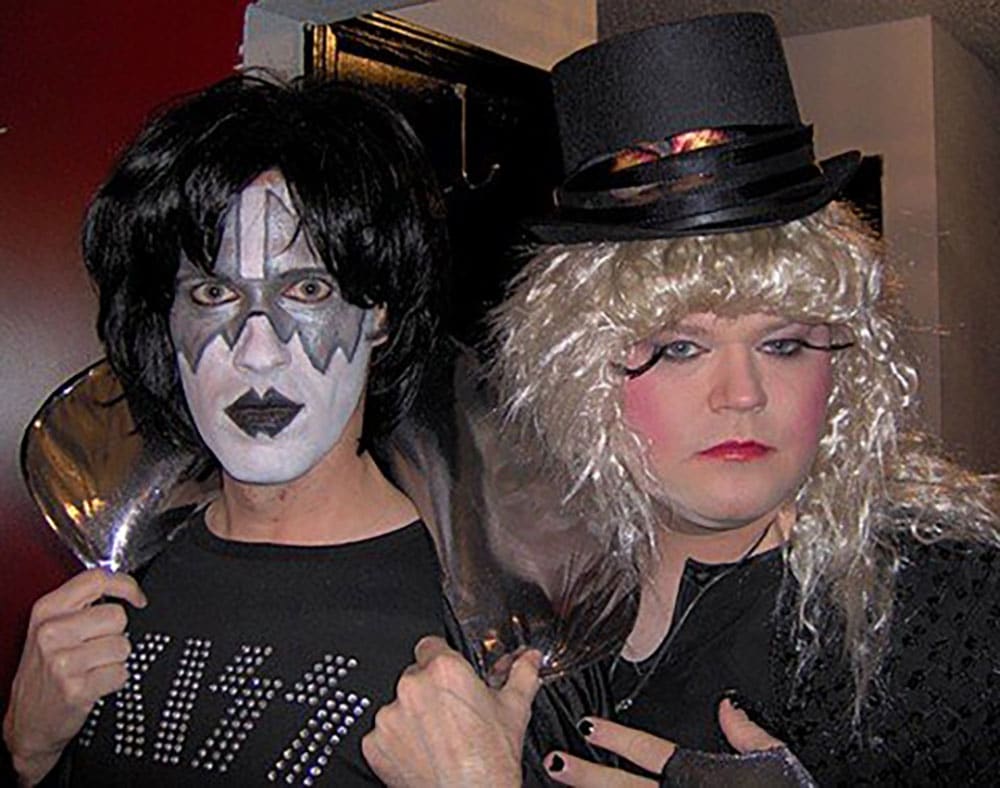
Corey (L) and Kendall (R) on Halloween
MB: In addition to helping others share their healing experiences on the podcast, you are both huge animal lovers.
Corey: We have six dogs. Two miniature Doxins, a Chihuahua, a Chihuahua mix, and two Havanese. Five of them are rescued. Our little Finny was Kendall’s consolation prize for COVID ruining his 50th birthday. Finny runs the house and we have two kittens as well.
Kendall: They’re all small, jokingly considered “toys”, however, the cats are twelve.
Corey: Yeah, they’re not kittens anymore.
MB: Do you have any favorite podcasts and YouTube channels out there that you recommend?
Kendall: We’re big fans of The Big Four Oh! which is a friend’s podcast, but we think it’s really worth listening to. It used to be called 40 Drinks.
Corey: It’s all about turning forty and that transition. Every guest has a story about some kind of major life shift around that age, some of the ickiness of it, and it’s awesome.
MB: I need to check that out, as I remember my hesitant forties.
Corey: Actually, there’s an episode to start with, because it’s kind of horror-related. I introduced her to this guy named Lou, a horror icon known as Father Evil. I’m not sure if you’re familiar with the father, but he is fantastic. Stephanie talks to him about his midlife transition around forty, and it’s a really good episode.
MB: What do you think makes a horror convention special and stand out from others?
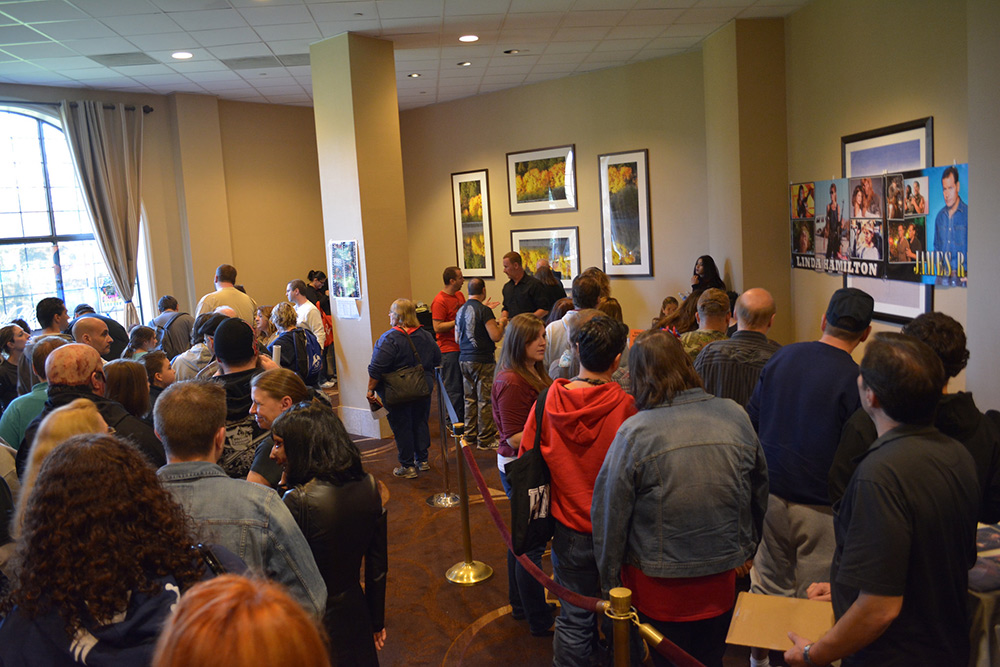
Corey: I like the hotel conventions because they have an intimate feel to them. They’re too crowded for Kendall. I remember waiting in line at Monster Mania for a photo op. Somehow, the hotel was overcrowded, and the fire marshal closed the doors for a bit. I met the most delightful couple standing in line. It was March, it was cold, but we just had the greatest time. I think it’s those small, unexpected moments that happen.
I dig it all, the vendors, meeting the celebs, doing the photos. Now, I don’t exactly cosplay, but I wear the most shiny and outlandish blazers. That helps me with my social anxiety, because I don’t have to walk up to people and start a conversation. People come over to me, “Oh man, I love that jacket!” It’s the perfect opportunity to ask, “Do you like podcasts? Well, here’s our card.”
MB: Are there changes you would like to make within the horror film business today, if you could?
Corey: Good question. I think the change that I’ve wanted to see is happening right now, the weird is becoming mainstream. The trailer for The Monkey, by Director Osgood “Oz” Perkins, Anthony Perkins’s son, is based on a Stephen King short story, and the trailer alone is amazing. I just saw the crazy over-the-top stuff. For example, when Hereditary came out, I said, “Oh my God, this is nuts. I can’t believe I just saw Toni Colette behead herself with piano wire!”
Seeing typical indie films turn mainstream is encouraging.
Secondly, I love seeing that you don’t have to age out of work. We’re seeing Danielle Harris, Felissa Rose, and others that started off as child actors, still acting in horror movies. It’s not like, whoever’s twenty years old gets to make horror movies. You don’t age out of it. Sid Haig was making movies almost until the time he passed.
MB: You just answered my next question on aging beautifully. We love you if you’re three years old, Miko Hughes in Pet’s Sematary, or we love you at eighty-one, Lin Shaye. We write a role for everyone.
Corey: I’m not sure if you listened to our Black Christmas episode with Lynn Grison, but we talked about that same subject. She and her husband were talking about all the ways that she had been killed in horror movies in the seventies. Joking, she’s like, “You know, before it’s too late, I want to be the bad guy.” I’ve drafted some ideas for her.
MB: We’re in a very defining period of time. Talk about anxiety. Not to get political, but it seems like everyone on the planet is going through something right now.
Corey: Absolutely. We’re in uncertain times for sure. It’s scary every day. What can be next? I think we need our escapes more than ever, taking a break from the horror that’s happening in real time all over the world.
Kendall: Often, we like to close out the night with a horror movie. It allows us to release that uncertainty to the screen.
Corey: Definitely. I think we can learn from our own fears and horrors and share to help others.
Corey and Kendall of the”Horror Heals” podcast are giving the horror community a voice and proving that horror does, in fact, heal!




Follow Us!