The Power of Horror Over Homophobia: A Retrospective on the Slasher Bro Baseline



It has been a minute since I graced the digital pages of Morbidly Beautiful. My editor, Steph, has graciously welcomed me back into the fold, and with Pride Month underway, it felt like the perfect time to have an honest conversation.
We need to talk about the power of horror over homophobia. It is a topic that requires us to look back at the genre’s deeply flawed history, and perhaps more uncomfortably, to look in the mirror at our own.
Let us rewind the tape to the neon-soaked, blood-splattered days of the 1970s and 1980s.
It is no secret that for decades, the horror community, specifically the slasher subgenre, was heavily dominated by a demographic of hypermasculine dude bros.
The culture surrounding the genre was rough around the edges, and the films reflected the prevailing attitudes of the time.
At the 2014 Grammy Awards, Paul Williams used his Album of the Year acceptance speech on behalf of Daft Punk to champion LGBTQ rights, while a same-sex wedding ceremony took place right there in the room. It was a massive, beautiful cultural moment.
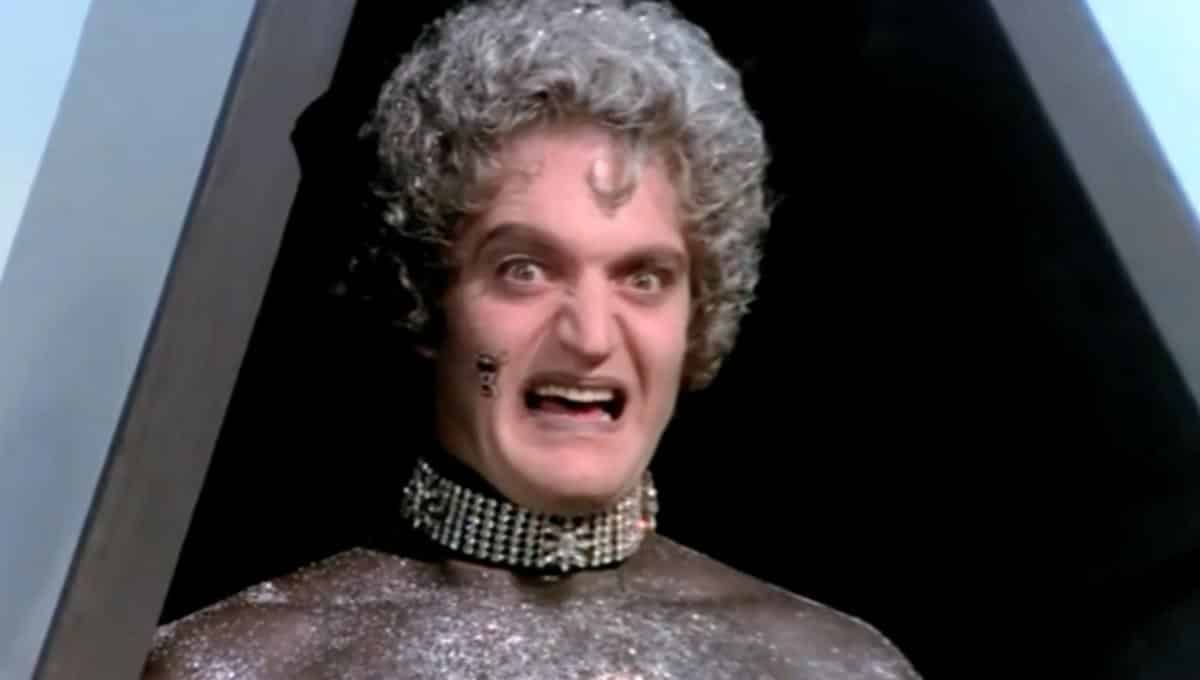
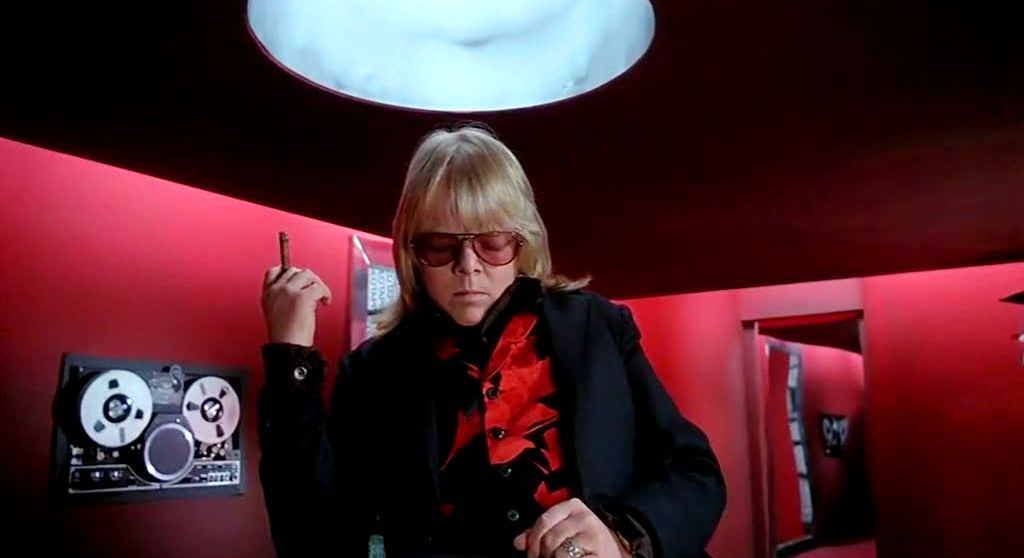
Yet forty years earlier, a younger version of that same Paul Williams played the villainous Swan in The Phantom of the Paradise.
In a pivotal scene, when our hero, Winslow Leach, sneaks into Swan’s casting couch room dressed as a woman among a bevy of scantily clad auditioning hopefuls, Swan’s immediate, dismissive reaction is to bark, “Get this fag out of here.”
The film also features Gerrit Graham’s unforgettable turn as Beef, the primary comic relief.
Beef is a stereotypical, hyper-camp homosexual rock star. The complexity here is fascinating. Graham plays the role for laughs, leaning into every expected trope of the era, yet he injects the character with undeniable talent and a strange sort of dignity.
It highlights the era’s complicated rulebook: queer-coded characters could exist and even be fabulous on screen, provided they remained the punchline.
In mainstream cinema, gayness was the ultimate insult.
To strip a male protagonist of his masculinity before an impending slaughter, films like Christine or Friday the 13th Part III leaned heavily on homophobic slurs. The nerds and the outcasts were berated with playground insults before being hacked to pieces.
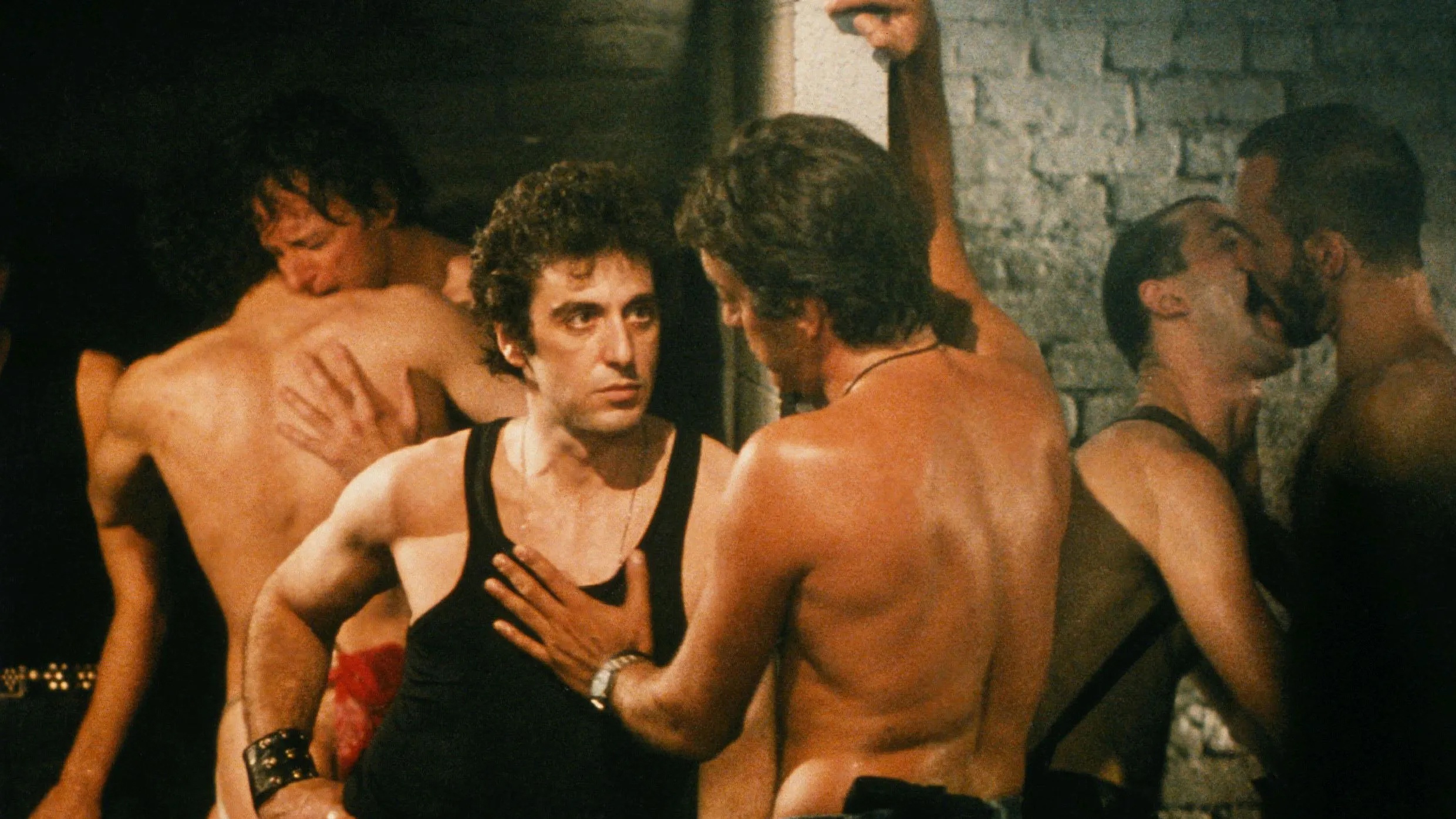
If a studio wanted to portray the LGBTQ community as an actual, physical threat to audiences, it gave us William Friedkin’s Cruising in 1980, which framed the queer underground as an inherently predatory, diseased world.
Then there are the movies that attempted to wade into gender and sexuality with famously mixed results.
Take Sleepaway Camp.
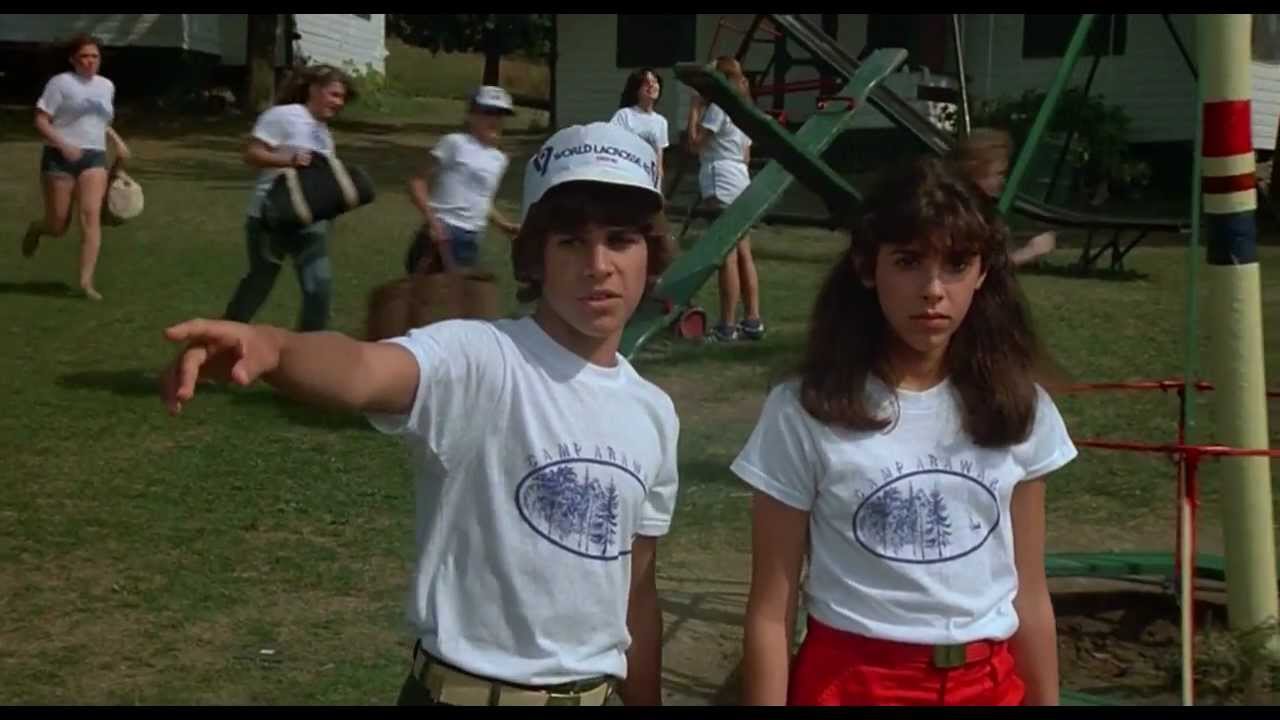
The dialogue is a masterclass in casual 80s homophobia, mostly courtesy of Ricky. However, the real point of contention is the ending. You can argue that it attempts to explore the psychological trauma of forcing a child into a rigid gender role.
Ultimately, however, it hinges its entire climax on the shock value of a transgender body, directly equating non-conforming anatomy with monstrous horror.
It is a legacy that queer horror fans are still fiercely debating today.
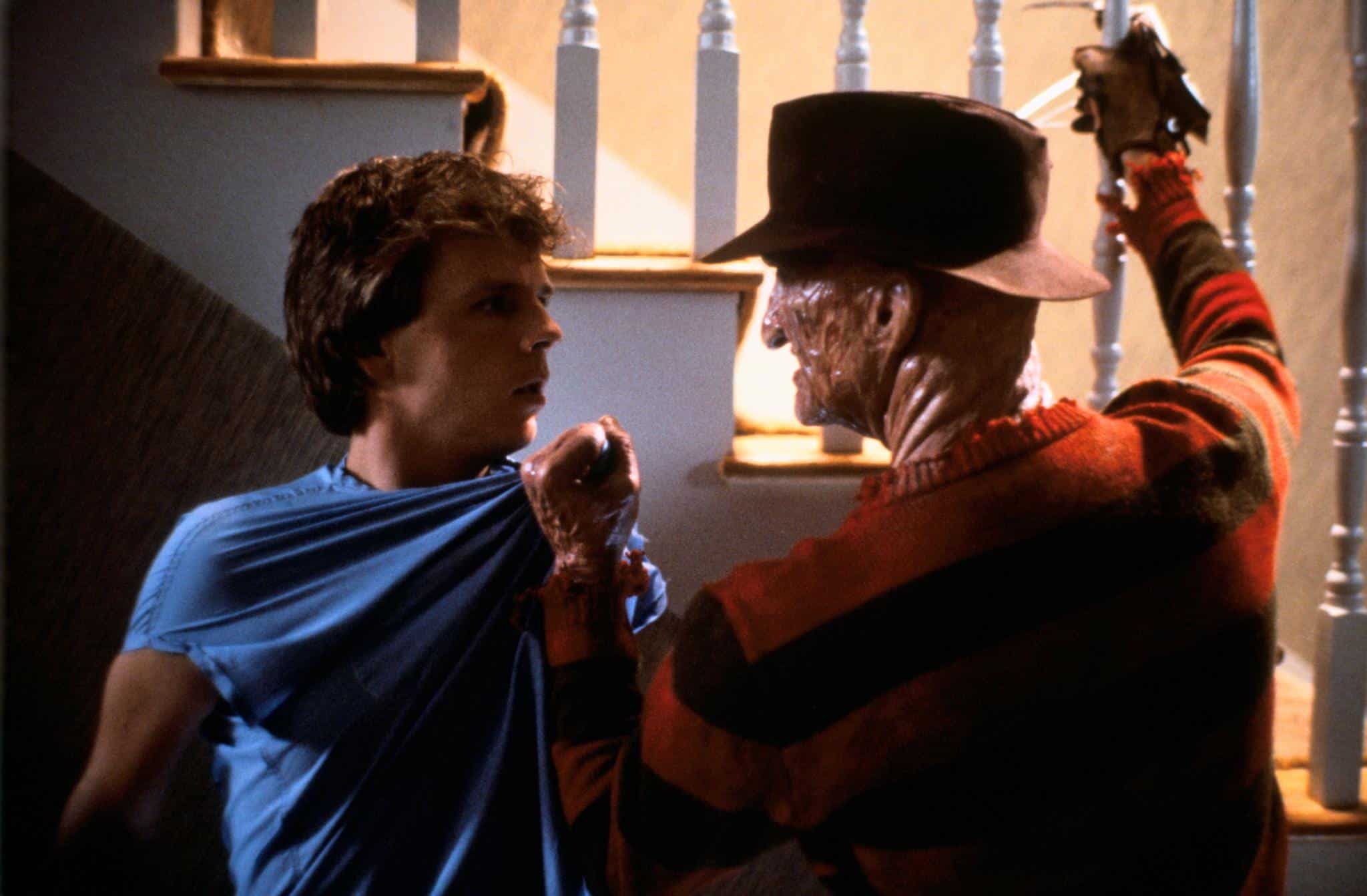
In a recent conversation, I flippantly referred to the sequel as “Nightmare on Ambiguously Gay Street.” It offended someone, which was absolutely not my intent, but it served as a stark, necessary reminder of my own lingering blind spots.
Look, we can be academically honest here: this is not a good movie. It is structurally messy and breaks its own franchise rules. It is, however, a monumentally important movie.
The queer subtext in Freddy’s Revenge is about as subtle as a bladed glove to the face. It is a subject explored with brilliant depth and much-needed context in the documentary Scream, Queen! My Nightmare on Elm Street.
Mark Patton’s ordeal, his exile from the industry, and his eventual reclamation of the film prove a vital point. Even when Hollywood treated queer themes as a horrific contagion or a dirty secret, the community was resilient enough to take the narrative back.
That resilience is exactly why the horror genre is uniquely equipped to dismantle bigotry, a lesson I had to learn the hard way.
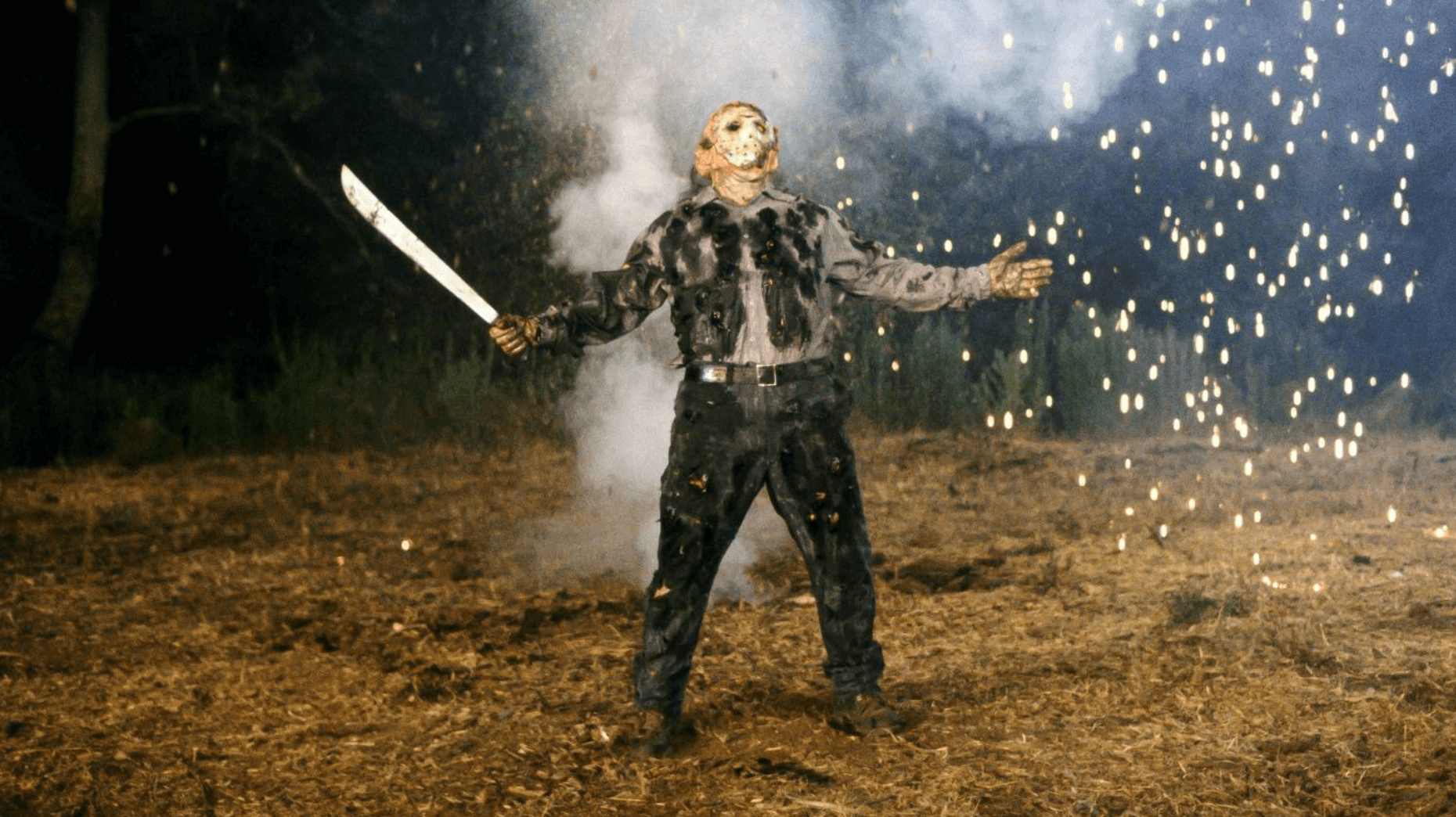
It is one thing to look back at the cinematic sins of the past and dissect them from an academic distance. It is entirely another to sit down with the architects of our favorite nightmares and ask them exactly what they were trying to pull off.
Recently, my co-hosts and I sat down with director Adam Marcus on The Scared Shitless Podcast®. For the uninitiated, Marcus is the man who was handed the keys to the Friday the 13th kingdom at the impossibly young age of twenty-three to direct Jason Goes to Hell: The Final Friday. He also directed the brilliantly deranged holiday bloodbath Secret Santa.
Having him on the show was the perfect catalyst for a realization I had been circling for years. Marcus took a beloved, mainstream horror franchise and deliberately pulled back the curtain on the queer themes that had always been bubbling under the surface of the genre.
Let us be brutally honest about the legacy of Crystal Lake.
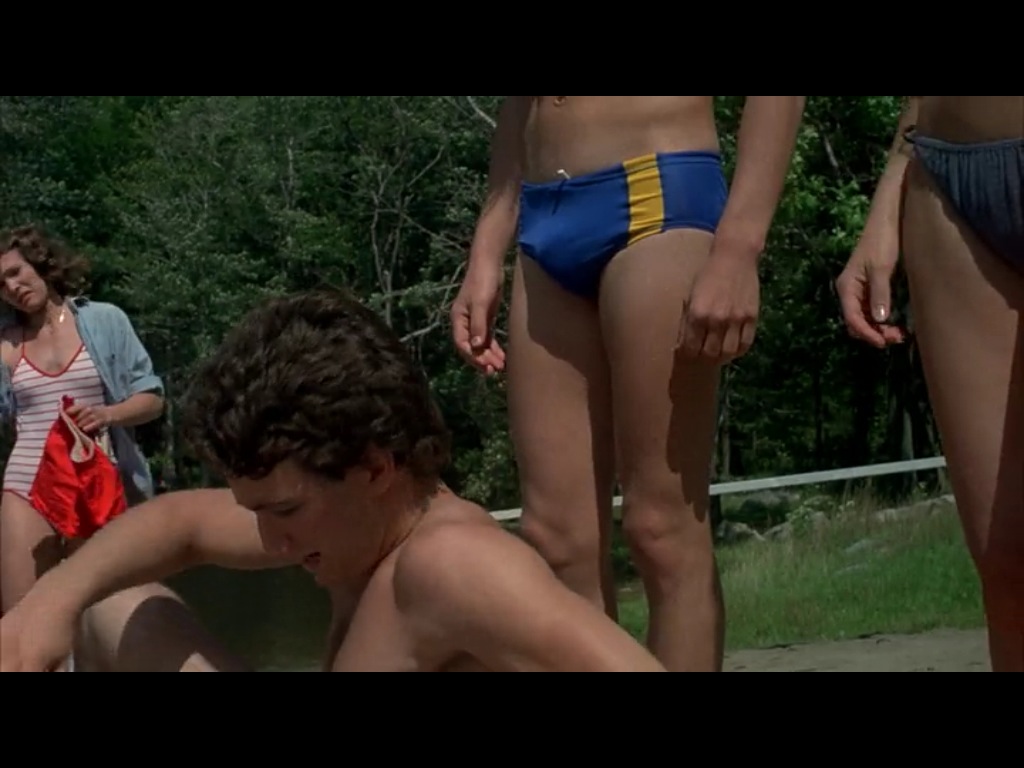
The franchise made its money on a very specific formula. It delivered a spectacular body count, usually preceded by the punishment of sexually active teenagers. Marcus knew exactly who was buying tickets in 1993, and he actively chose to make them squirm.
During our conversation, he did not mince words about the demographic he was playing with:
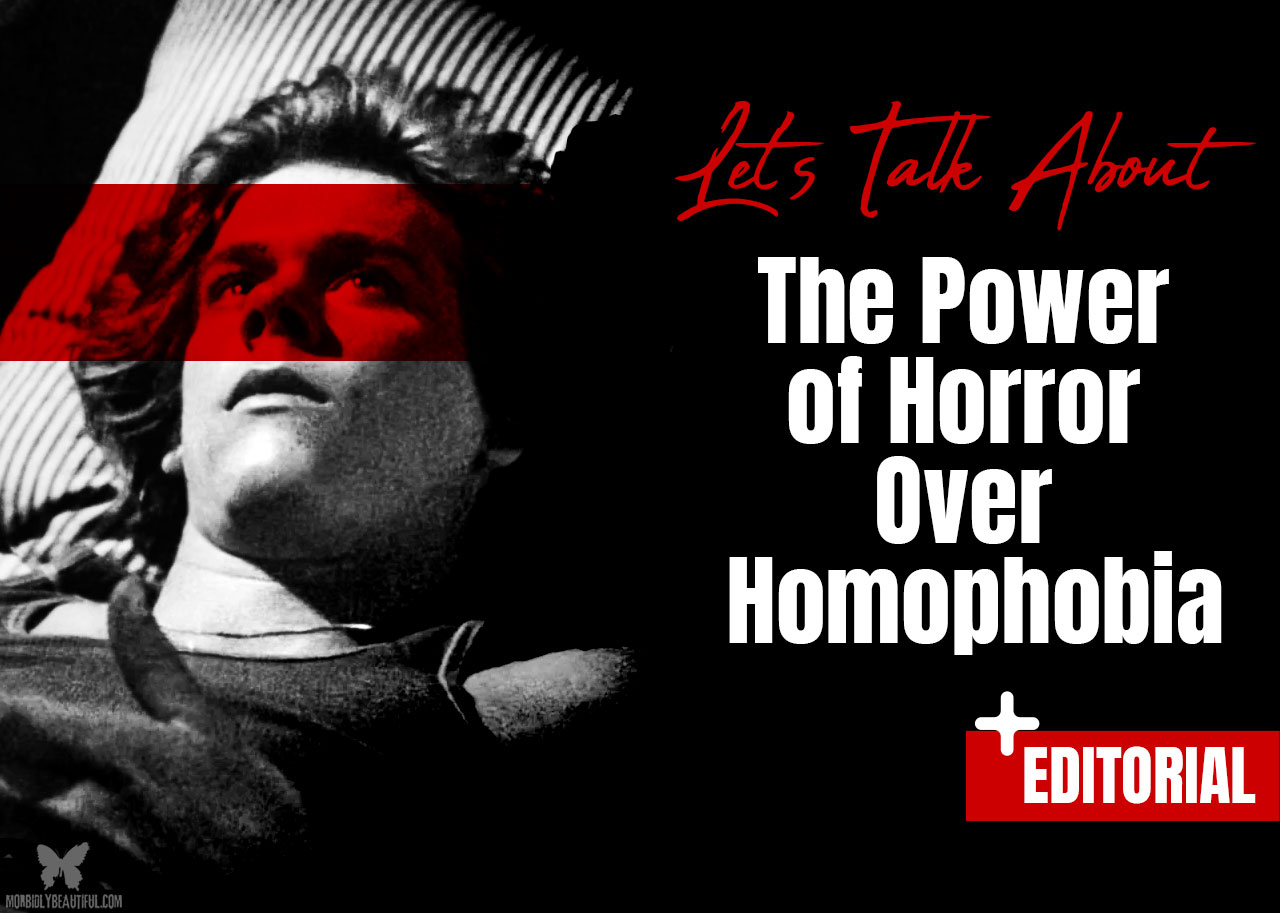
“The culture around Friday the 13th has always been this bro-dude, tit-loving bandwagon. That’s who they are. But I remember thinking, like, I remember so many of my female friends would talk about Kevin Bacon in the first movie, and like, why hasn’t there been another ass scene like that? I also find it extraordinary that the number of people who would get excited by those movies because of same-sex feelings.”
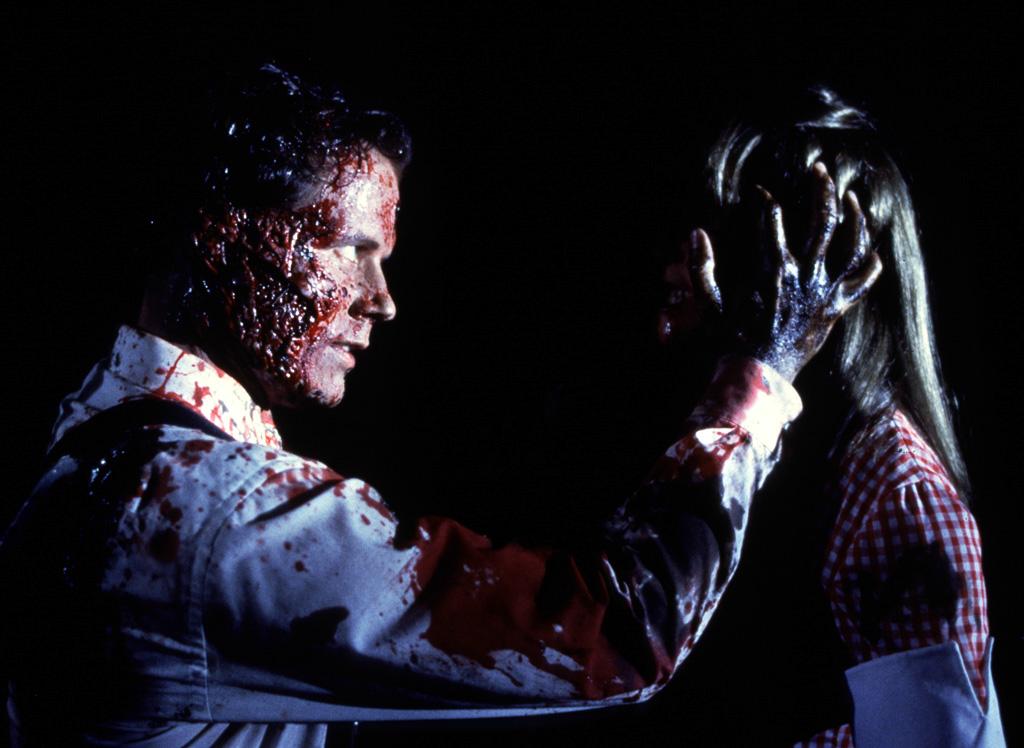
Instead of just hacking up camp counselors, Jason Goes to Hell introduces a body-hopping entity that strips its victims of their autonomy.
He subverted the hypermasculine expectations of the audience by giving us profoundly uncomfortable, intimately queer-coded sequences. Fans who were perfectly comfortable watching teenagers get slaughtered were suddenly outraged by a scene where a possessed man intimately straps down and shaves another man.
The subtext was loud, and the traditional fan base rebelled because they were forced to confront something they could not easily fit into their rigid, heteronormative boxes.
Fast forward to 2017, and Marcus directs Secret Santa.
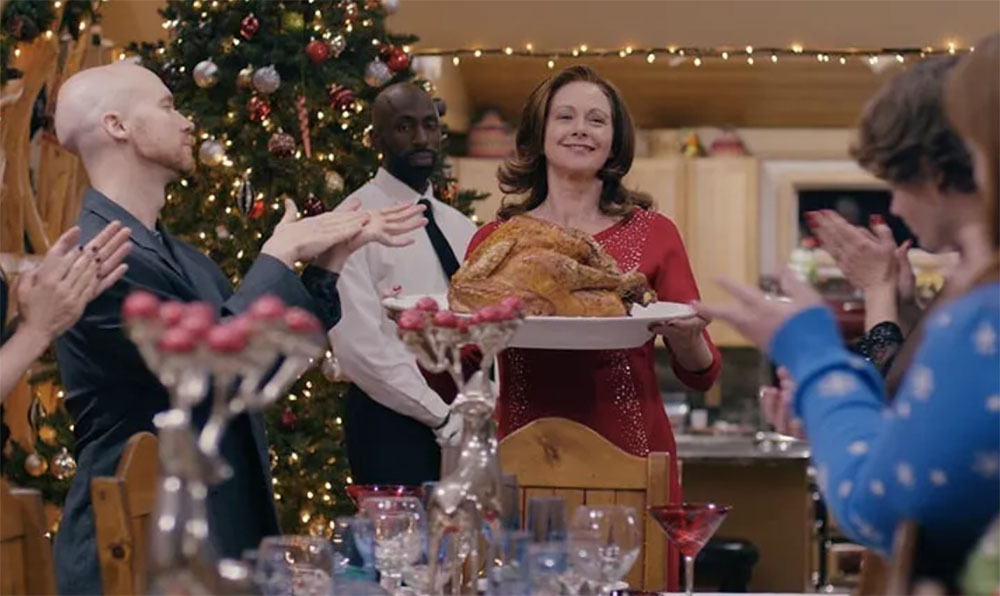
This time, the subtext is completely abandoned. The text is the text.
The film is a masterclass in tension, focusing on a deeply toxic, morally rotted family gathering that eventually explodes into supernatural violence. But before a single drop of blood is spilled, the real horror is the psychological warfare of the family unit.
Amidst the bile and the bigotry of the matriarch (Debra Sullivan, whose performance made Joan Crawford look like Florence Henderson), a character named Kyle (comedian Drew Lynch), who is marginalized and belittled by his own blood, unapologetically comes out as gay.
It is an incredibly powerful moment of defiance.
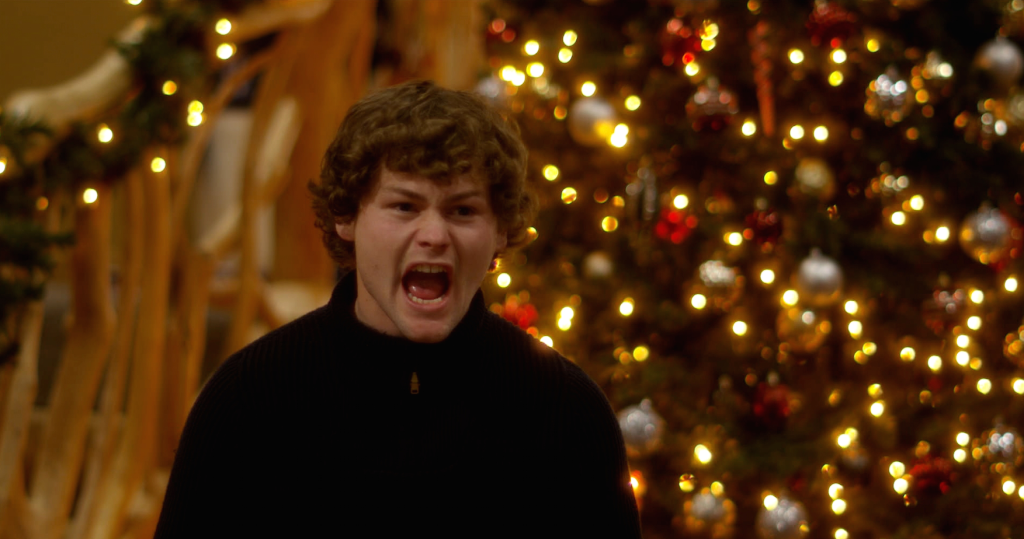
When discussing the impact of that specific scene, Marcus shared a detail that genuinely moved me:
“Do you know that in every country, because the movie did very well in the festival circuit, and in every country we played in, no matter what language we were experiencing, every single screening of that movie, no matter where it played, there was an applause break after that moment. Every audience applauded.”
That applause is the sound of a community recognizing its own evolution.
It is a far cry from the casting-couch slurs in The Phantom of the Paradise. Hearing a veteran director talk about intentionally dismantling the slasher bro mentality to create space for everyone else was a profound moment of clarity. It forced me to look at the genre not just as a vehicle for gore, but as a mirror reflecting who we actually are.
And for a long time, the reflection I saw of myself in that mirror was not something I was particularly proud of.
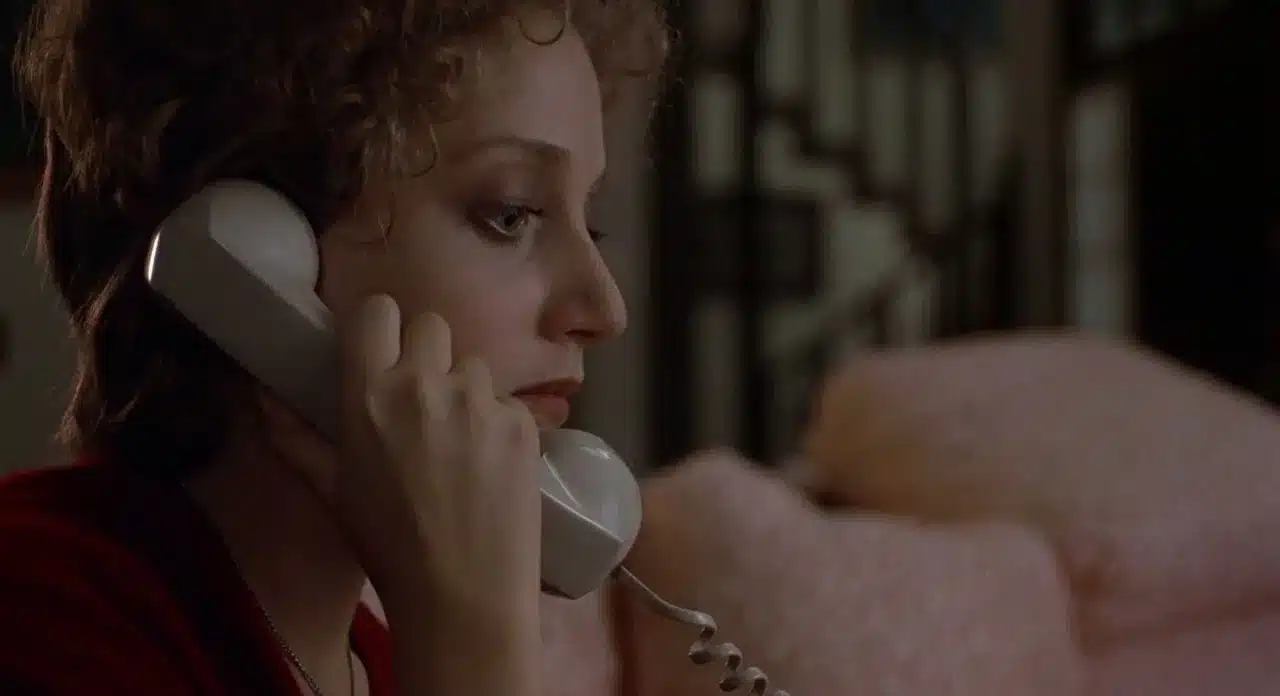
Listening to a veteran director talk about intentionally subverting the genre to empower the marginalized forces a rather uncomfortable moment of self-reflection.
It is easy to point fingers at the historical gatekeeping of the horror community. It is significantly harder to admit when you were the one standing guard at the gate.
Armed with a B.S. in Psychology, I am academically aware of how incredibly difficult it is to dismantle an ingrained belief system. We build psychological schemas to make sense of the world, and when reality challenges those structures, our brains fight back to protect the status quo. For a long time, my brain fought fiercely to protect a worldview steeped in strict religious dogma that I no longer hold today.
The wake-up call came from the most intimate place possible.
The very foundation of my pop culture fandom was built alongside my childhood best friend. He is the guy who handed me my first terrifying movies and introduced me to my favorite comic book characters. Years later, after we had reconnected on Facebook, I went on a spectacularly ignorant, homophobic rant online.
I felt completely justified in my own mind by my old religious beliefs. My friend publicly called me out. It was in that deeply humiliating moment that I realized he had actually come out as gay, a fact I had completely and totally missed. The person who gave me my pop culture soul was part of the community I was actively attacking.
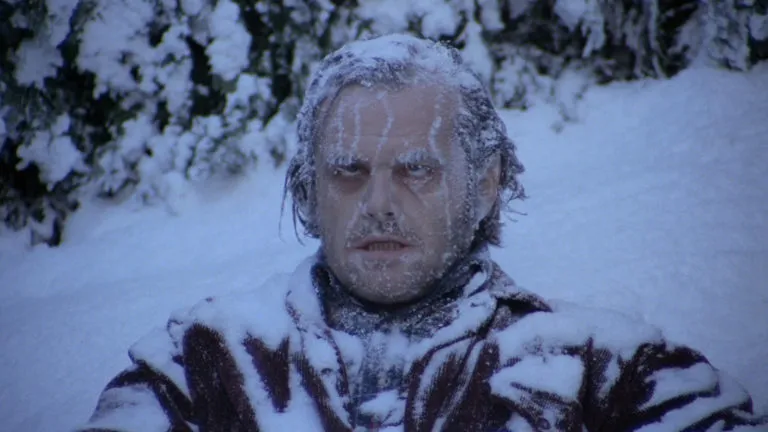
In my daily work at serving as a Case Manager Supervisor and Senior Director of Service Delivery and Compliance for a child welfare system provider in the Midwest, I frequently assist gay and trans children who are trapped in horrifying situations of abuse and neglect. I was advocating for their safety and survival by day while clinging to a belief system that marginalized them by night.
The hypocrisy was deafening.
If you want to see exactly what that messy, uncomfortable transition looked like in real time, you only need to read my 2022 review of Shudder’s Queer for Fear documentary right here on Morbidly Beautiful.
That article is a time capsule of a man struggling to reconcile his past with a world that had rightfully moved on.
In that piece, I still viewed the LGBTQ+ community very much as the proverbial “other side.” I was skeptical. I openly questioned whether the documentarians were trying a little too hard to see the pink in the black-and-white. I was not embracing the culture; I was merely trying to figure out how to reluctantly coexist with it.
I was owning my discomfort, but I was still keeping the subject safely at arm’s length.
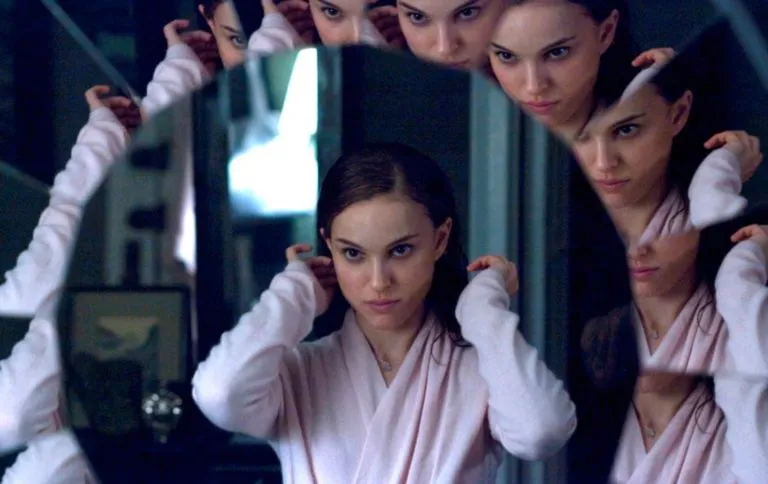
Contrast that 2022 skepticism with my 2023 review of the indie slasher Deadly Dealings, directed by Adam Freeman and featuring fantastic work from Ronnie Khalil and Roni Jonah.
In that article, the hesitation is entirely gone. I fully embraced the unapologetic, queer-coded, Technicolor aesthetic of indie horror. I championed the creatives not as an exotic demographic to be tolerated, but as essential voices delivering exactly the kind of subversive art the genre desperately needs.
I am evolving. I am stumbling, learning, and growing right alongside the rest of the horror community.
And much like the genre itself, my own redemption arc required me to finally drag my monsters out of the shadows and look at them until they lost their power.
It is fitting that horror is the genre leading this particular charge.
Horror has always been the island of misfit toys. It is the place where the outcasts, the freaks, and the weirdos go to find communion in the dark. For decades, the stories we told were deeply subversive. We simply forced the marginalized to hide in the subtext, burying their survival stories under layers of metaphor and plausible deniability.
We do not have to do that anymore. The horror community is finally starting to reflect the actual diversity of the stories it has been telling all along.
If you want proof of how far we have come, you only need to look at the caliber of films currently hitting our screens.
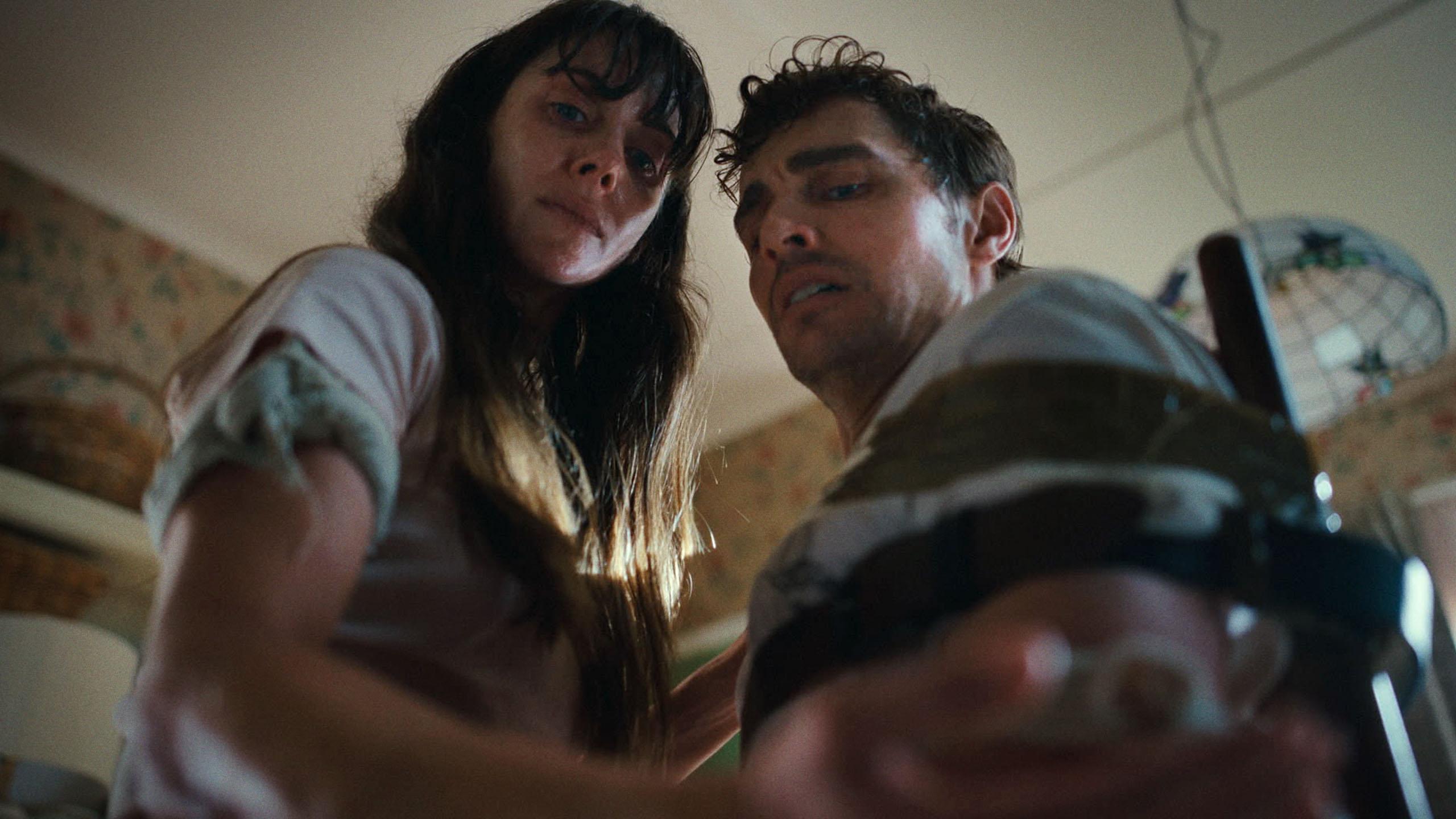
Take the recent film Together. If you have not seen it, you need to correct that oversight immediately. It masterfully crafts an amusing, terrifying, and intensely complex take on human sexuality and gender identity. The ending alone secures its place as one of the best original horror movies we have been gifted in decades.
It does not hide its themes behind a mask. It puts the messy, complicated human experience right at the forefront and dares you to look away.
That is the ultimate power of horror over homophobia. Bigotry thrives in ignorance, isolation, and silence. Horror is loud, messy, and unapologetic.
It takes our darkest, most uncomfortable prejudices, drags them out of the shadows, and forces us to stare at them until they lose their power entirely.
This Pride Month, let us celebrate the fact that the call is no longer just coming from inside the house. The doors have been kicked wide open, the lights are finally on, and the blood looks better than ever in full spectrum color.

She’s a lover, he’s a fighter. Together, they’re CHEER AND LOATHING. Tune in to hear your hosts, Stephanie (Cheer) and Casey (Loathing), clash over the films they love — and the ones they love to hate.
In this holiday extravaganza episode of Guilty Pleasures, join hosts Stephanie, Kelly, and our newest addition, Jonathan (Jack was tied up in tinsel and couldn't join us), as they unwrap the bizarre and unhinged world of holiday cinema. They dive into the depths of Elves, a film that's as chaotic as it is entertaining. It's a sleigh full of questionable decisions, diabolical dialogue, absurd plot twists, wildly offensive antics, and unhinged holiday mischief.
And that's not all! In the second half of the podcast, join your festive cinephile friends for a look at four more ”nutty as a fruitcake” holiday treats: A New York Christmas Wedding, Elf Bowling, A Medea Christmas, and Jack Frost. Plus, we each offer a bonus Christmas flick guaranteed to make you say, ”Ho, Ho, HO-LY Hell!”
Expect laughter, disbelief, and a spirited debate about what truly makes a movie a guilty pleasure. Don't miss this festive journey through the weirdest corners of holiday films!

Follow Us!