

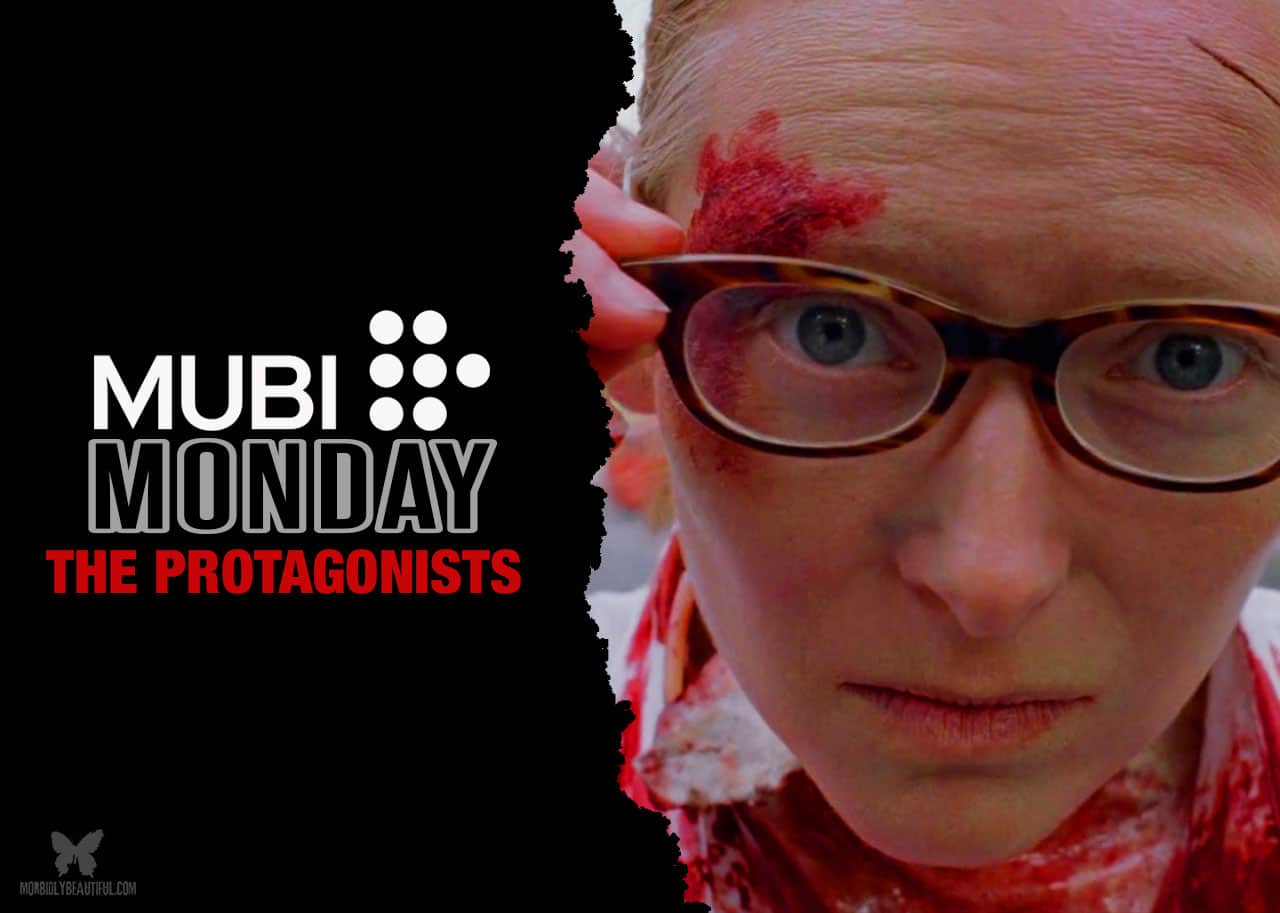
Luca Guadagnino’s “The Protagonists” is a surreal look at senseless violence, true crime obsession, and the blurring of fact and fiction.
No time to read? Click the button below to listen to this post.
ABOUT THIS COLUMN
In this new weekly column, I’ll be sharing some of the standout films on the Mubi platform, offering a deep dive into thoughtful, carefully curated cinema crafted for cinephiles and serious film lovers who crave something different.
Luca Guadagnino has become synonymous with sensual and provocative cinema—whether it’s the sun-drenched longing of Call Me By Your Name, the operatic bloodletting of Suspiria, or the feral hunger of Bones and All. In 2024, he delivered not one but two critically lauded tour-de-forces, dazzling with the steamy seduction of Challengers and the haunting longing of Queer, Guadagnino’s adaptation of William S. Burroughs’ most spectral text.
But long before those films cemented his reputation as a master stylist, Guadagnino made his feature debut with The Protagonists, a film as divisive as it is obscure.
Once nearly impossible to find, it’s now surfaced on MUBI, offering curious cinephiles a rare chance to experience the messy, provocative, and unapologetically strange first effort of a director who would go on to become one of the most intriguing filmmakers of his generation.
The film’s premise alone is tantalizing, based on a chilling real-life crime.
In 1994, two upper-class British teenagers, Jamie Petrolini and Richard Elsey, embarked on a bizarre, senseless mission: to kill a random stranger. They framed it as some kind of clandestine SAS operation, though in truth, it was a meaningless burst of violence—two bored young men playing at psychopathy. Their victim, Egyptian chef Mohamed El-Sayed, was chosen because he happened to be in the wrong place at the wrong time.
Guadagnino seizes on this horrifying act of random violence, but rather than reconstructing the crime in any conventional sense, he filters it through layers of artifice.
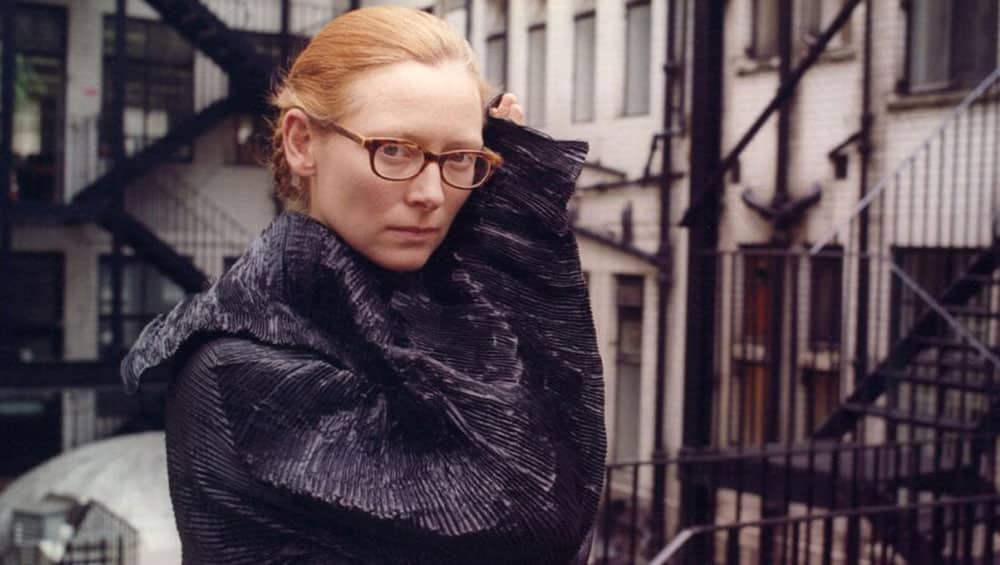
Tilda Swinton and Fabrizia Sacchi play fictionalized versions of themselves—an Italian film crew arriving in London to make a documentary about the case. They retrace the killers’ footsteps, interview those left behind, and gradually blur the lines between fact, fiction, and performance.
Even the killers’ names are changed (they become Happy and Billy), while the victim’s name remains hauntingly real: Mohamed El-Sayed.
This hybrid approach—part cinéma-vérité, part fictional reconstruction, part Lynchian tone poem—makes The Protagonists an inherently disorienting experience.
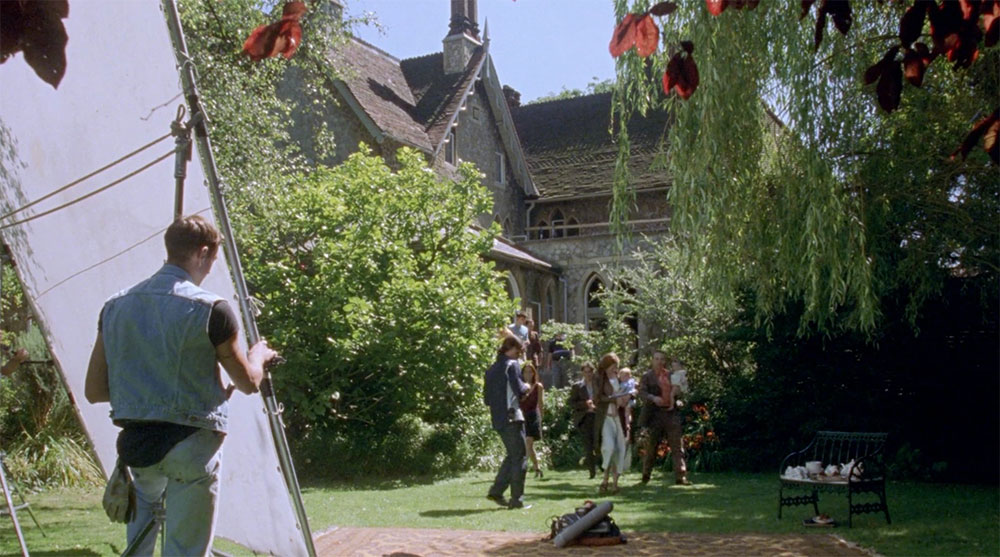
Guadagnino’s background as a documentary filmmaker prior to this feature debut bleeds into every frame, lending a sense of queasy realism to even the most stylized sequences.
Grainy miniDV footage captures El-Sayed’s widow, her grief painfully raw, raising ethical questions the filmmakers themselves openly ponder. Should this moment—so real, so unvarnished—be presented in lo-fi textures, while the fictional sequences receive the polished, painterly treatment? It’s an ethical minefield the film walks without clear answers, and the discomfort is entirely intentional.
It’s also the first of five collaborations between Guadagnino and Swinton, a creative partnership that has since become the stuff of cinema legend.
Even here, in this raw, experimental debut, her presence is magnetic—simultaneously warm and alien, intellectual and instinctual. She doesn’t just guide us through the film’s narrative; she philosophizes, questions, and muses aloud about the very nature of true crime obsession.
One of the film’s sharpest moments comes when Swinton reflects on why we’re so fixated on killers’ personal details—their favorite foods, their music tastes, their childhood pets. Is it because we want them to be monstrous, nothing like us? Or because we fear they’re exactly like us, and understanding their banal humanity is the only comfort we can cling to?
That question—what separates a killer from the rest of us—haunts every frame of The Protagonists.
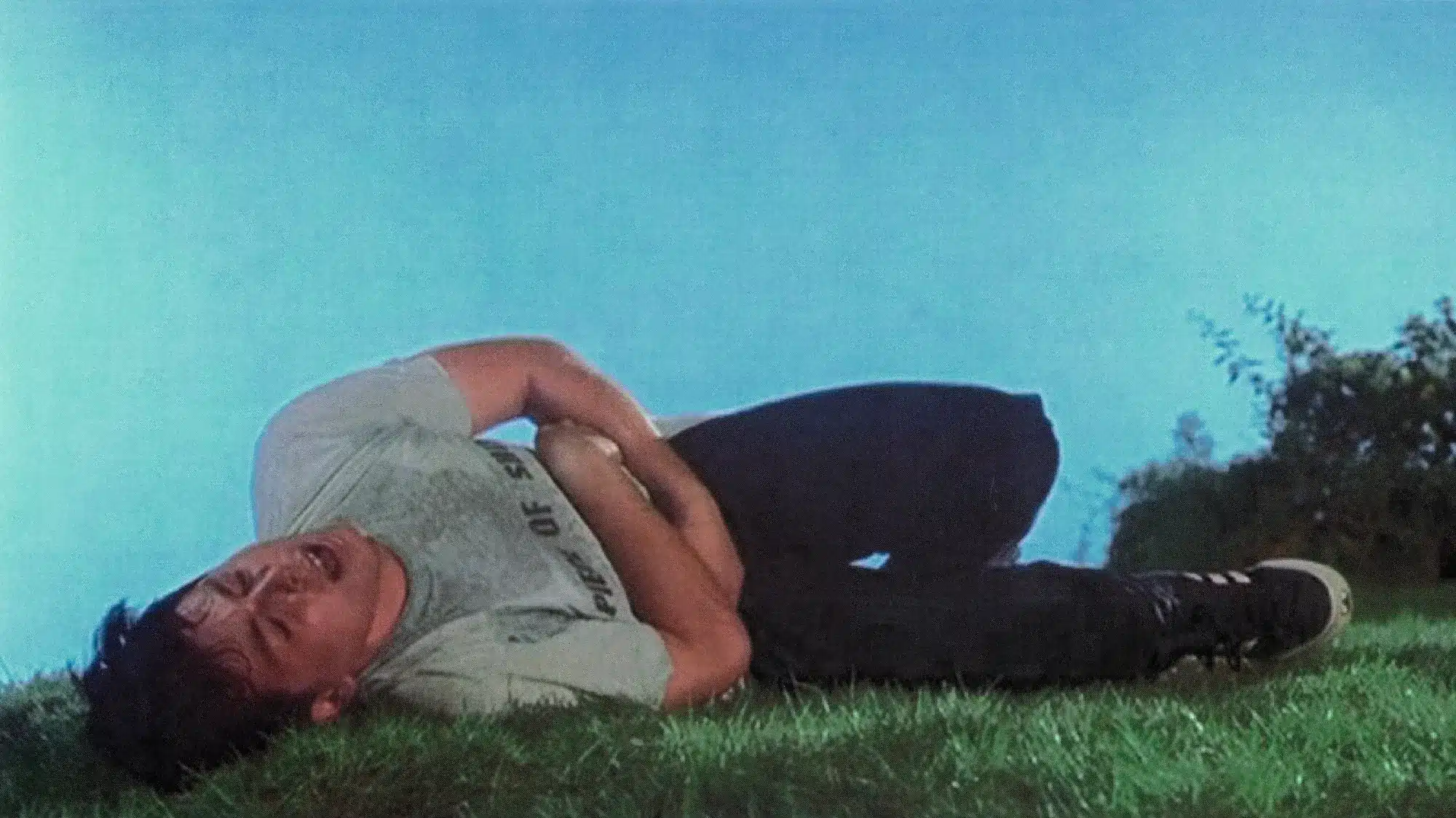
It’s not a whodunit or a why-did-they-do-it; it’s a meditation on the total lack of meaning behind this crime.
There was no passion, no vendetta, no personal connection; it was violence for its own sake. Critics at the time derided the film for “revealing nothing” about the killers or the crime, but that’s exactly the point. There is nothing to reveal. It was senseless, pointless, and terrifyingly ordinary in its cruelty.
This is not a story of extraordinary evil; it’s about two kids with knives and too much time on their hands. And that banality is the true horror.
Unsurprisingly, The Protagonists baffled critics and alienated audiences when it premiered at Venice in 1999. Many found it self-indulgent, exploitative, or simply incoherent. Even Guadagnino himself has since downplayed the film, dismissing it as “that crazy film” when accepting his Silver Lion decades later. It’s not hard to see why.
The film constantly shape-shifts—at times a forensic crime reconstruction, at times an essay film about filmmaking ethics, at times a fever dream. Some sequences stray so far into the absurd that they flirt (perhaps unintentionally) with comedy. It’s a tonal rollercoaster that refuses to offer the comfort of coherence.
Yet for all its rough edges, The Protagonists already hints at the filmmaker Guadagnino would become.
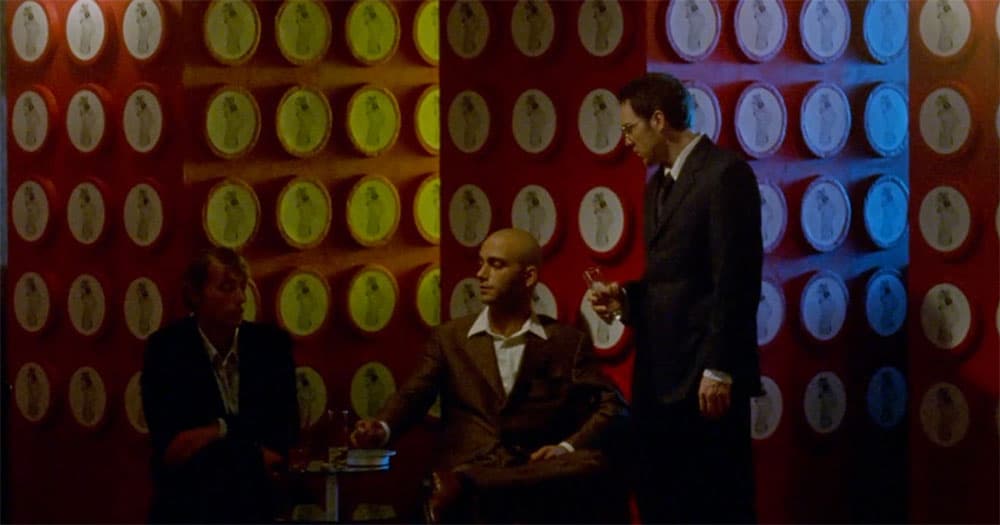
His visual flair is undeniable, with arresting compositions and audacious edits that keep you perpetually off-balance.
The soundtrack, too, is sumptuous, including two haunting tracks performed by Swinton herself. There’s already a fascination with bodies, textures, and surfaces that would later bloom into the lush sensuality of A Bigger Splash and Call Me By Your Name. And there’s the deep, gnawing awareness that beauty and violence often share the same space.
What ultimately elevates The Protagonists beyond mere experimentation is its commentary on the very nature of true crime storytelling.
Long before podcasts like Serial or docuseries like Making a Murderer made armchair sleuthing a cultural obsession, Guadagnino was already asking hard questions. Why do we obsess over these stories? What are we hoping to learn—or exorcise—from the process? Are we seeking justice, or are we feeding a darker, voyeuristic impulse?
By turning the camera back on the filmmakers themselves, The Protagonists implicates everyone, including us.
Your enjoyment of The Protagonists will depend entirely on your tolerance for ambiguity, formal experimentation, and aggressive discomfort.
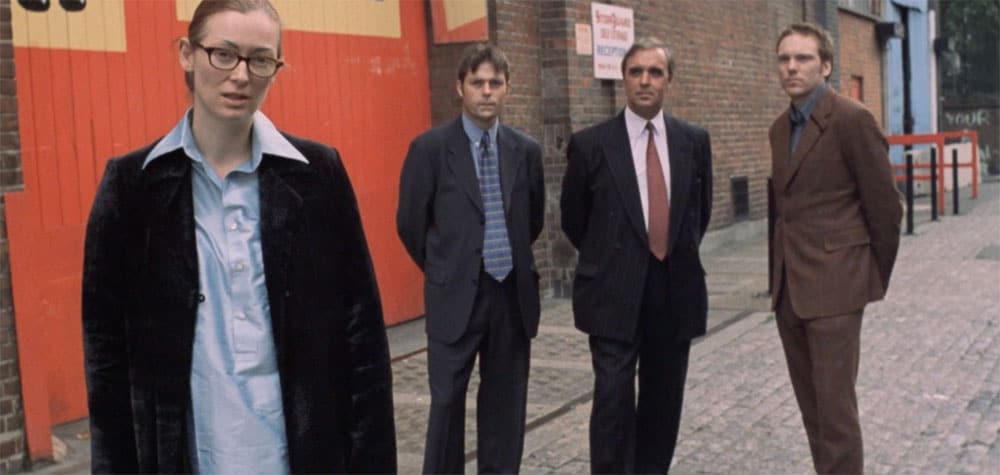
It’s the kind of film that could earn scathing criticism or offusive praise, depending on your mood and appetite for the avant-garde.
It’s messy, alienating, and occasionally brilliant. Parts are genuinely haunting, others deeply frustrating, and a few unintentionally hilarious. But it’s never boring—and that alone makes it worth your time.
Now that The Protagonists is finally accessible, it deserves reappraisal—not as a lost masterpiece, but as a fascinating artifact from a young artist already grappling with the questions that would define his career.
It’s a true-crime documentary, a metafictional essay, an art-film fever dream, and a deeply uncomfortable ethical provocation—all at once. And at its center, radiant and infallible, is Tilda Swinton, already Guadagnino’s muse, already operating on a plane somewhere between Earth and the cosmos.
For fans of Lynchian weirdness, experimental cinema, and the messy intersections of beauty and brutality, The Protagonists is essential viewing. For everyone else? Consider this your warning.







Follow Us!