

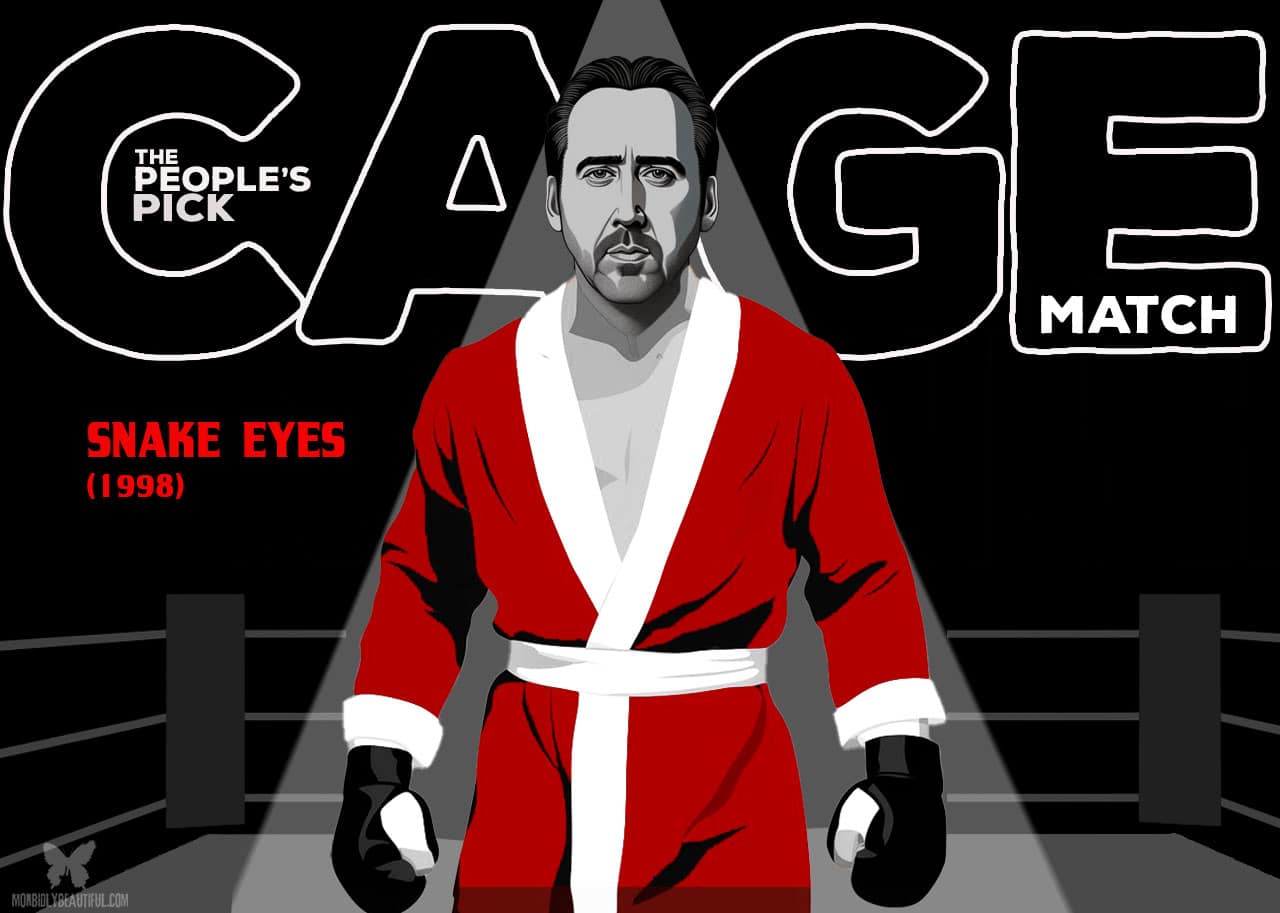
Brian De Palma’s “Snake Eyes” was dismissed upon release despite striking visuals and assured direction; is it ripe for a reappraisal?
No time to read? Click the button below to listen to this post.
This week’s Cage Match (as chosen by the random number generator from Cage’s entire filmography) was the chilling, still haunting 1999 thriller 8MM. For the People’s Pick, we put two other films where Cage plays a detective up for a vote: Bad Lieutenant: Port of Call New Orleans (2009) and Brian De Palma’s 1998 thriller Snake Eyes (1988). Snake Eyes won that match.
This divisive film received mixed reviews upon release and continues to inspire differing opinions, which you’re about to witness in this Cage Match!
IN THIS CORNER: KELLY MINTZER
The Lowdown

Approximately ten minutes into Snake Eyes, the relatively absurd 1998 Nicolas Cage/Brian DePalma collaboration, I messaged Steph, my intrepid partner in this fool’s errand, and said that I suspected DePalma negotiated Cage into accepting his full payment in cocaine. I did not change that assessment by the end of the film if that gives you any indication of what we’re working with.
DePalma and Cage are both artists who are given to excess, and neither is exercising much restraint here.
It’s big and bombastic and often quite silly; Nic Cage comes in huge, stays huge, and reins it in a TINY bit at the end. This is thrown into stark relief against Sinise’s much more naturalistic acting style, but that isn’t entirely a negative. I can’t call it a good performance—it’s way too cartoony and bonkers—but goddamn it’s watchable!
And then there’s the DePalma of it all.
Snake Eyes employs his signature split screen style, and credit where it’s due, he always knows how best to deploy that technique. And say what you will about him, DePalma’s always been a pretty impressive stylist.
The movie is all empty calories, but it’s a pretty cake. Even though afterward you might think, “Whoof, I wish I had eaten an apple instead,” while you’re plowing through that thick slice of red velvet, you’re pretty happy your mouth is full of cream cheese frosting… if you’ll forgive the extended and mediocre metaphor (truth be told, even if you won’t.)
Where Snake Eyes lost me a smidge was with the pacing. Boy, that movie started to feel long. It lags more than a bit in the middle, and no amount of kinetic Cage or DePalma flair can save it from that. It is simply to be endured.
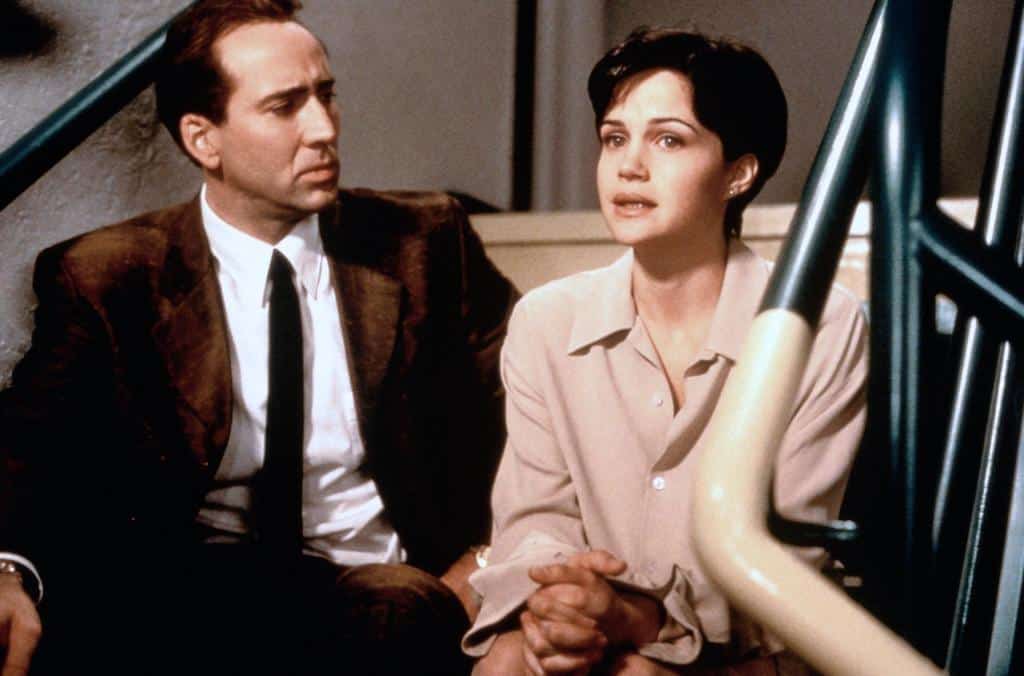
But hey, there’s also Carla Gugino, perhaps one of our most under-appreciated actresses, getting to play a part that’s more than a romantic interest, and that’s not nothing.
The Cage Factor:
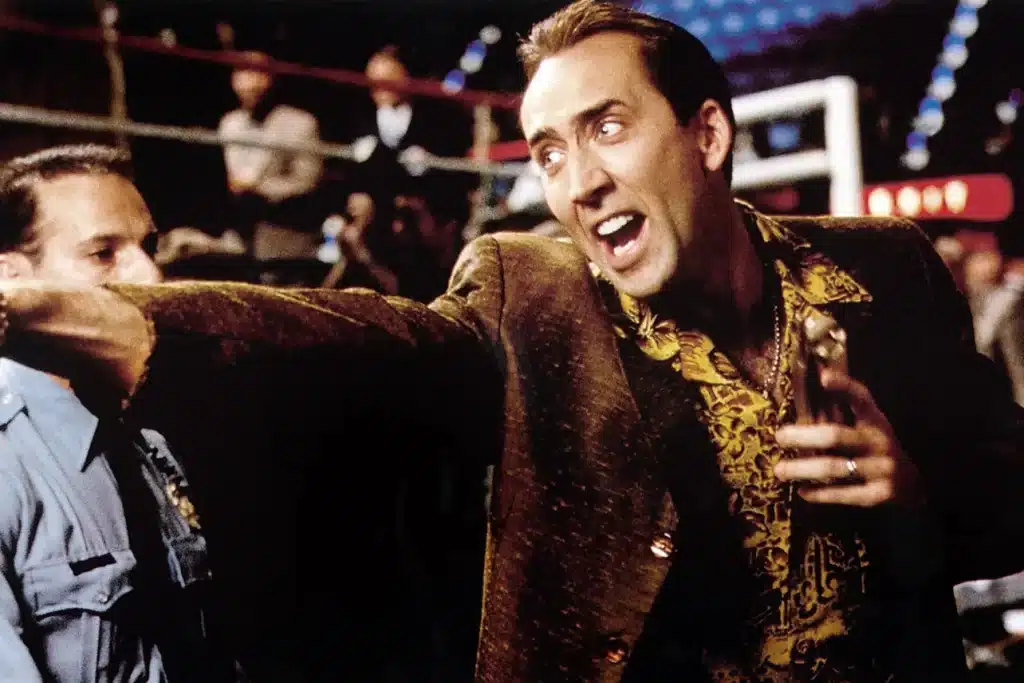
This is the quintessential Cautious Cage. It’s nowhere near a rat, and it’s nowhere near essential. But it’s just over an hour and a half, and Nic Cage is all over the place, which is pretty fun to watch! So why not? It’s free on Prime.
AND IN THIS CORNER: STEPHANIE MALONE
The Lowdown
At the time of its release, Snake Eyes received mixed to negative reviews, with critics praising De Palma’s direction but criticizing the script and the ending. Some saw it as a stylish but flawed thriller, while others dismissed it as a disappointment. Over time, however, some critics have come to appreciate its technical merits more, especially De Palma’s use of long takes and the elaborate staging of sequences.
The film is now regarded by some—myself included—as a hidden gem, largely due to its visual flair and Cage’s energetic performance, though it hasn’t universally aged into classic status. A case can be made (I’m about to make it) that it deserves more praise for its bold, albeit flawed, execution.
De Palma’s trademark direction is one of the film’s major strengths. The elaborate opening scene, a nearly 12-minute continuous tracking shot (that’s not entirely true; there are a few hidden edits, but it’s still wildly impressive), is particularly lauded for its complexity and ambition. De Palma’s flair for suspense and visual storytelling is evident throughout the film.
Though objectively flawed, the film excels in its visual set pieces, particularly the opening boxing match assassination and unraveling the mystery through different perspectives. These moments, along with De Palma’s kinetic style, make Snake Eyes stand out in his filmography.
The original ending, which was scrapped after test screenings, involved a massive flood that would have served as a kind of moral cleansing for Santoro, washing away the corruption both literally and figuratively. This darker, more symbolic conclusion would have made the film much more impactful and aligned with De Palma’s noirish sensibilities.
I personally choose to consider the original ending cannon, which gives Snake Eyes more weight and thematic coherence.
Without bonehead test screeners and unnecessary studio interference, I truly believe Snake Eyes would be a far more respected entry in De Palma’s impressive oeuvre.
The Cage Factor:
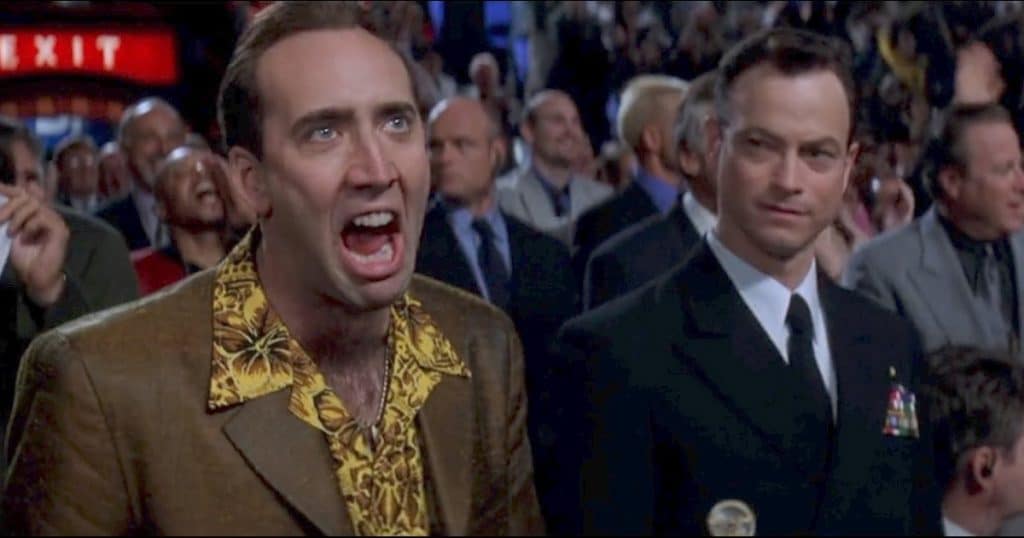
Cage’s performance is undoubtedly one of the film’s highlights. I will not accept counter-arguments here.
His portrayal of Rick Santoro is over-the-top, bringing a frenetic energy to the role that aligns well with the chaos of the plot. He oscillates between bombastic and vulnerable, embodying a man whose moral compromises are laid bare as the conspiracy unfolds.
Critics have noted that Cage’s performance both elevates and detracts from the film. On one hand, his larger-than-life approach fits De Palma’s hyper-stylized direction, making Santoro a magnetic character. On the other hand, some argue that his performance can be so outsized that it borders on distracting, pulling attention away from the narrative’s tension. That’s a reasonable criticism, but this Cage fan will gladly go to the mat for her man in this fight.
It may not be his best work, but it encapsulates what makes Cage a unique actor—his willingness to take risks and commit fully to roles, even in a flawed movie.












Follow Us!