

“Compliance” is a dramatization of a horrific true story, exploring a violation of human rights and the exploitation of vulnerable workers.

No time to read? Click the button below to listen to this post.
In these uncertain times, with shifting work environments, climate changes in the workplace, virtual opportunities, and an expanding market for online education, we cling to our livelihoods with white knuckles for fear of the tax man. Exactly, though, how far would you go to make sure the job stayed yours? What would you do for your boss? What would you give up?
I’m not speaking of common indignities like working overtime, taking extra shifts, working over the holidays, and sacrificing personal time to meet a deadline. I’m talking about much bigger sacrifices. For example, would you debase yourself and sacrifice your basic rights to keep a minimum-wage job if you were confronted with a terminable accusation?
Based on a chilling true story, Compliance was produced on a budget under a million dollars. Making this film likely cost much less than the settlement costs of the real trial for a heinous lapse in judgment that led to significant human rights violations.
It’s a regular, rushing Friday at ChickWich, another greasy spoon serving up fried goods. Manager Sandra (Ann Dowd) is dealing with $1,500 in lost product from an open freezer door and is getting talked down to by her delivery driver. Arriving to work, unaware of the foul mood, is young Becky (Dreama Walker), a little late, much to her manager’s distaste. Preparing for a rush on one of their busier days, the team will be short a member and short on ingredients, as well as told to be on the lookout for a potential “secret shopper” on Sandra’s word.
Everyone is to be “all smiles” at work today; the team must be out to impress.
The shift is as busy as anything, and Sandra sees coworkers chatting and feels the managerial void between her and those below her and younger than her. Trying to get in on gossip about romance and playing up her own relationship, you can’t help but feel a little for the old girl trying to relate to those she works with but has a noticeable power imbalance with. Likely embarrassed and irritated hearing the girls joke about her attempts to socialize, Sandra laments the state of her employees, micromanaging and making herself more of a joke to them.
Interrupting the mess is a troubling phone call from a police officer investigating a crime at the restaurant.

The officer claims he knows the manager above Sandra. However, he’s not calling about lost product or anything Sandra has done. Instead, he gives a vague description that could fit Becky at the counter. He claims he has someone who insists Becky stole from them and has a “surveillance unit” that can confirm otherwise blurry details, letting Sandra fill in the blanks on her own.
Supposedly, this is all part of a “bigger investigation,” and Sandra needs to help the police and the company.
Seizing Becky from the counter, it doesn’t take long for cell phones to be taken, clothes to be examined, and purses to be searched. As Becky gets more upset and adamant, Sandra gets hard-nosed and threatens to fire Becky; she is completely convinced by the officer on the phone that Becky’s pleas mean nothing. The demands escalate, asking that Becky be detained and implying he would know more about Becky than the woman who’s worked with her for who knows how long.
Sandra is more interested in making the officer happy than saying, “No, come here and talk to me and my employees; I’d like evidence.”
Handing the phone to Becky, the officer pulls the hysterical woman’s card and asks her to calm down. For now, it looks like Becky is under the control of authority figures who are being directed by a faceless voice demanding the dehumanization of a young woman.
Based on a True Story
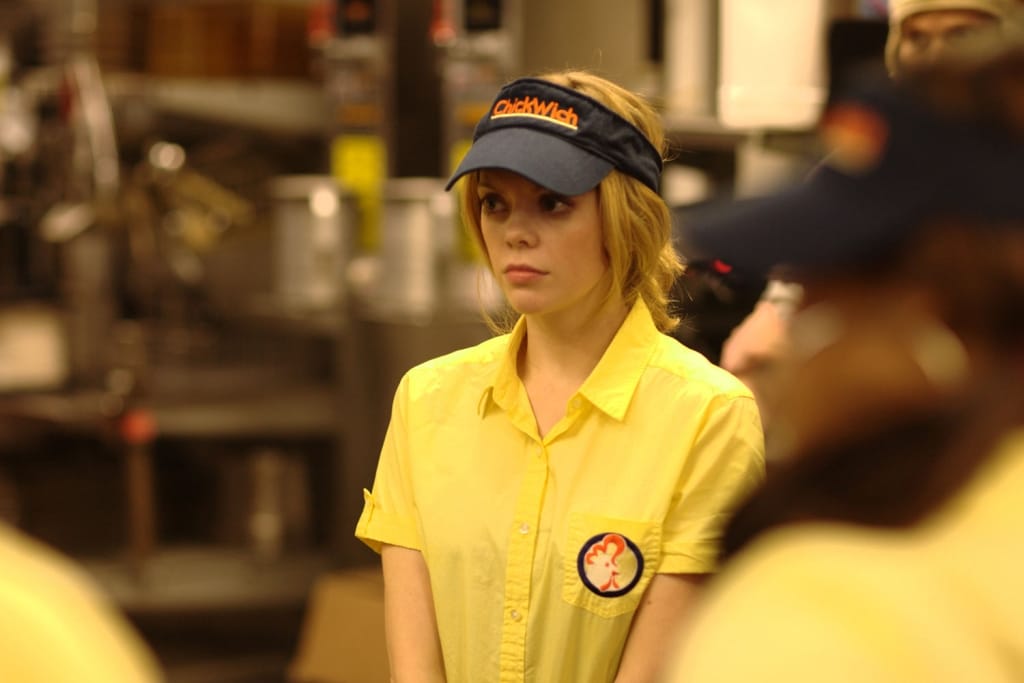
This could all seem too outlandish to be true. Sadly, it is true.
Compliance is based on a true story of impersonating officers, mismanagement of power, abuse of workers and human rights, and a suspect who got off the hook. Despite the gravity of the events depicted onscreen, the film is said to be far less heinous than the true crimes that inspired it, making it all the more stomach-turning.
There was even some commotion when the film debuted regarding the nudity involved. Yet, the director stuck to his guns, saying he felt the step necessary, illustrating the full ordeal and the insanity of stripping a person over a phone call.
The year was 2004, and a real-life horror story was about to unfold in a Kentucky McDonalds (1). After receiving a call from an individual pretending to be a police officer, a manager and her fiancé detained an employee, stripped them, and sexually assaulted them on command from someone who was believed to be an officer. The problem here is everything this person said was a lie, a scam that had been running for who knows how many years before this event would break the scandal wide open.
David Richard Stewart is believed to be responsible for the hoax (2). Calling in as either a company higher-up or a law enforcement officer, he could dupe countless managers into detaining and usually humiliating their employees through direction.
2004’s case would bring about a massive lawsuit, charging Stewart, the establishment manager, and her fiancé separately.
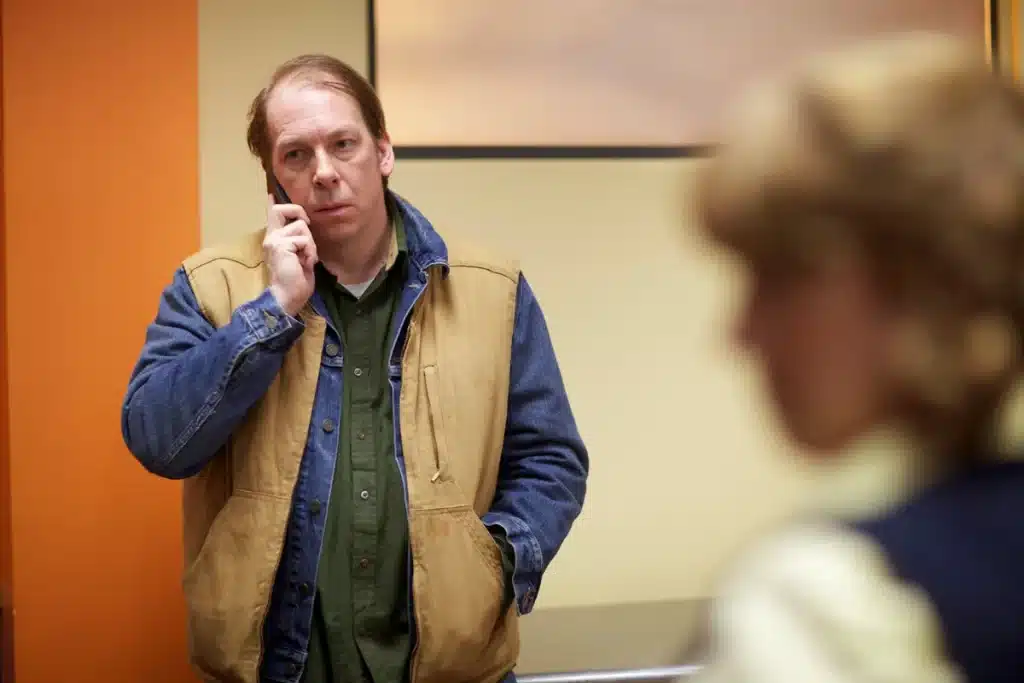
While the victim did receive compensatory and punitive damages during the trial, after an appeal, everything was settled for an undisclosed amount (1).
Though, it doesn’t seem that justice was served. The restaurant’s manager received only a year’s probation for the atrocious things they did, agreed to do, and instructed others to do. Her fiancé (who seemed to execute most of the monstrous deeds) received a harsher sentence but still only five years of jail time for unlawful imprisonment, sexual abuse, and misconduct (1).
Saddest of all, the man at the head of this, Stewart, walked away acquitted. With little evidence to tie him to the incidents and the nature of the crime, it was hard to pin Stewart down beyond a reasonable doubt. It is a peculiar “coincidence” that after Stewart’s arrest and near imprisonment, the phone calls suddenly stopped.
It seems almost certain this man was a despicable con artist, abuser, and master manipulator. Thankfully, despite justice being skewed, it seems there were no new victims after these shocking developments. It seems the fear of getting caught again finally brought an end to Stewart’s cruel and sadistic games.
Workers’ Rights

Sadly, many of us have had a brush with some form of workers’ rights violations at some prior, less-than-amazing place of employment.
With workplace discrimination at the top of offenses perpetrated in Compliance, it seems targeting an attractive young woman is not an uncommon example of real-life rights violations. Becky was singled out as an easy target, a victim due to her easy-to-fabricate description (a young, blonde female).
However, the real victimization came from the jealous fury of a woman with too much power and too little understanding, all too willing to torment an employee too vulnerable to defend herself. Sandra saw Becky as less than, both in terms of the power dynamic between a low-level employee and a store manager and as a less-than-human worker — a cog in the machine.
This film highlights what is quickly becoming a battle in all countries about what laborers are entitled to and what protections they can be offered.
The Department of Labor has topics for workers’ rights, such as the right to fair pay, the right to take unpaid leave, rights for young workers and farm workers, and what we will focus on here: Restaurant Workers’ Rights (3). Restaurant workers have their own section on the DOL page detailing rights and protections, showing that this particular industry has unique challenges and requires state and government oversight to keep workers safe and healthy.
In countries like Greece, governmental greed and a lack of regard for workers have led to the government trying to instate a six-day workweek as a standard, which is being met with fierce resistance. Workers who already run themselves ragged five days a week for long hours are still scarcely making ends meet in this country.
The restaurant rights manual has many tools, primarily for managers, to educate them about their workers’ rights. I would highly recommend all employees read these articles, as they show who is protected on the staff by the Fair Labor Standards Act and can clarify the order of command in managers regarding complex chains and bureaucratic red tape. Sections such as “Why the Minimum Wage Deserves Your Maximum Attention” highlight the importance of fair pay and providing living wages (3).
In this scenario, we are talking about not just workers’ rights being violated but human rights.

I’ve had employers go through my bag or attempt to confiscate my personal phone. When I refused this, I had my things rifled through as a glimpse into my life beyond being an employee. Becky should have quit on the spot and reported the situation to corporate. Yet, from what she has said and all we see about the volatile labor market, she felt like she couldn’t do anything to protect herself. She felt helpless and at the complete mercy of those with power over her. Desperate to keep her job, no matter how menial, she endured the unimaginable.
The deeper Becky goes into the violations, the more she feels trapped. She becomes less human to her tormentors by the second, a stripped criminal awaiting their punishment. It’s a stark reminder of how easy it is to dehumanize people when we stop seeing them as human and start seeing them as inferior in some way.
Becky is humiliated and traumatized by the incident. Sandra understandably feels remorse once she realizes she’s been duped and manipulated. Yet, she can’t garner much sympathy. Throughout the film, she appears gullible, power-hungry, and maybe even a little bit envious of the young and vivacious Becky.
Sandra gets no slack here. From beginning to end, she shows that she has to be the one to solve the problem, be the hero, and hide the mess. Her pride led her to corruption, which resulted in the kind of horror that can never be erased or forgotten.
Sadly, Compliance represents only one of many terrible stories about mistreated workers. In a series of repeated indignities, this event was just the straw that broke this particular camel’s back.
Overall Rating (Out of 5 Butterflies): 4
SOURCES
1) The astounding true story of “Compliance.” (n.d.). EW.com. https://ew.com/article/2012/08/24/astounding-true-story-compliance/; 2) Worby, M. (2023, July 31). The Compliance Movie’s True Story Is Even Worse Than What Happened On-Screen. Looper. https://www.looper.com/1352746/compliance-true-story-worse-than-movie/; 3) Worker Rights | U.S. Department of Labor. (n.d.). https://www.dol.gov/agencies/whd/workers.











Follow Us!