Frights and Feelings: Birth/Rebirth (2023)


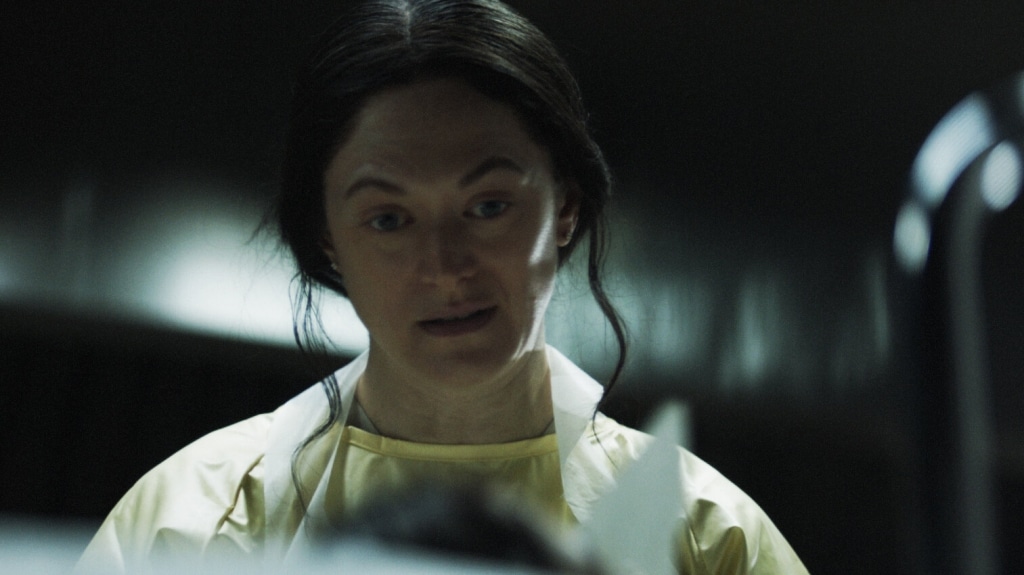
Gothic genre favorite Frankenstein is seeing a revival now, not that it’s ever truly gone out of style.
Some people lament that there is nothing more to be said regarding Mary Shelley’s classic romantic era ode to humanity, monstrosity, life, and death, but I disagree. There are always new horizons as long as we have new storytellers who are prepared to tackle old material and make it new once more in their own unique way. One of the core tenets of writing that you learn is that, while others may have broached a topic, you have never broached that topic and you are unique from the other writers who have.
Laura Moss’s exquisite indie horror drama Birth/Rebirth is the very reason that taking on Frankenstein and other classic media should always be welcomed and celebrated.
Birth/Rebirth is a film that is heavy from the jump.
We are confronted with the consequences of death, life, and rebirth constantly throughout the film as we see Mary Shelley’s classic reformed in a distinctly modern way by director and co-writer Laura Moss with their writing partner and frequent co-conspirator Brenden J. O’Brien. (Read this amazing and vulnerable article by Laura about their gender identity, collaborations with O’Brien, and making film babies here.)
Pathologist Rose Casper (Marin Ireland) and maternity nurse Celie Morales (Judy Reyes) find themselves bonded in the most intimate way: motherhood, after Rose successfully brings Celie’s recently deceased daughter, Lila (A.J. Lister), back to life.
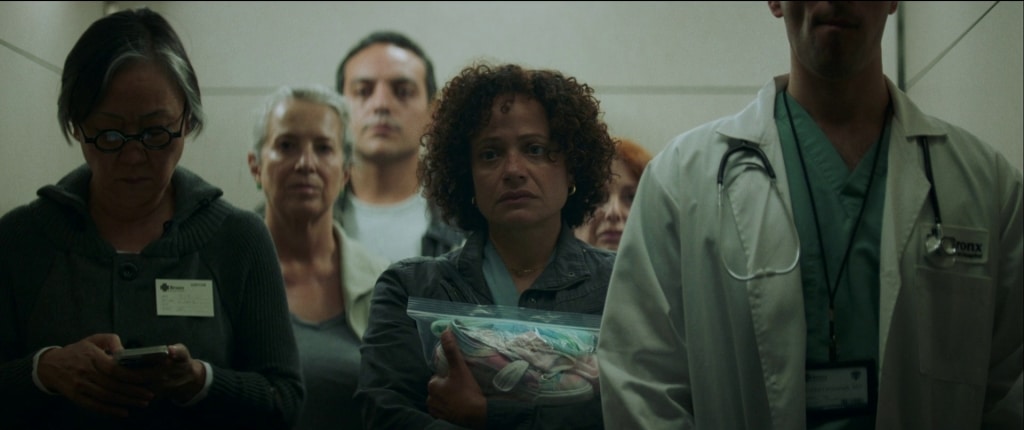
It’s the kind of movie that reminds me why I chose to make movies and why I chose horror as the vehicle to tell my own stories.
Motherhood and parenthood are complicated for women, femmes, and those with uteruses. We all have our own unique relationship to our capacity to carry a child, birth, and raise it. Motherhood also goes further than those ideas. Hell, motherhood goes beyond biology. It’s an idea, a theme. It’s everything. It’s primal. It’s fragile. It’s terrifying.
What Moss does with Birth/Rebirth captures the complicated breadth of motherhood in the most beautiful way.
Celie is Lila’s biological mother, who decided to have a child on her own and raise her as a single mother. She has an innate connection with her daughter that is typical of a mother-daughter relationship, but Rose’s more complicated relationship with motherhood leaves the viewers with a bit more to chew on. Rose is disgusted by reproduction and fascinated by it. She’s disgusted by the physical aspects of it, but the scientific possibilities excite her.
She uses her own body to incubate fetal tissues for her experiments, aborting the fetuses and then using the fetal stem cells to help bring Lila to life and keep her alive.
Through these actions, Rose essentially becomes a mother to Lila in a complicated but no less beautiful and poignant way. She bonds with Lila and becomes involved in her progress. As Lila makes important milestones, Rose and Celie start to form an emotional bond. Celie makes sure Rose eats, and the two women take shifts caring and watching over Lila.
Over the course of the film, we see the cold and odd Rose grow as a person through her relationship with Lila and, by extension, Celie.
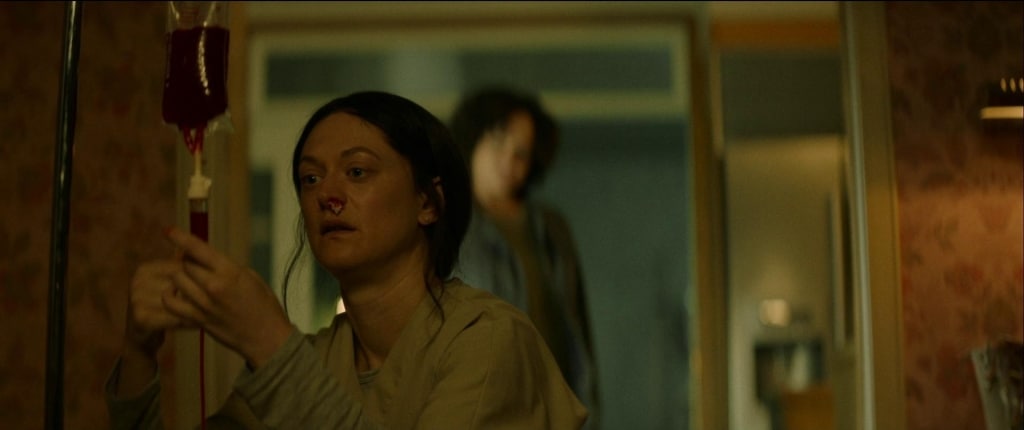
In fact, the most tender parts of the film are the ones where we learn Rose is not monstrous but someone dealing with intense grief over the loss of her own mother, who she tried desperately to cure of a debilitating illness.
When Celie finds out that Rose experimented on her own mother as a means to cure her, Celie misinterprets Rose as a mad woman. However, Rose is intensely invested in life, the quality of it, and the science it takes to combat everyday issues and heartbreaks.
From where I stand, Rose might be one of the most human characters in the story because of how she grapples with life around her, constantly reaching and striving.
She is one of the most fascinating characters in recent memory, and I have carried her with me in the back of my mind since watching the film. Rose is lovingly created by the writers and Ireland, and the result is a complicated woman, one that is both repulsing and magnetic yet always gloriously human. I adore her, and I love Moss and Company for creating this character that embodies messy femininity in a way that is bizarre and beautiful.
Celie goes down an arguably even darker road than Rose does, sacrificing parts of her humanity as a means of saving her daughter.
Celie begins to occupy the space Rose once did.
There is a role reversal of sorts as Celie’s desperation to keep her daughter pushes the limits of medical ethics, making the film murkier and delicious for those who like horror films that make you not only think but feel.
Like Rose, we understand Celie. She’s a single mother to a child who was conceived via a sperm donor, and she went out of her way to become a mother.
Rose has a horrific health crisis and can no longer incubate fetal tissue to keep Lila alive. The women resort to harvesting cells via amniocentesis due to a woman named Emily (Breeda Wool) having a similar genetic profile needed for Lila. However, this puts Celie in an odd position.
Emily is a woman who has had trouble conceiving and is put under great stress due to repeated procedures and faulty test results.
Celie is able to relate to Emily’s plight of wanting a child and wanting what is best for her child. However, Celie’s love for Lila wins in the end.
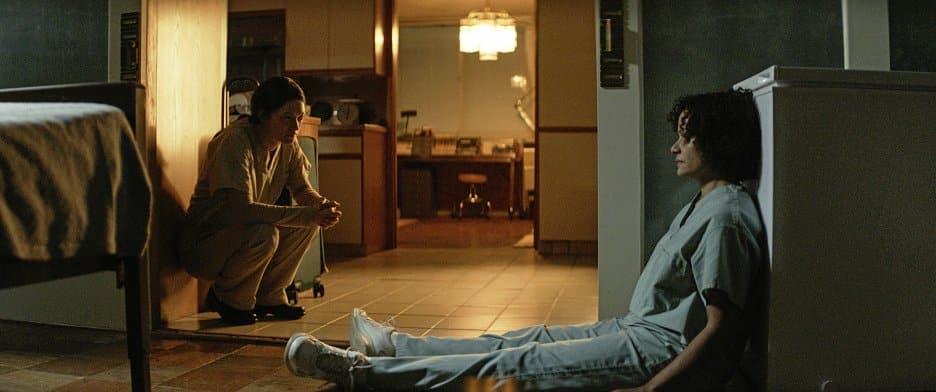
This is a problem because the women planned on saving Emily’s placenta in order to have over a year’s supply of stem cells on hand.
Celie then goes rogue, and the results are disastrous. A mother’s love overrides any and all ethics that she may have, pushing her into territory that Rose herself did not tread. Celie visits Emily, drugs her, and sends the woman into labor. In the process, Emily dies, and Rose conducts the autopsy, almost sorrowfully collecting the placenta.
Celie realizes the weight of what she’s done and that she cannot go back.
She has become more monstrous than Rose, a woman she wholeheartedly accused of being soulless and horrific. It is Rose then who has to shoulder the emotional labor and be the support Celie needs to see the job through to the end for Lila.
Rose and Celie form a bond that is tender and tenuous over the course of the film, showing that, to an extent, motherhood is its own universal language, even to those who find it uncomfortable.
Moss brings a keen perspective to the table that is both familiar through Celie’s story and fresh through Rose’s. While this film is harrowing, it is the compassion it holds for its characters and their desperate actions that stick with the viewer.
We live in a world that deeply needs to reevaluate parenthood far beyond genetic means, and this story does just that.
It’s messy, gorgeous, and gross, and it excites me for what Moss has up their sleeve as a creative with a strong voice and empathetic vision.
Birth/Rebirth is streaming on Shudder, Hulu, and AMC+. Give it a watch (or rewatch).

She’s a lover, he’s a fighter. Together, they’re CHEER AND LOATHING. Tune in to hear your hosts, Stephanie (Cheer) and Casey (Loathing), clash over the films they love — and the ones they love to hate.
In this holiday extravaganza episode of Guilty Pleasures, join hosts Stephanie, Kelly, and our newest addition, Jonathan (Jack was tied up in tinsel and couldn't join us), as they unwrap the bizarre and unhinged world of holiday cinema. They dive into the depths of Elves, a film that's as chaotic as it is entertaining. It's a sleigh full of questionable decisions, diabolical dialogue, absurd plot twists, wildly offensive antics, and unhinged holiday mischief.
And that's not all! In the second half of the podcast, join your festive cinephile friends for a look at four more ”nutty as a fruitcake” holiday treats: A New York Christmas Wedding, Elf Bowling, A Medea Christmas, and Jack Frost. Plus, we each offer a bonus Christmas flick guaranteed to make you say, ”Ho, Ho, HO-LY Hell!”
Expect laughter, disbelief, and a spirited debate about what truly makes a movie a guilty pleasure. Don't miss this festive journey through the weirdest corners of holiday films!











Follow Us!