


In a celluloid ocean filled with CGI sharks and lazy jump scares, “Beast of War” is an effective and emotionally charged survival nightmare.
No time to read? Click the button below to listen to this post.

There’s a particular kind of anticipation that comes with a new shark movie. It’s that primal, Pavlovian thrill we all carry from the first time we heard John Williams’ ominous two-note score. As someone who proudly swims in these cinematic waters, from the schlocky B-movie surf to the holy grail that is Jaws, I approach every new entry with a cocktail of excitement and skepticism.
Most are chum. Few are catches. But every so often, one breaches the surface with ferocity and purpose.
Kiah Roache-Turner’s Beast of War is one of those rare predators.
Set during World War II and inspired by the real-life sinking of the HMAS Armidale, this Australian horror film marries historical tragedy with creature-feature terror. It’s not content to simply gnash and thrash; it wants to say something… about bravery, racism, trauma, and the sheer will to live when the world has turned to chaos both above and below the surface.
Roache-Turner (known for Wyrmwood and Nekrotronic) wastes no time establishing camaraderie and character among his crew of young Australian soldiers.
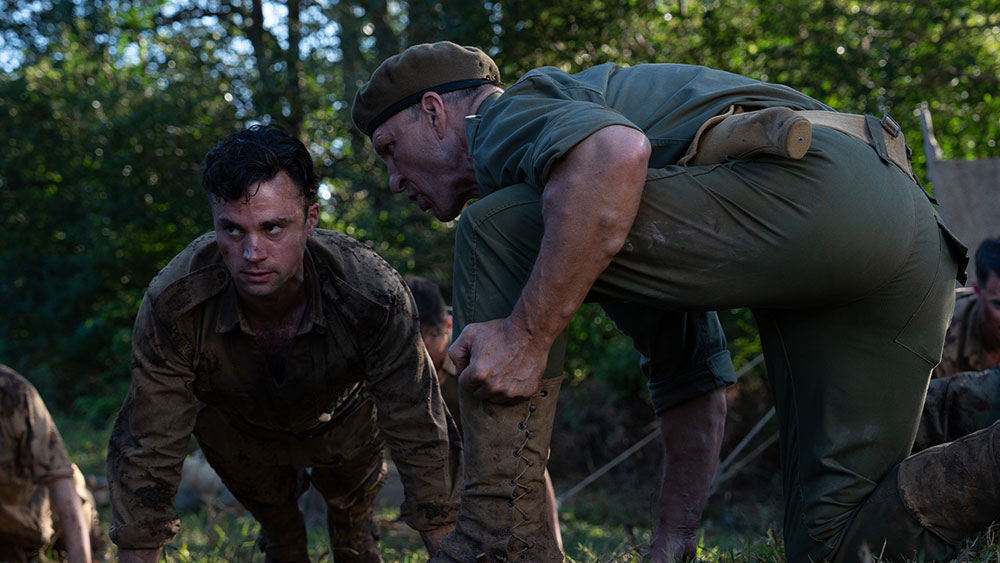
The first act feels almost deceptively gentle. It’s a sun-drenched respite of training drills, flirtations, and youthful bravado. But even here, darkness lurks.
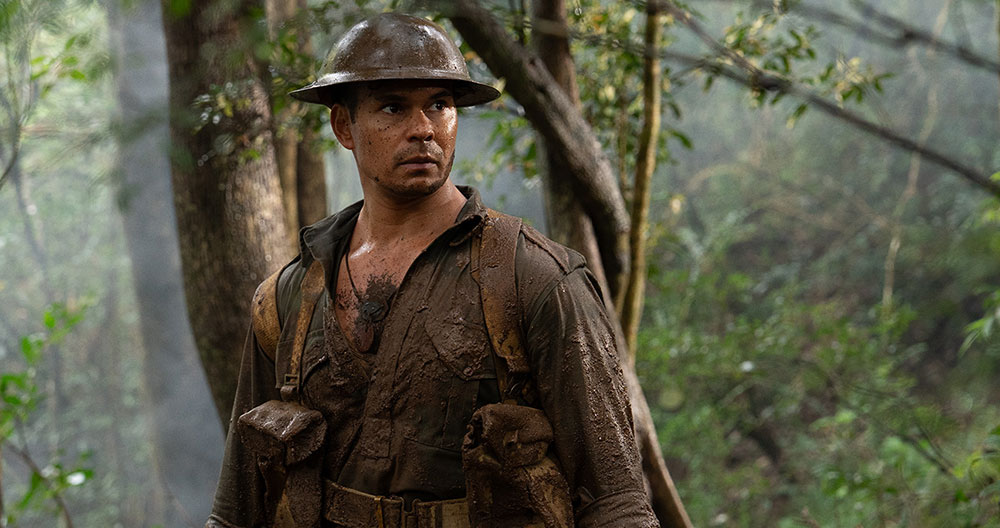
We meet Leo (Mark Coles Smith, in a career-defining performance), an Aboriginal soldier whose courage outpaces the recognition his country affords him. Paid a fraction of his white peers and treated with quiet cruelty by some, Leo embodies the film’s moral spine: a man determined to prove his worth in a system that denies it.
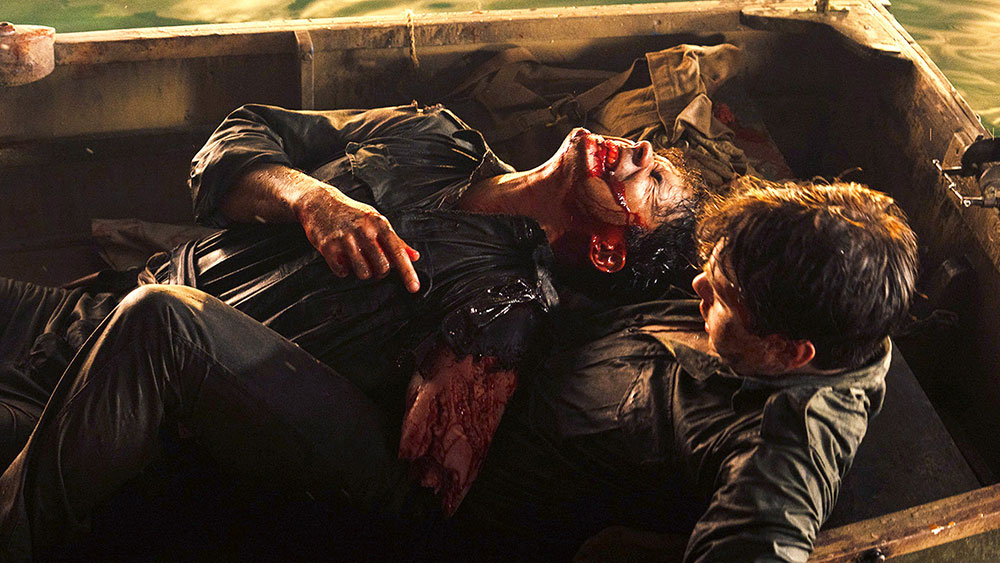
When a Japanese attack decimates their vessel, the survivors find themselves clinging to twisted metal and dwindling hope in the Timor Sea.
The enemy is no longer human. What emerges from the deep is not merely a great white shark; it’s an unrelenting force of nature, a reminder that war’s horror doesn’t end when the guns fall silent.
Beast of War thrives on confinement. Nearly the entire film unfolds atop a battered raft, the camera keeping us pressed close to the salt-stung skin and ragged breaths of its survivors. The limited space amplifies every splash, every flicker of shadow beneath the surface.
When the shark finally reveals itself — thirty-three minutes in — the payoff is staggering.
Steve Boyle’s animatronic creation, courtesy of Formation Effects, is an absolute marvel. The decision to go practical rather than digital pays off in spades; the beast feels tactile, real, and terrifyingly alive.
Roache-Turner’s direction is meticulous. Underwater shots evoke primal dread, while fog-shrouded horizons create an oppressive, dreamlike sense of isolation. It’s a masterclass in spatial storytelling, resulting in a film that is both minimalist and grand, grotesque yet gorgeous.
What separates Beast of War from the countless imitators circling the shark-movie ecosystem is its heart. Roache-Turner understands, like Spielberg before him, that no monster matters if we don’t care about who it’s eating.
Mark Coles Smith anchors the film with quiet gravitas, his Leo serving as both hero and conscience.
Joel Nankervis and Sam Delich round out the ensemble with performances that oscillate between gallows humor and raw panic. The camaraderie feels lived-in; the conflict, painfully authentic.
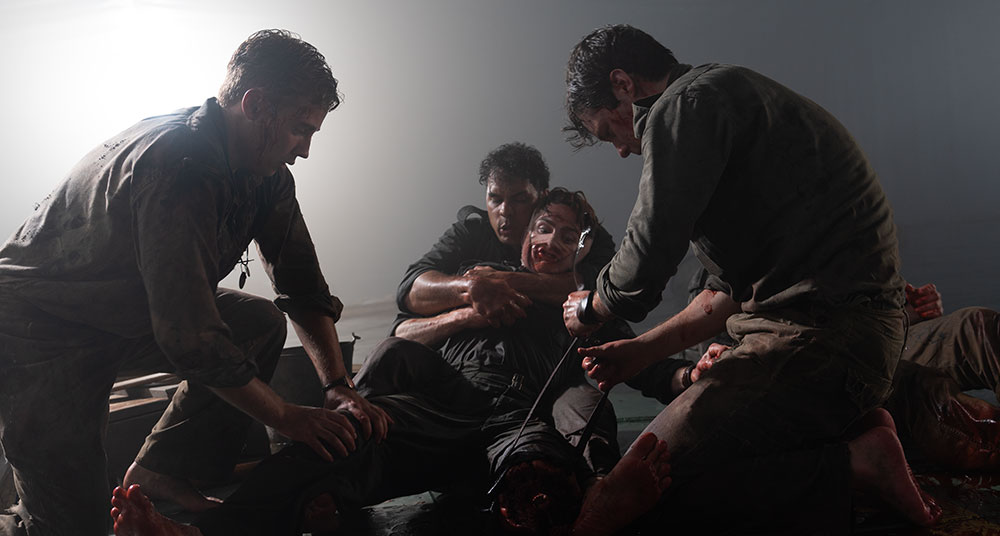
When limbs are lost and men crack under the sun, we witness the desperation of survival’s siren call and the slow unraveling of masculinity under pressure.
Beast of War also grapples with Australia’s colonial sins. Indigenous soldiers like Leo were paid less, lauded less, and buried faster. The film’s political undercurrent never feels preachy. It’s war horror reframed through the lens of racial injustice, and it’s a thematic risk that pays off beautifully.
At just 87 minutes, Beast of War never loses momentum.
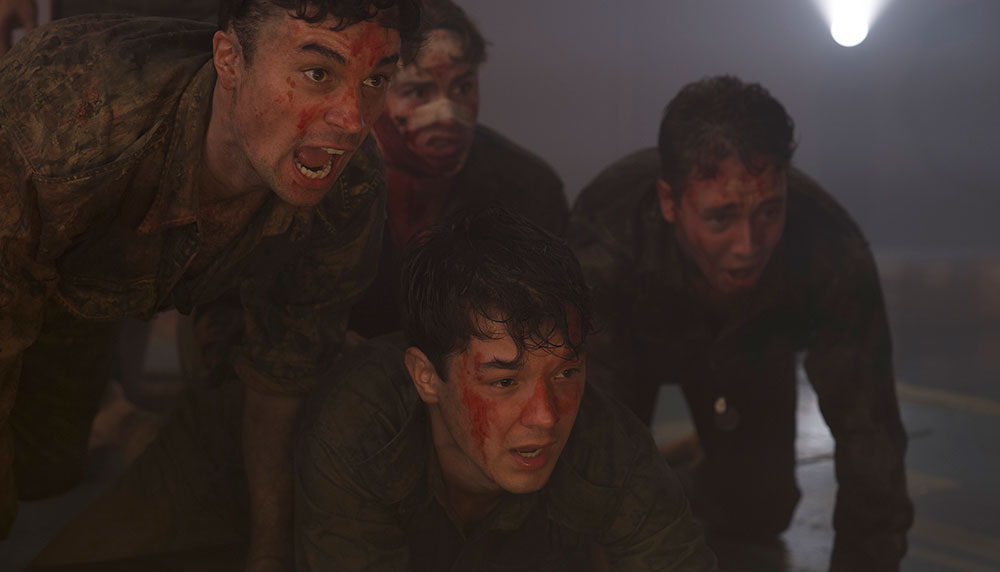
Its pacing is tight, and its tone is unwavering. It’s a lean, mean survival machine that marries pulp and prestige with startling finesse.
Horror fans rejoice; the gore is satisfyingly gnarly. But the film’s violence serves its themes, moving this beyond the realm of exploitation. The futility of control, the randomness of death, and the fragile dignity of those fighting to keep their heads above water are explored with aplomb.
Sound design plays a crucial role in sustaining that dread: the distant echo of air-raid sirens, the muffled screams beneath the waves, the low thrum of something massive circling below. It’s hauntingly immersive, evoking both the chaos of battle and the eerie stillness of open ocean.
Roache-Turner doesn’t just revive the shark-attack subgenre; he evolves it. Beast of War is a fiercely human, technically dazzling war horror that transforms a national tragedy into something mythic. It’s brutal, poignant, and terrifying in equal measure.
More than just a worthy heir to Jaws, it’s a film that swims in deeper waters, proving that even in the well-trodden subgenre of shark cinema, there’s still blood to be drawn and stories worth telling.
Overall Rating (Out of 5 Butterflies): 4.5











Follow Us!