


“Oddity” is the gold standard of atmospheric horror, delivering one of the most unsettling and unforgettable offerings of the year.
No time to read? Click the button below to listen to this post.
Oddity is a magnum opus of bone-chilling atmospheric horror that solidifies Damian McCarthy as one of the most innovative voices in modern genre filmmaking. This haunting tale of supernatural revenge and familial bonds is a slow-burn nightmare that burrows under your skin and refuses to let go.
McCarthy’s sophomore feature builds on the promise of his dazzling debut Caveat, crafting a richly layered narrative that seamlessly blends elements of Irish folk horror, home invasion thrills, and ghostly vengeance.
At its core, Oddity follows Darcy, a blind clairvoyant seeking the truth behind her twin sister Dani’s murder. This compelling mystery is the backbone for a series of increasingly unnerving encounters that challenge Darcy and the audience’s perception of reality.
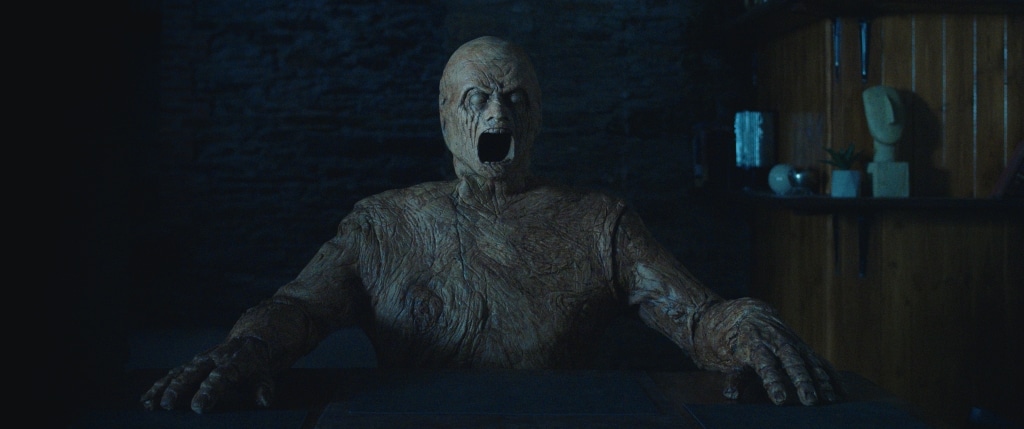
The film’s most brilliant innovation is its central prop, a life-sized wooden mannequin that becomes a focal point of terror.
Much like the unsettling toy rabbit in Caveat, McCarthy demonstrates his talent for imbuing seemingly innocuous objects with an aura of menace. The mannequin’s presence looms large throughout the film, its blank stare and immobile form infinitely more frightening than any CGI monster.
Carolyn Bracken delivers a tour-de-force performance in the dual roles of Darcy and Dani.
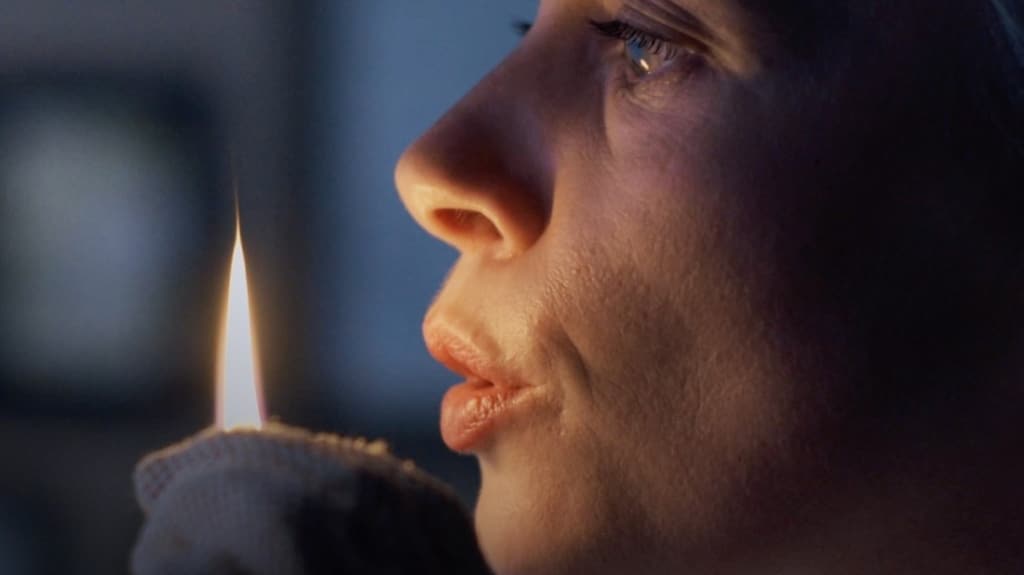
Her nuanced portrayal of the sisters’ complex relationship anchors the film’s emotional core. At the same time, her depiction of Darcy’s vulnerability and determination drives the narrative forward. Bracken’s ability to convey strength and fragility is crucial to the film’s success.
McCarthy’s direction shines in his masterful approach to building tension. The film’s pacing is deliberate, allowing dread to accumulate like a toxic fog. Long, quiet moments are punctuated by shocking violence or supernatural activity.
One particular jump scare, arriving after an agonizing build-up, stands out as one of the most effective in recent memory, eliciting genuine gasps from even the most jaded horror fans.
The claustrophobic setting, primarily in a remote Irish country house, becomes a haunting character.
McCarthy and cinematographer Colm Hogan use shadow and negative space excellently, transforming familiar domestic spaces into zones of creeping unease. The limited locations never feel restrictive; instead, they amplify the sense of isolation and vulnerability.
Oddity’s sound design is a masterclass in creating unease, using silence as effectively as its moments of auditory assault. The film’s soundscape, filled with creaks, whispers, and the mannequin’s unnerving movements, keeps viewers constantly on edge and fully immersed in the atmosphere.
Oddity stands out from conventional horror with its unwavering commitment to psychological terror, a choice that will surely pique the interest of those seeking a more cerebral fright.
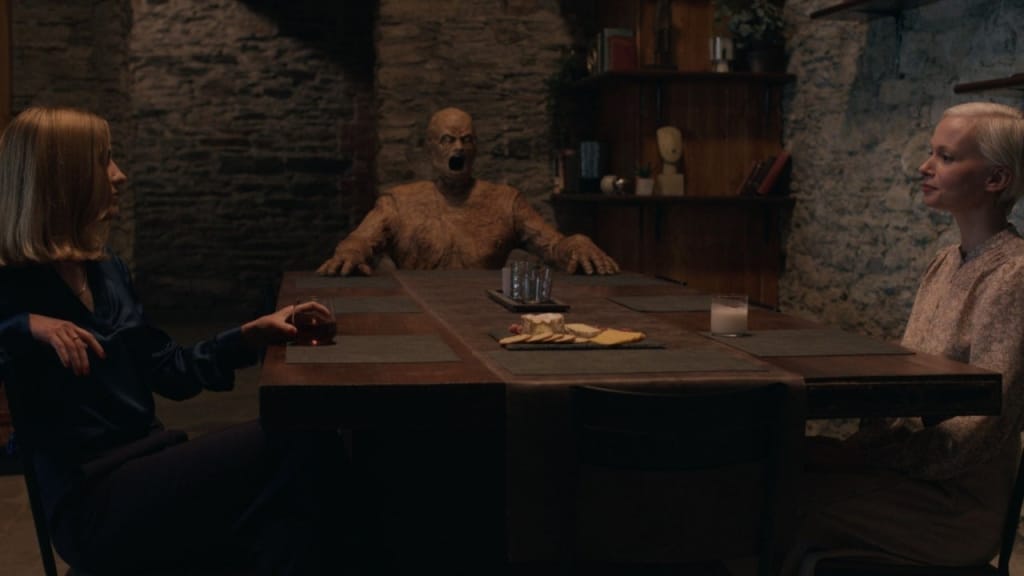
While there are moments of graphic violence, Oddity’s most unsettling scares stem from its profound exploration of grief, guilt, and the sometimes destructive power of family bonds, inviting the audience to empathize with the emotional turmoil of its characters.
McCarthy trusts his audience, allowing them to piece together the mystery alongside Darcy rather than relying on heavy-handed exposition.
The film’s final act is a masterpiece of sustained tension, with shocking and emotionally resonant revelations. McCarthy sticks the landing with a haunting final image long after the credits roll, cementing Oddity as one of the year’s most unforgettable horror experiences.
For fans of thoughtful, atmospheric horror, Oddity is an absolute must-see. It cements McCarthy’s reputation as a filmmaker of exceptional talent and vision, crafting stories as emotionally engaging as they are terrifying.
Like Caveat before it, Oddity proves that true horror lies not in jump scares or gore but in the dark corners of the human psyche and the secrets we keep from those closest to us.
Overall Rating (Out of 5 Butterflies): 5

Follow Us!