

“June Zero” is a challenging and provoking look at how the fabric of history is woven, with monumental events shaped by ordinary people.
No time to read? Click the button below to listen to this post.
One of my favorite films of 2023 was The Zone of Interest, directed by Jonathan Glazer and based on Martin Amis’ novel. It explores the banality of evil, a term coined by political theorist Hannah Arendt during her coverage of Adolf Eichmann’s trial.
The term describes the phenomenon where ordinary individuals commit atrocities not out of deep-seated ideology or personal hatred but rather through bureaucratic compliance, obedience, and a failure to think critically about their actions.
Though that characterization of one of the top organizers of the party’s Final Solution to exterminate the Jewish population is up for debate, many of those involved were bureaucrats who were more concerned with following orders and maintaining administrative efficiency than with the moral implications of their actions.
Meanwhile, the broader social and cultural environment in Nazi Germany created a context in which ordinary people could be influenced to participate in or tacitly support the Holocaust.
Understanding this concept helps explain how the Holocaust could occur on such a massive scale, perpetrated not just by a few fanatical leaders but by a vast network of ordinary individuals.
June Zero is another film that explores the horrific impact of the Holocaust from a unique perspective.
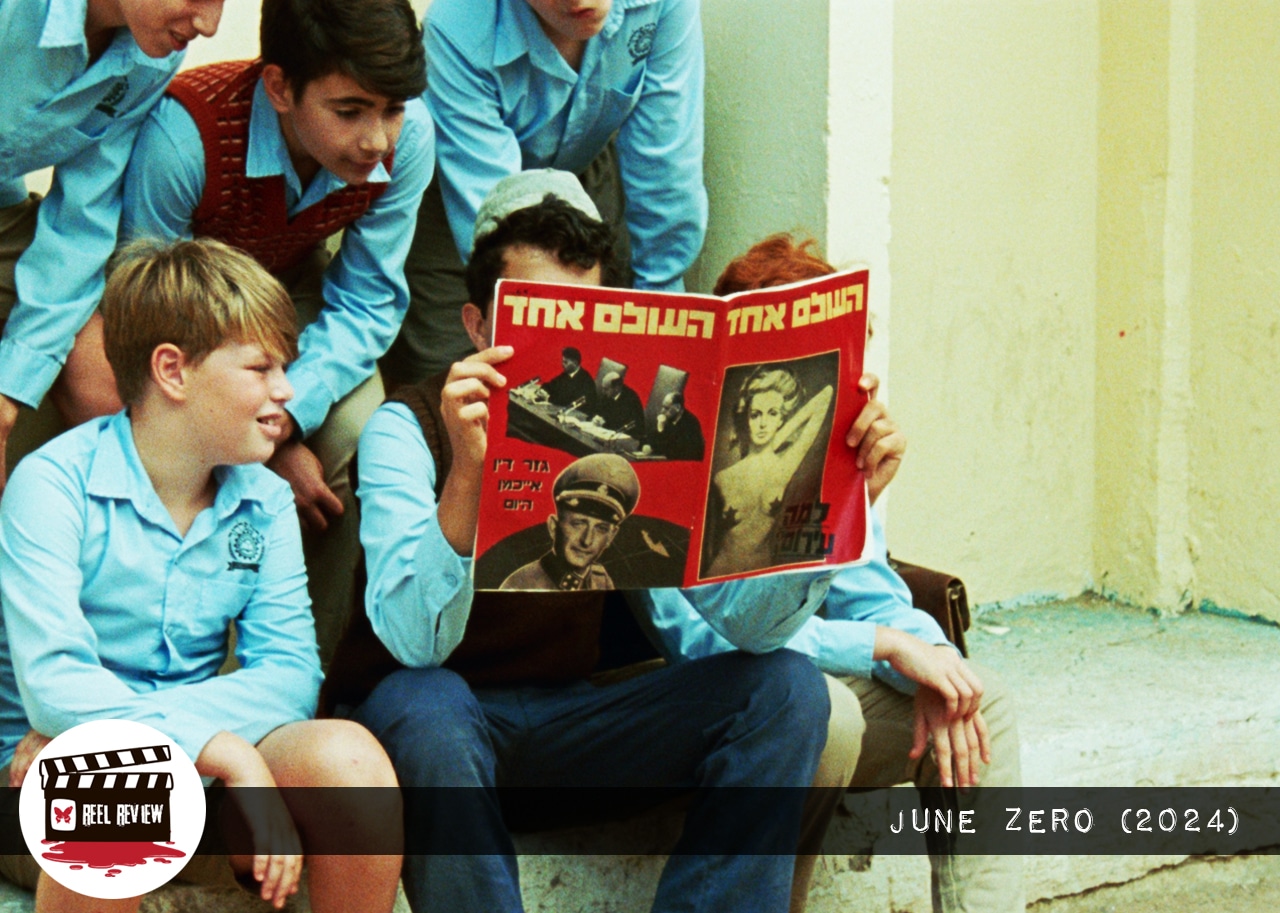
Years after WWII’s end, Israeli agents apprehended Eichmann in Argentina and brought him to trial in 1961 after months of daily interrogations. The trial, a watershed event in Israel, received prominent media coverage.
Until then, the young country (and the world) had been reluctant to discuss the Holocaust, address the suffering of the survivors, or confront its impact.
However, this film is not about Eichmann’s sensationalized trial or unimaginable crimes. Instead, it’s a stripped-back look at three ordinary individuals who find themselves inexplicably connected to the man and this critical moment in human history—based on actual accounts from real participants.
Much like The Zone of Interest, June Zero (a title that references how Israelis referred to the date of Eichmann’s execution so that it would not be commemorated in future years) reduces the scope of this seismic horror by crafting intimate, personal stories.
Told in three acts, the film revolves around a precocious 13-year-old Libyan raised in Israel, an Auschwitz survivor who built the case against Eichmann, and a guard forced to keep the prisoner alive until his hanging.
Through these somewhat interconnected stories, director Jake Paltrow, who co-wrote the film with Israeli filmmaker Tom Shoval, explores the notion of shared trauma and how historical events are perceived differently by people around the world.
Presented almost entirely in Hebrew, Paltrow stated in an interview with the Jewish Telegraphic Agency that “The film itself is being told from the point of view of a contested history” as experienced by different characters.
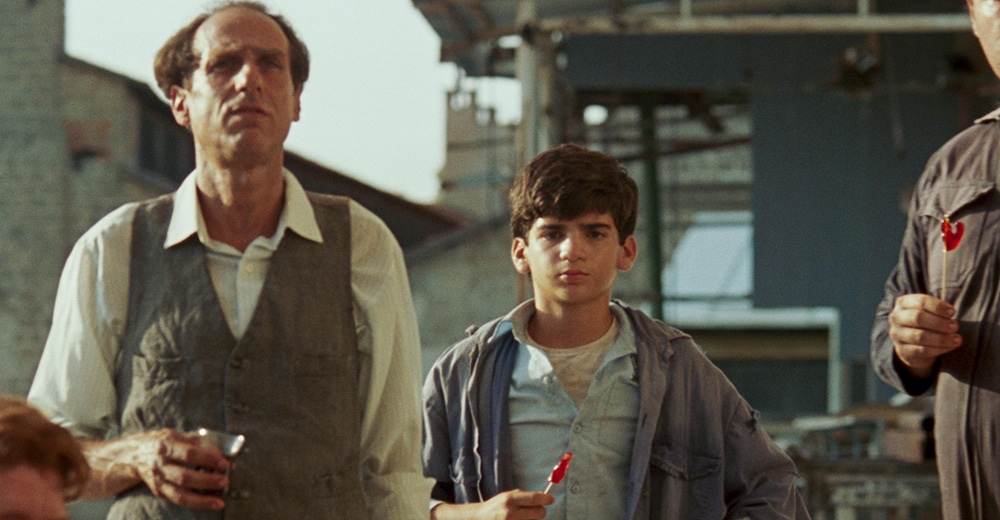
The film begins with a coming-of-age story about a young boy who goes to work in a factory that manufactures bakery ovens.

David (the exceptional Noam Ovadia) is struggling to fit in at school, suffers the wrath of his racist teacher, and commits petty crimes as a means of acting out.
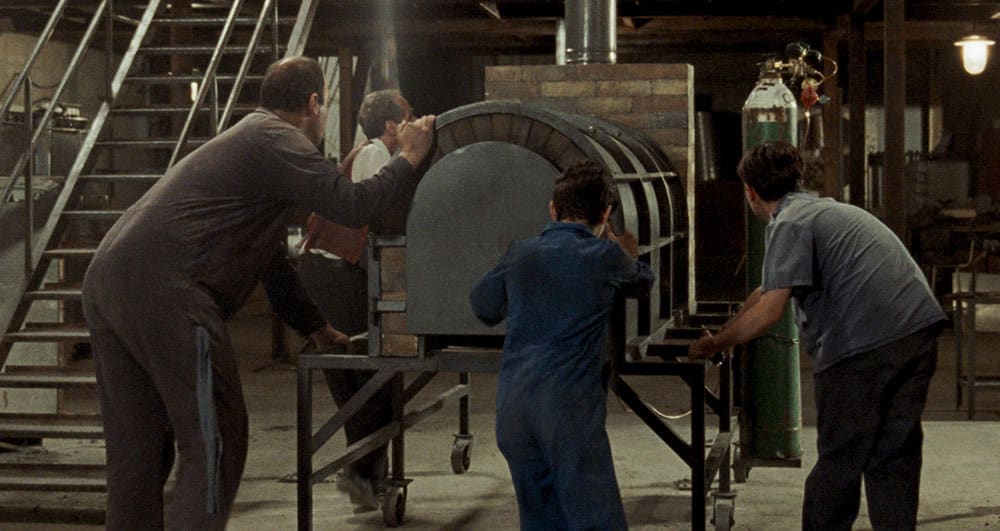
To straighten him out, his father gets him a job at a small factory, where he soon curries favor with the intimidating shop owner, Zebco (Tzahi Grad), who has himself committed monumental acts of terror. At the request of police Captain Haim Gouri (Yoav Levi), Zebco has agreed to construct an oven to cremate Eichmann’s corpse so that his burial ground cannot be turned into a shrine.
While many of David’s co-workers—Holocaust survivors—shudder at the task, which painfully resembles barbaric concentration camp practices, the more naïve David becomes instrumental in helping carry out the controversial assignment.
It’s important to note that Eichmann would be the first and only person to receive the death penalty in Israel, and cremation traditionally is forbidden in Judaism.
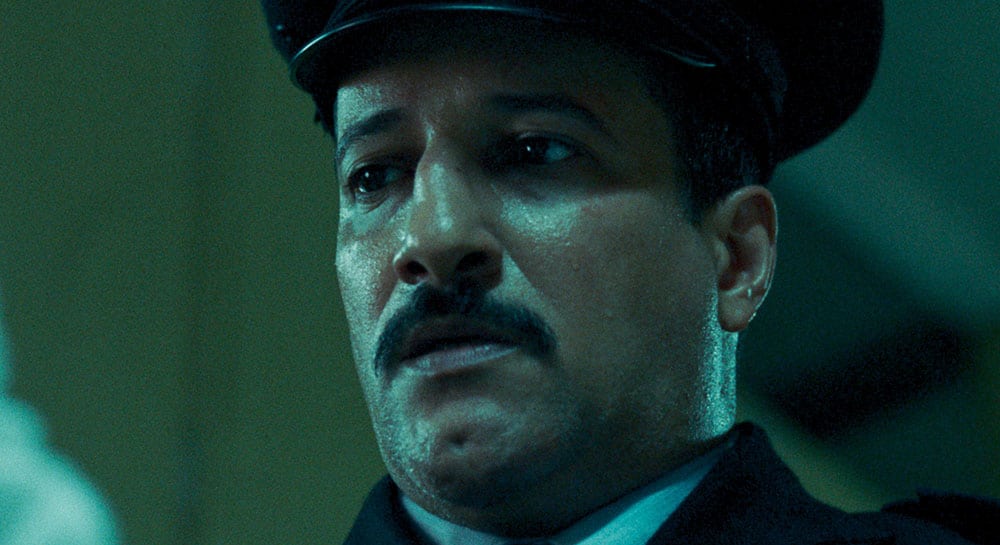
Meanwhile, Gouri is in charge of guarding Eichmann at a nearby prison, and the stress of the duty is taking its toll. He’s also tasked with the unenviable responsibility of determining how to morally deal with exceedingly immoral behavior.
The third act transports us to a Polish ghetto where Micha Aaronson (Tom Hagi), one of Eichmann’s prosecutors, recounts his nightmarish ordeal as a young Auschwitz prisoner to a group of American tourists.
In a meeting with a young woman from the Jewish Agency, he engages in a riveting and soul-shattering debate about survivor trauma and the necessity of remembrance versus the desire to heal and move on.
Though this part of the film ventures somewhat off the narrative path, it provides one of June Zero‘s most powerful and thought-provoking scenes.
June Zero reminds us that while history may only remember its most notable players, it was built upon the many small actions of ordinary people.

That’s as true of those who try their best to do the right thing as those who commit (or permit) great evil out of fear, ignorance, obedience, or manipulation. It’s also true of those who exist in a morally grey sphere where right and wrong and good versus evil are up for debate or interpretation.
Objective morality aside, whether an action is perceived as morally justified or hypocritically inhumane often depends on which side of the fence you’re on. You can draw your own inevitable parallels to modern times, but it’s a strong case for why films like this are vitally important.
Eichmann is never seen in full in June Zero; we get only brief, obscured glances of his feet or the back of his head. Reduced to a symbol of evil and stripped of humanity, it’s a thoughtful choice that mirrors the central concern of the film’s protagonists: how to keep the historical narrative centered on the victims rather than (intentionally or unintentionally) glorifying the perpetrators.
Beautifully shot on 16mm film with captivating performances, June Zero is an unusual and complex film that may alienate some viewers. But it’s difficult not to appreciate Paltrow’s bold choice to take the road less taken in his potent film full of weighty ethical considerations.
It’s about dealing with a magnitude of horror so colossal that it becomes inconceivable — about who gets to be remembered and who or what should be forgotten.
Most importantly, June Zero is about how we deal with great evil and whether the horrors of the past can ever justify the horrors of the present.
Overall Rating (Out of 5 Butterflies): 3.5










Follow Us!