Wes Craven and Original Sin



Wes Craven’s death in 2015 (August 30) triggered a myriad of obituaries that noted his outsized influence on modern horror. What it did not trigger, however, was much analysis of his status as an auteur. While Craven’s directing often had an amateurish quality, the films he wrote frequently contained an intriguing undercurrent of theology, which warrants serious consideration.
Craven’s films can be illuminated by the fact that he was raised in a strict fundamentalist Christian household. At home, the cinema itself was regarded as altogether immoral. Besides Disney films, Craven did not see a single movie until he went to college.
Although Craven abandoned his religious faith as an adult, the Christian concept of original sin had a profound impact on his body of work.
The interest in film that Craven acquired in college, combined with $87,000 from a grindhouse distributor, led to his debut feature, the most unsettling of B-movies: The Last House on the Left. Its plot was based on Ingmar Bergman’s The Virgin Spring (itself based on a medieval Swedish ballad).
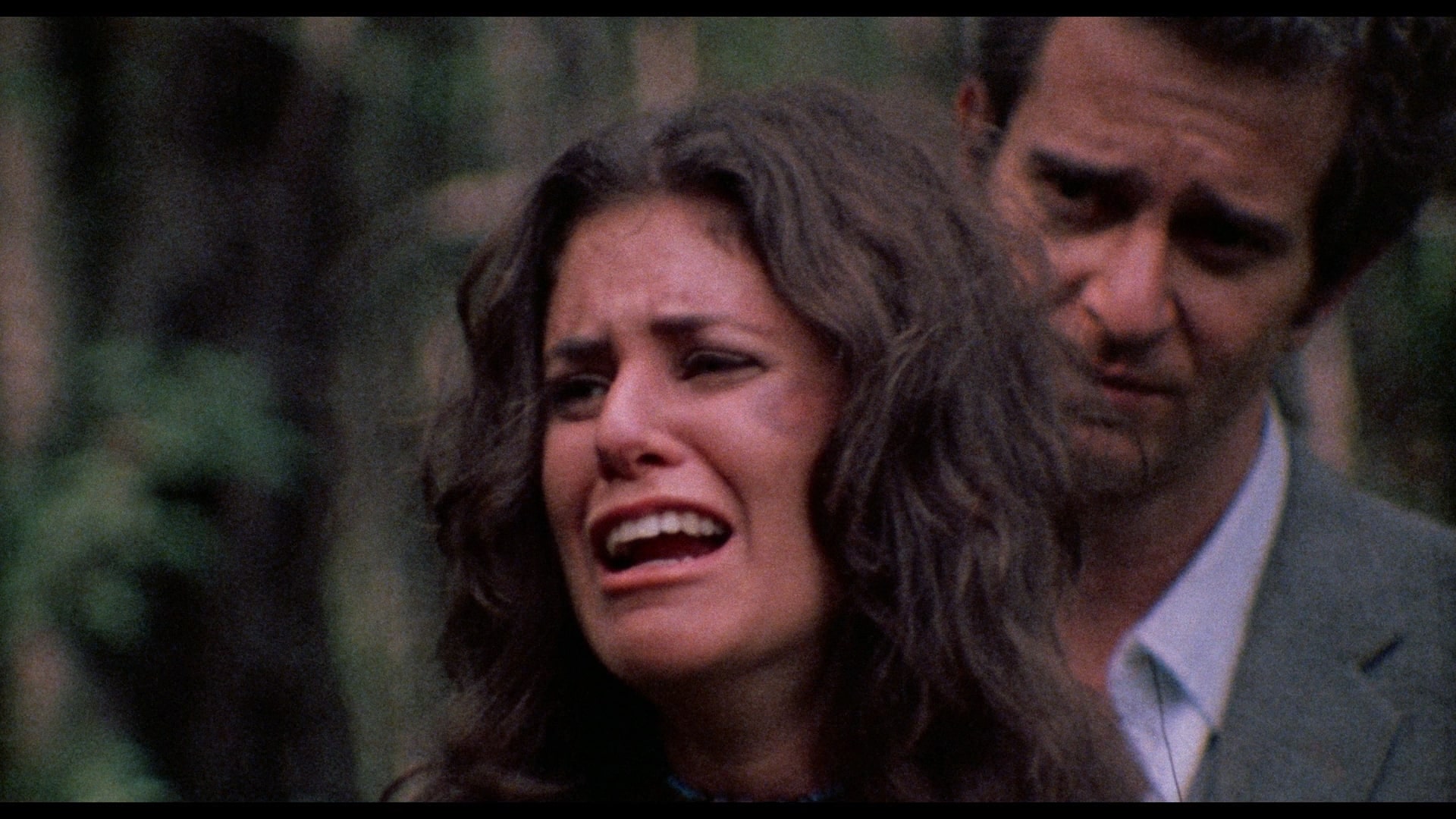
All-American girl, Mari Collingwood, is given a necklace by her parents for her seventeenth birthday. She goes to the city to see a concert with her friend Phyllis Stone. When they go into the city, the two are abducted by a gang led by the brutal Krug. Krug and his gang rape, disfigure, and kill the girls in some of the most disturbingly graphic scenes ever committed to celluloid.
In a moment of sickening dramatic irony, the gang stops at the Collingwood residence and is offered the chance to spend the night. There, Mr. and Mrs. Collingwood discover Mari’s necklace and realize that Krug and company are the reason why Mari hasn’t returned home. In retaliation, they do everything they can to hurt Krug and his thugs.
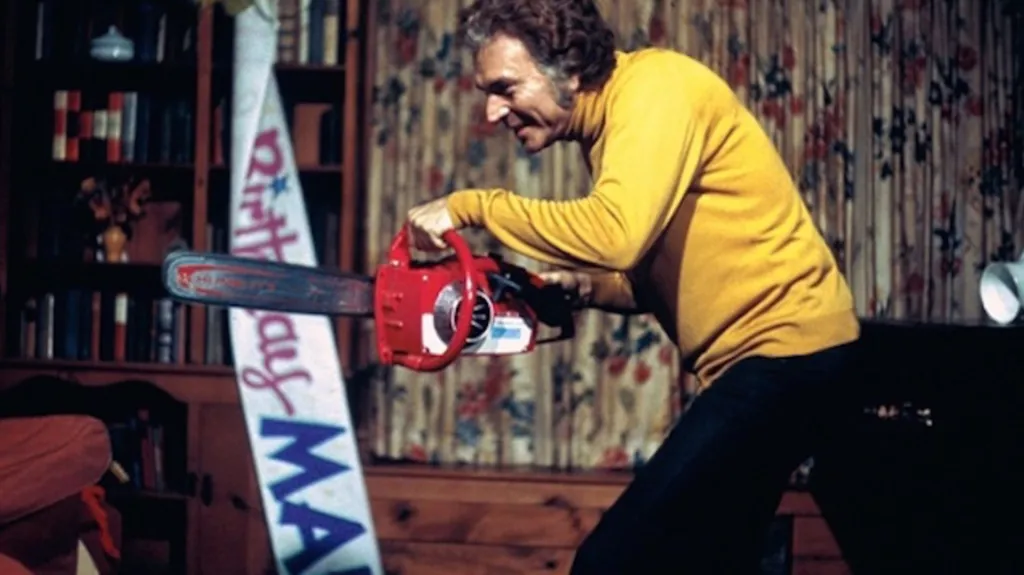
The film culminates in a freeze-frame shot of Mr. Collingwood about to chop a gang member up with a chainsaw.
The Last House on the Left became infamous due to its graphic violence, but its ambiguous moral compass is even more haunting. Are the Collingwoods just as bad as their enemies? That’s what the film seems to be implying.
This perfectly encapsulates one of the significant aspects of original sin, the idea that no one can be innocent. The real question is, are they evil because they fought back or because they went too far?
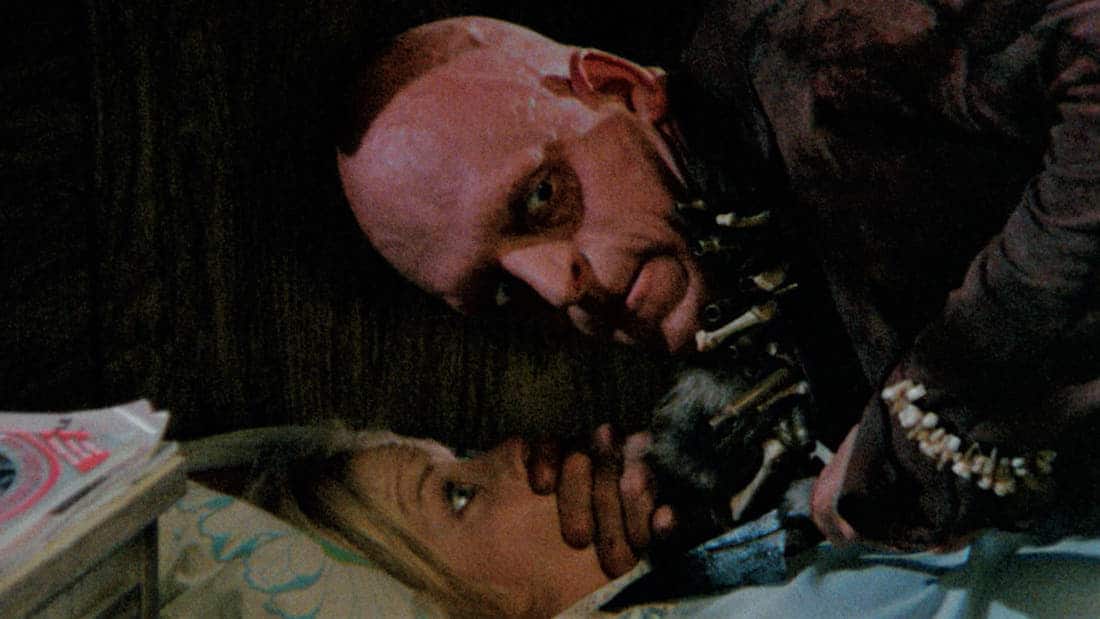
After the making of House, Craven wanted to branch out into other genres. However, he was eventually persuaded to write and direct a second horror film, The Hills Have Eyes, due to financial struggles. The project was envisioned by producer Peter Locke as an attempt to capitalize on the commercial success of House.
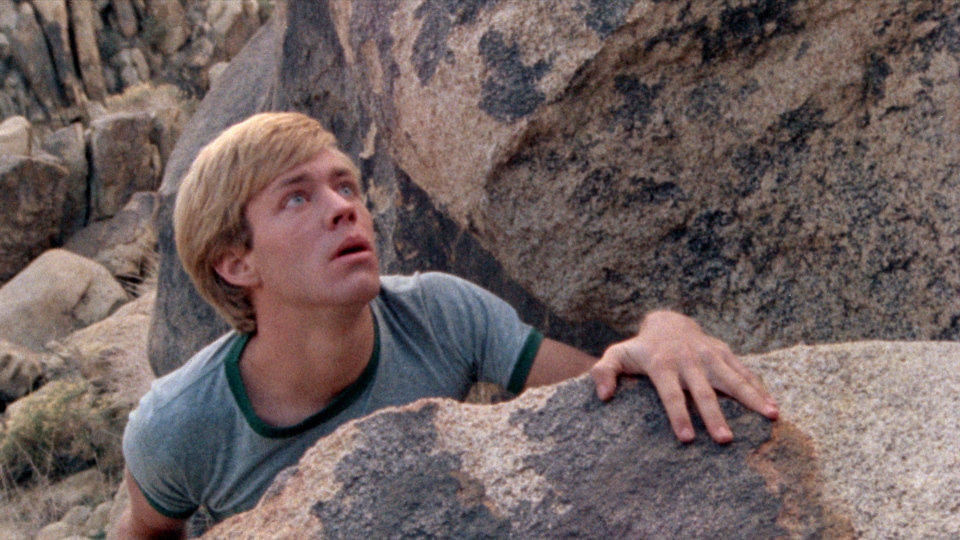
Craven took that mandate too literally, as the film recycles all of the major plot beats from House. The significant difference is that the antagonists are now a family of mutated cannibals who square off against an American family, the Carters, in an isolated desert setting.
The setting makes the family’s turn to defensive violence more justifiable, as no one can help them out here.
The freeze frame ending is repeated, with a key difference. Here, Doug, a member of the Carter family, is seen stabbing one of the cannibals, Mars, to prevent Mars from eating his baby daughter.
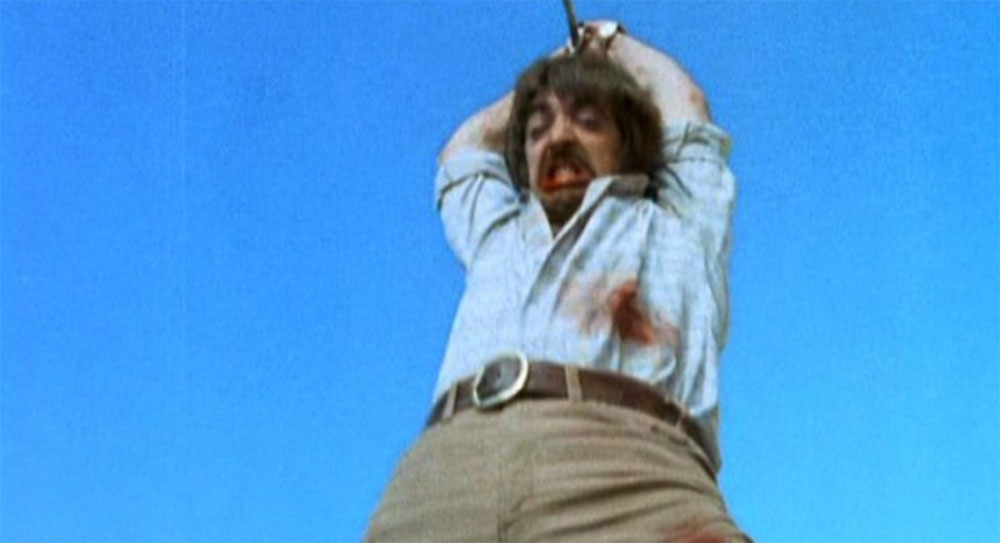
In House, the Collingwoods arguably went overboard in their quest for justice, maiming and killing members of Krug’s gang when they could have called the police. In Hills, Doug simply wants to protect his daughter, but the film still freezes on him looking distraught, with the frame tinted blood-red.
Is Doug a monster? Isn’t the desire to protect one’s children among the noblest of humanity’s impulses? And what choice did Doug have?
Again, Craven, like numerous Christian theologians, is unable to envision a scenario where human beings exist in anything less than a state of total depravity.
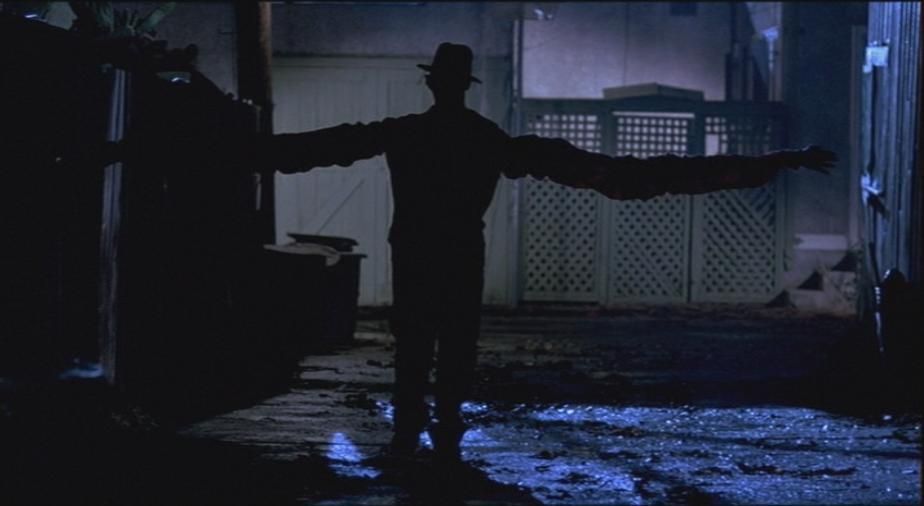
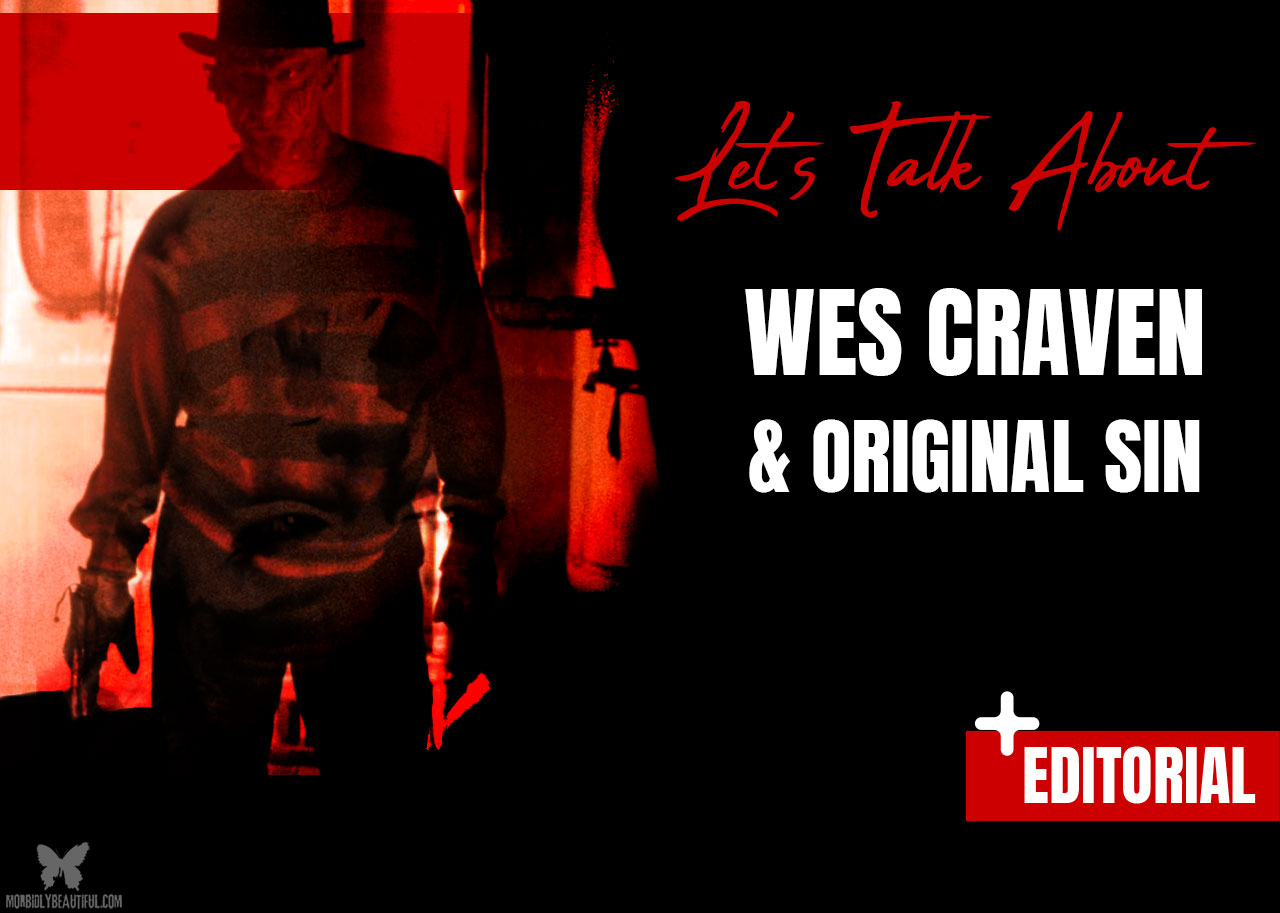
Freddy Krueger’s backstory is that he was convicted of murdering children before being released on a technicality. Soon after, an angry mob of parents cornered him in a boiler room and set him ablaze. Krueger’s ghost now haunts the children of his killers, making him an embodiment of original sin, of the wrongdoings of earlier generations being placed on the shoulders of their descendants.
According to Christianity, original sin entered the world through the devil’s machinations.
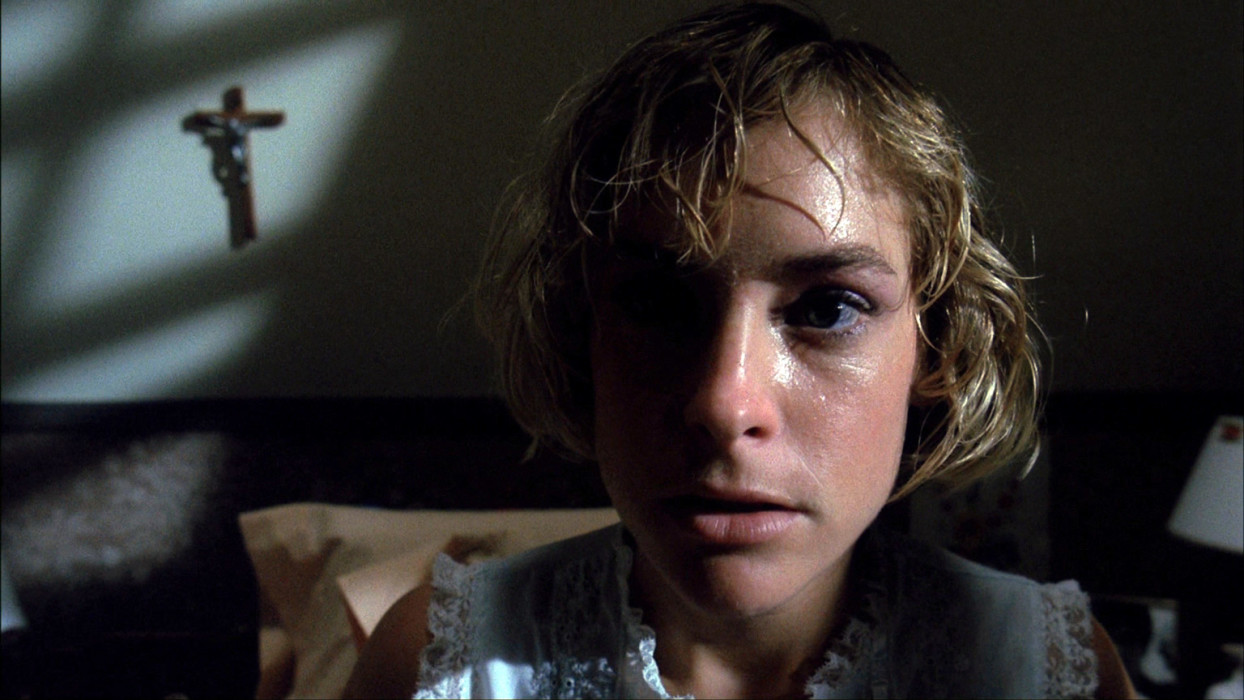
Everything about Krueger is Satanic, from his fiery origins to his red visage to the fact that local legends say a crucifix can ward him off, though Nancy Thompson’s crucifix does little to prevent his victory in the film’s epilogue.
Critics often overlook this small detail, but it’s crucial to understanding Craven’s worldview; even if the supernatural is real (as it is on ELM STRET), there certainly is no God out there to save us.
Craven’s ultimate statement of his theology also uses crucifixion imagery. In a key scene of The Hills Have Eyes, Papa Jupiter, the head of the cannibal clan, kills his civilized equivalent, Bob Carter, after nailing him to a tree.
The scene may not register as Christological upon a first viewing (unlike Jesus, Bob is fully clothed, and the tree is leafy and alive). However, Bob is essentially crucified.
Usually, when crucifixion imagery is employed in fiction, it is done to associate characters with Christlike traits (heroism, selflessness, unjust persecution). Bob is not remotely like Christ; he’s bitter, bigoted, and domineering.
Similarly, Jupiter and his sons—Mars, Mercury, and Pluto—lack the powers and majesty of their divine Roman namesakes. They are mentally deficient brutes.
Craven further invites comparison between Bob Carter and the Son of God when Jupiter and his family sit around the campfire to consume Bob’s flesh. Following a crucifixion, this moment clearly parallels the Christian tradition of communion, where Christ’s body is consumed in the form of bread.
In Christian thought, communion is the consumption of the only perfect human being who ever lived in remembrance of his gift of salvation. In Craven’s mind, there is no salvation to be found from God or from our fellow man; there’s only a lesser evil consumed by greater evil.
The success of these films would allow Craven to direct prominent Hollywood features, like the popular Scream quartet. Yet, while the Scream films have their charms, they lack the compelling moralism of Craven’s first three hit films, possibly because he did not write them.
What makes House, Hills, and Nightmare interesting, despite their rough edges, is their combination of the sacred and the profane, and the idea that original sin could exist without God, just as Christianity could affect a man who had long abandoned it.
She’s a lover, he’s a fighter. Together, they’re CHEER AND LOATHING. Tune in to hear your hosts, Stephanie (Cheer) and Casey (Loathing), clash over the films they love — and the ones they love to hate.
In this holiday extravaganza episode of Guilty Pleasures, join hosts Stephanie, Kelly, and our newest addition, Jonathan (Jack was tied up in tinsel and couldn't join us), as they unwrap the bizarre and unhinged world of holiday cinema. They dive into the depths of Elves, a film that's as chaotic as it is entertaining. It's a sleigh full of questionable decisions, diabolical dialogue, absurd plot twists, wildly offensive antics, and unhinged holiday mischief.
And that's not all! In the second half of the podcast, join your festive cinephile friends for a look at four more ”nutty as a fruitcake” holiday treats: A New York Christmas Wedding, Elf Bowling, A Medea Christmas, and Jack Frost. Plus, we each offer a bonus Christmas flick guaranteed to make you say, ”Ho, Ho, HO-LY Hell!”
Expect laughter, disbelief, and a spirited debate about what truly makes a movie a guilty pleasure. Don't miss this festive journey through the weirdest corners of holiday films!
Follow Us!