

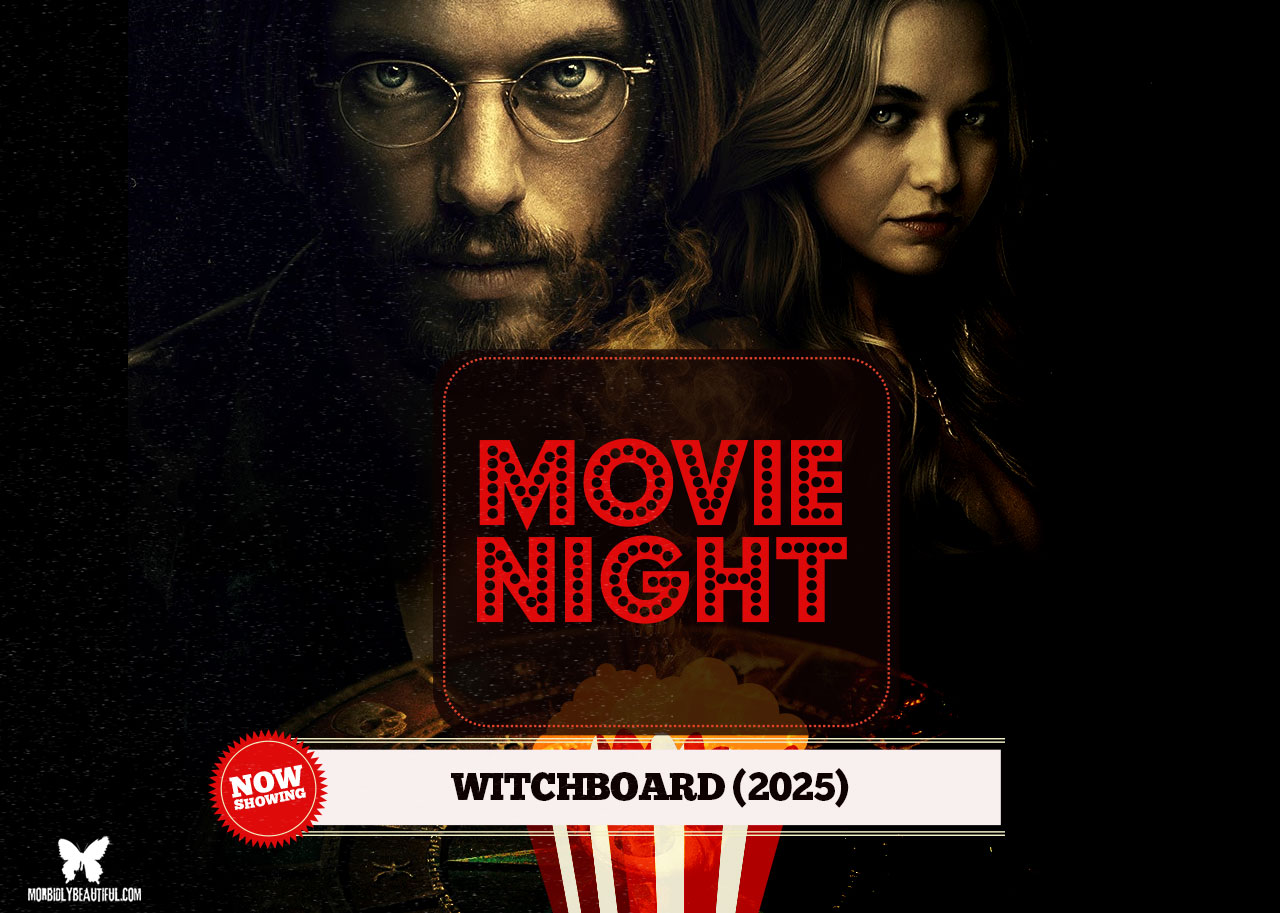
Chuck Russell’s “Witchboard” reinvents the cult 80s classic with gothic spectacle, gruesome gore, and a scenery-chewing Jamie Campbell Bower.

No time to read? Click the button below to listen to this post.

Some horror remakes play it safe, but Chuck Russell’s Witchboard swings for the fences—sometimes connecting in dazzling, gory fashion, other times whiffing with messy overindulgence.
Kevin Tenney’s 1986 Witchboard has never been considered a great film. Still, it’s carved out a cult status thanks to its campy charm, gonzo plot, and the presence of video vixen Tawny Kitaen, leveraging her perfectly tousled powers to scorch the screen and seduce viewers. It’s a guilty pleasure that has left a strong mark on the horror canon.

So when genre veteran Chuck Russell (The Blob remake, A Nightmare on Elm Street 3: Dream Warriors) stepped up to reimagine the cursed spirit board tale, hopes were understandably high.
Rather than simply remaking Tenney’s film, Russell reinvents it.
Gone is Malfeitor, the axe-wielding ghost who haunted the original. In his place comes a lush and layered mythology that transforms the concept of the spirit board into something far more elaborate, dangerous, and steeped in occult history. The result is a movie that feels bigger, sleeker, and undeniably stylish… though not without some baggage.
At the film’s core is Emily (Madison Iseman), a woman clawing her way back from addiction while building a new life with her partner Christian (Aaron Dominguez).

The pair is opening a restaurant in New Orleans’ French Quarter, a setting dripping with history, decadence, and gothic mystique. But when Emily stumbles upon an ancient pendulum board in the woods, her fragile recovery spirals into obsession. Soon, the boundaries between her trauma and the supernatural horrors surrounding her begin to collapse.
The first act spends ample time on character-building—a refreshing change from the paper-thin archetypes of the 1986 film. Unfortunately, that character work drags the pacing, and some viewers may find the buildup frustrating. Stick with it, though, because once the film unleashes its madness, it delivers spectacle worthy of Russell’s pedigree.
Russell has always been a filmmaker who understands how to marry practical gore with grand theatrics, and Witchboard thrives on that balance.
The film boasts gothic production design, lush giallo-inspired lighting, and gruesome set pieces that wouldn’t feel out of place in a FINAL DESTINATION entry. It’s all heightened, bloody, and unabashedly weird.

But make no mistake, this is a film often saved from its own convolutions by one actor: Jamie Campbell Bower (Stranger Things).
As a flamboyant, sinister villain holed up in a mansion filled with antiques and attended to by platinum-blonde witch triplets, Bower absolutely devours the screen. His campy menace cuts through the film’s somber tone like a knife, injecting exactly the kind of energy the movie needed more of.
He’s the must-watch MVP—a larger-than-life presence, oozing as much seductive charm as thinly veiled darkness.
For all its grandeur, Witchboard stumbles in cohesion.

The mythology is overstuffed, the plotting messy, and the pacing inconsistent. At times, it feels like Russell is trying to tell three different stories at once, with too many threads vying for attention. And while it flirts with camp, it rarely embraces the outrageousness that could have pushed it into instant cult classic territory.
Still, there’s plenty to admire. The film looks phenomenal, boasts some nasty gore, and isn’t afraid to get weird. It’s sexy, stylish, and sadistically fun, even when it threatens to collapse under its own weight.
Is it perfect? No. But it is a blast. Chuck Russell’s Witchboard is the kind of remake that refuses to phone it in, instead throwing everything it has onto the screen in a blood-slick, neon-lit spectacle.
It won’t replace the original’s cult charm, but it makes for one hell of a midnight movie.
Overall Rating (Out of 5 Butterflies): 3.5








Follow Us!