



The role of women in slashers reflects a complex dance between misogyny and empowerment, complicating horror’s relationship with feminism.
Show host Carolyn Smith-Hillmer mixes up her format by focusing on a subgenre analysis rather than an individual film. She provides a thought-provoking, scholarly assessment of women in slashers. She explores the components of the slasher film formula, the role of cinema as an inherently manipulative medium, the ways in which women are punished for their sexuality onscreen, and the significance of a killer’s weapon of choice. She also expands on themes discussed in her episode on Rosemary’s Baby and Inside. It’s essential listening for any horror fan, especially those seeking to understand the genre’s history and influence. – Stephanie (Editor-in-Chief)
SHOW NOTES FROM HOST CAROLYN SMITH-HILLMER:
Editor’s Notes:This episode is a slight deviation from my normal episode format. I was feeling incredibly passionate about this topic and felt compelled to share it with you all. I am sure you will enjoy it and learn, nonetheless.

The slasher film subgenre has long been a subject of feminist critique and analysis, presenting a complex and often contradictory portrayal of women in horror.
Slashers have often been criticized for their seemingly puritanical approach to female sexuality. Many early entries in the genre appeared to follow a simple formula: sexually active characters, particularly women, were more likely to meet a gruesome end at the hands of the killer. This pattern led many critics to view slasher films as inherently misogynistic, reinforcing conservative sexual mores through violent spectacle.
In her seminal work “Her Body, Himself: Gender in the Slasher Film,” Carol J. Clover notes that “the image of the distressed female most likely to linger in memory is the one who is screaming, staggering, falling, rising only to be struck again” (Clover, 1987). This observation underscores how slasher films often position women as victims, with their bodies serving as the primary site of horror and violence.
Paradoxically, the slasher subgenre also gave rise to one of horror’s most enduring and potentially empowering female archetypes: the Final Girl. Typically portrayed as resourceful, intelligent, and often chaste, the Final Girl is the character who survives to confront the killer in the film’s climax. Clover argues that this character allows for a complex identification process, where viewers of all genders are encouraged to align themselves with the female protagonist.
However, the existence of the Final Girl complicates feminist readings of slashers.

While she represents a form of female empowerment, her survival is often predicated on her adherence to traditional values and her rejection of the sexual freedom embraced by her ill-fated peers.
Over time, the portrayal of women in slasher films has undergone significant changes. Early entries in the subgenre, such as Halloween (1978) and Friday the 13th (1980), largely adhered to the formula of punishing sexually active characters. However, later films began to subvert these expectations.
Scream (1996), directed by Wes Craven, marked a significant shift in the genre. The film’s self-aware approach allowed it to comment on and critique the very tropes it was employing. Its protagonist, Sidney Prescott, navigates her sexual awakening while still fulfilling the role of the Final Girl, challenging the notion that female sexuality and survival are mutually exclusive in slasher narratives.
More recent entries in the genre have continued this trend towards more complex female characters.
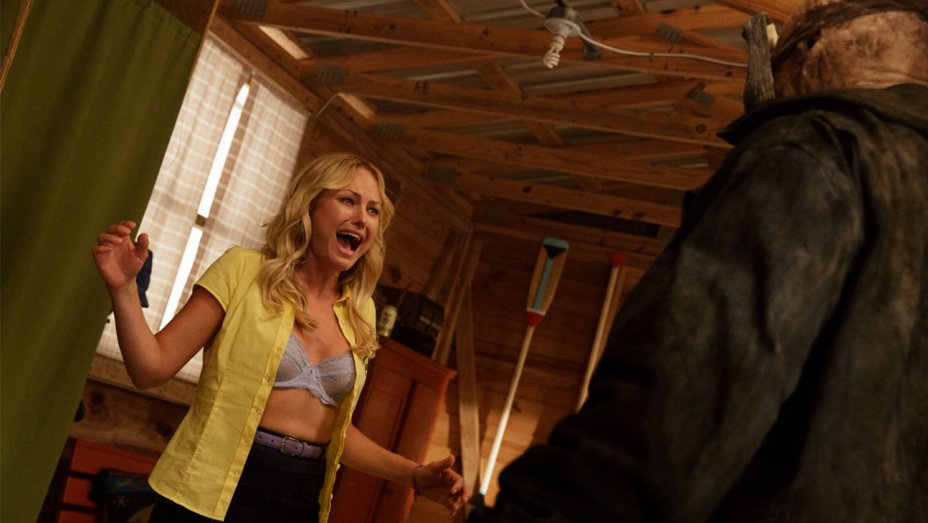
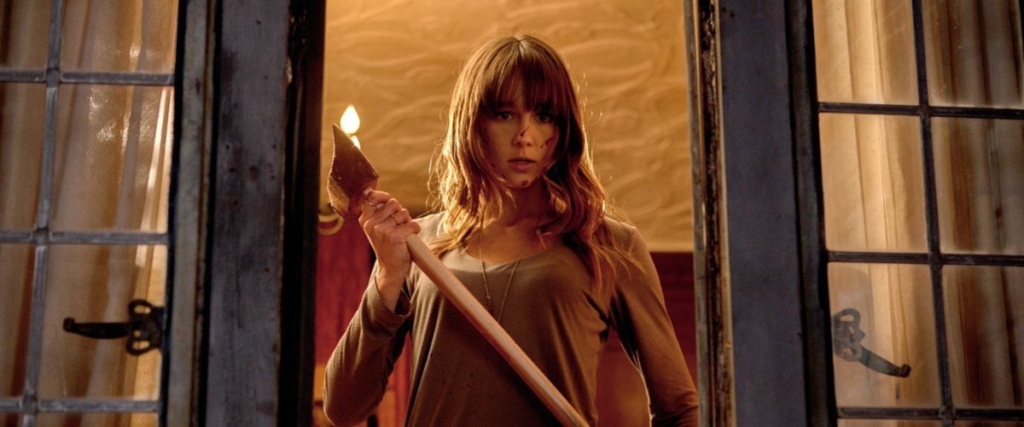
Films like You’re Next (2011) and Ready or Not (2019) feature protagonists who are both sexually empowered and capable survivors, further blurring the lines between victim and hero.
The evolution of women’s roles in slasher films is inextricably linked to the increasing presence of women behind the camera. While exact statistics are difficult to pin down, it’s clear that women have historically been underrepresented as directors and writers in the horror genre, including slasher films.
Women-helmed horror films often feature more complex female characters, exploring themes of trauma, motherhood, and female rage in ways that challenge traditional genre conventions. Hopefully, the increasing diversity behind the camera leads to more nuanced and varied representations of women on screen.
SOURCES
SOURCES/INFORMATION Clover, Carol J. “Her body, himself: Gender in the slasher film.” Representations, vol. 20, 1987, pp. 187–228, https://doi.org/10.2307/2928507 Cowan, Gloria and O’Brien, Margaret. “Gender and Survival vs. Death in Slasher Films: A Content Analysis.” Sex Roles, vol. 23, 1990, pp. 197-196. Lukowski, Sarah. “ Female Victimization in the 1970s and 1980s Slasher Film.” Suffolk University, 2022. Harrington, Erin. Women, Monstrosity and Horror Film: Gynaehorror. Routledge.
ABOUT THE SHOW:

The Final Girl on 6th Ave is a weekly show where host, Carolyn Smith-Hillmer, dissects an arthouse/elevated horror film. Each episode includes a detailed play-by-play of the film itself and a subsequent deep dive into the thematic elements and symbolism. Because elevated horror is sometimes viewed within the horror community as pretentious, Carolyn makes sure to use her down-to-earth tone and unique perspective to make these films less intimidating for the casual horror viewer and less ostentatious for the genre lover.
Listen to more episodes on the show’s website here.
The Final Girl on 6th Ave is a bi-weekly podcast where host Carolyn Smith-Hillmer reviews arthouse horror films in a non-pretentious way.
Lars von Tier and Horror
Lars von Trier has been called a visionary, a sadist, and a self‑mythologizing provocateur—sometimes all in the same breath. In this episode, we unpack how an anxious kid from Copenhagen became one of the most controversial figures in world cinema, and why his work looms so large over modern horror and “extreme” art‑film. Focusing on Antichrist, Melancholia, Nymphomaniac, and The House That Jack Built, we explore von Trier’s “Depression Trilogy,” his use of grief, sex, and violence, and the ongoing debates about misogyny, ethics, and audience complicity. Along the way, we bring in film scholarship, critical essays, and production histories to ask a simple but uncomfortable question: when von Trier pushes horror this far, is he revealing something profound about suffering—or just building a house out of pain?
SOURCES/INFORMATION
Biographical and career overviews
“Lars von Trier.” Wikipedia.wikipedia
“Lars von Trier – Simple English Wikipedia.” Simple Wikipedia.wikipedia
“Lars von Trier.” Encyclopaedia Britannica (biography, awards, filmography).britannica
“Lars von Trier filmography.” Wikipedia.wikipedia
“Lars von Trier – IMDb.” IMDb.imdb
“List of awards and nominations received by Lars von Trier.” Wikipedia.wikipedia
Context and Danish film culture
“Lars von Trier and Cultural Liberalism.” Danish Film Institute.dfi
Excerpt from Regional and Global Dimensions of Danish Film Culture and Film Policy (on Dogme 95 and Danish film branding).catalogimages.wiley
Critical profiles and interviews
“Lars von Trier: Behind the Curtain.” The New Yorker (profile on von Trier’s persona and controversies).mubi+1
“Lars von Trier: A Problematic Sort of Ladies’ Man?” NPR radio piece and transcript (Pat Dowell, with Caroline Bainbridge).npr+1
“The Many Faces of Lars von Trier.” BFI feature.bfi
“Lars von Trier: An Overview.” Film Festival Today (career overview).filmfestivaltoday
Horror‑specific and film‑specific sources
“The Immersive Examination of Depression and Grief in ‘Antichrist’ [Unveiling the Mind].” Bloody Disgusting.bloody-disgusting+1
“Antichrist (2009)” – film entry and production details. IMDb and Wikipedia.imdb+1
“The House That Jack Built (2018).” IMDb (plot, reception).imdb
“Manically Macabre: Lars von Trier as Horror Icon.” Horror Obsessive.horrorobsessive
“‘Terrifier 2’ and 9 Other Horror Movies Which Famously Made Audiences Sick.” Collider (section on Antichrist).collider
Scholarly / analytical work
“Lars von Trier – The ‘Sex’pression Ideology.” Academic essay (via Academia.edu PDF).academia
Caroline Bainbridge, The Cinema of Lars von Trier (discussed in NPR and academic contexts).npr+1
Career primers
“Notebook Primer: Lars von Trier.” MUBI Notebook.

Episode play icon
Lars von Trier has been called a visionary, a sadist, and a self‑mythologizing provocateur—sometimes all in the same breath. In this episode, we unpack how [...]
May 1, 2026
Episode play icon
In this episode, we explore why we willingly scare ourselves — unpacking the neuroscience of fear, the psychology of personality and anxiety, and the surprising [...]
March 1, 2026
Episode play icon
The Final Girl looks a little different for 2026… in the best way! Join in for the first episode of 2026 where we uncover what [...]
January 21, 2026
Search Results placeholder









Follow Us!