


The gritty and empathetic psychological thriller “Thirst Trap” offers a nuanced exploration of the precarious lives of online sex workers.

No time to read? Click the button below to listen to this post.
We need more films that refuse to demonize sex workers and that understand that sex work is just that… work. It’s not easy money. It’s hard work that often requires you to forego the kind of privacy and boundaries the rest of us enjoy.
There aren’t many films that examine the difficult and often terrifying world of online sex workers like OnlyFans creators and cam girls. There’s the incredible Cam (2018), written by real-life cam girl-turned-writer-turned-filmmaker Isa Mazzei. But that’s about it.
Until now.
Written and directed by Chantal Massuh-Fox, Thirst Trap is about a young woman, Riley Ann (Grace Gordon), struggling to make it in Hollywood. With her dreams of becoming an actress feeling less and less likely, she becomes a cam girl to pay the rent.
It’s not a bad gig, and she enjoys many aspects.
It allows her to use her acting skills to play pretend and embody the fantasy of others, and she admits to enjoying the attention and adoration.
That’s understandable given how much the pursuit of acting can be crushing to a woman’s self-esteem and sense of worth. Riley Ann explains how demoralizing the audition process can be; you’re never pretty enough, never thin enough.
As an aspiring actress, she’s just another face in the crowd, one of thousands of beautiful women sharing the same dream. She’s not special. But as a cam girl, she’s someone people notice and appreciate.
Still, there’s a definite downside.
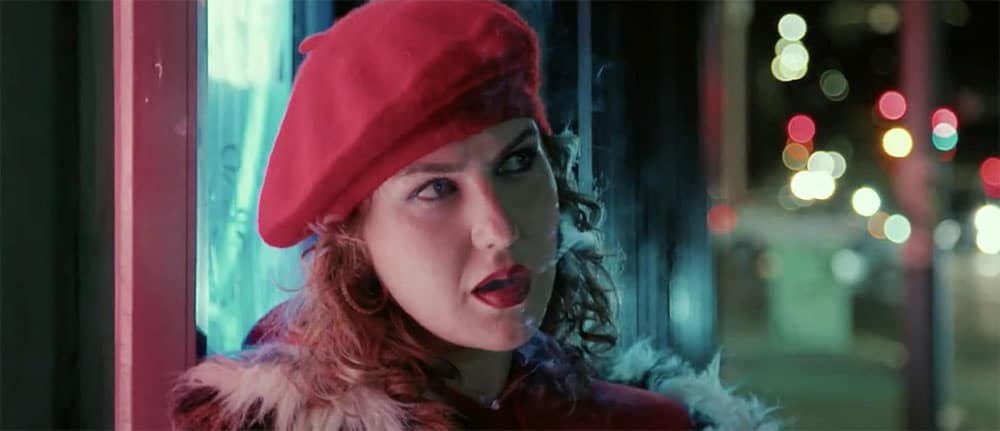
When she’s low, she has to fake it; no one wants to pay to hear someone talk about their problems or express authentic feelings. It can also be scary. The line between fantasy and reality becomes blurred, and people think they have a right to constant, unfiltered access to her.
For the most part, it’s more of a nuisance than a cause for real concern. But that’s all about to change when one obsessed fan starts to terrorize her, invading every aspect of her personal life.
It eventually escalates into truly terrifying and dangerous territory.
Of course, the cops are no help. They need her to be harmed before they can act. Suddenly, Riley’s safe haven from the demands and disappointment of real life is a horror show where she must constantly look over her shoulder and distrust everyone.
The film is dedicated to the “lost souls of Hollywood” and does a great job centering its story on the ugly side of make-believe, where real women — with real hopes, dreams, fears, and insecurities — face real pain and experience the same real emotions as everyone else.
It’s so easy for us to try to diminish sex workers and shame them for being attention-starved or using their bodies to make a quick buck. Social media is replete with people who are all too happy to share their unsolicited feedback for those promoting OF content. Most of it is full of hateful rhetoric and the kind of vitriol that implies these women are committing acts of a severe and heinous nature.
In reality, they are just trying to make their way like the rest of us and are just as prone to feeling wounded when attacked.
It’s also interesting how we never seem to shame the men who patronize spaces like OnlyFans, only the women who dare to create content there.
Grace Gordon is extraordinary as the lead character and is essentially a one-woman show for most of the film.
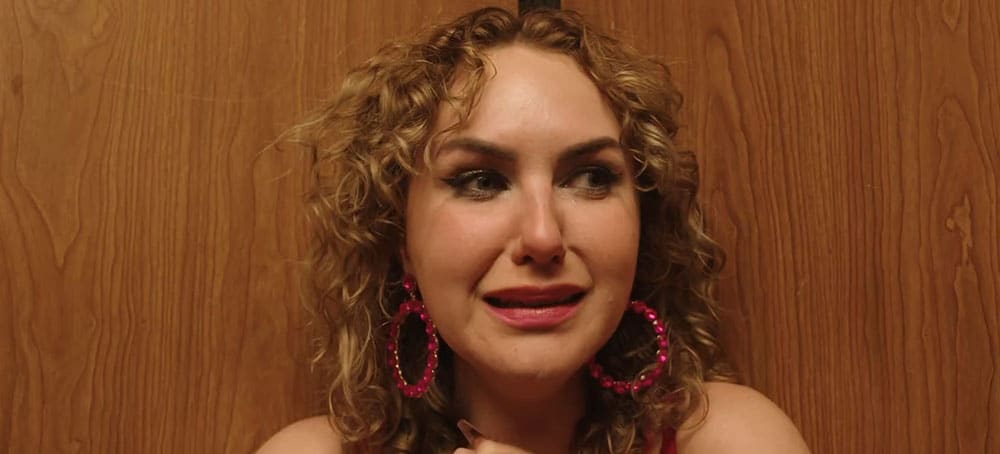
She carries the film on her capable shoulders. She is so good at making Riley feel relatable and sympathetic, a fleshed-out and complex character with a love-hate relationship to her work.
She’s stunning but struggles with feeling good enough and has to listen to daily affirmations on tape to maintain her confidence.
The film is a little over an hour long and moves quickly. It has a stellar set design and a great synth score. It’s beautifully shot with lots of gloriously girly-pop pink neon lighting to create Riley’s fantasy world and differentiate between the sobering reality of the real world.
The script is pretty bare-bones. It sets up a mystery as Riley Ann tries to figure out who is stalking her and how she can stop it before it gets more out of hand. Yet, the mystery isn’t much of the film’s focus and is not terribly deep or layered.
Instead, the film keeps its focus on Riley’s reaction to her world spiraling out of control.
She talks to the camera throughout, letting us in on her hidden trauma and how hard it is to always try to be what everyone wants her to be — never herself.
There may not be much happening, but Gordon easily draws viewers into her plight and keeps them on the hook.
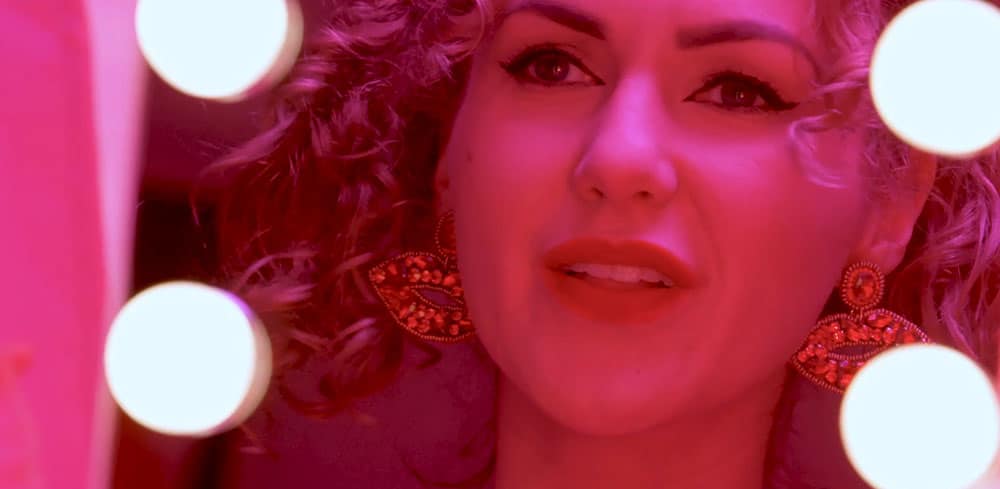
It’s often sexy and wryly funny.
However, despite being well-intentioned and well-acted, it’s not a perfect film. For starters, the payoff is not nearly as strong as the setup. The reveal of Riley’s stalker is lackluster and stretches credulity. To deliver a shocking surprise twist, the villain comes out of left field without proper setup and feels unearned.
The ending feels a bit meandering, and the climactic confrontation falls flat. Despite being lean, it starts to wear a little thin, and scenes start to feel redundant. The script is also full of implausible plot points. There’s an endless array of “How did they…” and “Why did she…” questions that pop up as Riley’s stalker intensifies his pursuit of her.
A pivotal plot point had me screaming at the set, wondering how and why Riley would be so careless. I won’t ruin it here, but it’s not a minor issue and significantly impacts the narrative.
I’m definitely not someone who bemoans small plot holes, and I am perfectly willing to suspend my disbelief for the sake of entertainment. Still, when a film presents itself as such an authentic peek behind the curtain and creates a compelling character meant to be a proxy for the audience, glaring plot holes can take a viewer out of the story.
However, if you can enjoy the film as a character-driven psychological thriller and ignore the narrative problems, you’ll have a good time with this one.
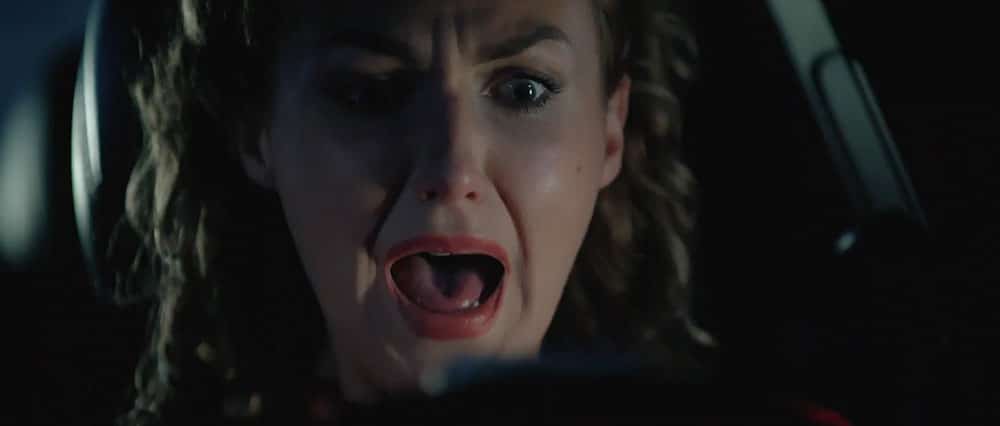
Gordon is hard to look away from, and her growing fear and frustration is palpable and utterly convincing.
I love that it’s a woman-driven project, and Massuh-Fox shows tremendous promise in her feature directorial debut.
There’s very little overt horror, almost no gore or genuine frights. The film doesn’t get truly dark until the last 5-10 minutes. But there is ample tension, and it succeeds at emphasizing the psychological impact of fear and anxiety.
THIRST TRAP also does a great job highlighting the lack of support for sex workers and how difficult it is for all women to be taken seriously and feel safe existing in the world.
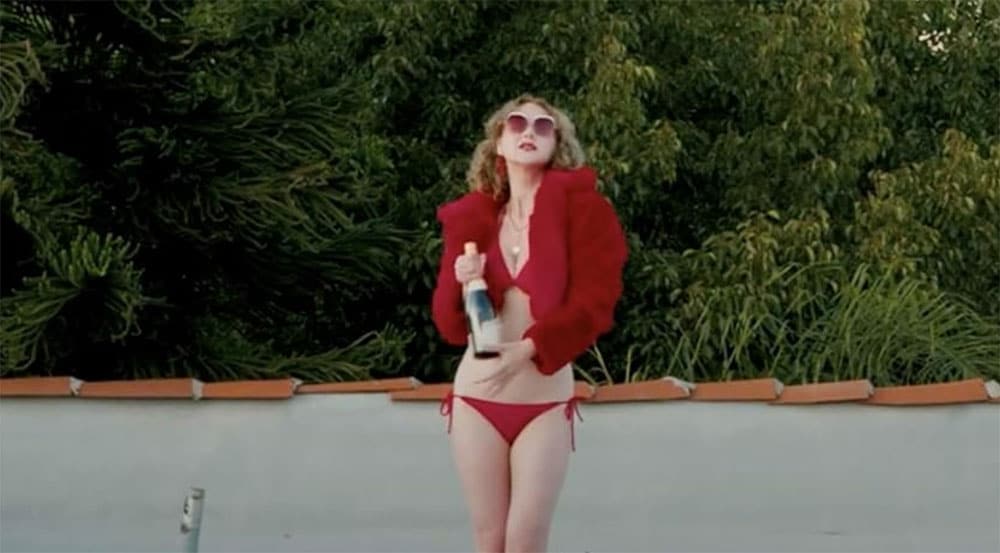
It effectively explores how women can simultaneously be the object of desire and disdain and how difficult that is to navigate.
It shows how hard it is for beautiful women to trust others… never knowing what someone’s intentions are toward them, and always feeling used, exploited, judged, and objectified.
Sometimes, you can use men’s desire to your advantage. Sometimes, the attention even feels good; it’s validation. Other times, it’s easy to feel alone, afraid, discarded, and deeply vulnerable.
Thirst Trap looks at both sides with unflinching honesty, and it’s mostly captivating even if a little messy.
Overall Rating (Out of 5 Butterflies): 3
THIRST TRAP is currently touring the festival circuit and will next screen at the Philadelphia Unnamed Film Festival (PUFF) on Saturday, September 28, at 4 pm.








Follow Us!